What’s actually slowing this PC down?
Pick the symptom - the matching free tool is one click away.
Tesla’s Optimus robot represents an attempt to extend the company’s artificial intelligence and manufacturing expertise beyond vehicles into general-purpose robotics. Elon Musk’s recent statements suggesting wider deployment timelines triggered renewed investor attention because the project, if successful, would expand Tesla’s addressable market well beyond automotive. Equity markets tend to react sharply when a credible growth narrative implies optionality, meaning potential future revenue streams not yet reflected in current financials. Understanding what Optimus is today, rather than what it could theoretically become, is essential for assessing whether such reactions are economically justified.
Origins of Optimus: Concept Before Capability
Optimus was first unveiled in 2021 as a humanoid robot concept designed to perform repetitive, dangerous, or undesirable tasks. At the time, the announcement was primarily a strategic signal rather than a demonstration of mature technology, with early prototypes lacking autonomous functionality. Markets often respond to such signals because they suggest management’s long-term vision, even when near-term cash flows are nonexistent. This gap between vision and execution is where investor skepticism or optimism is priced.
Core Design Philosophy and Technical Foundations
Optimus is built around Tesla’s existing artificial intelligence stack, including computer vision, neural networks, and custom silicon originally developed for autonomous driving. The robot uses cameras instead of specialized sensors, mirroring Tesla’s vehicle autonomy approach, which aims to reduce hardware costs and improve scalability. In financial terms, scalability refers to the ability to grow output without proportionally increasing costs, a critical factor in determining long-term margins. Tesla’s strategy implies that Optimus economics are expected to improve materially with volume, assuming the software reaches sufficient reliability.
From Stage Demonstrations to Functional Prototypes
Since its initial reveal, Tesla has shown progressively more capable Optimus prototypes performing basic tasks such as walking, sorting objects, and folding materials. These demonstrations indicate incremental progress but remain far from commercial readiness. The distinction matters because functional prototypes validate engineering feasibility, not economic viability. Investors must separate technological proof-of-concept from a product that can be manufactured, sold, and supported at scale.
#1 Best Overall
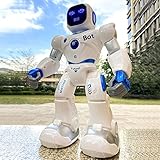
- 【BRILLIANT GIFT IDEA FOR KIDS】It's a big surprise to kids as the robot is up to 15.8 inches in height. With various pioneering ways to play, it can build kids' imagination and creativity. Kids will love this Birthday or Christmas gift!
- 【STEM LEARNING ROBOT】With 10 expressions, 9 flexible joints, and 10 songs, this robot moves more dynamically than typical toys—making playtime more engaging and lifelike. It's a fun way for kids to explore basic programming while building logic, creativity, and coordination!
- 【DIVERSE FUNCTIONS】Gymnastics, storytelling, dance, music, and recording—the Ruko robot enriches childhood with creativity and early artistic exploration. More than just a toy, it’s a fun, engaging friend!
- 【RECHARGEABLE & LONG-LASTING】 Enjoy up to 100 minutes of playtime on a full charge, giving kids plenty of time to play, explore, and have fun without frequent battery changes.
- 【CHARGING REMINDER】For proper charging, please use the original cable included in the package. USB-C to USB-C cables are not supported and will not charge the device. Charge Before Use: No response? Charge for 30 mins first.
Why Musk’s Comments Move the Stock
Elon Musk’s public comments often influence Tesla’s stock because they shape expectations around future growth and capital allocation. When management signals confidence in a transformative technology, markets may adjust valuation multiples, which are ratios such as price-to-earnings that reflect expected future performance rather than current results. This dynamic is common in growth equities, where long-duration cash flows dominate valuation models. However, higher expectations also raise execution risk, meaning the potential downside increases if timelines slip or capabilities underperform.
Assessing Realistic Financial Impact and Risk
From a financial perspective, Optimus remains a pre-revenue initiative with uncertain commercialization timelines. Key risks include technical complexity, safety regulation, manufacturing cost control, and competition from both industrial robotics firms and emerging AI-driven entrants. Investors evaluating Optimus should focus on whether progress translates into measurable cost reductions, internal productivity gains, or third-party sales over time. Until such evidence emerges, the robot’s contribution to Tesla’s valuation should be viewed as speculative optionality rather than a defined earnings driver.
The Catalyst: What Elon Musk Actually Said and Why Markets Reacted Immediately
The immediate stock reaction was driven not by a new product launch, but by a change in the narrative around timing, scale, and strategic importance. Elon Musk stated that Tesla expects Optimus humanoid robots to begin deployment outside the company within the next few years, with the long-term goal of producing them in very high volumes. Crucially, the comments framed Optimus not as an experimental side project, but as a future mass-market product central to Tesla’s growth.
The Specific Statements That Mattered
Markets focused on Musk’s assertion that Optimus could eventually be produced at scale and sold broadly, rather than being limited to internal factory use. He emphasized cost targets that would place the robot well below the price of existing industrial robots, suggesting a potential consumer or enterprise market far larger than traditional automation. While no precise revenue figures or launch dates were provided, the shift from “demonstration” to “distribution” language was notable.
Equally important was Musk’s claim that Tesla’s existing advantages in artificial intelligence, sensors, and manufacturing would transfer directly to humanoid robotics. This positioned Optimus as an extension of Tesla’s core capabilities rather than a separate, unproven business line. For investors, that framing reduces perceived integration risk, even if execution risk remains high.
Why Markets React to Words Before Numbers
Equity markets often move on changes in expectations rather than changes in current earnings. In valuation terms, Tesla is priced as a long-duration growth asset, meaning a large portion of its value reflects cash flows expected many years in the future. When management expands the perceived size or longevity of those future cash flows, valuation models can shift quickly, even in the absence of near-term financial impact.
This is particularly true for technologies that could create entirely new revenue pools. Humanoid robotics, if commercially viable, would represent a market measured in tens of billions of dollars annually. Even a low probability of success can materially influence valuation when the potential payoff is large, a concept known as asymmetric optionality.
How Optimus Fits Into Market Pricing Mechanics
When Musk speaks about Optimus at scale, markets implicitly adjust assumptions embedded in discounted cash flow models. A discounted cash flow model estimates a company’s value by projecting future cash flows and discounting them back to today using a required rate of return. Extending the growth period, increasing terminal revenue potential, or adding a new business line can raise estimated equity value without altering near-term earnings forecasts.
This does not mean the market believes Optimus revenue is imminent. Rather, it reflects a reassessment of the range of possible outcomes. The stock reaction represents probability-weighted expectations, not certainty.
Separating Narrative Momentum From Economic Reality
Despite the positive reaction, Musk’s comments did not resolve the core uncertainties surrounding Optimus. There was no disclosure of unit economics, regulatory approval pathways, safety validation, or customer demand outside Tesla. These factors will ultimately determine whether Optimus transitions from speculative optionality to a material contributor to revenue and profit.
For investors, the key analytical task is distinguishing between narrative catalysts and fundamental inflection points. Narrative shifts can move stocks in the short term, but sustainable valuation support requires evidence of execution, cost discipline, and repeatable demand. Until those emerge, Optimus should be viewed as a long-dated call option embedded within Tesla’s equity, not a near-term earnings driver.
Why Future Tech Narratives Move Stocks: How Markets Price Optionality and Vision
The market response to Elon Musk’s Optimus commentary fits a broader pattern in equity pricing. Stocks do not move solely on reported earnings; they move on changes in expectations about the future distribution of outcomes. When a credible management team outlines a potentially transformative technology, investors reassess not what the business is today, but what it could become over a full economic cycle.
Recommended Free Tools
This mechanism is especially powerful for companies already valued on long-duration growth assumptions. Tesla’s valuation reflects expectations extending many years into the future, making it inherently sensitive to narratives that expand or reshape the long-term opportunity set.
Optionality: How Markets Value Low-Probability, High-Impact Outcomes
Optionality refers to the embedded right, but not obligation, to pursue future opportunities with asymmetric payoff potential. In equity valuation, this means a project can justify incremental value even if the probability of success is modest, provided the upside is sufficiently large. Humanoid robotics fits this framework due to its potential applicability across manufacturing, logistics, healthcare, and household services.
Markets incorporate this by adjusting probability-weighted scenarios rather than forecasting a single outcome. If investors assign a small chance that Optimus becomes a scalable, profitable platform, the expected value of that scenario can still justify a higher stock price today. This is analogous to a real option in corporate finance, where early investment preserves the ability to scale later once uncertainty resolves.
Narratives as Information Signals, Not Forecasts
Technology narratives influence stocks because they act as signals about strategic direction, ambition, and resource allocation. When Musk discusses Optimus, markets interpret it as confirmation that Tesla intends to deploy capital, talent, and data advantages toward robotics over an extended horizon. That signal can matter even without new financial disclosures.
Importantly, narratives are not forecasts. They do not specify timelines, margins, or adoption curves. Instead, they widen the perceived range of future states, prompting investors to revisit long-term assumptions embedded in valuation models.
Why Vision Matters More for Certain Companies
Not all firms benefit equally from future-oriented narratives. Companies with strong balance sheets, high operating leverage, and platform-like characteristics tend to receive more valuation credit for distant opportunities. Tesla’s existing manufacturing scale, software capabilities, and AI infrastructure make the Optimus concept appear more internally coherent than it would for a less integrated firm.
As a result, the market reaction reflects perceived feasibility as much as technological ambition. Investors are not pricing Optimus as a standalone startup, but as a potential extension of Tesla’s existing ecosystem.
Rank #2

- 【Humanoid Robot with ESP32】 Powered by ESP32 and 17 intelligent servos, Tonybot smart humanoid robot delivers smooth, dynamic performance. Use the app to easily control it for walking, dancing, kicking, and more. Tonybot can stand up automatically, which is great for playing football and performing gymnastics.
- 【Multimodal Large AI Models】Powered by an AI model module that combines language, voice, and vision models, Tonybot Ultimate Kit unlocks advanced embodied AI functions such as natural conversation and scene understanding. (Ultimate Kit Only)
- 【AI Vision & Voice Interaction】Equipped with an ESP32-S3 vision module and voice interaction module, Tonybot AI robot enables offline face recognition, target tracking, visual line following, voice control, and more. Customize commands and train it to be your AI assistant.
- 【Expandable AI Development with Sensors】 Tonybot robot kit comes with an ultrasonic sensor, IMU sensor, buzzer, and supports modules like dot matrix display, fan, temp/humidity sensors, and WiFi for endless AI-driven development.
- 【3 Programming Options & Comprehensive Tutorials】Tonybot smart AI robot supports Arduino, Python, and Scratch programming, with open-source low-level code and step-by-step tutorials covering everything from beginner learning to advanced humanoid robot development.
Bridging Vision and Financial Reality
Despite narrative-driven price movements, the translation from vision to financial impact remains uncertain and lengthy. Commercial humanoid robotics would require breakthroughs in reliability, cost reduction, regulatory acceptance, and customer willingness to pay. Each of these factors introduces execution risk and delays cash flow realization.
From a valuation perspective, this places Optimus firmly in the outer years of any financial model. Its influence on today’s stock price comes through terminal value assumptions and scenario analysis, not near-term revenue forecasts. Understanding this distinction helps investors contextualize why headlines can move stocks without immediately altering reported fundamentals.
Optimus as a Business: Addressable Markets, Use Cases, and Revenue Pathways
Moving from narrative to economics requires framing Optimus not as a science project, but as a potential commercial product with identifiable customers, pricing mechanisms, and cost structures. The stock reaction following Musk’s comments reflects investor attempts to map Optimus onto large addressable markets, even if those markets remain theoretical today.
At this stage, Optimus should be evaluated as a long-dated option on new revenue streams rather than a defined business line. Understanding how markets might size those streams clarifies both the opportunity and the limits of current enthusiasm.
Addressable Markets: Labor Substitution and Augmentation
The core economic premise behind humanoid robots is labor substitution, meaning replacing or augmenting human work with machines capable of operating in human-designed environments. Unlike industrial robots, which are task-specific and fixed in place, humanoid robots aim to be general-purpose, adaptable, and mobile.
Quick wins for a faster PC:
Clear out junk files and repair common Windows errorsFree Scan →Fix the driver behind crashes, sound loss and screen glitchesFind Drivers →Repair Windows errors before they cause bigger problemsFix Now →Potential addressable markets therefore span manufacturing, logistics, warehousing, retail operations, healthcare support, hospitality, and eventually household services. Collectively, these sectors represent trillions of dollars in global annual labor costs, which is why even low penetration rates appear financially significant in long-term projections.
However, addressable market does not equal realizable market. Adoption depends on whether robots can deliver reliability, safety, and total cost of ownership that is competitive with human labor, including wages, benefits, training, and turnover.
Use Cases: Where Optimus Could Be Deployed First
Initial use cases are likely to be narrow, controlled, and enterprise-focused rather than consumer-facing. Internal deployment within Tesla’s own factories is frequently cited, as it allows testing in structured environments while avoiding immediate external customer expectations.
Early commercial applications would likely involve repetitive, low-variability tasks such as material handling, parts movement, basic assembly assistance, or inventory management. These tasks minimize cognitive complexity while maximizing economic return through labor cost reduction and productivity gains.
Crashes, No Sound, or Screen Glitches?
Random freezes, missing sound and display glitches usually trace back to one bad driver. Find and replace yours safely.Free scan · under a minuteWindows Errors? Fix Them Before They Spread
Repair common Windows errors and clear accumulated junk for a smoother, more stable PC - no reinstall needed.Free scan · no reinstallMore complex roles requiring social interaction, fine motor skills, or unsupervised decision-making remain distant. Markets typically discount these scenarios heavily due to higher technical risk and regulatory scrutiny.
Revenue Pathways: Product Sales, Services, and Platform Economics
From a revenue perspective, Optimus could follow multiple pathways. The most straightforward model is direct unit sales to enterprises, similar to capital equipment, where revenue is recognized upfront but margins depend heavily on manufacturing scale and component costs.
An alternative model involves robots-as-a-service, where customers pay recurring fees tied to usage, uptime, or productivity outcomes. This structure would smooth revenue over time and potentially support higher lifetime value, but it also requires Tesla to carry more operational risk.
Longer term, investors speculate about platform economics, where software updates, task libraries, and AI improvements generate incremental revenue. Such models resemble software businesses, but only if hardware penetration reaches sufficient scale to justify ecosystem development.
Free tools Windows power users keep installed
One-click scans. No signup required.
Timelines, Cost Curves, and Execution Risk
Critically, none of these revenue pathways are imminent. Humanoid robots face steep cost curves related to actuators, sensors, batteries, and compute, all of which must decline meaningfully for mass adoption. Even optimistic scenarios place commercial viability several years away.
Execution risk is substantial. Challenges include safety certification, liability frameworks, customer trust, and maintaining performance in unstructured real-world environments. Delays or technical setbacks would push revenue realization further into the future.
Markets incorporate these uncertainties by assigning low probability weights and high discount rates to distant cash flows. This explains why Optimus can influence Tesla’s valuation narrative without materially changing near-term earnings models.
How Investors Should Interpret the Business Potential
For investors, the key distinction is between strategic optionality and financial contribution. Optimus expands Tesla’s perceived opportunity set, which affects terminal value assumptions in discounted cash flow models, defined as the estimated value of a business beyond the explicit forecast period.
Do these 3 things before closing this tab:
1Scan for outdated or missing drivers - takes under a minute2Repair Windows errors before they cause bigger problems3Fix the driver behind crashes, sound loss and screen glitchesThat impact is inherently subjective and sensitive to assumptions about adoption speed, margins, and competitive dynamics. Headline-driven stock moves reflect shifts in those assumptions rather than new measurable data.
A disciplined assessment focuses on whether Tesla demonstrates incremental progress in cost reduction, real-world deployment, and customer validation over time. Until then, Optimus remains a concept with economic promise, not a revenue driver with forecastable precision.
Rank #3
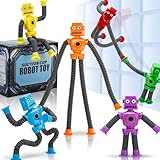
- 6 Fun Robot-Shaped Toys – Includes 6 colorful robots (red, yellow, blue, green, purple, orange) with stretchy pop tube arms & legs for endless bending, twisting, and sticking fun!
- Strong Suction Cup Base – Each robot’s hands and feet have powerful suction cups that securely stick to glass, mirrors, tiles, and smooth surfaces, making them perfect for travel and on-the-go play.
- Sensory & Fidget-Friendly – Helps calm anxiety, improve focus, and relieve stress, making them ideal for autistic kids, ADHD, or anyone who loves fidget toys.
- Perfect Gift & Multi-Use Fun – Great for birthdays, Easter baskets, stocking stuffers, party favors, classroom rewards, or Valentine’s gifts – a hit with kids ages 3-9!
- Safe & Durable – Made from child-safe, non-toxic materials, these stretchy robot toys are BPA-free and designed for long-lasting play.
Separating Hype From Execution: Technical, Manufacturing, and AI Risks
Elon Musk’s public comments tend to compress long development arcs into near-term narratives. Markets often respond by extrapolating future success without fully accounting for execution friction. For Optimus, the gap between demonstration and scaled deployment remains the central analytical challenge.
Understanding that gap requires disaggregating risk across three domains: physical robotics engineering, manufacturing scalability, and artificial intelligence reliability. Each introduces constraints that are fundamentally different from those Tesla has faced in vehicles or energy products.
The Tool Desk
Outbyte Driver Updater FREEScan for outdated or missing drivers - takes under a minuteDriver Scan →Outbyte PC Repair FREEClear out junk files and repair common Windows errorsFree Scan →Physical Robotics: The Difficulty of General-Purpose Movement
Humanoid robots operate in unstructured environments, meaning spaces not designed specifically for automation. This requires real-time balance, dexterous manipulation, and adaptive motion, all while maintaining safety around humans. These capabilities remain at the frontier of robotics research, not industrial standardization.
Actuators, defined as components that convert electrical signals into physical movement, represent a major bottleneck. High-performance actuators must be powerful, precise, lightweight, and energy-efficient simultaneously, a combination that remains expensive and difficult to manufacture at scale.
Battery density and thermal management further constrain usable work time. Unlike vehicles, which can tolerate downtime for charging, humanoid robots must operate continuously to justify their economics in commercial settings.
Manufacturing Scale: From Prototype to Economically Viable Production
Building a functional prototype differs materially from producing thousands or millions of units at consistent quality and cost. Tesla’s strength in automotive manufacturing does not automatically translate to humanoid robotics, which involves far higher component complexity and tighter tolerances.
Yield risk, defined as the percentage of manufactured units that meet quality standards, is especially critical in early production. Low yields increase per-unit costs and slow deployment, delaying any path toward positive margins.
Supply chain depth also remains uncertain. Many robotics components lack the mature supplier ecosystems that support automotive production, increasing dependency on in-house development and raising capital intensity.
AI Reliability: From Demonstrations to Autonomous Utility
Optimus relies on advanced artificial intelligence to perceive environments, plan actions, and execute tasks. While Tesla has demonstrated progress in visual perception, general-purpose autonomy remains an unsolved problem across the industry.
Task generalization is a key limitation. Training a robot to perform one task reliably does not guarantee competence across varied settings, lighting conditions, object types, or human interactions. Each additional use case increases data requirements and validation complexity.
The Tool Desk
Outbyte Driver Updater FREEFix the driver behind crashes, sound loss and screen glitchesFind Drivers →Outbyte PC Repair FREERepair Windows errors before they cause bigger problemsFix Now →Failures in AI-driven systems carry asymmetric risk. A single high-profile safety incident could materially slow adoption through regulatory scrutiny, liability exposure, and reputational damage, even if underlying performance improves incrementally.
Why Markets Still React to Forward-Looking Claims
Equity markets price expectations, not just current earnings. When Musk signals confidence in Optimus deployment, investors reassess the probability-weighted contribution of robotics to Tesla’s long-term cash flows, even if those cash flows remain distant.
This reassessment affects valuation through terminal value assumptions, where small changes in perceived success can have outsized impacts on modeled outcomes. The result is short-term stock movement driven by narrative shifts rather than operational milestones.
A rigorous framework separates visibility from viability. Visibility increases when management communicates progress; viability increases only when cost, reliability, and scalability improve in measurable ways.
Assessing Progress Without Overreacting to Headlines
Investors evaluating Optimus should focus on evidence of narrowing execution risk rather than aspirational timelines. Relevant signals include declining component costs, repeatable task performance, third-party validation, and early commercial pilots with defined economics.
Absent these indicators, optimism remains speculative. That does not negate the strategic importance of Optimus, but it does constrain how much weight it should carry in valuation models today.
In this context, Optimus functions as a long-duration option embedded within Tesla’s equity. Its value depends less on announcements and more on sustained, verifiable execution across technical, manufacturing, and AI domains.
Timelines That Matter: When Optimus Could (and Could Not) Impact Financials
Understanding how Optimus could influence Tesla’s financials requires separating technical milestones from accounting impact. Markets may react immediately to commentary, but income statements, cash flow statements, and balance sheets respond only when products generate revenue at scale and with acceptable margins. This gap between narrative timing and financial timing is central to interpreting recent stock moves.
PC Slower Than It Used to Be?
A free scan shows the junk files, broken settings and background clutter dragging Windows down - then fixes them in one click.Free scan · Windows 10 & 11Crashes, No Sound, or Screen Glitches?
Random freezes, missing sound and display glitches usually trace back to one bad driver. Find and replace yours safely.Free scan · under a minuteThe Near Term: Demonstrations Without Material Financial Impact
Over the next one to two years, Optimus activity is most likely to remain within research, development, and limited internal deployment. During this phase, costs are expensed through operating expenses, meaning they reduce reported profitability rather than enhance it. Even successful demonstrations or factory pilots would not be expected to generate meaningful external revenue.
Rank #4

- STEAM Learning Made Fun, Building 4C Skills: Yonbo makes learning a blast, the ideal robot for kids aged 4-12 and up! 🚀 It brings STEAM (Science, Tech, Engineering, Art, Math) to life through fun play. 💡With Yonbo, kids develop essential 4C skills—creativity, critical thinking, communication, collaboration—while having a great time. Forget boring lessons or too much screen time, educational robot Yonbo helps kids learn by doing, thinking and imagining. It’s education, but fun and exciting! 🧠✨
- Your Child’s Emotional Robot Companion: This companion robot Yonbo isn’t just a toy – it’s a friend who gets your kid! 😊 With over 100 facial expressions, tones, and movements, emo robot Yonbo reacts to your child’s feelings in real-time. Happy? It dances! Sad? It shows empathy. It’s more than a robot kids toy – it’s a fun, emotional sidekick that kids can bond with, while parents enjoy knowing their child is in good hands. A robot friend, not a gadget! 💖🤖
- Interactive and Immersive Playtime: Goodbye boring playtime! 👋 Interactive robot Yonbo takes fun to a whole new level by recognizing sight, sound and scenes. Yonbo brings stories to life with immersive, interactive fun. 🎧👀 It sings, tells stories and even lets kids embark on imaginary adventures. With sound, action and facial expressions combined, Yonbo creates a whole new world for kids to explore! It’s not just watch a screen – it’s getting involved, and kids’ creativity has no limits! 🌟🎤
- Personalized Play with Customizable AI: Every kid is unique, and so is Yonbo ai robot! 😎 You can totally customize intelligent robot Yonbo’s personality and behavior, based on your child’s interests and even their MBTI personality type. Customizable robot Yonbo takes on any role with style, making every interaction fun and tailored to your child’s imagination. The adventure is always personal! 🦸♀️🐶
- Parental Peace of Mind with Full Control: Parents, you’re in charge – but you can still let your kid enjoy some independence! 😌 With the Yonbo app, you can set the kids robot toy’s personality, monitor interactions, and even get alerts when something’s up. Whether you’re cooking or working, you can control Yonbo robot remotely, ensuring your child is safe and happy. It’s like having a fun, educational robot assistant who also respects your parenting style. 🛠️👨👩👧👦
As a result, Optimus is unlikely to contribute positively to earnings per share in the near term. Any stock reaction during this window reflects changes in expectations, not changes in cash generation. From a financial modeling perspective, Optimus remains outside the forecast period for most conventional valuation models.
The Medium Term: Internal Use and Early Commercial Pilots
A plausible medium-term pathway involves Optimus performing narrowly defined tasks within Tesla’s own factories or with select enterprise partners. Internal deployment could lower labor costs or improve productivity, but these benefits would be incremental and difficult to isolate within consolidated margins. Such efficiency gains tend to appear gradually rather than as step-changes.
Early commercial pilots, if they occur, would likely involve low volumes and customized use cases. Revenue at this stage would be modest, while costs related to support, iteration, and liability would remain elevated. Financially, this phase tests unit economics, defined as the profitability of a single robot after accounting for manufacturing, software, and servicing costs, rather than scaling profits.
Quick wins for a faster PC:
Scan for outdated or missing drivers - takes under a minuteDriver Scan →Clear out junk files and repair common Windows errorsFree Scan →Fix the driver behind crashes, sound loss and screen glitchesFind Drivers →The Long Term: Scale Is the Only Point That Matters Financially
Optimus becomes financially relevant only if Tesla can manufacture robots at scale, sell or deploy them across diverse environments, and achieve consistent gross margins. Gross margin refers to revenue minus direct production costs and is critical for assessing whether a product can contribute meaningfully to corporate profitability. This stage is several years away under even optimistic assumptions.
At scale, Optimus could influence Tesla’s valuation primarily through terminal value, which represents the estimated worth of the company beyond the explicit forecast period. Small changes in assumed adoption rates or margins can materially alter this value. That sensitivity explains why forward-looking statements can move the stock despite limited near-term earnings impact.
What Optimus Is Unlikely to Do on Any Near Timeline
Optimus is unlikely to smooth earnings volatility, offset automotive cyclicality, or materially improve free cash flow in the next few years. Free cash flow, defined as cash generated after capital expenditures, remains dominated by vehicle sales, pricing, and manufacturing efficiency. Robotics development, by contrast, is capital-intensive and front-loaded in cost.
It is also unlikely to reduce Tesla’s reliance on its core automotive business in the medium term. Until Optimus demonstrates repeatable economics at scale, it should not be treated as a parallel revenue engine. Framing it as such risks overstating its contribution and underestimating execution risk.
What’s actually slowing this PC down?
Pick the symptom - the matching free tool is one click away.
Why Timelines, Not Announcements, Anchor Valuation Discipline
The key analytical task is aligning technological progress with realistic commercialization timelines. Markets may compress years of uncertainty into a single trading session, but financial statements do not. A disciplined investor distinguishes between signals that improve long-term probability and milestones that alter near-term cash flows.
In valuation terms, Optimus remains a long-dated, high-variance component of Tesla’s equity story. Its potential is real, but its financial impact is deferred. Recognizing where Optimus sits on that timeline helps contextualize why the stock reacts today, and why the underlying financials are unlikely to follow for some time.
Independent reader supportYour contribution helps us test, update, and keep practical guides available for everyone.Valuation Implications: How Much Optimus Is Already Embedded in Tesla’s Stock
Understanding how Optimus affects Tesla’s valuation requires separating narrative impact from what is mathematically implied in the stock price. Equity markets continuously discount future expectations, meaning even distant technologies can influence valuation today if they alter perceived long-term outcomes. The critical question is not whether Optimus has value, but how much of that value investors are already assuming.
How Markets Price Distant Technologies
Public equities are typically valued using discounted cash flow models, which estimate the present value of future cash flows. Because cash flows far in the future are heavily discounted, near-term earnings dominate most valuations. However, when a company is expected to generate meaningful cash flows for decades, assumptions about long-term growth and profitability can materially influence today’s price.
Free tools Windows power users keep installed
One-click scans. No signup required.
In Tesla’s case, this dynamic shifts more weight onto terminal value, the portion of valuation that captures cash flows beyond the explicit forecast period. Optimus primarily affects this component, not near-term revenue or margins. As a result, even speculative changes in long-term assumptions can move the stock without altering current financial statements.
What Tesla’s Current Valuation Implies About Optimus
Tesla trades at valuation multiples that exceed those of traditional automotive manufacturers. A valuation multiple compares a company’s stock price to a financial metric such as earnings or sales. This premium reflects expectations that Tesla’s future business mix will be structurally different from that of a conventional car company.
Part of that premium already embeds optionality from non-automotive initiatives, including software, autonomy, energy storage, and now robotics. Optionality refers to potential upside that is uncertain but plausible. Optimus contributes to this optionality, but it is not being valued as a fully formed business with defined cash flows.
Why Announcements Can Move the Stock Without Changing Valuation Models
Elon Musk’s comments matter because they influence perceived probability, not immediate profitability. When management signals confidence or accelerates timelines, markets may adjust the likelihood that a long-dated project succeeds. Even if projected cash flows remain years away, a higher assumed probability can increase expected terminal value.
This mechanism explains why the stock can rise despite no change in earnings forecasts. The valuation impact comes from a subtle shift in assumptions, not from a quantifiable revenue line. Such moves are inherently fragile because they rely on confidence rather than evidence.
Execution Risk and the Limits of Embedded Value
Importantly, the stock does not appear to be pricing in Optimus as a near-term profit center. If it were, valuation would require explicit assumptions about unit volumes, pricing, margins, and capital intensity, none of which are currently observable. The absence of these inputs limits how much value can be rationally embedded today.
Execution risk remains high, encompassing technical feasibility, manufacturing scalability, regulatory considerations, and market adoption. Until these risks are reduced through measurable milestones, Optimus remains a high-variance contributor to Tesla’s valuation. The stock’s reaction reflects optimism about possibility, not confirmation of economic reality.
Bull vs. Bear Scenarios: What Has to Go Right—or Wrong—for Optimus to Matter
The distinction between optimism and material impact comes down to execution. For Optimus to meaningfully affect Tesla’s valuation, a series of technical, economic, and organizational hurdles must be cleared in sequence. Each step reduces uncertainty, allowing optionality to transition into an analyzable business line.
Best Value
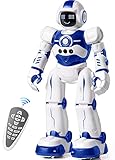
- Remote Control and Hand Gesture Control:This gesture sensing robot not only can be controlled by infrared controller, but also can turn left ,turn right, slide backward, and slide forward according to how your hand gesture commands; Multi function includes auto display and obstacles avoidance as well;The toy robot’s eyes light up with bright blue illuminating LED when it moves;
- Intelligent Programming: This smart robot toy can demonstrating a set of 50 actions inputted by the user.If you switch programming function,this Interactive robot will playback using its moves record feature to repeat the movement one by one as you created like turn left+turn right+walk forward+walk backward+patrol+dance+and many others action mode you selected;
- Premium Material:This Remote Control Robot is made of non-toxic ABS plastic, with flexible multi-joint in shoulder,elbows and thumbs ,and the bottom skating wheels are pretty sturdy to well carry out a various combination of moves;This playful robot really entertain your kids and bring you endless joys;
- Convenient Rechargeable Robot Toy:this RC robot is powered by built-in batteries.Directly connect to USB charging interface like your power bank,plug,computers.Rechargeable way saves your money for batteries and you only recharge the robot about 2 hours, and its playtime is about 60 minutes;
- Ideal Birthday Xmas Gift & Kids Intimate Companion : The infrared control Robot is versatile and vivid can dance,sing,walk,patrol,even can speak.Each robot measures 5.9 x 3.3 x 10.6 inch.
The Bull Case: From Prototype to Scalable Economic Asset
In a favorable scenario, Optimus achieves reliable real-world functionality in constrained environments such as factories, warehouses, or logistics centers. Early use cases would need to demonstrate measurable labor substitution or productivity gains, creating a clear value proposition for enterprise customers. Without this proof, demand remains speculative rather than economic.
Manufacturing scalability is equally critical. Tesla would need to leverage its existing expertise in vertical integration, supply chain control, and cost-down engineering to produce robots at declining unit costs. Gross margin, defined as revenue minus cost of goods sold, must eventually approach levels consistent with advanced hardware-plus-software products rather than bespoke industrial machinery.
Software differentiation underpins the most optimistic outcomes. If Tesla’s artificial intelligence stack enables rapid learning across deployed units, marginal performance improvements could scale faster than costs. This dynamic, if realized, would justify viewing Optimus less as a one-time hardware sale and more as a platform with recurring software value.
The Bear Case: Technical Feasibility Without Economic Viability
The negative scenario is not outright failure but prolonged insufficiency. Optimus may function in demonstrations yet struggle with edge cases, reliability, or safety in uncontrolled settings. Incremental improvements without step-change capability would delay adoption and keep deployment limited.
Recommended Free Tools
Cost structure represents a major downside risk. If sensors, actuators, and compute requirements remain expensive, unit economics may never reach commercial viability at scale. In that case, Optimus becomes a capital-intensive project with low returns, absorbing resources without generating commensurate cash flow.
There is also organizational risk. Robotics competes internally for engineering talent, capital expenditure, and management focus. If automotive margins or energy investments require renewed attention, Optimus could face deprioritization, elongating timelines and weakening its strategic relevance.
Timeline Risk and Market Patience
Time is a central variable in valuation. Even a highly successful Optimus outcome, if pushed a decade into the future, carries limited present value due to discounting. Discounting reflects the principle that cash flows received later are worth less today because of uncertainty and opportunity cost.
Markets can tolerate long timelines when interim milestones are credible and observable. Absent those milestones, enthusiasm decays, and optionality is gradually removed from valuation. This creates asymmetric risk: delays hurt perception faster than early progress helps it.
Do these 3 things before closing this tab:
1Fix the driver behind crashes, sound loss and screen glitches2Clear out junk files and repair common Windows errors3Scan for outdated or missing drivers - takes under a minuteHow These Scenarios Translate Into Valuation Reality
In the bull case, Optimus evolves from narrative to modelable segment. Analysts would begin estimating unit shipments, average selling prices, operating margins, and reinvestment needs. Only at that stage can robotics support a durable expansion in valuation multiples.
In the bear case, Optimus remains an experimental program with limited financial disclosure. The market may continue to react episodically to announcements, but long-term valuation would revert to core automotive, energy, and software fundamentals. The difference between these paths is not belief, but evidence accumulating over time.
How Long-Term Investors Should Think About Optimus Without Overreacting to Headlines
The market reaction to Elon Musk’s comments reflects how early-stage technologies are often priced: through expectations rather than cash flows. Optimus is not currently a revenue-generating product, and its financial contribution cannot yet be modeled with conventional valuation tools. As a result, short-term stock movements largely reflect changes in perceived optionality rather than changes in intrinsic value.
Optionality refers to the potential for a project to create significant future value if it succeeds, despite limited current financial impact. Markets sometimes assign this optionality aggressively during periods of optimism, especially when leadership credibility and prior success reinforce belief. That dynamic explains why optimistic statements can move the stock even when underlying fundamentals are unchanged.
Separating Strategic Vision From Financial Reality
Optimus should be viewed as a long-duration strategic initiative rather than a near-term earnings driver. The distinction matters because strategy influences narrative, while financial reality determines valuation sustainability. Until Optimus produces measurable revenue, margins, and capital efficiency, it remains outside the core earnings base.
Long-term investors benefit from treating Optimus as a call option embedded within Tesla’s broader business. A call option provides upside if a specific outcome materializes but expires worthless if it does not. Importantly, rational valuation assigns weight not only to upside potential, but also to probability, timing, and capital required to reach scale.
Why Headline Risk Cuts Both Ways
Headlines accelerate expectations faster than execution can realistically follow. Early enthusiasm can inflate implied timelines and adoption rates, increasing the risk of disappointment when progress proves incremental. This pattern is common across emerging technologies, from autonomous driving to virtual reality, where development cycles routinely exceed initial projections.
The inverse is also true: extended periods of limited news can compress expectations excessively. Long-term investors should recognize that volatility driven by commentary does not equate to progress or regression in the underlying technology. The signal lies in disclosed milestones, not statements of intent.
Anchoring on Evidence, Not Narratives
A disciplined framework focuses on observable indicators: prototype capability, task complexity, cost reduction trends, and early customer use cases. These factors provide insight into whether Optimus is moving toward economic viability or remaining a research project. Over time, consistent disclosure in these areas would justify incorporating robotics into forward-looking financial models.
Until that evidence accumulates, Optimus should not materially alter assumptions around near- to medium-term cash flows. Tesla’s valuation will continue to be anchored primarily by automotive margins, software monetization, energy storage growth, and capital discipline. Robotics remains a potential upside vector, not a foundation.
Positioning Optimus Within a Long-Term Thesis
For long-term investors, the appropriate response to Optimus-related headlines is calibration, not reaction. Optimism should be tempered by execution risk, and skepticism should acknowledge asymmetric upside if key hurdles are cleared. Both extremes distort decision-making.
Ultimately, Optimus is best understood as a strategic experiment with meaningful but uncertain payoff. Its value will be determined gradually through execution, not declarations. Investors who align expectations with evidence are more likely to interpret future developments accurately, regardless of near-term market enthusiasm.
Quick Recap
Product prices and availability are accurate as of the date/time indicated and are subject to change. Any price and availability information displayed on Amazon at the time of purchase will apply.




