Canceled debt occupies a unique position in federal tax law because it directly affects a taxpayer’s economic position. When a lender forgives or discharges a debt, the borrower is relieved of a legal obligation to repay money previously received. The Internal Revenue Service generally treats this relief as taxable income because it increases net worth in the same way cash income would.
What Form 1099-C Represents
Form 1099-C, Cancellation of Debt, is an information return issued by a lender or creditor to report that $600 or more of a debt has been canceled. A creditor includes banks, credit card issuers, finance companies, and certain government agencies. The form is provided to both the taxpayer and the IRS, creating a matching record that signals potential taxable income.
The form identifies the amount of debt canceled, the date of cancellation, and the type of debt involved. It may also indicate whether the borrower was personally liable for repayment. The issuance of Form 1099-C does not automatically determine taxability, but it does require the taxpayer to analyze and address the transaction on the federal return.
Why the IRS Treats Canceled Debt as Income
Under the Internal Revenue Code, gross income includes all income from whatever source derived unless a specific exclusion applies. Canceled debt is treated as income because the borrower previously received funds without paying them back, resulting in an economic benefit. From the IRS’s perspective, this benefit is functionally equivalent to earning additional income.
Do these 3 things before closing this tab:
1Fix the driver behind crashes, sound loss and screen glitches2Clear out junk files and repair common Windows errors3Scan for outdated or missing drivers - takes under a minute#1 Best Overall

- IT IS A COMPLETE INCOME TAX FILING FORMS - Report payments FAST, RELIABLE and EASY way with our updated NEC Laser form kit! This kit has everything you need. You can report your rent, medical, royalties or contract payments. It has 9 of A, B copies. 17 of C copies, 3 of Transmittal 1096 - NEC forms.
- A GREAT VALUE KIT - We are adding EXTRA VALUE to your set of 1096 NEC forms for 2026, including in your order 3 FREE transmittal 1096 forms, offered as a UNIQUE BONUS! Get EVERYTHING you need for your tax filing needs in a tremendous value ALL-INCLUSIVE 2026 1099 NEC forms 2026
- DUAL LASER TAX FORMS SET - (4-Part state) for the year 2026 to meet the needs of 25 Individuals. It is designed in compliance with the government requirements and is valid, IRS approved form 1099 set.
- A GREAT COMPATIBILITY SET - This 2026 1099 NEC form kit is compatible with both Inkjet and Laser printers as well as Quickbooks software and it is an ALL-INCLUSIVE kit of Federal Copy A, Copy B, Copy C and 1096 NEC, everything you need for your peace of mind in reporting payments.
This principle applies regardless of whether the debt was used for personal expenses or business purposes. If the cancellation frees the taxpayer from a legally enforceable obligation, the default rule is inclusion in taxable income. The reporting system built around Form 1099-C exists to enforce this inclusion consistently.
Common Situations That Trigger Form 1099-C
Form 1099-C is commonly issued after credit card settlements, mortgage foreclosures with forgiven balances, repossessions, loan modifications, and negotiated debt reductions. It may also be issued when a creditor abandons collection activity for an extended period, even if no formal settlement occurred. The triggering event is the creditor’s determination that the debt will not be collected.
The timing of issuance can create confusion because the form may arrive years after the original default. The tax year shown on the form controls when the canceled amount must be addressed on the return. Ignoring the form typically results in IRS notices due to income mismatch.
Statutory Exclusions That Can Eliminate Taxability
Federal tax law provides specific exclusions that allow canceled debt to be excluded from income. The most common are bankruptcy and insolvency. Bankruptcy exclusion applies when the debt is discharged in a Title 11 bankruptcy case, while insolvency applies when total liabilities exceed the fair market value of total assets immediately before the cancellation.
Free tools Windows power users keep installed
One-click scans. No signup required.
Other exclusions may apply to certain farm debts, qualified real property business indebtedness, and limited categories of student loan forgiveness. These exclusions are not automatic and must be properly claimed. Documentation and accurate calculations are essential to support exclusion eligibility.
How Canceled Debt Is Reported or Excluded on a Tax Return
Taxable canceled debt is generally reported as other income on the federal income tax return. When an exclusion applies, the taxpayer must file Form 982, Reduction of Tax Attributes Due to Discharge of Indebtedness. This form formally notifies the IRS that the canceled amount is excluded and identifies the legal basis for exclusion.
A frequent filing error is failing to report the Form 1099-C at all, even when an exclusion applies. Another common mistake is excluding the income without filing Form 982 or miscalculating insolvency. Because the IRS already has the form, accurate reporting or exclusion is necessary to prevent automated assessments and penalties.
When Creditors Are Required to Issue Form 1099-C (and When They Are Not)
Understanding when a creditor must issue Form 1099-C is essential because the obligation to report canceled debt on a tax return is tied to the creditor’s reporting requirements, not the taxpayer’s perception of forgiveness. Federal tax regulations impose specific rules on creditors, but those rules are narrower and more technical than many taxpayers expect.
Creditors Subject to the Form 1099-C Reporting Rules
Form 1099-C is required only when the creditor is an “applicable financial entity” as defined by the Internal Revenue Code. This category includes banks, credit unions, federal government agencies, finance companies, credit card issuers, and any business whose significant trade or business involves lending money.
Individual lenders who are not in the business of lending, such as friends, family members, or private individuals making isolated loans, are generally not required to issue Form 1099-C. However, the absence of a form does not determine taxability. Canceled debt may still be taxable income even if no Form 1099-C is issued.
The Identifiable Events That Trigger Issuance
A creditor is required to issue Form 1099-C when an “identifiable event” occurs that reflects a decision to cancel the debt. Treasury regulations list eight identifiable events, including a formal discharge in bankruptcy, a negotiated settlement, foreclosure, repossession, or a creditor’s decision to discontinue collection activity.
One of the most common triggers is the expiration of the non-payment testing period, which generally occurs after 36 consecutive months with no payment and no significant collection activity. In this situation, the creditor is deemed to have abandoned efforts to collect, even if the debt is not legally forgiven. The form reflects the creditor’s determination for tax reporting purposes, not necessarily the legal enforceability of the debt.
Quick wins for a faster PC:
Fix the driver behind crashes, sound loss and screen glitchesFind Drivers →Clear out junk files and repair common Windows errorsFree Scan →Situations Where Form 1099-C Is Not Required
A creditor is not required to issue Form 1099-C when the debt is merely delinquent, placed with a collection agency, or subject to ongoing collection efforts. Likewise, the issuance of a Form 1099-C is not required simply because interest is waived, late fees are forgiven, or the loan terms are modified without reducing the principal balance.
Certain types of debt are excluded from reporting altogether. For example, canceled debt resulting from gifts, bequests, or inheritances is not subject to Form 1099-C reporting. In addition, student loan forgiveness that qualifies under specific statutory programs may be exempt from reporting or reported under separate rules.
Why Form 1099-C May Be Issued Even When the Debt Is Still Legally Owed
A frequent source of confusion arises when Form 1099-C is issued even though the creditor retains the legal right to collect. IRS regulations clarify that issuing the form does not, by itself, cancel the debt or prohibit further collection. The form serves a tax reporting function rather than a legal discharge.
As a result, taxpayers may receive collection notices after receiving Form 1099-C. From a tax perspective, the income is tied to the identifiable event and the year reported on the form, regardless of whether collection later resumes or the debt is ultimately paid.
Crashes, No Sound, or Screen Glitches?
Random freezes, missing sound and display glitches usually trace back to one bad driver. Find and replace yours safely.Free scan · under a minutePC Slower Than It Used to Be?
A free scan shows the junk files, broken settings and background clutter dragging Windows down - then fixes them in one click.Free scan · Windows 10 & 11Implications for Tax Reporting and Common Misunderstandings
Because the IRS receives a copy of every Form 1099-C, the taxpayer’s return must reflect the canceled amount either as taxable income or as excluded income using Form 982. A common misconception is that disputing the debt with the creditor eliminates the reporting requirement. In reality, disputes must be resolved with the creditor separately and do not suspend IRS matching procedures.
Another frequent error is assuming that the absence of Form 1099-C means nothing must be reported. Tax law focuses on whether income was realized, not whether a form was issued. Proper reporting, supported by documentation and accurate application of exclusions, is critical to avoid automated IRS notices and downstream compliance issues.
How to Read Form 1099-C Line by Line and Identify Common Errors
Given the IRS’s reliance on automated matching, accurately interpreting each line of Form 1099-C is essential. The form is relatively short, but each box serves a specific reporting purpose that directly affects how canceled debt must be reflected on a federal tax return. Misreading even one line can result in overstated income, missed exclusions, or avoidable IRS correspondence.
Identifying Information: Creditor and Debtor Details
The top portion of Form 1099-C lists the creditor’s name, address, and taxpayer identification number (TIN), along with the debtor’s name, address, and Social Security number or Employer Identification Number. Errors in this section are common, particularly outdated addresses or truncated identification numbers.
While minor address errors do not change the tax treatment of the debt, an incorrect TIN can trigger IRS matching issues. Taxpayers should verify that the form clearly identifies them as the borrower and not a co-signer, guarantor, or related party whose debt was not actually canceled.
Box 1: Date of Identifiable Event
Box 1 reports the date the identifiable event occurred, not necessarily the date the form was issued or received. An identifiable event is a specific occurrence defined by IRS regulations, such as a discharge in bankruptcy, expiration of the statute of limitations, or a creditor’s decision to cease collection activity.
A common error is assuming this date controls when income is recognized regardless of circumstances. For tax purposes, canceled debt is generally reported in the tax year of the identifiable event, unless an exclusion applies. If Box 1 reflects a year different from the year the taxpayer believed the debt was resolved, the discrepancy should be investigated rather than ignored.
Box 2: Amount of Debt Discharged
Box 2 shows the amount of debt the creditor considers canceled. This figure is the starting point for determining potential cancellation of debt income, which is generally taxable unless excluded by law.
Frequent mistakes include assuming the amount automatically represents taxable income or failing to confirm whether the figure includes interest, penalties, or fees. If Box 2 includes amounts that were not legally enforceable or were previously paid, the taxpayer may need supporting documentation to challenge the accuracy with the creditor.
Box 3: Interest Included in Box 2
Box 3 indicates how much of the discharged amount consists of accrued interest. This line is often overlooked, yet it can materially affect reporting.
For individual taxpayers, canceled interest is generally taxable only if it was previously deducted, such as mortgage interest claimed on Schedule A. If interest was never deducted, including it again as income can overstate taxable income. Many creditors leave this box blank, which can itself be a source of confusion.
Box 4: Debt Description
Box 4 provides a brief description of the debt, such as “credit card,” “auto loan,” or “commercial line of credit.” While informational, this description helps determine whether the debt is personal, investment-related, or connected to a trade or business.
The Tool Desk
Outbyte Driver Updater FREEScan for outdated or missing drivers - takes under a minuteDriver Scan →Outbyte PC Repair FREEClear out junk files and repair common Windows errorsFree Scan →Rank #2
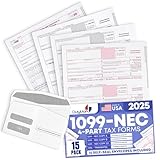
- Premium Value Pack: This comprehensive bundle includes 10 Forms of 4-part 1099 NEC tax forms updated for 2026, along with 3 1096 transmittal forms and 10 Security self-seal envelopes for secure mailing
- IRS & US Government Standard: These 1099 NEC tax forms meet all US Government and IRS requirements and standards, allowing you to file and mail your taxes with confidence and compliance
- Works With Tax Software: These forms are compatible with Quickbooks and TaxRight Software (Formerly Known as TFP) and other accounting and tax software, with printed words and fields that automatically align with the boxes of your preferred program
- Seamless Printing: These 1099 NEC tax forms are printed on high-quality paper that feeds smoothly through your inkjet or laser printers, minimizing paper jams and ink blots during your printing operations
- Small Business Tax Solution: Keep your offices running smoothly through tax season with a reliable supply of 1099 NEC tax forms for reporting payments made to non-employees and independent contractors
Misclassification here can lead to reporting errors, especially for small business owners. Business-related canceled debt is generally reported differently than personal debt, and the description should align with how the debt was originally used.
Box 5: Was Debtor Personally Liable for Repayment?
Box 5 indicates whether the borrower was personally liable for the debt. Personal liability means the creditor could pursue the borrower’s other assets beyond the collateral.
This distinction is critical because nonrecourse debt, where the lender’s recovery is limited to specific property, can trigger different tax consequences upon cancellation or foreclosure. Taxpayers often overlook this box, yet it directly affects whether canceled debt income arises at all.
Box 6: Identifiable Event Code
Box 6 contains a letter code corresponding to the specific identifiable event that triggered reporting, such as a discharge in bankruptcy or a creditor’s decision to discontinue collection. The code explains why the form was issued, not whether the debt is taxable.
A common misunderstanding is treating certain codes as automatic exclusions. The code does not determine taxability by itself; it merely supports the timing and rationale for reporting. Exclusions, such as bankruptcy or insolvency, must still be claimed separately using Form 982 when applicable.
Fair Market Value of Property and Other Supplemental Boxes
If the canceled debt is connected to repossessed or foreclosed property, the form may include a fair market value (FMV) of the property. FMV represents the price the property would sell for in an arm’s-length transaction between willing parties.
Errors frequently arise when taxpayers assume the FMV reduces the amount in Box 2 automatically. In reality, FMV is used to calculate gain or loss on the disposition of property, which is a separate analysis from cancellation of debt income.
Reconciling the Form with Tax Reporting Obligations
Each line on Form 1099-C must be evaluated in context before being transferred to a tax return. The IRS receives an exact copy of the form, and discrepancies between the form and the return are commonly flagged by automated systems.
What’s actually slowing this PC down?
Pick the symptom - the matching free tool is one click away.
Accurate reporting requires determining whether the canceled amount is taxable income, excluded income reported on Form 982, or partially taxable due to interest, nonrecourse treatment, or business use. Line-by-line review, supported by contemporaneous records, is the primary safeguard against overstated income and avoidable compliance issues.
Determining Whether Your Canceled Debt Is Taxable or Excludable
Once Form 1099-C has been reconciled for accuracy, the central question becomes whether the reported canceled debt must be included in gross income or may be excluded under the Internal Revenue Code. As a baseline rule, canceled debt is taxable because it represents an economic benefit: the taxpayer is relieved of an obligation to repay borrowed funds.
This default treatment applies regardless of whether the cancellation arose from settlement, foreclosure, repossession, abandonment, or a creditor’s decision to stop collection. However, Congress has carved out several statutory exclusions that remove some or all canceled debt from taxable income when specific conditions are met.
The General Rule: Cancellation of Debt as Taxable Income
Under Internal Revenue Code Section 61(a)(11), income includes cancellation of indebtedness. The rationale is that borrowed funds are not income when received because they must be repaid; when repayment is no longer required, that obligation’s disappearance increases net worth.
Recommended Free Tools
Accordingly, the amount shown in Box 2 of Form 1099-C is presumed taxable unless the taxpayer affirmatively establishes an exclusion. Ignoring the form or assuming non-taxability without analysis commonly results in IRS underreporting notices.
Key Statutory Exclusions That May Apply
Certain circumstances allow canceled debt to be excluded from income, but these exclusions are not automatic. They must be claimed, documented, and reported correctly.
Debt discharged in a Title 11 bankruptcy case is excludable if the discharge occurs under the jurisdiction of a federal bankruptcy court. This exclusion applies only to debts actually discharged through the bankruptcy process, not to debts settled informally before or after the case.
Insolvency is another common exclusion. Insolvency means the taxpayer’s total liabilities exceeded the fair market value of total assets immediately before the cancellation. Only the portion of canceled debt up to the amount of insolvency may be excluded, requiring a balance-sheet calculation as of the cancellation date.
Free tools Windows power users keep installed
One-click scans. No signup required.
Other exclusions may apply in narrower situations, including certain qualified farm indebtedness, qualified real property business indebtedness, and, in limited historical periods, qualified principal residence indebtedness. Each exclusion has its own eligibility requirements and limitations defined by statute.
Situations Where Canceled Debt Is Not Income at All
Some canceled amounts are not income even before considering exclusions. If the debt is nonrecourse, meaning the lender’s only remedy was to take specific collateral and the borrower had no personal liability, cancellation generally does not produce cancellation of debt income. Instead, the transaction is treated solely as a property disposition.
Additionally, canceled amounts attributable to accrued but unpaid interest are not taxable if the interest was never deducted. This distinction is particularly relevant for cash-basis taxpayers and requires reviewing loan statements and prior-year deductions.
The Role of Form 982 in Claiming Exclusions
When an exclusion applies, the taxpayer must file Form 982, Reduction of Tax Attributes Due to Discharge of Indebtedness. This form does not merely notify the IRS of an exclusion; it also requires reductions to certain tax attributes, such as net operating losses or asset basis, depending on the exclusion claimed.
Quick wins for a faster PC:
Scan for outdated or missing drivers - takes under a minuteDriver Scan →Clear out junk files and repair common Windows errorsFree Scan →Failing to attach Form 982 while excluding income is a frequent error that leads to IRS correspondence. Conversely, attaching the form without meeting the statutory requirements can expose the return to challenge upon examination.
Practical Steps to Determine Proper Tax Treatment
Determining taxability requires a sequential analysis. First, confirm the nature of the debt and whether it was recourse or nonrecourse. Second, identify the triggering event and timing of cancellation. Third, evaluate whether any statutory exclusions apply as of the moment immediately before cancellation.
Only after completing this analysis should amounts be reported on the return, either as taxable income on the appropriate line or as excluded income supported by Form 982. This disciplined approach ensures consistency between Form 1099-C, the tax return, and supporting records, reducing the likelihood of misreporting and downstream compliance issues.
Key Exclusions Explained: Bankruptcy, Insolvency, Qualified Residence, and Business Debt
Once cancellation of debt income has been identified, the next step is to determine whether a statutory exclusion applies. These exclusions are narrowly defined and must be evaluated based on the taxpayer’s financial condition immediately before the debt was canceled. Each exclusion operates independently, carries distinct documentation requirements, and is claimed by completing specific sections of Form 982.
The Tool Desk
Outbyte PC Repair FREERepair Windows errors before they cause bigger problemsFix Now →Outbyte Driver Updater FREEFix the driver behind crashes, sound loss and screen glitchesFind Drivers →Bankruptcy Exclusion
Canceled debt is excluded from income if the discharge occurs in a case under Title 11 of the United States Code, commonly referred to as bankruptcy. The cancellation must be granted by a court or occur as a direct result of the bankruptcy proceeding. Informal workouts or lender settlements outside of court do not qualify for this exclusion.
To claim the exclusion, Form 982 must indicate that the discharge occurred in bankruptcy, and the amount excluded is limited to the debt discharged in that proceeding. Although the income is excluded, the taxpayer is required to reduce certain tax attributes, such as net operating losses or tax credit carryforwards, in a prescribed order. This reflects the principle that bankruptcy provides relief from immediate taxation but may reduce future tax benefits.
Insolvency Exclusion
If the taxpayer was insolvent immediately before the debt was canceled, canceled debt may be excluded up to the amount of insolvency. Insolvency is defined as the excess of total liabilities over the fair market value of total assets at that precise moment. Assets include cash, property, retirement accounts, and interests in businesses, even if not easily liquidated.
This exclusion requires a detailed balance sheet calculation and contemporaneous documentation supporting asset values and liabilities. The exclusion is limited; any canceled debt exceeding the insolvency amount remains taxable. As with bankruptcy, claiming the insolvency exclusion requires Form 982 and triggers mandatory reductions to tax attributes.
Rank #3
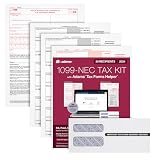
- Get the 3 up 1099 NEC forms you need to report nonemployee compensation for up to 30 recipients; includes 3-part 1099 NEC tax forms, peel and seal envelopes, 3 1096 summary reports & access to Helper
- Use Form 1099 NEC to report nonemployee compensation to the IRS and your recipients; the NEC is an IRS continuous-use form with a fill-in-the-year date field good for multiple tax years
- White 3-Part 1099 NEC forms print 3 to a page on 10 micro perforated sheets per copy with copies A, B, 1 & 2; includes scannable red ink copies required for paper filing; IRS has removed Copy-C
- Includes access to Adams Tax Forms Helper— with QuickBooks Online integration; fill forms faster, eFile and much more; share employee/recipient forms with PDF File Share; fees apply for PDF File Share
- Mail or eFile your 2024 1099-NEC to the IRS and furnish copies to your recipients by January 31, 2025; IRS eFile law! If you're filing 10 or more returns, you must eFile; easily eFile on the Helper
Qualified Principal Residence Indebtedness
Certain canceled debt related to a taxpayer’s principal residence may be excluded if it meets the definition of qualified principal residence indebtedness. This generally includes acquisition debt used to buy, build, or substantially improve the primary home and secured by that residence. Refinanced debt qualifies only to the extent it does not exceed the original acquisition balance.
This exclusion has been subject to legislative extensions and limitations, making the applicable tax year critical. The exclusion does not apply to second homes, rental properties, or cash-out refinancing used for non-housing purposes. When available, it is claimed on Form 982 and does not require insolvency or bankruptcy, but improper classification of the debt is a common source of IRS adjustments.
Business and Farm Debt Exclusions
Certain canceled debts connected to business or farming activities may qualify for exclusion under specialized provisions, such as qualified real property business indebtedness. This exclusion generally applies to debt incurred in connection with real property used in a trade or business and is not available to C corporations. The rules focus on the relationship between the debt, the property, and the income-producing activity.
Excluding business-related canceled debt often requires a reduction in the basis of depreciable property rather than other tax attributes. This can affect future depreciation deductions and gain or loss calculations on disposition. Accurate classification of the debt and property use is essential, as misapplying personal exclusions to business debt is a frequent and costly reporting error.
Step-by-Step: How to Report Taxable Canceled Debt on Your Federal Tax Return
Once exclusions are evaluated and properly documented, any remaining canceled debt must be reported as taxable income. The reporting process hinges on the information provided on Form 1099-C and the taxpayer’s ability to reconcile that form with applicable exclusions. Errors at this stage commonly result from omitting income, misclassifying exclusions, or failing to file required supporting forms.
Step 1: Review Form 1099-C for Accuracy and Context
Form 1099-C, Cancellation of Debt, is issued by a lender when $600 or more of debt is canceled. The form reports the amount of canceled debt, the date of cancellation, and a code identifying the reason for the discharge. Taxpayers should verify that the amount reported reflects only the canceled principal and not accrued interest that was never deducted.
The issuance of Form 1099-C does not automatically mean the income is taxable. It is an information return to the IRS, requiring the taxpayer to either report the income or formally claim an exclusion. Any discrepancy between the form and the tax return increases the likelihood of IRS correspondence.
Step 2: Determine the Taxable Portion of the Canceled Debt
Canceled debt is generally treated as ordinary income because it represents an economic benefit to the taxpayer. This concept is referred to as cancellation of debt income, or COD income. The taxable amount equals the canceled debt minus any portion that qualifies for exclusion under bankruptcy, insolvency, or other statutory provisions.
If an exclusion applies only partially, the remaining balance must still be reported as income. For example, when a taxpayer is insolvent by less than the total canceled amount, the excess is taxable. Accurate calculations and supporting schedules are critical at this stage.
Step 3: Report Taxable Canceled Debt as Income
For individual taxpayers, taxable canceled debt is generally reported on Schedule 1 (Form 1040), Additional Income and Adjustments to Income, under “Other income.” The description should clearly identify the income as canceled debt or Form 1099-C income. This amount flows through to Form 1040 and increases adjusted gross income.
For sole proprietors, partnerships, or S corporations, the treatment depends on whether the debt is connected to the business. Business-related canceled debt is typically reported on the applicable business return and may affect gross receipts or other income categories. Consistency between the information return and the filed tax return is essential.
Step 4: File Form 982 to Claim Any Exclusions
When canceled debt is excluded from income, Form 982, Reduction of Tax Attributes Due to Discharge of Indebtedness, must be attached to the tax return. This form formally notifies the IRS of the exclusion being claimed and identifies the legal basis, such as bankruptcy or insolvency. Failure to file Form 982 while excluding income is a common audit trigger.
What’s actually slowing this PC down?
Pick the symptom - the matching free tool is one click away.
Form 982 also requires reporting any required reductions to tax attributes, such as net operating losses, credits, or property basis. These reductions do not affect current-year income but can materially impact future tax years. Incomplete or incorrect attribute reductions are frequent sources of IRS adjustments.
Step 5: Maintain Supporting Documentation
Taxpayers must retain records supporting both the amount of canceled debt and any exclusions claimed. This includes Form 1099-C, loan statements, bankruptcy filings, and insolvency worksheets showing assets and liabilities immediately before the cancellation. The IRS may request this documentation even years after the return is filed.
Documentation should be internally consistent and contemporaneous. Asset valuations and liability balances must reflect fair market values at the relevant date, not estimates prepared retroactively. Weak or reconstructed records significantly undermine exclusion claims.
Step 6: Address Common Reporting Errors Before Filing
One frequent error is excluding canceled debt without filing Form 982 or without qualifying for an exclusion. Another is reporting the full 1099-C amount as taxable income when only a portion is taxable. Mismatching the income amount or ignoring the form entirely often results in automated IRS notices.
Recommended Free Tools
Taxpayers should also ensure that canceled debt is not double-counted, particularly when multiple loans or modifications are involved. Careful reconciliation of lender statements, Forms 1099-C, and the tax return is necessary to ensure accurate reporting and compliance.
Independent reader supportYour contribution helps us test, update, and keep practical guides available for everyone.Step-by-Step: How to Claim an Exclusion Using Form 982
Claiming an exclusion for canceled debt requires precise coordination between Form 1099-C, Form 982, and the main tax return. The process is not optional or discretionary; Form 982 is the formal mechanism by which the Internal Revenue Code (IRC) exclusion is asserted. Each step below corresponds to a specific compliance requirement enforced by the IRS.
Step 1: Confirm That the Canceled Debt Qualifies for an Exclusion
Before completing Form 982, the taxpayer must determine whether the canceled debt qualifies for exclusion under IRC Section 108. The most common exclusions apply to discharges occurring in bankruptcy, insolvency, qualified farm indebtedness, qualified real property business indebtedness, and certain qualified principal residence indebtedness. Each exclusion has distinct legal definitions and eligibility thresholds.
This determination must be made as of the date immediately before the debt was canceled. For insolvency, this requires calculating whether total liabilities exceeded the fair market value of total assets at that specific moment. If no statutory exclusion applies, the canceled debt remains taxable income and Form 982 should not be filed.
PC Slower Than It Used to Be?
A free scan shows the junk files, broken settings and background clutter dragging Windows down - then fixes them in one click.Free scan · Windows 10 & 11Outdated Drivers Are Slowing You Down
One free scan finds every outdated or missing driver and matches the right update for your exact hardware.Free scan · exact hardware matchStep 2: Match the Exclusion to the Correct Line on Form 982
Form 982 begins by identifying the legal basis for the exclusion in Part I. The taxpayer must check the box corresponding to the applicable exclusion, such as discharge in bankruptcy or discharge to the extent insolvent. Only one exclusion may be selected for a specific portion of canceled debt, although different portions of the same discharge may qualify under different rules in limited circumstances.
Line 2 of Form 982 requires entering the amount of canceled debt being excluded from income. This amount must reconcile exactly to the Form 1099-C and the portion reported or omitted from gross income on the tax return. Discrepancies between these figures are a common cause of IRS correspondence.
Step 3: Coordinate Form 982 With Income Reporting on the Tax Return
Canceled debt reported on Form 1099-C is generally included as “other income” on Schedule 1 of Form 1040 or as gross receipts for a business. When an exclusion applies, only the non-excluded portion, if any, is included in income. The excluded amount is not reported as income but is disclosed through Form 982.
The tax return should reflect this treatment consistently. Reporting the full 1099-C amount as income while also filing Form 982 creates internal contradictions. Conversely, excluding income without filing Form 982 leaves the IRS with no statutory explanation for the omission.
Do these 3 things before closing this tab:
1Fix the driver behind crashes, sound loss and screen glitches2Clear out junk files and repair common Windows errors3Scan for outdated or missing drivers - takes under a minuteStep 4: Apply Required Reductions to Tax Attributes
Most exclusions under IRC Section 108 require the reduction of tax attributes, which are tax benefits that may be used in future years. These include net operating losses, general business credits, capital loss carryovers, and the tax basis of property. The purpose is to defer, rather than permanently eliminate, the tax effect of the canceled debt.
Part II of Form 982 specifies which attributes must be reduced and in what order. These reductions do not affect the current-year tax liability but can significantly alter future depreciation deductions or loss carryovers. Failure to apply attribute reductions correctly is a frequent source of later IRS adjustments.
Step 5: Attach Form 982 to the Correct Tax Return
Form 982 must be attached to the federal income tax return for the year in which the debt was canceled, not the year the 1099-C was received if those differ. The form cannot be filed independently and is ineffective if submitted separately from the return. For joint filers, Form 982 applies only to the taxpayer legally responsible for the debt.
Electronic filing systems typically include Form 982 as a supported attachment, but accuracy remains the taxpayer’s responsibility. The form should be reviewed for internal consistency, correct line references, and alignment with all supporting schedules.
Rank #4

- Premium Value Pack - Get more value for your money! This premium bundle includes 10 sets of 4-part 1099 NEC tax forms updated for 2026 . We've also included matching 10 standard self-seal envelopes.
- IRS & US Government Standard: Our 1099 NEC tax forms meet all US Government and IRS requirements and standards, allowing you to file and mail your taxes with ease and peace of mind
- Works With Tax Software: These forms are compatible with Quickbooks and TaxRight (Formerly TFP) accounting and tax software, with printed words and fields that automatically align with the boxes of your preferred program
- Seamless Printing: Our 1099 NEC tax forms are printed on high-quality paper that feeds smoothly through your inkjet or laser printers, preventing paper jams and ink blots from interrupting your operations
- Essential For Small Businesses: Keep your offices running smoothly through tax season with a reliable supply of our 1099 NEC tax forms for payments made to non-employees and independent contractors
Step 6: Ensure Consistency With Form 1099-C and IRS Records
The IRS receives a copy of Form 1099-C directly from the lender, making automated matching inevitable. The exclusion claimed on Form 982 must explain, line by line, why the canceled debt reported by the lender does not fully appear in taxable income. Any mismatch increases the likelihood of an automated notice or examination.
Consistency across Form 1099-C, Form 982, and the tax return is essential for compliance. Accurate reporting does not eliminate audit risk, but inconsistencies almost guarantee IRS follow-up.
Special Situations for Small Business Owners, Partnerships, and LLCs
Canceled debt involving a business entity introduces additional layers of complexity beyond individual reporting. The tax treatment depends on the entity’s legal structure, who is legally liable for the debt, and whether the obligation is recourse or nonrecourse. These distinctions determine whether Form 1099-C income is reported at the entity level or passed through to individual owners.
Sole Proprietors and Single-Member LLCs
For federal tax purposes, a sole proprietorship and a single-member limited liability company (LLC) that has not elected corporate taxation are disregarded entities. This means the business and the owner are treated as the same taxpayer for income reporting. As a result, canceled business debt reported on Form 1099-C is included directly on the owner’s individual return, typically on Schedule C.
Exclusions under IRC Section 108, such as insolvency or bankruptcy, are also determined at the individual owner level. The insolvency calculation must include all personal and business assets and liabilities combined, not just those associated with the business. Any required tax attribute reductions apply to the owner’s personal tax attributes, including the basis of business property.
Partnerships and Multi-Member LLCs
Partnerships, including multi-member LLCs taxed as partnerships, are separate reporting entities but generally do not pay federal income tax. When a partnership’s debt is canceled, the partnership reports the cancellation of debt income on its informational return, Form 1065. The income is then allocated to the partners through Schedule K-1 according to the partnership agreement.
However, most exclusions under IRC Section 108 are applied at the partner level, not the partnership level. Each partner must separately determine whether they qualify for an exclusion such as insolvency or bankruptcy, based on their individual financial condition. This frequently results in different tax outcomes among partners for the same canceled debt.
Effect on Partner Capital Accounts and Basis
Canceled debt affects a partner’s tax basis, which represents the partner’s investment in the partnership for tax purposes. A reduction in partnership liabilities generally reduces each partner’s share of liabilities, which in turn reduces their outside basis. This reduction can limit the partner’s ability to deduct losses and may trigger taxable gain if distributions exceed basis.
Capital accounts, which track each partner’s equity interest for economic purposes, may also be adjusted depending on how the partnership agreement treats debt forgiveness. Discrepancies between tax basis and capital accounts are a common source of reporting errors and IRS scrutiny. Accurate tracking is essential to maintain consistency across Forms 1065, K-1, and the partners’ individual returns.
S Corporations and Corporate LLCs
S corporations and LLCs that have elected corporate taxation are treated differently from partnerships. When an S corporation’s debt is canceled, the income is recognized at the corporate level and passed through to shareholders on Schedule K-1. Unlike partnerships, exclusions under IRC Section 108 are generally applied at the corporate level rather than by individual shareholders.
Any required tax attribute reductions, such as reductions to net operating losses or asset basis, occur within the corporation. Shareholders do not independently apply insolvency or bankruptcy exclusions unless the debt was personally guaranteed and legally discharged at the individual level. Misidentifying where the exclusion applies can result in improper reporting and duplicate income recognition.
Personally Guaranteed Business Debt
Small business owners frequently personally guarantee business loans, which complicates the treatment of canceled debt. If the lender cancels the debt and issues Form 1099-C to the individual guarantor rather than the business, the income is generally reportable on the individual’s return. Whether an exclusion applies depends on the individual’s financial condition, not the business’s balance sheet.
Recommended Free Tools
If both the business and the owner are listed on the 1099-C, careful analysis is required to determine who bore the economic loss and who is legally released from the obligation. Inconsistent reporting between the business return and the owner’s return is a frequent trigger for IRS correspondence. Proper alignment of liability, income recognition, and any Form 982 exclusion is critical for compliance.
Business Asset Basis and Depreciation Consequences
When canceled debt is excluded from income, required tax attribute reductions often involve reducing the basis of depreciable business assets. Basis refers to the amount invested in an asset for tax purposes and determines future depreciation deductions and gain or loss on disposition. A basis reduction does not create immediate tax but lowers future deductions.
For small business owners, this deferred impact can materially affect cash flow and future taxable income. The reductions must be applied in the order specified by IRC Section 108 and reflected consistently across depreciation schedules and balance sheets. Errors in this area may not surface immediately but often result in adjustments during later IRS examinations.
Common Filing Mistakes, IRS Notices, and How to Defend Your Tax Position
Because canceled debt often intersects with financial distress, reporting errors are common and closely scrutinized by the IRS. Many issues arise not from the absence of income, but from incomplete documentation, inconsistent reporting, or misunderstanding how Form 1099-C interacts with exclusions under Internal Revenue Code Section 108. Identifying these errors proactively is essential to preserving the integrity of the tax return.
Quick wins for a faster PC:
Fix the driver behind crashes, sound loss and screen glitchesFind Drivers →Repair Windows errors before they cause bigger problemsFix Now →Scan for outdated or missing drivers - takes under a minuteDriver Scan →Failure to Report Form 1099-C at All
The most frequent mistake is ignoring Form 1099-C entirely when it is received. The IRS independently receives a copy from the lender and uses automated matching programs to verify inclusion in gross income. When canceled debt is omitted without explanation, the IRS typically assumes the full amount is taxable.
Even when an exclusion applies, the canceled debt must still be addressed on the return. The correct approach is to report the income and then formally exclude it using Form 982, Reduction of Tax Attributes Due to Discharge of Indebtedness. Silence on the issue almost always results in IRS correspondence.
Improper or Incomplete Use of Form 982
Another common error is filing Form 982 incorrectly or incompletely. Taxpayers may check the wrong exclusion box, fail to enter the amount excluded, or neglect to reduce tax attributes as required. These errors undermine the legal basis for excluding the income.
Form 982 is not merely a disclosure form; it is the mechanism through which the exclusion is claimed. If insolvency or bankruptcy is asserted, the form must reflect the precise amount excluded and align with the underlying financial facts. Unsupported or overstated exclusions are frequently challenged.
Misunderstanding Insolvency Calculations
Insolvency, for tax purposes, means total liabilities exceed the fair market value of total assets immediately before the debt cancellation. Many taxpayers incorrectly calculate insolvency using book values, exclude certain assets, or measure insolvency after the cancellation occurs. Each of these errors can invalidate the exclusion.
All assets must be included, even those not subject to creditor claims, such as retirement accounts or personal-use property. The insolvency exclusion is limited to the amount by which liabilities exceed assets, not the full amount of the canceled debt. Precision in this calculation is critical.
Inconsistent Reporting Between Information Returns and Tax Returns
Discrepancies between Form 1099-C, business returns, and individual returns often trigger IRS notices. This is especially common when canceled debt involves partnerships, S corporations, or personally guaranteed loans. The IRS compares filings across entities to identify mismatches.
When income appears on a 1099-C but is excluded on the return without a clear explanation, the IRS may issue a notice proposing additional tax. Consistency across all filings, including proper allocation between business and individual returns, reduces the likelihood of examination.
Common IRS Notices Related to Canceled Debt
The most typical IRS correspondence is a CP2000 notice, which proposes additional tax based on unreported income. These notices are automated and assume the 1099-C amount is fully taxable unless the return shows otherwise. They are not final determinations but require timely response.
Other notices may request substantiation of insolvency, bankruptcy discharge, or basis reductions. Failure to respond or providing incomplete documentation can escalate the issue to a formal examination. Early, organized responses often resolve these matters without further action.
Defending the Tax Position with Documentation
A defensible tax position relies on contemporaneous records that support the treatment of canceled debt. This includes the Form 1099-C, loan agreements, bankruptcy court orders, and a detailed insolvency worksheet showing assets and liabilities immediately before cancellation. Documentation should clearly tie to the amounts reported on the return.
For excluded debt, records must also support any required tax attribute reductions. Depreciation schedules, basis computations, and net operating loss carryforwards should reflect the adjustments mandated by Form 982. Consistency across years strengthens the credibility of the filing.
Maintaining Compliance Going Forward
Canceled debt often has multi-year tax consequences, particularly when basis reductions affect future depreciation or gain recognition. Errors may not surface until assets are sold or deductions are later disallowed. Maintaining accurate records beyond the year of cancellation is therefore essential.
When Form 1099-C is properly reported, exclusions are correctly claimed, and supporting documentation is retained, the tax treatment of canceled debt is generally sustainable under IRS review. Careful execution transforms a high-risk reporting area into one that is fully compliant and defensible.
Quick Recap
Product prices and availability are accurate as of the date/time indicated and are subject to change. Any price and availability information displayed on Amazon at the time of purchase will apply.




