Healthcare coverage decisions occupy a uniquely complex position in small business financial management because they intersect compensation strategy, tax law, labor markets, and regulatory compliance. Unlike wages, healthcare benefits involve long-term cost commitments, unpredictable utilization patterns, and legal obligations that vary by business size and structure. These decisions directly affect employee recruitment and retention while simultaneously shaping cash flow stability and tax efficiency.
Small employers also operate under a different risk and regulatory framework than large organizations. Limited bargaining power, smaller risk pools, and fluctuating headcounts amplify cost volatility. As a result, healthcare benefits often represent one of the largest and least predictable non-payroll expenses on a small business balance sheet.


Fragmented Regulation and Size-Based Rules
Healthcare regulation for small businesses is not uniform and changes materially based on employee count, ownership structure, and plan design. The Affordable Care Act (ACA) introduced size thresholds that define “small employer” and “applicable large employer,” each carrying different compliance obligations. A small employer generally has fewer than 50 full-time equivalent employees, a metric that converts part-time hours into full-time equivalents for regulatory purposes.
These thresholds determine whether coverage is optional, which reporting requirements apply, and whether penalties may be assessed. State insurance laws further layer additional mandates, creating a compliance environment that varies significantly by geography. This fragmented framework requires small businesses to evaluate healthcare options through both a federal and state regulatory lens.
#1 Best Overall
Multiple Coverage Models With Distinct Trade-Offs
Small businesses face an unusually wide array of healthcare delivery models, each with different financial mechanics. Traditional group health insurance pools employees under a single employer-sponsored policy, typically with shared premium costs. Alternatives such as the Small Business Health Options Program (SHOP) marketplace offer standardized plans but come with eligibility rules tied to participation and employer contribution levels.
Other models shift risk and control in different ways. Self-insured arrangements place claims risk on the employer, while Health Reimbursement Arrangements (HRAs) allow employers to reimburse individual insurance premiums within defined limits. Professional Employer Organizations (PEOs) and private exchanges further complicate the landscape by outsourcing plan administration or aggregating purchasing power, often at the cost of reduced flexibility.
Cost Structures That Defy Simple Budgeting
Healthcare costs are not linear expenses and do not behave like fixed salaries or rent. Premiums, deductibles, copayments, and out-of-pocket maximums interact in ways that affect both employer expense and employee financial exposure. A premium is the recurring cost paid to maintain coverage, while deductibles represent the amount an individual must pay before insurance begins covering claims.
For employers, these structures influence participation rates, total compensation value, and long-term affordability. Annual premium increases, claims volatility, and administrative fees introduce uncertainty that can strain small business cash flow. Budgeting for healthcare therefore requires scenario analysis rather than simple cost comparison.
What’s actually slowing this PC down?
Pick the symptom - the matching free tool is one click away.
Tax Treatment and Incentives Add Strategic Complexity
Healthcare benefits are deeply intertwined with tax policy, creating both opportunities and compliance risks. Employer-sponsored health insurance premiums are generally deductible as a business expense, while certain arrangements allow employees to receive benefits on a pre-tax basis. Health Savings Accounts (HSAs), for example, pair with high-deductible health plans and offer tax-deductible contributions, tax-deferred growth, and tax-free withdrawals for qualified medical expenses.
However, eligibility for these tax advantages depends on precise plan design and employee participation rules. Misalignment between plan structure and tax requirements can inadvertently disqualify benefits or trigger penalties. This makes tax coordination a central component of healthcare decision-making rather than a secondary consideration.
Workforce Expectations and Market Pressures
Healthcare benefits also function as a competitive tool in labor markets, even for very small employers. Employees increasingly evaluate health coverage quality alongside salary, flexibility, and retirement benefits. A plan that minimizes employer cost but shifts excessive financial burden to employees may undermine retention and productivity.
At the same time, small businesses must balance competitiveness against financial sustainability. Unlike large employers, they cannot easily absorb cost overruns or regulatory missteps. This tension between market expectations and operational constraints is what ultimately makes healthcare coverage decisions uniquely complex for small businesses.
The Tool Desk
Outbyte Driver Updater FREEFix the driver behind crashes, sound loss and screen glitchesFind Drivers →Outbyte PC Repair FREERepair Windows errors before they cause bigger problemsFix Now →Foundational Options Explained: Fully Insured Group Health Plans and SHOP Marketplace Coverage
Against the backdrop of cost uncertainty, tax coordination, and workforce expectations, most small businesses begin their healthcare evaluation with fully insured group health plans. These arrangements represent the most traditional and widely understood form of employer-sponsored coverage. They also serve as the reference point against which more alternative or nontraditional options are typically measured.
Fully Insured Group Health Plans: Core Structure and Risk Allocation
A fully insured group health plan is an arrangement in which an employer purchases coverage from a licensed health insurance carrier. The insurer assumes the financial risk of employee medical claims in exchange for a fixed monthly premium. This risk transfer is central to the appeal of fully insured plans for small businesses with limited capacity to absorb unexpected costs.
Premiums are set annually and are based on factors such as employee age, geographic location, tobacco use, and plan design. Plan design refers to the structure of benefits, including deductibles, copayments, coinsurance, and out-of-pocket maximums. These elements determine how healthcare costs are shared between the employer, employees, and the insurer.
From an administrative standpoint, fully insured plans offer predictability. The insurer typically manages claims processing, provider networks, compliance filings, and mandated benefits under federal and state law. This reduces internal administrative burden but also limits flexibility in plan customization and cost control mechanisms.
Eligibility, Participation, and Contribution Requirements
Most fully insured small group plans are available to employers with 1 to 50 full-time equivalent employees, though some states extend small group status up to 100 employees. Full-time equivalent is a regulatory calculation that aggregates part-time hours to determine employer size for insurance and compliance purposes. Eligibility rules vary by state and insurer, but minimum employee participation thresholds are common.
Participation requirements typically mandate that a specified percentage of eligible employees enroll in the plan, excluding those with qualifying alternative coverage such as a spouse’s employer-sponsored insurance. Contribution requirements often require the employer to pay a minimum percentage of the employee-only premium. These rules are designed to stabilize risk pools and prevent adverse selection, where only higher-cost individuals enroll.
Failure to meet participation or contribution standards can limit plan availability or restrict enrollment periods. As a result, workforce demographics and employee coverage preferences directly affect an employer’s ability to maintain certain group plans.
Cost Dynamics and Renewal Risk
While fully insured plans offer stable monthly premiums during the plan year, they expose employers to renewal risk. Renewal risk refers to the potential for significant premium increases at annual renewal based on broader claims experience, medical inflation, and insurer pricing strategies. Small employers have limited leverage in negotiating these increases.
Recommended Free Tools
Premium volatility can complicate long-term budgeting, particularly when healthcare cost growth outpaces revenue growth. Employers must therefore evaluate not only current premiums but also historical rate trends and plan sustainability. The predictability of fixed premiums does not eliminate long-term cost escalation risk.
Despite these challenges, fully insured plans remain a foundational option because they provide comprehensive coverage, regulatory clarity, and employee familiarity. These attributes often outweigh cost concerns for employers prioritizing stability and ease of administration.
SHOP Marketplace Coverage: Purpose and Structural Differences
The Small Business Health Options Program, commonly referred to as the SHOP Marketplace, was created under the Affordable Care Act to expand access to group health insurance for small employers. SHOP plans are fully insured group plans offered through a government-operated marketplace rather than directly through insurers or brokers. They are available to employers with 1 to 50 full-time equivalent employees, with some state-specific variations.
SHOP coverage mirrors traditional fully insured plans in terms of risk transfer and benefit structure. The key distinction lies in standardized plan offerings and eligibility for specific tax incentives. In practice, SHOP functions as a distribution channel rather than a fundamentally different insurance product.
Plan availability and insurer participation within SHOP vary significantly by state. In some regions, limited carrier participation has reduced plan choice, while in others SHOP remains a viable access point for small group coverage.
Small Business Health Care Tax Credit Considerations
The primary policy incentive associated with SHOP coverage is the Small Business Health Care Tax Credit. This credit is available to eligible employers with fewer than 25 full-time equivalent employees, average annual wages below a specified threshold, and a minimum employer premium contribution. The credit is calculated as a percentage of employer-paid premiums and is available for a limited number of consecutive tax years.
Eligibility rules are narrowly defined and require careful calculation of employee counts and wages. The credit is only available for coverage purchased through SHOP, which limits its applicability. For many employers, the administrative complexity and temporary nature of the credit reduce its long-term strategic value.
Nevertheless, for very small employers with lower-wage workforces, the tax credit can materially offset premium costs during its availability period. Evaluating SHOP coverage therefore requires a coordinated assessment of insurance costs and tax outcomes rather than a standalone comparison.
Crashes, No Sound, or Screen Glitches?
Random freezes, missing sound and display glitches usually trace back to one bad driver. Find and replace yours safely.Free scan · under a minutePC Slower Than It Used to Be?
A free scan shows the junk files, broken settings and background clutter dragging Windows down - then fixes them in one click.Free scan · Windows 10 & 11Strategic Trade-Offs Between Fully Insured and SHOP Coverage
When comparing traditional fully insured plans and SHOP coverage, the differences are primarily structural and incentive-based rather than substantive in coverage quality. Both options involve fixed premiums, insurer-managed claims, and standardized benefit designs. The decision often hinges on access to tax credits, plan availability, and administrative preferences.
Employers must also consider how these foundational options align with workforce expectations and future growth. Participation requirements, contribution mandates, and renewal risk affect scalability as employee counts change. These constraints frequently prompt small businesses to explore alternative models as cost pressures intensify.
Understanding fully insured and SHOP options establishes the baseline from which more flexible or cost-managed healthcare strategies emerge. These foundational models define the regulatory and financial framework that alternative arrangements seek to modify rather than replace.
Alternative Employer-Sponsored Models: HRAs, HSAs, and Defined Contribution Strategies
As premium volatility and participation requirements constrain traditional group coverage, many small employers seek models that separate the employer’s financial commitment from the selection of a specific insurance policy. These arrangements shift from sponsoring a single plan to funding a defined benefit amount, while employees choose how coverage is obtained or how healthcare dollars are spent. The result is greater cost predictability for employers and increased choice for employees, subject to distinct regulatory frameworks.
These alternatives do not eliminate employer responsibility; rather, they reallocate it. Each model carries specific eligibility rules, tax treatment, and compliance obligations that must be evaluated alongside workforce demographics and risk tolerance. Understanding how these structures function is essential before integrating them into a broader benefits strategy.
Health Reimbursement Arrangements (HRAs)
A Health Reimbursement Arrangement is an employer-funded account that reimburses employees for qualified medical expenses, including insurance premiums, on a tax-advantaged basis. Reimbursements are generally excluded from employee taxable income and deductible to the employer, provided the arrangement complies with Internal Revenue Code and Employee Retirement Income Security Act (ERISA) requirements. Unlike health insurance, HRAs do not involve risk pooling or insurer-managed claims.
For small employers, two HRA structures are most relevant. The Qualified Small Employer HRA (QSEHRA) is available only to employers with fewer than 50 full-time equivalent employees that do not offer a group health plan. It allows reimbursement of individual insurance premiums and other medical expenses up to annual statutory limits.
The Individual Coverage HRA (ICHRA) is available to employers of any size and can be offered alongside or instead of a traditional group plan, provided employees are placed into defined classes. Employees must be enrolled in individual health insurance to participate. ICHRAs are not subject to contribution caps but must meet Affordable Care Act (ACA) affordability standards for applicable large employers.
Do these 3 things before closing this tab:
1Fix the driver behind crashes, sound loss and screen glitches2Clear out junk files and repair common Windows errors3Scan for outdated or missing drivers - takes under a minuteHRAs require formal plan documentation, uniform availability within employee classes, and substantiation of expenses. While administratively simpler than group insurance, they still involve compliance monitoring and coordination with payroll and benefits administration. Their primary advantage lies in budget control and employee-level flexibility rather than risk reduction.
Health Savings Accounts (HSAs)
A Health Savings Account is an individually owned, tax-advantaged account used to pay qualified medical expenses. Contributions are excluded from federal income and payroll taxes, investment earnings grow tax-free, and distributions for eligible expenses are not taxed. HSAs are only available to individuals enrolled in a high-deductible health plan (HDHP), which is a health plan meeting minimum deductible and maximum out-of-pocket thresholds set annually by the IRS.
Employers may contribute to employee HSAs, but the account remains the employee’s property and is fully portable. Employer contributions are discretionary and can be made through payroll, typically on a pre-tax basis. Total annual contributions, including both employer and employee amounts, are subject to statutory limits.
Rank #2
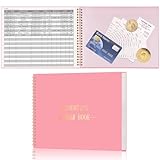
- Easy To Track Your Finances: HAUTOCO accounting ledger book keeps you on top of your expenses and income! Help you keep your money organized, spend well, and set and achieve financial goals
- Premium Material: The accounting ledger book has a total of 120 pages and 3,000 lines of entries. It is made of 100gsm thick paper to reduce ink leakage; it is equipped with a waterproof and sturdy PP cover to protect the inner pages
- Practicality: The expense tracker notebook measures 10.1 x 7.8'', and the large size gives you enough space to record each of your transactions; there are 2 PE large pockets at the back of the account book to store important tickets and loose items
- Manage Your Finances Effectively: Undated accounting books with number, date, description, account, payment or deposit amount, and total balance. You will be able to easily analyze your financial activities and quickly prepare accurate financial statements
- Ideal For Small Business or Personal Use: An accounting log journal can track your business or personal financial status. With a clear record of transactions, you can find unnecessary expenses or fraudulent charges
From a strategic perspective, HSAs complement but do not replace insurance coverage. They are most effective when paired with HDHPs that trade lower premiums for higher upfront cost-sharing. For small employers, HSAs can reduce premium expense while supporting tax-efficient savings, but they shift greater financial responsibility to employees at the point of care.
Quick wins for a faster PC:
Scan for outdated or missing drivers - takes under a minuteDriver Scan →Repair Windows errors before they cause bigger problemsFix Now →Defined Contribution Healthcare Strategies
Defined contribution healthcare refers to an approach where the employer commits to a fixed dollar amount for healthcare benefits rather than sponsoring a specific insurance plan. The contribution may be delivered through HRAs, HSA contributions, or stipends administered through compliant benefit platforms. This model mirrors defined contribution retirement plans by emphasizing cost predictability over benefit design control.
Under this strategy, employees typically select coverage through individual insurance marketplaces, private exchanges, or other qualifying plans. The employer’s obligation is limited to the defined contribution, insulating the business from annual premium increases. However, employee experience depends heavily on access to affordable individual market options and decision-support tools.
Regulatory treatment varies based on the mechanism used to deliver the contribution. Cash stipends paid outside a compliant benefit structure are generally taxable and may create ACA or ERISA exposure. In contrast, structured arrangements such as HRAs preserve tax advantages but impose formal compliance requirements.
Regulatory and Strategic Considerations
Alternative employer-sponsored models interact closely with federal healthcare regulations. ACA employer mandate rules, affordability calculations, and nondiscrimination standards can apply depending on employer size and plan design. Failure to align these models with regulatory thresholds can result in penalties or loss of tax-favored status.
Free tools Windows power users keep installed
One-click scans. No signup required.
Strategically, these models favor employers prioritizing cost containment, workforce heterogeneity, or geographic dispersion. They are less suited to organizations seeking standardized benefits or maximum risk pooling. Evaluating these arrangements requires balancing administrative simplicity, employee financial exposure, and long-term scalability within the broader benefits framework.
Advanced and Hybrid Approaches: Self-Insurance, Level-Funded Plans, PEOs, and Private Exchanges
As small businesses move beyond fully insured group plans and basic defined contribution models, more advanced and hybrid healthcare structures become relevant. These arrangements blend elements of employer sponsorship, risk sharing, and market-based purchasing. They are typically considered when a business seeks greater cost control, flexibility, or administrative leverage while remaining within regulatory boundaries.
These approaches differ substantially in how risk is allocated, how costs are calculated, and which compliance obligations apply. Understanding their mechanics is essential, as the financial and legal consequences extend beyond annual premiums. The following models represent the most common advanced options available to small employers.
Self-Insurance for Small Employers
Self-insurance, also known as self-funded health coverage, is a structure in which the employer assumes direct financial responsibility for employee healthcare claims rather than paying fixed premiums to an insurance carrier. The employer pays claims as they occur and typically contracts with a third-party administrator to manage claims processing and provider networks. Stop-loss insurance is commonly purchased to cap exposure to large or unexpected claims.
The Tool Desk
Outbyte PC Repair FREEClear out junk files and repair common Windows errorsFree Scan →Outbyte Driver Updater FREEFix the driver behind crashes, sound loss and screen glitchesFind Drivers →Historically, self-insurance was limited to large employers due to volatility and cash flow requirements. Advances in stop-loss coverage and claims analytics have made this model accessible to some smaller firms, particularly those with stable demographics and predictable utilization. However, claim variability can still create material financial risk year to year.
From a regulatory perspective, self-insured plans are governed primarily by ERISA rather than state insurance laws. This federal preemption offers design flexibility but shifts compliance responsibility squarely onto the employer. ACA mandates, reporting obligations, and fiduciary standards still apply, requiring disciplined administration and oversight.
Level-Funded Health Plans
Level-funded plans operate as a hybrid between fully insured and self-insured models. The employer pays a fixed monthly amount that covers estimated claims, administrative costs, and stop-loss premiums. Actual claims are reconciled against projections at the end of the plan year, with potential refunds or deficits depending on plan performance.
This structure provides budget predictability similar to traditional insurance while preserving some advantages of self-funding. If claims run lower than expected, the employer may recover a portion of unused claim funds. If claims exceed projections, stop-loss coverage limits the employer’s downside exposure.
Free tools Windows power users keep installed
One-click scans. No signup required.
Level-funded plans are typically underwritten based on employee health risk, making them more sensitive to workforce composition than community-rated fully insured plans. While attractive for cost-conscious employers, they require careful evaluation of contract terms, refund mechanics, and renewal risk. Regulatory treatment generally mirrors self-insured plans, including ERISA governance and ACA compliance obligations.
Professional Employer Organizations (PEOs)
Professional Employer Organizations provide healthcare coverage through a co-employment arrangement. Under this model, employees are jointly employed by the small business and the PEO, allowing the workforce to be pooled with other client companies. This pooling can improve access to broader plan options and more competitive pricing.
PEOs typically bundle healthcare benefits with payroll, tax administration, workers’ compensation, and HR compliance services. The healthcare plan is sponsored by the PEO, reducing the employer’s direct responsibility for plan design and certain compliance tasks. Costs are usually expressed as a per-employee fee combined with benefit premiums.
While PEOs can simplify administration and stabilize benefit costs, they reduce employer control over plan selection and employee experience. Termination of a PEO relationship may also require transitioning employees to new coverage mid-year. Employers must also assess the PEO’s financial stability and regulatory standing, as liability can arise from misclassification or compliance failures.
Recommended Free Tools
Private Health Insurance Exchanges
Private exchanges are employer-sponsored marketplaces where employees choose from a curated set of health plans offered by multiple insurers. The employer typically contributes a fixed dollar amount, and employees apply that contribution toward the plan they select. This structure combines defined contribution financing with group-based purchasing.
Unlike public marketplaces, private exchanges are operated by insurers, brokers, or benefits platforms. They often provide decision-support tools, standardized plan comparisons, and consolidated billing. For employees, this can enhance choice while preserving access to employer-sponsored coverage.
From a tax and regulatory standpoint, private exchange coverage generally remains employer-sponsored group insurance. Employer contributions are typically deductible, and employee premiums may be paid pre-tax if structured through a cafeteria plan. However, the employer remains responsible for ACA affordability, nondiscrimination rules, and plan oversight despite the outsourced platform.
Strategic Trade-Offs and Eligibility Considerations
Advanced and hybrid healthcare models are not universally suitable for all small businesses. Self-insurance and level-funded plans favor employers with predictable claims experience and sufficient cash reserves. PEOs and private exchanges appeal to businesses seeking administrative relief or enhanced employee choice rather than maximum plan control.
Eligibility thresholds, workforce size, and employee health characteristics materially influence feasibility. Regulatory complexity also increases as employers move away from fully insured arrangements, shifting compliance risk from carriers to the business. These factors make professional evaluation and ongoing monitoring essential components of implementation.
Within a broader benefits strategy, these approaches function as tools rather than defaults. Their value depends on alignment with the employer’s financial tolerance, workforce needs, and long-term operational goals.
Cost Structures, Tax Treatment, and Compliance Rules Across All Healthcare Options
As healthcare models diverge in structure and risk allocation, their financial mechanics and regulatory obligations also differ in material ways. Understanding how costs are incurred, how contributions are taxed, and where compliance responsibility resides is essential to evaluating any option discussed in the preceding sections. These dimensions often determine whether a healthcare strategy is sustainable, scalable, and legally defensible for a small business.
Fully Insured Group Health Plans and SHOP Coverage
Fully insured group health plans involve fixed monthly premiums paid to an insurance carrier, with the carrier assuming claims risk. Costs are driven by plan design, employee demographics, geographic rating area, and industry classification. Premiums are predictable but may increase annually based on carrier rate filings and market conditions.
Crashes, No Sound, or Screen Glitches?
Random freezes, missing sound and display glitches usually trace back to one bad driver. Find and replace yours safely.Free scan · under a minuteWindows Errors? Fix Them Before They Spread
Repair common Windows errors and clear accumulated junk for a smoother, more stable PC - no reinstall needed.Free scan · no reinstallEmployer premium contributions are generally deductible as ordinary business expenses. Employee contributions can be excluded from taxable income if paid through a cafeteria plan, which is a tax-advantaged arrangement under Internal Revenue Code Section 125 allowing pre-tax payroll deductions for benefits. For eligible employers, SHOP coverage may also provide access to the Small Business Health Care Tax Credit, subject to strict size, wage, and contribution requirements.
Compliance obligations primarily fall under the Affordable Care Act (ACA), the Employee Retirement Income Security Act (ERISA), and applicable state insurance laws. Employers must satisfy minimum employer contribution rules, offer coverage to eligible employees, distribute required disclosures, and adhere to nondiscrimination standards. While carriers handle many administrative tasks, legal responsibility for plan compliance remains with the employer.
Self-Insured and Level-Funded Health Plans
Self-insured arrangements replace fixed premiums with variable claims costs, administrative fees, and stop-loss insurance premiums. Level-funded plans smooth this variability by charging a consistent monthly amount that reconciles against actual claims at year-end. These models shift financial risk from the insurer to the employer, creating potential savings alongside increased volatility.
Employer payments for claims and administrative services are generally deductible, but there is no carrier-paid premium tax component. Employee contributions may still be made on a pre-tax basis if the plan is structured to allow it. Unlike fully insured plans, self-insured plans are exempt from certain state insurance mandates, which can reduce costs but increases federal compliance exposure.
What’s actually slowing this PC down?
Pick the symptom - the matching free tool is one click away.
Regulatory oversight is more complex, with primary governance under ERISA and the ACA. Employers act as plan sponsors and fiduciaries, assuming responsibility for claims administration accuracy, reporting, and appeals. Failure to meet fiduciary standards or reporting requirements can result in penalties independent of claims performance.
Health Reimbursement Arrangements (HRAs)
HRAs are employer-funded accounts that reimburse employees for qualified medical expenses and, in some cases, individual insurance premiums. Costs are entirely controlled by the employer through defined contribution limits rather than claims experience. There is no requirement to prefund accounts, which improves cash flow predictability.
Employer reimbursements are deductible, and payments to employees are excluded from taxable income when used for qualified expenses. HRAs are not subject to payroll taxes, distinguishing them from taxable wage increases. However, HRAs must be carefully coordinated with other coverage to avoid disqualifying tax treatment.
Compliance is driven by the specific HRA type, such as Qualified Small Employer HRAs or Individual Coverage HRAs. Each variant has eligibility rules, notice requirements, and interaction limits with premium tax credits. Improper design or failure to provide required employee disclosures can invalidate the arrangement.
Health Savings Accounts (HSAs) Paired with High-Deductible Health Plans
HSAs function as employee-owned savings vehicles paired with high-deductible health plans that meet federal criteria. Employer costs are limited to any discretionary HSA contributions and the underlying insurance premiums. Employees bear greater upfront cost exposure but gain long-term savings flexibility.
Employer HSA contributions are deductible and excluded from employee income and payroll taxes. Employee contributions made through payroll can also receive pre-tax treatment. Unused balances roll over indefinitely, which differentiates HSAs from reimbursement-based accounts.
Compliance hinges on maintaining eligibility, including proper plan design and contribution limits set annually by the Internal Revenue Service. Employers must ensure that no disqualifying coverage is offered alongside the high-deductible plan. Errors can result in loss of tax-advantaged status for employees.
Rank #3

- EASY TO MANAGE - Use this income & expense log book to record your income and expenses each day.Keep your budget in balance, and develop good bookkeeping habits to meet your financial goals
- ACCOUNTING FOR THE WHOLE YEAR - This income and expense tracker is undated and is used to lasts a whole year.The keeping log has 1 page Year Overview, 53 weekly spreads, 2 pages annual summary, 10 notes pages, to track weekly and yearly income & expenses
- HIGH QUALITY - The accounting bookkeeping tracking ledger log book is used to high quality 100gsm pure white paper, teal elastic band and a back pocket for extra space. Make sure you have enough space for all financial activities
- UNIQUE DESIGN & A4 SIZE - Income and expense log book is spiral bound design, size of 8" x 10.5". Just the perfectly size to fit in your backpack, purse or laptop case. Without taking up your space and always helping you keep track of your small business
- THE PERFECT GIFT - Income & expense notebook as gift for woman & man. Use it to track your week-to-week progress, make efficient adjustments whenever needed
Professional Employer Organizations (PEOs)
PEOs bundle healthcare benefits with payroll, tax, and human resources services under a co-employment arrangement. Healthcare costs are embedded within a broader service fee structure and are influenced by pooled workforce risk rather than the employer’s standalone claims experience. This can stabilize costs but reduces transparency.
Employer payments to PEOs are generally deductible as business expenses. Healthcare benefits provided through the PEO are typically treated as employer-sponsored coverage for tax purposes. However, the allocation between benefits and administrative fees can affect financial analysis and benchmarking.
Compliance responsibility is shared but not eliminated. While the PEO manages many administrative functions, the business retains liability for certain employment and benefits obligations. Careful review of the co-employment agreement is necessary to understand regulatory accountability.
Private Health Insurance Exchanges
Private exchanges use a defined employer contribution model applied toward a menu of group health plans. Costs are capped at the contribution level chosen by the employer, with employees absorbing incremental premium differences. This structure enhances cost control while preserving group coverage status.
Employer contributions are deductible, and employee premium payments can remain pre-tax if administered through a cafeteria plan. The exchange platform does not alter the underlying tax treatment of the coverage. However, fees charged by exchange operators add an additional cost layer.
From a compliance perspective, private exchange participation does not shift employer obligations. ACA affordability testing, reporting, and nondiscrimination rules still apply. The exchange simplifies administration but does not insulate the employer from regulatory enforcement.
Eligibility Requirements and Employer Responsibilities by Business Size and Structure
As healthcare options expand in form and complexity, eligibility and compliance obligations increasingly depend on business size and organizational structure. Federal and state regulations apply differently to sole proprietors, small employers, and larger organizations, and these distinctions directly affect which benefit arrangements are permissible. Understanding these thresholds is essential for selecting a compliant healthcare strategy and avoiding unintended regulatory exposure.
Defining Employer Size for Healthcare Purposes
Employer size for healthcare regulation is generally determined by the number of full-time employees and full-time equivalent employees, commonly referred to as FTEs. A full-time employee is an individual averaging at least 30 hours of service per week or 130 hours per month, while FTEs aggregate part-time hours into a full-time equivalent count. This calculation is central to obligations under the Affordable Care Act (ACA).
Businesses with fewer than 50 FTEs are classified as small employers for federal healthcare purposes. Those with 50 or more FTEs are considered Applicable Large Employers, or ALEs, and are subject to additional mandates. Misclassification can trigger penalties, reporting failures, and retroactive compliance corrections.
Do these 3 things before closing this tab:
1Repair Windows errors before they cause bigger problems2Fix the driver behind crashes, sound loss and screen glitches3Clear out junk files and repair common Windows errorsSole Proprietors and Single-Member Businesses
Sole proprietors without common-law employees are not considered employers for group health plan purposes. Healthcare coverage is typically obtained through the individual market, including ACA Marketplace plans. Premiums may be deductible as self-employed health insurance, subject to earned income limitations.
Because no employer-employee relationship exists, group health insurance, HRAs linked to employee status, and cafeteria plans are generally unavailable. However, once even a single non-owner employee is hired, employer-based eligibility and compliance rules begin to apply.
Small Employers Under 50 Full-Time Equivalent Employees
Small employers are not subject to the ACA employer shared responsibility mandate, which requires coverage offering and affordability standards. Coverage is optional, but once offered, it must comply with applicable insurance market reforms and nondiscrimination rules. This group has the widest range of healthcare design flexibility.
Eligible options include fully insured group health plans, SHOP Marketplace coverage, Qualified Small Employer HRAs (QSEHRAs), Individual Coverage HRAs (ICHRAs), and defined contribution arrangements through private exchanges. Each option carries distinct eligibility conditions, particularly regarding employee classes, contribution uniformity, and benefit coordination.
SHOP Marketplace Eligibility and Participation Rules
The Small Business Health Options Program, or SHOP, is limited to employers with generally 1 to 50 employees, though some states extend eligibility up to 100 employees. Participation requirements often include minimum employer contribution levels and minimum employee enrollment percentages. These thresholds are designed to stabilize risk pools but can restrict access.
Employers seeking the Small Business Health Care Tax Credit must purchase coverage through SHOP and meet specific criteria related to wages, employee count, and contribution levels. Failure to meet any single requirement disqualifies the credit, even if coverage is otherwise compliant.
Applicable Large Employers and ACA Mandates
Employers with 50 or more FTEs are subject to the ACA employer shared responsibility provisions. These rules require offering minimum essential coverage that is affordable and provides minimum value to full-time employees and their dependent children. Minimum value refers to a plan covering at least 60 percent of expected healthcare costs.
ALEs must also comply with annual information reporting using Forms 1094-C and 1095-C. These filings document coverage offers and are used to assess penalties. Administrative accuracy is critical, as errors can result in automatic penalty assessments regardless of intent.
Quick wins for a faster PC:
Repair Windows errors before they cause bigger problemsFix Now →Fix the driver behind crashes, sound loss and screen glitchesFind Drivers →Clear out junk files and repair common Windows errorsFree Scan →Eligibility Constraints for HRAs and Self-Insured Arrangements
HRAs are subject to strict eligibility and integration rules. QSEHRAs are limited to employers with fewer than 50 FTEs and cannot be offered alongside a group health plan. ICHRAs are available to employers of any size but require uniform availability within defined employee classes and proper substantiation of individual coverage.
Self-insured health plans, including level-funded arrangements, are more common among larger small businesses and ALEs due to financial risk and administrative demands. These plans are governed primarily by federal law under the Employee Retirement Income Security Act, or ERISA, rather than state insurance mandates. Employers assume direct responsibility for claims payment, fiduciary oversight, and plan documentation.
Employer Contribution, Nondiscrimination, and Fiduciary Duties
Once healthcare benefits are offered, employers assume fiduciary and administrative responsibilities regardless of size. Contributions must comply with plan terms and applicable nondiscrimination rules, which prohibit favoring highly compensated employees in eligibility or benefits. Violations can result in loss of tax-advantaged status or corrective penalties.
Employers sponsoring group health plans or HRAs must also maintain formal plan documents, distribute required notices, and protect employee health information under privacy rules. Delegating administration to carriers, PEOs, or exchange platforms does not eliminate these duties. Ultimate accountability remains with the employer sponsoring the benefit.
Comparative Trade-Off Analysis: Cost Control, Risk, Flexibility, and Employee Experience
The regulatory obligations described above frame a central reality for small businesses: every healthcare option reflects a series of trade-offs across cost predictability, financial risk, operational flexibility, and workforce impact. No arrangement optimizes all dimensions simultaneously. Evaluating these trade-offs requires aligning plan structure with workforce demographics, cash flow tolerance, and compliance capacity.
Cost Control and Budget Predictability
Fully insured group health plans offer the highest level of cost predictability, as premiums are fixed for the plan year and shift claims risk to the insurance carrier. This structure simplifies budgeting but limits the employer’s ability to capture savings when claims are lower than expected. Premium increases are typically driven by pooled risk, regional medical trends, and carrier pricing decisions rather than the employer’s actual claims experience.
Health Reimbursement Arrangements, or HRAs, provide tighter employer cost control by allowing defined contribution limits. A defined contribution is a fixed dollar amount the employer commits toward healthcare expenses rather than an open-ended premium obligation. While this caps employer spending, total employee costs may fluctuate with individual market premiums and out-of-pocket exposure.
Self-insured and level-funded plans offer potential long-term cost efficiency by tying expenses more directly to actual claims. Level-funded plans blend fixed monthly payments with partial self-insurance, often including stop-loss coverage, which is insurance that limits catastrophic claims exposure. These arrangements may reduce costs for healthier groups but introduce variability and require sufficient cash reserves.
Risk Allocation and Financial Exposure
Risk allocation differs significantly across healthcare models. Fully insured plans transfer nearly all medical claims risk to the insurer, making them structurally conservative but often more expensive over time. This trade-off favors employers prioritizing financial stability over potential savings.
HRAs and Individual Coverage HRAs shift medical claims risk almost entirely to employees while maintaining employer cost certainty. However, employers retain compliance risk, including substantiation requirements and coordination with individual market coverage. Misalignment between allowance levels and market premiums can also affect workforce satisfaction.
Self-insured arrangements place claims risk directly on the employer, subject to stop-loss protection thresholds. Stop-loss policies reimburse claims above a specified attachment point, which is the dollar level at which coverage begins. Improperly structured stop-loss coverage can expose small employers to material financial strain.
Flexibility in Plan Design and Workforce Alignment
Traditional group health plans offer limited design flexibility, as benefit structures, networks, and cost-sharing are largely standardized by the carrier. SHOP plans, while administratively streamlined, further restrict choice and have seen declining carrier participation in many states. These constraints can simplify compliance but reduce customization.
Crashes, No Sound, or Screen Glitches?
Random freezes, missing sound and display glitches usually trace back to one bad driver. Find and replace yours safely.Free scan · under a minuteWindows Errors? Fix Them Before They Spread
Repair common Windows errors and clear accumulated junk for a smoother, more stable PC - no reinstall needed.Free scan · no reinstallHRAs provide significant flexibility by allowing employers to vary allowances by employee class, such as full-time versus part-time, within regulatory limits. This structure accommodates diverse workforces and geographic dispersion. However, class design must comply strictly with uniformity rules to avoid penalties.
Private exchanges and Professional Employer Organizations, or PEOs, expand plan choice by aggregating purchasing power across multiple employers. PEOs operate under a co-employment model, where the PEO becomes the employer of record for benefits and payroll purposes. While this can enhance flexibility and access, it reduces direct employer control over plan terms.
Employee Experience and Perceived Benefit Value
Employee experience is shaped by plan simplicity, network access, and perceived employer support. Group health plans are familiar to most employees and often viewed as a core benefit, particularly when employer premium contributions are substantial. Limited plan choice, however, may not meet diverse individual needs.
Rank #4
HRA-based models increase employee choice but also shift decision-making responsibility to the individual. Employees must navigate plan selection, premium payments, and reimbursement processes, which can be challenging without education and support. The value of the benefit may be less visible despite equivalent or greater employer spending.
Self-insured and exchange-based models can enhance employee experience when paired with broader plan menus and competitive pricing. However, complexity in enrollment, claims, or customer service can erode satisfaction if administrative partners are poorly aligned. Employee perception often hinges less on plan mechanics and more on access, clarity, and responsiveness.
Administrative Complexity and Compliance Burden
Administrative demands vary substantially across healthcare options and directly affect internal resources. Fully insured plans and SHOP coverage are generally the least complex, with carriers handling most compliance filings and disclosures. Even so, employers remain responsible for accurate eligibility tracking and reporting.
HRAs and self-insured plans impose higher administrative and fiduciary obligations. Employers must manage plan documentation, substantiation processes, privacy protections, and ongoing regulatory monitoring. Outsourcing administration can reduce operational burden but does not transfer legal accountability.
PEOs and private exchanges reduce day-to-day administration by centralizing enrollment and compliance functions. This efficiency comes at the cost of service fees and reduced customization. The trade-off is most favorable when internal administrative capacity is limited and workforce complexity is high.
Strategic Decision Framework: How Small Businesses Choose the Right Healthcare Option
Selecting a healthcare model requires integrating cost management, workforce needs, tax treatment, and regulatory exposure into a single decision framework. No option is universally optimal; suitability depends on business size, employee demographics, cash flow predictability, and administrative capacity. The decision process is most effective when options are evaluated across consistent criteria rather than in isolation.
Workforce Characteristics and Benefit Objectives
Employee composition materially influences healthcare strategy. Age distribution, family coverage needs, income variability, and geographic dispersion affect plan utilization and perceived value. For example, younger or geographically distributed workforces often benefit from individual-market-based solutions such as Individual Coverage HRAs, while more stable, location-based teams may prioritize traditional group coverage.
Benefit objectives must also be clearly defined. Some employers seek maximum cost control and predictability, while others emphasize recruitment competitiveness or benefit richness. Group health plans and PEO-sponsored coverage tend to support retention and familiarity, whereas HRAs and private exchanges prioritize flexibility and cost discipline.
Employer Size and Eligibility Constraints
Federal and state rules limit which options are available based on employer size. Fully insured small group plans, including SHOP plans, are generally available to employers with one to fifty full-time equivalent employees, defined as employees averaging at least thirty hours per week. SHOP participation may require minimum employer premium contributions and employee enrollment thresholds.
Self-insured plans are legally available to employers of any size but are rarely practical for very small firms due to claims volatility and cash flow risk. HRAs have distinct eligibility rules: Qualified Small Employer HRAs are limited to employers with fewer than fifty full-time equivalent employees and cannot be offered alongside group coverage, while Individual Coverage HRAs have no size limit but require uniform availability across employee classes.
Cost Structure and Financial Predictability
Healthcare options differ significantly in how costs are incurred and controlled. Fully insured group plans involve fixed monthly premiums, providing budgeting certainty but limited flexibility in response to rate increases. SHOP plans follow the same structure, with the potential offset of small business tax credits for qualifying employers, defined as those with fewer than twenty-five employees and lower average wages.
HRAs and defined contribution models shift cost control to the employer by setting a fixed reimbursement allowance. Actual employee healthcare costs may vary, but employer exposure is capped. Self-insured plans replace premiums with claims payments and administrative fees, offering potential long-term savings but introducing short-term volatility that must be managed through reserves and stop-loss insurance, which limits catastrophic claims.
Tax Treatment and Financial Efficiency
Tax considerations materially affect the net cost of healthcare benefits. Employer-paid premiums for group health plans and PEO-sponsored coverage are generally deductible as ordinary business expenses and excluded from employee taxable income. Employee contributions made through a cafeteria plan, formally known as a Section 125 plan, can be made on a pre-tax basis, reducing payroll taxes.
The Tool Desk
Outbyte PC Repair FREERepair Windows errors before they cause bigger problemsFix Now →Outbyte Driver Updater FREEScan for outdated or missing drivers - takes under a minuteDriver Scan →HRAs provide tax-free reimbursements for qualified medical expenses when properly structured. However, interaction with premium tax credits in the individual marketplace must be carefully managed, as HRA eligibility can reduce or eliminate employee subsidy access. Health Savings Accounts, which require enrollment in a high-deductible health plan, offer triple tax advantages: deductible contributions, tax-free growth, and tax-free withdrawals for qualified expenses.
Compliance Risk and Regulatory Oversight
Regulatory exposure varies widely by model and must be factored into strategic selection. Fully insured plans transfer much of the compliance responsibility to carriers, though employers remain accountable for employee notices and reporting. SHOP plans and PEO arrangements further streamline compliance but do not eliminate employer obligations under federal laws such as ERISA, COBRA, and the Affordable Care Act.
HRAs and self-insured plans place greater compliance responsibility on the employer. Plan documentation, nondiscrimination testing, privacy safeguards under HIPAA, and timely reporting are mandatory. Failure to administer these requirements correctly can result in excise taxes and penalties, making administrative discipline and professional support essential components of the decision.
Administrative Capacity and External Support
The practicality of any healthcare option depends on internal administrative resources. Small businesses with limited human resources infrastructure often favor fully insured plans, SHOP coverage, or PEOs due to their operational simplicity. These models reduce enrollment complexity and centralize employee communication.
Do these 3 things before closing this tab:
1Fix the driver behind crashes, sound loss and screen glitches2Repair Windows errors before they cause bigger problems3Scan for outdated or missing drivers - takes under a minuteMore customizable options, including HRAs, private exchanges, and self-insured arrangements, require higher administrative engagement. Third-party administrators can assume day-to-day operations, but strategic oversight and fiduciary responsibility remain with the employer. The optimal choice balances desired flexibility against the organization’s ability to monitor vendors and maintain compliance.
Strategic Trade-Offs and Long-Term Alignment
Healthcare decisions should align with the company’s broader compensation philosophy and growth trajectory. A rapidly scaling business may prioritize flexibility and cost containment through defined contribution models, while a mature firm competing for experienced talent may emphasize comprehensive group coverage. Transition costs, employee disruption, and communication demands should be evaluated alongside immediate financial impact.
Ultimately, the right healthcare option emerges from a structured comparison of eligibility, cost mechanics, tax outcomes, compliance exposure, and employee experience. Small businesses that apply this disciplined framework are better positioned to select a solution that remains sustainable, compliant, and aligned with long-term business objectives.
Common Pitfalls, Regulatory Traps, and Planning Opportunities for Long-Term Sustainability
As healthcare strategies evolve, risk shifts from selection to execution. Many small businesses encounter challenges not from the type of plan chosen, but from misunderstandings about eligibility rules, tax treatment, and ongoing compliance obligations. Awareness of these issues is central to sustaining both financial stability and regulatory compliance over time.
Free tools Windows power users keep installed
One-click scans. No signup required.
Misalignment Between Plan Design and Workforce Demographics
A frequent pitfall is adopting a healthcare model that does not reflect employee needs or utilization patterns. Younger workforces may undervalue rich group plans, while older or family-oriented employees may find high-deductible options financially stressful. Misalignment can lead to underutilization, dissatisfaction, and higher turnover despite significant employer expense.
Defined contribution arrangements such as HRAs or private exchanges are sometimes implemented without adequate employee education. When employees do not understand deductibles, networks, or reimbursement mechanics, perceived benefit value declines. Long-term sustainability depends on aligning plan design with workforce composition and communication capacity.
Underestimating Compliance Obligations and Reporting Requirements
Regulatory traps often arise from assuming simplicity where none exists. Fully insured plans reduce some risk, but employers remain subject to requirements under ERISA, COBRA, ACA employer reporting, and state insurance mandates. Failure to distribute required notices or file accurate information returns can trigger penalties regardless of intent.
Self-insured plans, HRAs, and level-funded arrangements introduce additional compliance layers. These include Form 5500 filings, nondiscrimination testing to ensure benefits do not disproportionately favor owners or highly compensated employees, and HIPAA privacy safeguards. Employers remain legally responsible even when third-party administrators perform operational tasks.
Quick wins for a faster PC:
Clear out junk files and repair common Windows errorsFree Scan →Fix the driver behind crashes, sound loss and screen glitchesFind Drivers →Repair Windows errors before they cause bigger problemsFix Now →Improper Tax Treatment and Coordination Errors
Tax inefficiencies commonly stem from poor coordination between healthcare benefits. For example, offering a general-purpose HRA alongside a Health Savings Account disqualifies employees from HSA eligibility. An HSA is a tax-advantaged savings account available only when paired with a qualified high-deductible health plan.
Similarly, misunderstanding the deductibility of premiums versus reimbursements can distort cost projections. Employer-paid group premiums are generally deductible, while certain reimbursement arrangements may require careful structuring to preserve tax exclusion. Long-term planning requires consistent review of how benefits interact across payroll, income taxes, and employee contributions.
Overreliance on Short-Term Cost Reductions
Healthcare decisions driven solely by immediate premium savings often introduce deferred costs. Narrow networks, high deductibles, or abrupt plan changes may reduce employer expense in one year while increasing employee dissatisfaction or claims volatility later. These effects are amplified in self-insured or partially self-funded arrangements.
Sustainable planning evaluates cost predictability alongside affordability and risk exposure. Stop-loss insurance thresholds, contribution formulas, and renewal volatility should be assessed across multiple years rather than a single budget cycle. Stability, not just low initial cost, is a defining feature of resilient benefit strategies.
What’s actually slowing this PC down?
Pick the symptom - the matching free tool is one click away.
Missed Opportunities in Strategic Benefit Integration
Many small businesses underutilize the planning flexibility available across healthcare options. Combining group coverage with HSAs, limited-purpose HRAs, or voluntary benefits can improve employee outcomes without materially increasing employer cost. These integrations require careful sequencing to remain compliant but can enhance perceived value.
Professional employer organizations and private exchanges also present opportunities beyond administration. When evaluated strategically, these platforms can support scaling, multi-state compliance, and predictable budgeting. Their effectiveness depends on understanding contractual terms, exit provisions, and long-term cost trajectories.
Governance, Documentation, and Vendor Oversight
A less visible but critical risk lies in inadequate governance. Plan documents, summary plan descriptions, and service agreements must reflect actual operations. Discrepancies between written terms and practice are a common source of audits and disputes.
Vendor oversight is equally important. Brokers, administrators, and PEOs provide execution support but do not assume fiduciary responsibility for employer-sponsored plans. Long-term sustainability requires periodic review of vendor performance, fee transparency, and compliance controls.
Recommended Free Tools
Planning for Growth, Transition, and Regulatory Change
Healthcare strategies that work for very small employers may not scale effectively. Growth can trigger ACA employer mandate obligations, alter SHOP eligibility, or make self-insurance financially viable. Planning for these thresholds reduces disruption and preserves negotiating leverage.
Regulatory environments also change. Businesses that regularly reassess eligibility rules, tax treatment, and compliance guidance are better positioned to adapt without emergency redesigns. Sustainable healthcare planning is an ongoing process rather than a one-time selection.
In conclusion, the durability of a small business healthcare strategy depends less on the specific option chosen and more on disciplined execution, regulatory awareness, and strategic alignment. By understanding common pitfalls, recognizing compliance traps, and integrating benefits thoughtfully, small businesses can construct healthcare programs that remain compliant, cost-effective, and aligned with long-term organizational objectives.
Quick Recap
Product prices and availability are accurate as of the date/time indicated and are subject to change. Any price and availability information displayed on Amazon at the time of purchase will apply.




