Do these 3 things before closing this tab:
1Repair Windows errors before they cause bigger problems2Fix the driver behind crashes, sound loss and screen glitches3Clear out junk files and repair common Windows errorsA fiscal year is a 12-month accounting period used by an organization to measure financial performance, prepare financial statements, and determine tax obligations. Unlike a calendar year, which always runs from January 1 to December 31, a fiscal year can begin and end in any month, as long as it spans a continuous 12-month period. The chosen fiscal year establishes the formal boundary for recognizing revenue, recording expenses, and reporting profits or losses.
The concept matters because financial reporting is inherently time-bound. Investors, lenders, regulators, and tax authorities evaluate financial information based on clearly defined periods. A fiscal year provides the structural framework that makes financial results comparable, auditable, and legally enforceable across reporting cycles.
Core Definition and Structure
A fiscal year consists of four fiscal quarters, each typically three months long, used for interim reporting and internal performance evaluation. Fiscal quarters may align with calendar quarters, but often they do not, depending on the fiscal year start date. For example, a fiscal year that begins on July 1 ends on June 30 of the following calendar year.
Once established, the fiscal year determines the timing of required financial statements, such as the income statement, balance sheet, and cash flow statement. These statements summarize an entity’s financial activity exclusively within the fiscal year, regardless of when cash is received or paid, under accrual accounting. Accrual accounting records revenue when earned and expenses when incurred, not when cash changes hands.
The Tool Desk
Outbyte Driver Updater FREEFix the driver behind crashes, sound loss and screen glitchesFind Drivers →Outbyte PC Repair FREERepair Windows errors before they cause bigger problemsFix Now →#1 Best Overall
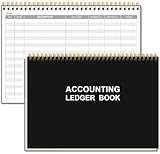
- EASY TO MANAGE - Use this accounting ledger book to track your payments, deposits, and balances, and develop good bookkeeping habits to meet your financial goals.
- UNDATED ACCOUNT TRACK - Use a ledger book to record every expense you make no matter what day it starts. The accounting book is plenty of space to record each transaction you make, and state its number, date, description, account, payment or deposit amount, and total balance.
- MANAGE YOUR FINANCES & SUCCEED - Use this business expense tracker notebook, You will be able to easily analyze your financial activities and quickly prepare accurate financial statements. Use your records to regularly assess your spending and income and find any unnecessary expenses you can cut to improve your financial performance.
- HIGH QUALITY - The A5 expense tracker notebook is used to high quality 100gsm pure white paper, pink elastic band and a back pocket for extra space. A total of 64 sheets(128 pages), it comes with 3480 entry lines (29 lines per page, 60sheets/120pages), 1 page Year Overview, 7 lined notes pages. The accounting book is plenty of space to record each transaction you make, and state its number, date, description, account, payment or deposit amount, and total balance.
- THE PERFECT GIFT - Use account ledger book for your personal or business finances, give it to your friends, colleagues as a gift for Birthday| Easter|Children's Day|Halloween|Thanksgiving|Christmas|Back to school and New Year's Day.
Fiscal Year Versus Calendar Year
A calendar year is a specific type of fiscal year that coincides exactly with January through December. Many individuals and very small businesses default to the calendar year because it aligns with personal tax filing deadlines and simplifies recordkeeping. However, the calendar year is only one possible configuration among many fiscal year options.
The key distinction is flexibility. A fiscal year allows organizations to select a reporting period that better reflects their operational reality, while a calendar year imposes a fixed structure regardless of business cycles. This difference can materially affect how financial performance appears from one period to the next.
Operational and Seasonal Considerations
Businesses often choose a fiscal year that aligns with their revenue cycle rather than the calendar. Companies with strong seasonality, such as retailers, agricultural producers, or tourism-related firms, may generate most revenue during specific months. Ending the fiscal year after peak activity allows inventory levels, receivables, and expenses to normalize before financial results are finalized.
This alignment improves the analytical quality of financial statements. Profit margins, working capital, and cash flow trends are easier to interpret when the fiscal year captures a complete operating cycle instead of cutting through it mid-season. Budgeting and forecasting also become more accurate when planning periods match how the business actually operates.
Crashes, No Sound, or Screen Glitches?
Random freezes, missing sound and display glitches usually trace back to one bad driver. Find and replace yours safely.Free scan · under a minutePC Slower Than It Used to Be?
A free scan shows the junk files, broken settings and background clutter dragging Windows down - then fixes them in one click.Free scan · Windows 10 & 11Financial Reporting and Regulatory Implications
The selected fiscal year governs external reporting requirements. Public companies must file periodic reports with regulators based on their fiscal year-end, while private companies typically use the fiscal year for lender reporting and internal governance. Consistency is critical, as frequent changes to the fiscal year can reduce comparability and raise regulatory scrutiny.
Accounting standards require disclosures when a fiscal year differs from the calendar year, ensuring transparency for users of financial statements. This allows investors and analysts to properly interpret trends, compare companies, and adjust for timing differences in reported results.
Taxation and Government Use
Tax obligations are directly tied to the fiscal year. In many jurisdictions, businesses may elect a fiscal year that differs from the calendar year, subject to tax authority approval and ongoing consistency requirements. The fiscal year determines when income is reported, deductions are claimed, and tax payments are due.
Governments themselves operate on fiscal years that rarely match the calendar year. This structure supports long-term budgeting, public spending authorization, and revenue forecasting. The same principles that apply to businesses—planning stability, operational alignment, and financial control—also drive fiscal year selection in the public sector.
Free tools Windows power users keep installed
One-click scans. No signup required.
Calendar Year vs. Fiscal Year: Key Structural Differences Explained
Understanding the distinction between a calendar year and a fiscal year clarifies how organizations structure financial reporting, budgeting, and tax compliance. While both represent twelve-month accounting periods, their start and end dates serve different operational and analytical purposes.
Definition and Date Structure
A calendar year runs from January 1 through December 31 and aligns directly with the standard civil year. It is the default reporting period for individuals and many small businesses due to its simplicity and widespread recognition.
A fiscal year is any consecutive twelve-month period that does not necessarily begin on January 1. Common fiscal year-ends include March 31, June 30, and September 30, though any month-end may be selected subject to regulatory rules. The defining feature is flexibility in timing rather than length.
Financial Reporting Alignment
The choice between a calendar year and a fiscal year determines how financial statements capture business activity. A calendar year may divide an operating cycle across two reporting periods, particularly for seasonal businesses.
Quick wins for a faster PC:
Fix the driver behind crashes, sound loss and screen glitchesFind Drivers →Clear out junk files and repair common Windows errorsFree Scan →A fiscal year allows financial results to reflect a complete operating cycle within a single reporting period. This improves the internal consistency of revenue, expenses, and profitability measures, making year-over-year analysis more meaningful.
Budgeting and Planning Considerations
Budgeting is more effective when planning periods align with operational realities. A calendar-year budget may require frequent mid-year revisions if peak activity occurs late in the year.
Fiscal years enable organizations to set budgets immediately after completing a full cycle of operations. This timing improves forecasting accuracy, capital planning, and performance evaluation, particularly for businesses with pronounced seasonality.
Seasonality and Operational Cycles
Seasonality refers to predictable fluctuations in business activity during specific periods of the year. Retailers, agricultural producers, and tourism-related businesses often experience concentrated revenue during limited months.
Recommended Free Tools
Using a fiscal year that ends after the high season allows inventory turnover, receivable collections, and expense recognition to stabilize. This results in financial statements that better represent ongoing economic performance rather than temporary seasonal distortions.
Tax Reporting and Cash Flow Timing
Tax reporting follows the chosen accounting year. Under a calendar year, taxable income is reported based on activity through December 31, with tax payments typically due shortly thereafter.
A fiscal year can shift the timing of income recognition and tax payments, which may improve cash flow management without altering total tax liability. However, tax authorities often impose approval and consistency requirements to prevent abuse of timing differences.
Comparability and Stakeholder Interpretation
Calendar-year reporting enhances comparability across businesses, as many organizations use the same reporting window. This uniformity simplifies benchmarking for investors, lenders, and analysts.
Rank #2

- Easy To Track Your Finances: HAUTOCO accounting ledger book keeps you on top of your expenses and income! Help you keep your money organized, spend well, and set and achieve financial goals
- Premium Material: The A5 accounting ledger book has a total of 120 pages and 2040 lines of entries. It is made of 100gsm thick paper to reduce ink leakage; it is equipped with a waterproof and sturdy PP cover to protect the inner pages
- Practical Design: Compact 8.3 x 6.2'' expense tracker notebook is easy to carry and features information pages, 2025 calendar, yearly financial goals page, and PVC pocket for storing important tickets and loose items
- Manage Your Finances Effectively: Undated accounting books with number, date, description, account, payment or deposit amount, and total balance. You will be able to easily analyze your financial activities and quickly prepare accurate financial statements
- Ideal For Small Business or Personal Use: An accounting log journal can track your business or personal financial status. With a clear record of transactions, you can find unnecessary expenses or fraudulent charges
Fiscal-year reporting requires additional interpretation, particularly when comparing companies with different year-ends. Required disclosures help users adjust for timing differences, ensuring that financial analysis remains accurate despite structural variation in reporting periods.
Why Fiscal Years Exist: Historical, Operational, and Economic Rationale
Understanding why fiscal years exist requires stepping beyond modern accounting practice and examining how reporting periods evolved to meet practical economic needs. Fiscal years are not arbitrary constructs; they emerged as solutions to structural limitations inherent in calendar-year reporting.
At a foundational level, a fiscal year is a 12-month accounting period that does not necessarily begin on January 1 or end on December 31. Its purpose is to align financial measurement, budgeting, and reporting with the actual economic cycle of an organization rather than with the civil calendar.
Historical Origins of Fiscal Years
Fiscal years predate modern corporate accounting and originated in government finance and agrarian economies. Early governments collected taxes and allocated resources based on harvest cycles, trade seasons, and military campaigns, none of which aligned neatly with the calendar year.
As commerce expanded, merchants and governing bodies adopted accounting periods that ended after peak economic activity concluded. This allowed revenues to be measured after collections stabilized and obligations were known, improving the reliability of financial records.
These practices carried forward into modern accounting systems, particularly in industries where production and sales cycles span multiple calendar years.
Operational Alignment with Business Cycles
The primary operational rationale for a fiscal year is alignment with how a business actually functions. Many organizations experience uneven revenue, expense, and workload distribution throughout the year due to seasonality, contract timing, or production cycles.
A fiscal year allows financial statements to capture a complete operational cycle from start to finish. When revenues, costs, and inventory movements are measured over a coherent business cycle, reported profitability becomes more representative of underlying performance.
What’s actually slowing this PC down?
Pick the symptom - the matching free tool is one click away.
This alignment reduces distortions caused by year-end cutoffs that occur during peak or dormant periods, improving the usefulness of financial information for internal decision-making.
Budgeting, Planning, and Performance Measurement
Fiscal years also support more effective budgeting and performance evaluation. Budgets are most accurate when they are developed immediately after actual results from a completed operating cycle are known.
When a fiscal year ends after peak activity, management can analyze finalized revenue trends, cost behavior, and cash flows before setting targets for the next period. This sequencing strengthens forecast reliability and reduces the need for frequent budget revisions.
Performance metrics, such as profit margins or return on assets, are likewise more meaningful when measured over a full operational cycle rather than a partial or seasonally skewed period.
Economic and Cash Flow Considerations
From an economic perspective, fiscal years help synchronize financial reporting with cash inflows and outflows. Many businesses collect cash weeks or months after sales occur, particularly in industries that extend customer credit.
Ending a fiscal year after major collections occur improves liquidity visibility on financial statements. This clarity is important for assessing solvency, debt capacity, and working capital management.
Although a fiscal year may affect the timing of reported income, it does not change the underlying economics of the business. Instead, it changes when economic activity is measured and reported.
Tax Administration and Regulatory Frameworks
Tax systems accommodate fiscal years to reflect the diversity of business operations. While calendar years simplify administration, fiscal years recognize that forcing all entities into a single reporting window can create unnecessary financial strain.
Governments typically require consistency once a fiscal year is adopted and may require formal approval for changes. These rules exist to prevent manipulation of income timing while still allowing flexibility for legitimate operational reasons.
For governments themselves, fiscal years are essential for public budgeting. Legislative approval, program funding, and public expenditure oversight depend on fiscal periods that align with policy cycles rather than calendar months.
Standardization Within Accounting and Reporting Systems
Modern accounting standards explicitly recognize fiscal years as valid reporting periods. Financial reporting frameworks require disclosures of fiscal year-ends so users can interpret results accurately and adjust comparisons when necessary.
This institutional acceptance reflects a broader principle: financial reporting is intended to represent economic reality, not calendar convenience. Fiscal years exist because they often produce more decision-useful information for managers, investors, lenders, and regulators.
Rank #3

- Neatly Track & Organize Your Finances: The accounting ledger book is here for you to stay on top of your spendings & income! Clearly & neatly structured, it offers ample space for all crucial information about checks, savings, bills & other expenses or income
- Perfect For Small Business Owners: Keep it simple, yet super effective - the undated income and expense log book is an absolute must-have among small business supplies! Register your financial data and use your debit & credit records to compile a trial balance
- Premium Style With A Sturdy Cover: With the 120-page finance tracker, you can manage your finances conveniently in one place. A solid cover, thick paper and a reliable ring binding ensure maximum durability
- Beautiful Modern Minimalistic Design: A visual highlight just like you can expect from ZICOTO! The sage green cover of the ledger book, look stunning with a modern golden floral on the front - makes bookkeeping simply beautiful!
- Super Handy - Always At Hand: Thanks to its practical size, the 8.6x6.1” ledger book fits into any bag easily and is therefore always by your side. Whether used as a checkbook register or to track other financial flow, with the log book you’ve got it all sorted!
The continued use of fiscal years demonstrates that accounting periods are tools designed to serve economic understanding, not rigid rules dictated by the calendar.
Advantages of Using a Fiscal Year Over a Calendar Year
Building on the institutional acceptance of fiscal years within accounting and regulatory systems, their primary advantage lies in better alignment between financial reporting and actual business activity. A fiscal year is a 12-month accounting period chosen by an organization that does not necessarily end on December 31, unlike a calendar year. This flexibility allows reporting periods to reflect how revenue is earned, costs are incurred, and cash is collected in practice.
Improved Alignment With Business Seasonality
Many businesses experience predictable seasonal patterns in sales, production, or service demand. A fiscal year can be structured to end after the completion of a peak operating cycle, rather than in the middle of it. This results in financial statements that capture a full operational cycle instead of fragmenting it across reporting periods.
For example, retailers, agricultural producers, and tourism-related businesses often generate the majority of revenue during specific months. Ending the fiscal year after these periods allows revenues and directly related expenses to be reported together, improving the matching principle, which requires expenses to be recognized in the same period as the revenues they help generate.
More Meaningful Financial Performance Measurement
Financial performance is evaluated through metrics such as net income, profit margins, and return on assets. These measures are more informative when they reflect complete operating cycles rather than partial ones. A fiscal year reduces distortions caused by temporary inventory buildups, prepaid expenses, or deferred revenues that occur mid-cycle.
As a result, year-over-year comparisons become more economically meaningful. Analysts and investors can better distinguish structural performance trends from timing-related fluctuations that arise solely from calendar-based reporting.
Enhanced Budgeting and Internal Planning
Budgeting is the process of allocating financial resources over a defined period to support operational and strategic objectives. Fiscal years allow budgets to be synchronized with operational planning cycles, contract renewals, and capital expenditure schedules. This alignment improves cost control and performance accountability.
When budgets and financial statements share the same reporting boundaries, variance analysis becomes more precise. Variance analysis compares actual results to budgeted expectations, helping management identify operational inefficiencies rather than timing mismatches.
Operational Efficiency in Accounting and Closing Processes
Year-end financial closing involves reconciling accounts, valuing inventory, estimating accruals, and preparing disclosures. For businesses with intense activity at year-end holidays or peak seasons, a calendar year-end can strain accounting resources and increase the risk of errors. A fiscal year-end scheduled during a slower period reduces operational pressure.
This timing allows accounting staff to perform reconciliations and estimates with greater accuracy and oversight. Higher-quality financial data benefits both internal decision-making and external users such as lenders and regulators.
Tax Timing Flexibility Within Legal Frameworks
While tax obligations are governed by law, fiscal years can influence when taxable income is recognized. Income recognition refers to the period in which revenues and expenses are reported for tax purposes. By selecting a fiscal year that aligns with cash inflows, businesses may experience smoother tax payment timing without altering total tax liability.
This flexibility is particularly relevant for entities with delayed collections or long billing cycles. However, tax authorities require consistent application of a fiscal year and often impose approval requirements to ensure that timing choices reflect operational reality rather than income manipulation.
Quick wins for a faster PC:
Scan for outdated or missing drivers - takes under a minuteDriver Scan →Clear out junk files and repair common Windows errorsFree Scan →Fix the driver behind crashes, sound loss and screen glitchesFind Drivers →Clearer Communication With Financial Statement Users
Financial statements are tools for communication between an organization and external stakeholders. When reporting periods reflect how the business actually operates, users can interpret results with greater confidence. Disclosures of fiscal year-ends allow readers to adjust comparisons and account for timing differences transparently.
In this way, fiscal years enhance the decision-usefulness of financial information. They reinforce the core objective of accounting: to present a faithful representation of economic activity rather than an arbitrary alignment with the calendar.
Seasonality, Budgeting, and Performance Measurement Implications
Beyond reporting and tax considerations, the choice between a fiscal year and a calendar year materially affects how seasonality is captured, how budgets are constructed, and how performance is evaluated. Seasonality refers to predictable fluctuations in business activity tied to time-based factors such as holidays, weather, or industry cycles. Aligning the reporting year with these cycles improves the analytical usefulness of financial information.
Seasonality Alignment and Revenue Pattern Clarity
A fiscal year can be structured so that peak and off-peak periods fall within the same reporting cycle. This reduces distortions caused by splitting a single operating cycle across two calendar years. As a result, annual revenue, expenses, and margins more accurately reflect a complete business cycle.
The Tool Desk
Outbyte PC Repair FREEClear out junk files and repair common Windows errorsFree Scan →Outbyte Driver Updater FREEFix the driver behind crashes, sound loss and screen glitchesFind Drivers →For seasonal businesses, calendar-year reporting can exaggerate volatility by isolating peak revenues in one year and related costs in another. A fiscal year that ends after the peak season captures both revenue generation and cost absorption in the same period. This alignment enhances comparability across years and improves trend analysis.
Budgeting Accuracy and Resource Planning
Budgeting is the process of forecasting revenues, expenses, and cash flows for a defined period. When the budget year mirrors the operational cycle, forecasts are grounded in how resources are actually deployed. This leads to more realistic spending controls and performance targets.
A fiscal year allows management to plan staffing, inventory purchases, and capital expenditures around known seasonal demands. In contrast, calendar-year budgets may require artificial adjustments to accommodate peak-season expenditures that do not align neatly with January-to-December planning. Better alignment reduces mid-year budget revisions and improves cost discipline.
Performance Measurement and Management Evaluation
Performance measurement relies on comparing actual results to expectations over a consistent time frame. A fiscal year that reflects operational reality provides a more reliable basis for evaluating profitability, efficiency, and growth. This is especially important for internal management reporting and incentive compensation structures.
Rank #4

- Easy To Track Your Finances: HAUTOCO horizontal accounting ledger book keeps you on top of your expenses and income! Help you keep your money organized, spend well, and set and achieve financial goals
- Practical Design: The accounting book is PU leather hardcover, with double-wire spiral binding that allows it to lay flat 360°; 100gsm thick paper, comes with an elastic band, pen loop, bookmarks, and 2 large pockets for storing loose notes
- Plenty of Space: The expense tracking notebook measures 10.78 x 8'' and has 120 pages with 3000 lines of entries giving you enough space to record each of your transactions
- Manage Your Finances Effectively: Undated accounting books with number, date, description, account, payment or deposit amount, and total balance. You will be able to easily analyze your financial activities and quickly prepare accurate financial statements
- Ideal For Small Business or Personal Use: An accounting log journal can track your business or personal financial status. With a clear record of transactions, you can find unnecessary expenses or fraudulent charges
Key performance indicators, such as gross margin or operating cash flow, are more meaningful when measured over a full operating cycle. Using a fiscal year reduces the risk of misinterpreting short-term fluctuations as structural changes. This supports fairer management evaluation and more informed strategic decisions.
Taxation and Regulatory Considerations for Fiscal Year Filers
While a fiscal year can improve operational alignment and performance measurement, it also affects how and when taxes are calculated, reported, and paid. Tax authorities and regulators recognize fiscal years, but they impose specific rules to ensure consistency and prevent income deferral. Understanding these requirements is essential for accurate compliance and financial reporting.
Recognition of Fiscal Years for Tax Purposes
A fiscal year is a 12-month accounting period that ends on the last day of any month other than December. Tax authorities, including the Internal Revenue Service (IRS), generally permit businesses to adopt a fiscal year if it reflects their natural business cycle. However, the fiscal year must be consistently applied across tax filings and financial statements.
Not all entities have unrestricted choice. Certain structures, such as sole proprietorships and single-member limited liability companies, are often required to use a calendar year unless a valid business purpose for a fiscal year can be demonstrated. This limitation exists to reduce opportunities for income timing manipulation.
Tax Filing Deadlines and Payment Timing
Fiscal year filers follow tax deadlines that are based on their year-end, not the calendar year. For example, a corporation with a fiscal year ending June 30 generally files its income tax return several months after that date, rather than by April 15. This shifts the timing of tax compliance activities without changing the underlying tax liability.
Tax payments, including estimated taxes, are also aligned to the fiscal year. Estimated taxes are periodic advance payments based on expected taxable income, designed to prevent large balances due at filing. Fiscal year filers calculate and remit these payments according to their own accounting cycle, which can better match cash inflows for seasonal businesses.
Changing from a Calendar Year to a Fiscal Year
Switching from a calendar year to a fiscal year is a regulated process. Tax authorities typically require formal approval because a change in year-end can affect when income and deductions are recognized. Without oversight, such changes could be used to defer taxes rather than reflect economic activity.
The transition often involves a short tax year, which is a reporting period of less than 12 months. During this interim period, income must be annualized for certain tax calculations, adding complexity to compliance. These transitional rules are intended to preserve neutrality in tax outcomes across different accounting periods.
What’s actually slowing this PC down?
Pick the symptom - the matching free tool is one click away.
Payroll, Sales Tax, and Ongoing Compliance
Adopting a fiscal year does not change the frequency of payroll tax filings, sales tax remittances, or other transactional taxes. These obligations are typically tied to calendar-based reporting periods, such as monthly or quarterly cycles. As a result, businesses may operate under a hybrid compliance structure, using a fiscal year for income taxes and financial reporting while maintaining calendar-based filings for other taxes.
This dual structure requires careful internal controls to ensure consistency between accounting records and tax reports. Clear reconciliation processes help prevent timing errors, particularly when revenues or expenses span fiscal and calendar periods.
Regulatory Reporting and Financial Statement Implications
Regulatory bodies and lenders generally accept fiscal-year financial statements, provided they are prepared consistently and disclosed clearly. Financial reporting standards, such as Generally Accepted Accounting Principles (GAAP), allow both fiscal and calendar years as long as comparative periods are presented on the same basis. This consistency supports reliable trend analysis and external review.
However, comparability across firms may be reduced when peers use different year-ends. Investors and analysts must adjust for timing differences when comparing revenue growth, margins, or cash flows. For this reason, fiscal-year filers often include explanatory disclosures to clarify how seasonality affects reported results.
Do these 3 things before closing this tab:
1Repair Windows errors before they cause bigger problems2Scan for outdated or missing drivers - takes under a minute3Clear out junk files and repair common Windows errorsStrategic Implications for Tax Planning and Transparency
A fiscal year can improve transparency by aligning taxable income with the period in which it is economically earned. This alignment reduces mismatches between revenue recognition and deductible expenses, especially for businesses with pronounced seasonal cycles. From a regulatory perspective, this enhances the reliability of reported taxable income.
At the same time, fiscal year filers are subject to closer scrutiny when their reporting periods differ from the norm. Consistent application, clear documentation, and adherence to filing requirements are critical to maintaining credibility with tax authorities, regulators, and external stakeholders.
Independent reader supportYour contribution helps us test, update, and keep practical guides available for everyone.Who Uses Fiscal Years? Real-World Examples from Businesses and Governments
Against this regulatory and strategic backdrop, fiscal years are not a niche accounting choice. They are widely used across industries and public institutions where operational cycles, funding structures, or seasonal revenue patterns make a calendar-year framework less informative. Understanding who uses fiscal years clarifies why this approach persists despite added complexity.
Corporations with Seasonal or Project-Based Operations
Many large corporations adopt fiscal years to align financial reporting with their primary revenue-generating cycles. Retailers are a common example, often ending their fiscal year after the peak holiday season to capture a complete sales cycle in one reporting period. This structure improves the accuracy of profitability analysis by matching revenues with related inventory and marketing costs.
Recommended Free Tools
Manufacturing, construction, and defense contractors frequently use fiscal years tied to long-term projects. These businesses incur costs and recognize revenue over extended periods, making a non-calendar year better suited for tracking project completion and margin performance. Aligning the fiscal year with operational milestones enhances internal budgeting and performance evaluation.
Publicly Traded Companies and Financial Reporting Norms
Public companies listed on stock exchanges regularly use fiscal years that differ from the calendar year. Financial reporting standards, such as GAAP, permit this flexibility as long as the reporting period is consistently applied and clearly disclosed. Investors are accustomed to reviewing earnings reports for fiscal quarters that do not correspond to calendar quarters.
For these companies, fiscal years often reflect legacy business models, merger histories, or industry conventions. While this can complicate peer comparisons, standardized disclosures allow analysts to adjust for timing differences. The emphasis remains on consistency and transparency rather than alignment with the calendar.
Governments and Public Sector Entities
Fiscal years are the norm for governments at the federal, state, and local levels. In the United States, the federal government operates on a fiscal year running from October 1 to September 30. This structure supports the legislative budgeting process by separating budget approval from year-end tax collection and economic fluctuations.
Crashes, No Sound, or Screen Glitches?
Random freezes, missing sound and display glitches usually trace back to one bad driver. Find and replace yours safely.Free scan · under a minuteWindows Errors? Fix Them Before They Spread
Repair common Windows errors and clear accumulated junk for a smoother, more stable PC - no reinstall needed.Free scan · no reinstallBest Value

- Hardcover journal with 240 line-ruled pages (120 sheets)
- Built-in elastic closure and ribbon bookmark
- Includes an expandable inner storage pocket and a pen holder
State and municipal governments also rely on fiscal years to manage appropriations, public programs, and capital projects. A fiscal year framework allows lawmakers to allocate resources based on anticipated spending needs rather than calendar constraints. This improves budgetary control and long-term planning for public services.
Nonprofits, Educational Institutions, and Grant-Funded Organizations
Nonprofit organizations and universities frequently adopt fiscal years that align with academic calendars or grant cycles. Tuition-driven institutions often use fiscal years ending in summer, reflecting the completion of an academic year. This alignment improves the matching of tuition revenue with instructional and administrative expenses.
Grant-funded entities also benefit from fiscal years that mirror funding agreements. Since grants are often awarded and expended over specific periods, a fiscal year structure simplifies compliance reporting and financial oversight. This reduces reconciliation issues between internal accounting records and external funder requirements.
Small Businesses with Concentrated Revenue Periods
Smaller businesses are permitted to use fiscal years when their income patterns justify it and tax regulations are met. Examples include agricultural operations, tourism-based businesses, and event-driven enterprises. These businesses may generate the majority of their revenue in a narrow window, making a calendar year a poor reflection of economic performance.
Free tools Windows power users keep installed
One-click scans. No signup required.
By using a fiscal year, these businesses can present financial statements that more accurately capture profitability and cash flow. This can improve internal decision-making and lender communication, provided records are maintained consistently. The choice reflects operational reality rather than firm size.
International Businesses and Multinational Groups
Multinational corporations often standardize fiscal years across global subsidiaries to simplify consolidation and internal reporting. Different countries follow varying tax calendars, but a unified fiscal year supports group-level financial analysis. Local tax filings may still follow jurisdiction-specific rules, creating layered compliance requirements.
This approach highlights the distinction between accounting periods and tax periods. While tax authorities dictate filing deadlines, internal fiscal years are chosen to support coherent financial management. Clear reconciliation processes remain essential to manage cross-border reporting differences.
Choosing the Right Year-End: Strategic Factors for Businesses and Investors
The selection of a fiscal year-end is not an administrative formality; it is a structural accounting decision that shapes how financial performance is measured, reported, and interpreted. A fiscal year is a 12-month accounting period chosen by an entity, which may or may not align with the calendar year ending December 31. The choice affects financial statements, tax reporting timelines, budgeting cycles, and the analysis performed by external users such as lenders and investors.
While regulatory constraints limit flexibility for certain entities, many businesses and some government bodies are permitted to select a fiscal year that better reflects operational realities. Understanding the strategic factors behind this decision is essential for interpreting financial results accurately and comparing entities on a like-for-like basis.
Operational Seasonality and Revenue Recognition
One of the most important considerations is seasonality, meaning predictable fluctuations in revenue and expenses throughout the year. When a business’s peak activity spans year-end, a calendar year can split a single operating cycle into two reporting periods. This distorts profitability measures and complicates performance analysis.
A fiscal year aligned with the end of the operating cycle improves revenue recognition, which is the accounting principle governing when income is recorded. Expenses related to generating that revenue are more accurately matched, producing financial statements that better reflect economic reality rather than arbitrary calendar cutoffs.
Budgeting, Planning, and Performance Evaluation
The fiscal year also defines the budgeting framework used by management and, in the public sector, by legislatures and oversight bodies. Budgets are typically prepared, approved, and evaluated on a fiscal-year basis. Aligning the year-end with operational milestones simplifies variance analysis, which compares actual results to budgeted expectations.
Do these 3 things before closing this tab:
1Scan for outdated or missing drivers - takes under a minute2Clear out junk files and repair common Windows errors3Fix the driver behind crashes, sound loss and screen glitchesFor investors and analysts, consistent fiscal periods improve trend analysis over time. When fiscal years are chosen thoughtfully and applied consistently, year-over-year comparisons become more meaningful, even if the reporting period does not align with the calendar year.
Tax Compliance and Cash Flow Timing
Taxation is a critical constraint in choosing a fiscal year, as tax authorities define which entities are eligible to adopt non-calendar year reporting. In many jurisdictions, partnerships, corporations, and certain pass-through entities may qualify, while others are restricted to calendar years. Approval requirements and anti-deferral rules exist to prevent improper tax timing advantages.
From a cash flow perspective, the fiscal year-end influences when tax liabilities are calculated and paid. While a fiscal year does not eliminate taxes owed, it can affect the timing of payments relative to revenue cycles. This timing difference can be operationally significant, particularly for businesses with uneven cash inflows.
Comparability for Investors and External Users
For investors, a fiscal year choice affects comparability across companies and industries. Financial statements must be interpreted in the context of the reporting period used, especially when comparing a calendar-year company to one with an off-cycle fiscal year. Seasonal businesses may appear more or less profitable depending on where the reporting cutoff falls.
Recommended Free Tools
Public companies disclose their fiscal year-end clearly in regulatory filings, allowing analysts to adjust expectations and comparisons. Understanding these distinctions helps investors avoid misinterpreting short-term performance fluctuations as long-term trends.
Regulatory, Industry, and Governance Considerations
Some industries operate under established norms that influence fiscal year selection. Educational institutions, government agencies, and nonprofit organizations often follow industry-standard fiscal calendars to align with funding, oversight, and reporting requirements. Deviating from these norms can increase administrative complexity without providing meaningful benefits.
Governance consistency is also important. Once a fiscal year is selected, changes typically require formal approval and may trigger additional disclosures or tax filings. Stability in the accounting period supports transparency and credibility with regulators, lenders, and equity holders.
In summary, the choice between a fiscal year and a calendar year reflects how an entity balances operational accuracy, reporting clarity, tax compliance, and stakeholder needs. A well-chosen fiscal year enhances the usefulness of financial information by aligning reporting periods with economic activity. For businesses, students of finance, and investors alike, recognizing why a fiscal year was selected is essential to understanding what the financial statements truly represent.
Quick wins for a faster PC:
Fix the driver behind crashes, sound loss and screen glitchesFind Drivers →Clear out junk files and repair common Windows errorsFree Scan →Scan for outdated or missing drivers - takes under a minuteDriver Scan →Quick Recap
Product prices and availability are accurate as of the date/time indicated and are subject to change. Any price and availability information displayed on Amazon at the time of purchase will apply.




