Quick wins for a faster PC:
Repair Windows errors before they cause bigger problemsFix Now →Scan for outdated or missing drivers - takes under a minuteDriver Scan →Clear out junk files and repair common Windows errorsFree Scan →The perceived alignment between Donald Trump and Elon Musk emerged at a moment when U.S. political power and corporate ambition appeared unusually well synchronized. Trump entered the 2016 election framing himself as a disruptive pro‑business president, while Musk had become emblematic of American technological leadership through Tesla, SpaceX, and SolarCity. For investors and corporate leaders, the prospect of cooperation between a deregulatory White House and a high‑profile innovator carried material implications for industrial policy, capital markets, and global competitiveness.
Trump’s Pro‑Business Signaling and the Courtship of Corporate Leaders
During the transition period after the 2016 election, Trump moved quickly to signal openness to corporate America. Public meetings with executives, frequent commentary on stock prices, and promises of sweeping tax reform conveyed a governing philosophy that prioritized business confidence as a driver of economic growth. This approach was designed to reduce regulatory uncertainty, defined as the risk that unclear or shifting rules deter long‑term investment.

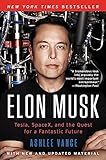



Musk’s inclusion in this orbit was highly visible. He joined Trump’s Strategic and Policy Forum, an advisory group composed of prominent CEOs intended to provide direct input on economic policy. The appointment suggested that the administration viewed Musk not merely as a business leader, but as a representative of advanced manufacturing, energy, and aerospace sectors critical to U.S. competitiveness.
Why Musk Had Incentives to Engage
For Musk, early engagement with the Trump administration aligned with clear business interests. Tesla and SolarCity operated in heavily regulated markets shaped by federal tax credits, environmental standards, and energy policy. SpaceX depended on government contracts and regulatory approvals from agencies such as NASA and the Federal Aviation Administration, making stable relations with Washington commercially significant.
#1 Best Overall
Participation in advisory councils also offered a channel to influence policy debates from the inside. At the time, many executives believed constructive engagement could moderate more extreme policy proposals, particularly around trade, immigration, and climate-related regulation. This calculation reflected a broader corporate strategy: access was viewed as a hedge against political risk rather than an endorsement of ideology.
Shared Rhetoric, Different Foundations
Publicly, Trump and Musk appeared aligned through shared language about innovation, manufacturing, and American leadership. Trump praised Musk’s companies as symbols of domestic industrial revival, while Musk spoke cautiously about the value of reforming government processes. This rhetorical overlap created the impression of a personal rapport, amplified by media coverage eager to frame the relationship as emblematic of a new business-friendly administration.
Yet the foundations of this alignment were asymmetrical. Trump’s support for business was transactional and nationalist, emphasizing job creation and trade leverage. Musk’s priorities were global and technocratic, rooted in long-term technological development and international supply chains. The early harmony rested less on shared values than on a temporary convergence of interests.
The Broader Financial Significance
This initial phase mattered to markets because it illustrated how political access can shape expectations around regulation, taxation, and government spending. Investors often interpret visible proximity between political leaders and executives as a signal of favorable policy treatment, even when no formal guarantees exist. In early 2017, the Trump–Musk alignment reinforced optimism that innovative firms could thrive under a government promising fewer constraints and greater executive influence.
Free tools Windows power users keep installed
One-click scans. No signup required.
The episode also set the stage for later conflict by raising expectations that could not easily be met. When political objectives and corporate strategies diverge, early cooperation can magnify the perception of rupture. Understanding this origin is essential to explaining why the relationship later deteriorated so publicly—and what it reveals about the fragile nature of alliances between political power and influential corporate leaders.
From Courtship to Caution: Musk’s Advisory Roles, Silicon Valley Pragmatism, and Early Policy Frictions
Institutionalized Access Through Advisory Councils
The relationship moved from symbolic alignment to structured engagement when Elon Musk accepted seats on the President’s Strategic and Policy Forum and the Manufacturing Jobs Initiative in early 2017. These advisory councils were informal bodies designed to provide business leaders with direct access to the White House, rather than statutory authority over policy. Participation signaled proximity, not power, and carried reputational risk alongside potential influence.
For Musk, the decision reflected a pragmatic calculation common among globally exposed executives. Advisory roles offered an opportunity to shape regulatory discussions affecting energy, transportation, and advanced manufacturing. They also functioned as a risk-management tool, allowing firms dependent on government contracts and permits to monitor policy direction from inside the process.
Silicon Valley Pragmatism Versus Political Optics
Musk’s involvement was consistent with a broader Silicon Valley tradition of engaging administrations across party lines. The technology sector often prioritizes regulatory predictability and infrastructure investment over ideological alignment. This approach treats political access as a business input, similar to capital or labor, rather than a statement of loyalty.
However, the Trump administration viewed corporate participation through a more performative lens. High-profile executives were used to validate policy agendas centered on domestic production and executive authority. This mismatch meant that what Silicon Valley saw as quiet pragmatism was often interpreted by political audiences as endorsement.
Early Policy Frictions Beneath the Surface
Tensions emerged quickly as policy substance replaced campaign rhetoric. Immigration restrictions, including the 2017 travel ban, directly conflicted with the technology sector’s reliance on global talent. Musk publicly criticized these measures, highlighting how political decisions could disrupt innovation-driven business models.
Climate and trade policy further strained the relationship. Musk’s companies depended on global supply chains and, in Tesla’s case, regulatory frameworks supporting clean energy adoption. The administration’s skepticism toward multilateral climate agreements and its emphasis on tariffs introduced uncertainty that advisory access could not resolve.
From Engagement to Conditional Distance
These early frictions revealed the limits of advisory influence when core policy priorities diverged. While Musk initially framed participation as a means of constructive engagement, the widening gap between technocratic business needs and nationalist policy goals made sustained cooperation increasingly costly. The advisory roles became less a bridge and more a fault line, exposing how quickly perceived alignment can erode when access fails to translate into outcomes.
Do these 3 things before closing this tab:
1Scan for outdated or missing drivers - takes under a minute2Repair Windows errors before they cause bigger problems3Fix the driver behind crashes, sound loss and screen glitchesThe shift from courtship to caution underscored a broader dynamic in corporate–government relations. Political leaders may seek validation from influential executives, while corporate leaders seek stability and foresight. When those objectives stop overlapping, visibility amplifies disagreement rather than smoothing it.
The Paris Climate Accord Break: A Defining Rupture and the End of Public Harmony (Mid‑2017)
The underlying tensions between the Trump administration and Elon Musk became publicly irreversible with the United States’ withdrawal from the Paris Climate Accord in June 2017. What had previously been framed as manageable disagreement within a cooperative framework was transformed into an explicit break. The episode marked the end of public harmony and clarified the limits of executive influence over sovereign policy decisions.
Rank #2
The Paris Accord as an Economic and Regulatory Signal
The Paris Climate Accord was not merely an environmental agreement but a long-term policy signal to global markets. For capital-intensive industries, such as electric vehicles, energy storage, and renewable power generation, it provided regulatory predictability that justified multi-decade investment horizons. Tesla’s business model, in particular, relied on the expectation that governments would continue to support decarbonization through emissions standards, subsidies, and coordinated international targets.
By rejecting the accord, the administration signaled a shift away from multilateral regulatory coordination toward domestic discretion. This introduced policy volatility, meaning the risk that future rules could change abruptly, increasing uncertainty for businesses planning long-term infrastructure investments. For Musk, continued participation on advisory councils became increasingly difficult to justify in light of this directional shift.
Musk’s Resignation and the Public Break
Following the announcement, Musk resigned from the President’s Manufacturing Jobs Initiative and the Strategic and Policy Forum. The resignation was publicly framed as a matter of principle rather than personal conflict, emphasizing the incompatibility between climate withdrawal and long-term economic competitiveness. Importantly, the decision was communicated openly, ensuring that the rupture was visible to investors, employees, and international partners.
This visibility mattered. Until that moment, disagreements had been contained within advisory structures, preserving the appearance of constructive engagement. The resignation transformed private divergence into public opposition, signaling that access without policy influence had lost its strategic value.
Why the Break Was Structurally Inevitable
The Paris decision exposed a fundamental mismatch between the administration’s political incentives and Musk’s business imperatives. For the White House, exiting the accord reinforced campaign promises centered on national sovereignty, fossil fuel protection, and regulatory rollback. For Musk, global coordination on climate policy reduced risk, stabilized demand for clean technologies, and aligned with Tesla’s capital allocation strategy.
Once these priorities diverged publicly, continued cooperation risked reputational damage on both sides. Musk faced pressure from stakeholders who viewed silence as complicity, while the administration had little incentive to accommodate dissent from a high-profile executive whose companies symbolized the very transition it was resisting.
What the Rupture Revealed About Power and Influence
The Paris Climate Accord break demonstrated the asymmetry inherent in corporate–government relationships. Advisory access offers proximity to decision-makers but no guarantee of policy alignment, particularly when decisions serve electoral rather than economic logic. When political authority and market-based strategy collide, visibility amplifies conflict instead of mitigating it.
More broadly, the episode illustrated how quickly relationships framed as “great” can unravel once symbolic politics override technocratic considerations. The rupture was not an emotional fallout but a structural correction, reflecting the reality that influence without alignment is inherently fragile.
Regulation, Subsidies, and Space: How Diverging Economic Interests Undermined the Relationship
Following the Paris Climate Accord rupture, the relationship faced a more durable source of strain: conflicting views on the role of government in shaping markets. What initially appeared as tactical disagreements gradually hardened into structural opposition over regulation, federal subsidies, and the strategic direction of the U.S. space sector. These were not peripheral issues for Musk’s companies but core determinants of their long-term valuation and competitive position.
Regulatory Rollback Versus Regulatory Dependence
The Trump administration pursued aggressive deregulation, particularly in environmental and labor standards, framing regulation as a cost imposed on economic growth. For many traditional industries, reduced regulatory oversight lowered compliance expenses and boosted near-term profitability. For Tesla, however, regulation functioned as a market-making mechanism rather than a constraint.
What’s actually slowing this PC down?
Pick the symptom - the matching free tool is one click away.
Vehicle emissions standards and fuel economy rules created implicit demand for electric vehicles by raising the cost of internal combustion alternatives. Weakening these standards increased competitive pressure on Tesla by extending the economic life of legacy automotive technologies. What benefited fossil fuel producers and incumbent automakers directly undermined Tesla’s comparative advantage.
The Politics of Subsidies and Selective Support
Public debate around subsidies further exposed diverging incentives. A subsidy is a government financial contribution designed to support specific economic activities, often justified by strategic or social objectives. While Trump frequently criticized renewable energy subsidies as market distortions, Musk’s businesses had relied on a mix of tax credits, consumer incentives, and federal research funding to scale capital-intensive technologies.
Notably, these subsidies were not unique to clean energy; defense contractors, aerospace firms, and agricultural producers received far larger and more entrenched federal support. The administration’s selective skepticism toward clean technology incentives signaled that subsidy policy was being shaped by political symbolism rather than economic consistency. This asymmetry reinforced Musk’s perception that policy risk was increasing rather than declining.
SpaceX and the Limits of Transactional Alignment
SpaceX initially appeared insulated from these tensions. The company benefited directly from NASA and Department of Defense contracts, aligning with the administration’s emphasis on national security and American technological dominance. However, even in space policy, priorities diverged beneath the surface.
Outdated Drivers Are Slowing You Down
One free scan finds every outdated or missing driver and matches the right update for your exact hardware.Free scan · exact hardware matchWindows Errors? Fix Them Before They Spread
Repair common Windows errors and clear accumulated junk for a smoother, more stable PC - no reinstall needed.Free scan · no reinstallThe White House favored visible, nationalist achievements such as a rapid return to the Moon, while SpaceX prioritized cost reduction, reusability, and Mars-focused long-term planning. These differences mattered because contract structures, timelines, and funding mechanisms shape capital allocation and engineering strategy. Alignment on rhetoric did not guarantee alignment on execution.
From Personal Rapport to Policy Incompatibility
As regulatory and subsidy conflicts accumulated across sectors, the relationship shifted from personal rapport to institutional incompatibility. Musk’s companies required predictable, technocratic policy frameworks to justify long-horizon investments. The administration’s approach emphasized flexibility, political signaling, and responsiveness to electoral coalitions.
This divergence reduced the practical value of informal access and public praise. The relationship did not collapse due to a single dispute but eroded as economic interests repeatedly moved in opposite directions. In this context, cooperation became increasingly symbolic, while the underlying incentives pushed both parties toward distance rather than alignment.
Personalities and Power: Trump’s Transactional Politics vs. Musk’s Maverick Corporate Identity
The erosion of policy alignment was compounded by a deeper mismatch in governing style and corporate identity. What initially appeared as mutual admiration was, in practice, a fragile overlap between two highly individualized power centers. As institutional frictions mounted, personal style became a material variable in how cooperation functioned—or failed to.
The Tool Desk
Outbyte PC Repair FREERepair Windows errors before they cause bigger problemsFix Now →Outbyte Driver Updater FREEScan for outdated or missing drivers - takes under a minuteDriver Scan →Transactional Politics and Conditional Loyalty
President Trump’s political approach was explicitly transactional, favoring relationships that produced immediate, visible wins. Support tended to be conditional, calibrated to public loyalty, media alignment, and short-term political utility rather than long-term strategic coherence. This framework rewarded executives who reinforced administration narratives and penalized those who diverged, even when divergence reflected underlying business realities.
For corporate leaders, this introduced a form of reputational volatility. Public praise could quickly convert into criticism if a company’s actions conflicted with political messaging or electoral incentives. From a business perspective, such volatility increases policy uncertainty, defined as the risk that regulatory or fiscal conditions change unpredictably due to political discretion rather than rule-based processes.
Musk’s Maverick Identity and Institutional Resistance
Musk’s corporate identity operated in tension with this model. His leadership style emphasized engineering autonomy, long-term technological bets, and a willingness to challenge regulatory norms publicly. While this approach appealed to capital markets seeking innovation-driven growth, it conflicted with political environments that prioritize message discipline and hierarchical control.
Musk’s tendency to speak independently, including on social media, reduced his utility as a predictable political ally. Even when his companies aligned economically with national priorities, his unwillingness to subordinate corporate strategy to political optics undermined transactional trust. This made sustained cooperation difficult once policy disagreements became visible.
Power, Signaling, and Asymmetric Leverage
The relationship also revealed asymmetries in how power is exercised between government and corporate leaders. Political authority operates through regulation, contracting, and public narrative-setting, while corporate influence relies on investment, innovation, and market performance. When these sources of power conflict, governments retain coercive tools, but corporations can withdraw cooperation, delay investment, or reallocate capital geographically.
In this case, neither side fully controlled the outcome. The administration could shape regulatory tone and public perception, but Musk’s companies were not easily replaceable within advanced manufacturing and space launch markets. The resulting stalemate reduced the practical benefits of proximity and made distance a rational response for both parties.
What the Breakdown Reveals About Modern Corporate–State Relations
The fading of the Trump–Musk relationship illustrates a broader structural dynamic rather than a personal falling-out. In highly politicized environments, informal access and personal rapport cannot substitute for stable institutional alignment. When political decision-making is personalized and corporate strategy is decentralized, cooperation becomes episodic and fragile.
For investors and business observers, the episode underscores how personality-driven governance amplifies policy risk. Relationships anchored in visibility and symbolism may appear strong publicly, yet weaken quickly when incentives diverge. The lesson is not about individual temperament, but about the limits of personality-based alliances in systems where capital allocation and political power operate on fundamentally different timelines.
Recommended Free Tools
From Silence to Sniping: Public Criticism, Social Media, and the Rewriting of the Narrative (2018–2020)
As institutional alignment weakened, the tone of the Trump–Musk relationship shifted from quiet disengagement to intermittent public friction. What had once been framed as mutual admiration increasingly played out through absence, selective criticism, and competing narratives about credit, loyalty, and economic contribution. This transition mattered because it unfolded in public view, reshaping how investors and policymakers interpreted the durability of corporate–government partnerships.
The End of Strategic Silence
Following Musk’s withdrawal from White House advisory councils in 2017, direct interaction between the two figures largely disappeared. This silence was not neutral. In political economy, disengagement itself functions as a signal, indicating that informal channels of influence have closed even if formal policy interactions continue.
For Musk, distancing reduced reputational exposure to policies unpopular with his workforce and customer base, particularly on climate and immigration. For the administration, the absence limited the ability to showcase Musk as evidence of private-sector endorsement for industrial and technology policy. The relationship shifted from cooperative symbolism to parallel, largely uncoordinated action.
Social Media as a Substitute for Institutional Dialogue
By 2018, social media became the primary venue through which tensions surfaced. President Trump periodically criticized companies for offshoring, labor practices, or perceived ingratitude for government support, while Musk used online platforms to defend corporate autonomy and question political narratives. These exchanges were rarely direct, but their subtext was unmistakable.
What’s actually slowing this PC down?
Pick the symptom - the matching free tool is one click away.
This dynamic reflected a broader erosion of institutional mediation. Instead of disputes being managed through regulators, contracts, or closed-door negotiation, they were reframed as public messaging contests. Social media amplified reputational risk on both sides, compressing complex policy disagreements into simplified, emotionally resonant claims.
Policy Friction: Subsidies, Trade, and Industrial Credit
Concrete policy disputes underpinned the rhetorical shift. The administration’s emphasis on tariffs and trade confrontation conflicted with Tesla’s globally integrated supply chain, which relies on cross-border components and export markets. Tariffs function as taxes on imported goods, raising input costs and introducing margin volatility for manufacturers.
At the same time, Trump frequently criticized electric vehicle subsidies, portraying them as market distortions rather than transitional industrial policy. Subsidies, defined as government financial support to reduce production costs or consumer prices, were central to Tesla’s early market development. Public skepticism from the White House reframed these mechanisms as political liabilities rather than strategic investments.
Credit-Taking, Credit-Withholding, and Narrative Control
Another source of tension involved attribution of economic success. Trump regularly sought to claim credit for stock market performance, factory announcements, and job creation, while Musk emphasized long-term innovation and private capital risk-taking. This contest over narrative ownership mattered because political recognition can influence regulatory goodwill and public trust.
Musk’s reluctance to publicly endorse the administration’s economic messaging reduced Trump’s incentive to maintain rhetorical restraint. In response, praise gave way to sporadic criticism, particularly when corporate decisions did not align neatly with nationalist or populist framing. The relationship became transactional in reverse: visibility was conditional, not automatic.
What the Public Turn Revealed About Power and Autonomy
The move from cooperation to sniping exposed the limits of personalized alliances in high-stakes policy environments. Political leaders command agenda-setting power and enforcement tools, but depend on private actors to execute investment and innovation. Corporate leaders control capital allocation but cannot insulate themselves from regulatory or rhetorical pressure.
Between 2018 and 2020, the Trump–Musk dynamic illustrated how quickly narrative alignment can unravel once strategic interests diverge. Public criticism did not cause the breakdown; it revealed it. For investors, the episode highlighted how reputational politics and policy uncertainty can intersect, reshaping the operating environment even when underlying business fundamentals remain intact.
Independent reader supportYour contribution helps us test, update, and keep practical guides available for everyone.Post‑Presidency Reassessment: Musk’s Evolving Political Signals and Trump’s Retrospective Claims
As Trump left office, the relationship entered a retrospective phase shaped less by policy coordination and more by public signaling. Without the constraints of executive authority, Trump reframed prior interactions to emphasize harmony and mutual respect. Musk, meanwhile, began expressing political positions that diverged from both major parties, complicating any simple narrative of alignment.
Musk’s Shift From Institutional Engagement to Ideological Signaling
After 2020, Musk reduced visible participation in formal government advisory roles and increased direct commentary on political issues. This shift was most evident through social media activity and public statements emphasizing free speech, regulatory skepticism, and opposition to perceived bureaucratic overreach. These positions resonated selectively with conservative audiences but did not translate into consistent partisan loyalty.
Musk’s political donations and endorsements during this period reflected heterodox preferences rather than a realignment with Trumpism. Political heterodoxy, defined as holding views that cross traditional ideological boundaries, allowed Musk to maintain autonomy but limited his usefulness as a symbolic ally. From a corporate governance perspective, this posture prioritized strategic flexibility over political insurance.
Trump’s Retrospective Framing and Incentives
Trump’s post-presidency comments often portrayed the Musk relationship as uniformly positive, emphasizing mutual admiration and cooperation. This framing served multiple purposes: reinforcing Trump’s self-image as pro-business, appealing to innovation-oriented voters, and countering narratives of executive–corporate conflict. Retrospective claims required little factual precision because they operated in the realm of political branding rather than policy accountability.
The emphasis on past goodwill also reflected asymmetric incentives. Trump benefited from associating with a high-profile technology entrepreneur, while Musk faced reputational risk from explicit alignment with a polarizing political figure. As a result, Trump’s claims of closeness were more assertive than Musk’s acknowledgments.
Recommended Free Tools
Best Value
What the Reassessment Reveals About Power After Office
The post-presidency phase underscored how political power decays faster than corporate influence. Former officeholders retain rhetorical platforms but lose regulatory leverage, while corporate leaders continue allocating capital and shaping markets. This imbalance alters incentives, reducing the value of personalized alliances once formal authority ends.
For investors and business observers, the episode illustrates a broader structural lesson. Relationships between political leaders and corporate executives are contingent on active power exchange, not personal rapport. When policy control recedes, narrative revisionism fills the gap, revealing how fragile “great relationships” can be once strategic utility declines.
What the Trump–Musk Fallout Reveals About Modern Corporate‑State Relations in the Age of Celebrity CEOs
The deterioration of the Trump–Musk relationship is best understood not as a personal dispute, but as a case study in how power, visibility, and incentives interact in contemporary capitalism. The episode reflects structural changes in corporate–state relations, where individual executives command public attention comparable to political leaders. In this environment, alliances are more fragile, more performative, and more sensitive to reputational risk.
The Rise of the Celebrity CEO as a Political Actor
Elon Musk represents a new category of corporate leader whose influence extends beyond shareholders and regulators to mass public opinion. Celebrity CEOs derive leverage from brand recognition, social media reach, and cultural relevance, reducing their dependence on traditional political patronage. This autonomy allows selective engagement with government while avoiding durable partisan alignment.
Quick wins for a faster PC:
Repair Windows errors before they cause bigger problemsFix Now →Scan for outdated or missing drivers - takes under a minuteDriver Scan →For political leaders, such figures offer symbolic value rather than reliable coalition partners. Association with a high-profile innovator can signal economic modernity, but it does not guarantee policy loyalty. The Trump–Musk relationship followed this pattern: visibility substituted for institutional integration, making the connection inherently unstable.
Transactional Governance and Its Limits
The interaction between Trump and Musk was rooted in transactional governance, a mode of policymaking based on discrete exchanges rather than long-term coordination. Transactional governance prioritizes immediate outcomes, such as regulatory relief or public endorsement, over durable frameworks of cooperation. While efficient in the short term, it lacks resilience when interests diverge.
As policy agendas shifted and public rhetoric intensified, the absence of shared institutional commitments became evident. Without embedded mechanisms for dispute resolution or alignment, disagreements moved quickly into the public domain. This dynamic amplified conflict and accelerated the perception of fallout.
Regulatory Power Versus Narrative Power
A defining feature of the episode is the divergence between regulatory power and narrative power. While in office, Trump wielded direct influence over federal agencies affecting Musk’s businesses. After leaving office, that leverage dissipated, leaving narrative influence as the primary tool.
Musk, by contrast, retained control over capital allocation, corporate strategy, and communication channels. This asymmetry explains why post-presidency tensions favored the corporate actor. Narrative power, when combined with operational control, can outweigh the residual influence of former political authority.
Implications for Investors and Policymakers
For investors, the Trump–Musk fallout underscores the importance of separating personal relationships from structural exposure. Corporate valuations and strategic trajectories depend more on regulatory regimes and market fundamentals than on executive access to individual politicians. Publicized alliances may generate headlines, but they rarely provide durable economic insulation.
For policymakers, the episode illustrates the diminishing effectiveness of personalized engagement with globally influential firms. As corporate leaders gain independent platforms and cross-border flexibility, state influence increasingly relies on institutional consistency rather than personal rapport. This shift favors predictable regulation over ad hoc negotiation.
A Broader Recalibration of Corporate–State Relations
Ultimately, the Trump–Musk episode reflects a broader recalibration in corporate–state relations. Power is no longer concentrated solely within formal political office or corporate hierarchies, but dispersed across media ecosystems and capital networks. Celebrity CEOs can engage, disengage, or reposition themselves with speed that political systems struggle to match.
The lesson is structural rather than personal. In the age of celebrity executives, “great relationships” are provisional arrangements shaped by overlapping but temporary incentives. When those incentives fade, the relationship dissolves, revealing a system governed less by loyalty than by leverage.
Quick Recap
Product prices and availability are accurate as of the date/time indicated and are subject to change. Any price and availability information displayed on Amazon at the time of purchase will apply.




