Outdated Drivers Are Slowing You Down
One free scan finds every outdated or missing driver and matches the right update for your exact hardware.Free scan · exact hardware matchWindows Errors? Fix Them Before They Spread
Repair common Windows errors and clear accumulated junk for a smoother, more stable PC - no reinstall needed.Free scan · no reinstallSelecting a banking app in 2026 directly affects how consumers receive income, manage cash flow, access credit, and safeguard personal data. As mobile-first financial platforms increasingly replace branch-based banking for daily use, differences in fees, interest structures, security controls, and usability have meaningful long-term financial consequences. This evaluation framework was designed to isolate those differences objectively, using consistent criteria that reflect how consumers actually interact with digital banks today.
The assessment prioritizes real-world functionality over marketing claims, focusing on measurable features and documented policies available to U.S. consumers as of March 2026. Only fully operational banking apps offering insured deposit accounts were considered, ensuring relevance for users seeking primary or secondary checking and savings solutions.
Evaluation Framework and Data Sources
Each banking app was evaluated using publicly disclosed fee schedules, account disclosures, app documentation, regulatory filings, and independently verified user experience testing. When available, data from federal regulators such as the Federal Deposit Insurance Corporation (FDIC) and the National Credit Union Administration (NCUA) were used to confirm deposit insurance coverage, which protects customer balances up to statutory limits.
App performance and reliability were assessed through direct testing across iOS and Android platforms, focusing on stability, update frequency, and feature consistency. User support quality was evaluated based on documented service channels, response availability, and problem-resolution pathways rather than anecdotal reviews.
#1 Best Overall

- Effective Budget Plan Book – Take control of your finances with the SUNEE budget account book. This all-in-one budget planner allows you to plan and track your income, expenses, savings, and financial goals. Its intuitive layout and easy-to-use sections help you stay organized and make smart decisions to reach financial success. Our financial planner also included a comprehensive guidebook with valuable tips and instructions to help you get the most out of your budgeting planner.
- Full-Page Calendars – Each month’s full-page calendar provides plenty of space to track paydays, bills due dates, appointments, and important events. No more cramped boxes or tight writing areas, you can easily plan and organize your schedule at a glance.
- Colorful Pages Layout and Tabs – This vibrant budget planner features a user-friendly design for easy navigation and organization. Each month includes dedicated budget pages to set financial goals, track income, and plan expenses. Additional sections like debt trackers, savings goals, and bill payment trackers make managing your finances a breeze. The colorful backgrounds on each page offer clear, instant visibility.
- Bonus 4 Stickers and Convenient Design – This monthly budget planner is built for convenience and durability. Water-resistant cover protects against spills, while the elastic band keeps everything secure, and the dual-sided pocket offers extra storage. Plus, we’ve included 4 adorable sticker sheets to personalize your planner and make budgeting more enjoyable. Experience a budget planner that combines practicality with lasting quality.
- UNDATED DESIGN & 1 YEAR USE - Undated finance books start with 1 page-financial goals, 1 page-Mind Map, 1 page-Financial Strategy, 1 page-Tactics, 2 pages-Important Dates, 4 pages-Bill Tracker, 4 pages-Saving Tracker, 8 pages-Debt Tracker, followed by 12 Months(10 pages per month, 1 unique color for each month). 2 pages-Christmas Budgeting, 2 pages-Yearly Summary, 2 pages-Check Register and 12 pages-Notes(dotted). It is UNDATED, so you could start at any time, suitable for 1 year use.
Core Evaluation Categories and Weightings
Fees and cost transparency accounted for a significant portion of the evaluation, reflecting their direct impact on account holders. This category included monthly maintenance fees, overdraft policies, out-of-network ATM charges, foreign transaction fees, and clarity of disclosures. Overdraft terms were analyzed carefully, as overdrafts represent short-term negative balances that can generate high effective costs if poorly structured.
Interest rates and earnings potential were assessed for both checking and savings accounts, with attention to balance caps, tiered rates, and variable rate policies. Annual percentage yield (APY), which represents the effective annual return including compounding, was used as the standardized comparison metric.
Security and regulatory safeguards formed another major category. This included multi-factor authentication, biometric login options, real-time fraud monitoring, and account recovery controls. Regulatory compliance, data encryption standards, and customer liability protections in the event of unauthorized transactions were also evaluated.
User Experience and Functional Depth
User experience focused on how efficiently consumers can complete core banking tasks such as deposits, transfers, bill payments, and account monitoring. Navigation clarity, transaction speed, and customization options were assessed alongside accessibility features, including support for users with disabilities and multilingual interfaces.
Recommended Free Tools
Functional depth evaluated whether apps offer tools beyond basic banking, such as budgeting dashboards, automated savings features, early direct deposit, and integration with external financial accounts. These features were assessed based on practical usefulness rather than novelty.
Consumer Suitability and Use-Case Alignment
Banking apps were analyzed for suitability across different consumer profiles, including fee-sensitive users, interest-focused savers, gig workers, frequent travelers, and individuals seeking credit-building tools. No single app was assumed to be optimal for all users, as trade-offs between cost, features, and flexibility vary by financial behavior.
Apps that restricted access through geographic limitations, employer partnerships, or narrow eligibility criteria were evaluated with those constraints clearly accounted for. Platforms primarily designed for business banking or investment-only use were excluded to maintain focus on everyday consumer banking.
Ongoing Relevance and March 2026 Benchmarking
All evaluations reflect product features, pricing, and policies available in March 2026, recognizing that digital banking platforms evolve rapidly. Temporary promotions, teaser interest rates, and time-limited incentives were excluded unless they represented ongoing, publicly available terms.
This methodology emphasizes consistency, transparency, and consumer relevance, ensuring that comparisons are grounded in how banking apps function in practice rather than how they are advertised.
The 2026 Digital Banking Landscape: Key Trends Shaping Mobile-First Banking Apps
As the comparative framework above demonstrates, banking apps in 2026 are no longer evaluated solely on basic functionality. The broader digital banking landscape now reflects structural shifts in how financial services are delivered, regulated, and consumed. Understanding these trends provides essential context for interpreting differences between leading mobile-first banking apps.
Normalization of App-First Banking as the Primary Account Relationship
By 2026, mobile apps have become the primary, and often exclusive, interface for consumer banking relationships. Many institutions now design products assuming minimal or no branch interaction, with account opening, identity verification, and customer support handled entirely within the app.
This shift has increased expectations around reliability, uptime, and transaction transparency. App outages, delayed notifications, or unclear transaction histories now carry greater consumer impact because alternative service channels are limited or nonexistent.
Do these 3 things before closing this tab:
1Repair Windows errors before they cause bigger problems2Scan for outdated or missing drivers - takes under a minute3Clear out junk files and repair common Windows errorsConvergence of Traditional Banks and Fintech Platforms
The historical distinction between traditional banks and fintech apps has narrowed significantly. Established banks increasingly deploy app-first experiences that resemble fintech interfaces, while fintech platforms rely on regulated banking partners or full bank charters to offer insured deposit accounts.
For consumers, this convergence complicates comparisons. Brand recognition no longer reliably signals fee structure, interest rates, or feature depth, making detailed evaluation of app-specific terms and functionality essential.
Fee Compression and Revenue Model Transparency
Competitive pressure has continued to reduce visible consumer fees, particularly monthly maintenance charges, overdraft fees, and foreign transaction fees. Many banking apps now emphasize fee-free positioning, although revenue is often generated through interchange income, subscription tiers, or optional premium features.
As a result, transparency around conditional fees, such as expedited transfers or out-of-network cash access, has become a key differentiator. Apps that clearly disclose these costs within the user interface tend to support better financial decision-making.
What’s actually slowing this PC down?
Pick the symptom - the matching free tool is one click away.
Interest Rate Sensitivity and Dynamic Savings Features
Persistently higher interest rate awareness among consumers has elevated the importance of yield on savings balances. Mobile banking apps increasingly adjust savings rates dynamically in response to broader rate environments, rather than relying on static promotional offers.
This has led to greater scrutiny of balance caps, tiered rates, and eligibility conditions. Automated savings tools, such as rules-based transfers or round-up features, are now evaluated not only for convenience but for their ability to meaningfully increase interest-earning balances.
Security Expectations Beyond Basic Authentication
Security standards in 2026 extend well beyond passwords and basic biometric login. Consumers increasingly expect real-time fraud alerts, granular transaction controls, and immediate in-app dispute resolution for unauthorized activity.
Regulatory compliance with data protection and consumer liability rules remains foundational, but competitive differentiation now hinges on how quickly and clearly apps communicate risk events. Security features are assessed as part of the overall user experience, not as isolated technical safeguards.
The Tool Desk
Outbyte PC Repair FREEClear out junk files and repair common Windows errorsFree Scan →Outbyte Driver Updater FREEScan for outdated or missing drivers - takes under a minuteDriver Scan →Personalization Through Data Aggregation and Financial Insights
Many banking apps now integrate external account data using secure aggregation tools, allowing users to view balances, transactions, and liabilities across multiple institutions. Data aggregation refers to the process of securely pulling financial data from different providers into a single interface.
This capability enables more personalized insights, such as spending categorization, cash flow projections, and bill forecasting. However, the practical value of these tools varies significantly depending on accuracy, customization options, and user control over data sharing.
Regulatory Oversight and Consumer Protection Alignment
Regulatory scrutiny of digital banking platforms has intensified, particularly around disclosures, complaint handling, and the clarity of account terms. Apps operating through partner banks must now more clearly identify the institution holding deposits and providing Federal Deposit Insurance Corporation coverage.
For consumers, this increased oversight improves baseline protections but also highlights meaningful differences in dispute resolution timelines and customer support accessibility. Regulatory alignment has become a core factor in assessing long-term app reliability.
Rank #2
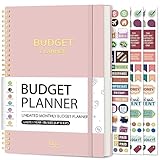
- Effective Budget Planning - Take control of your finances with the budget account book. This comprehensive planner allows you to plan and track your income, expenses, savings, and financial goals in one convenient place. With its intuitive layout and easy-to-use sections, you can stay organized and make informed decisions to achieve financial success.
- User-Friendly Layout - The budget planner features a user-friendly layout designed for easy navigation and organization. Each month, you'll find dedicated budget pages where you can set financial goals, track your income, and plan your expenses. Additional sections include debt trackers, savings goals, bill payment trackers, and more, making it simple to stay on top of your finances.
- Undated Monthly Calendar & Bonus Stickers - Featuring undated calendar each month, you'll have ample space to mark paydays, bills due, appointments, and important dates. Say goodbye to difficult writing spaces. Plus, we've included 3 cute sticker sheets that allow you to personalize your financial organizer and make budgeting more fun. Dates are not pre-printed and are completed by the user.
- Reliable and Convenient Design - Our monthly budget planner is designed for your convenience and built to last. The elastic band keeps everything securely in place, and the dual-sided pocket provides extra storage. Experience a budget planner that combines practicality and durability.
- Master Budgeting with Ease - Our financial planner includes a complete guidebook that provides valuable insights and instructions for optimal usage. From setting financial goals to tracking expenses, this guidebook offers step-by-step guidance and practical tips. Whether you're new to budgeting or an experienced user, this resource will help you make the most of your budget planner, empowering you to achieve financial success.
Use-Case Specialization Within General-Purpose Banking Apps
Rather than offering one-size-fits-all solutions, many mobile-first banking apps now optimize for specific consumer behaviors. Examples include features tailored to gig income volatility, frequent international usage, or credit-building through secured products.
This specialization reinforces the importance of matching app capabilities to individual financial patterns. Feature breadth alone is less informative than how effectively those features address real-world consumer needs.
Best Overall Banking Apps for Everyday Use: Fees, Reliability, and Core Features Compared
Building on differences in personalization, regulatory alignment, and use-case focus, overall app quality is most clearly reflected in how core banking functions perform under everyday conditions. Fees, operational reliability, and baseline features such as deposits, payments, and customer support remain the primary determinants of day-to-day usability for most consumers.
Fee Structures and Cost Transparency
Across leading banking apps, fee models continue to diverge between traditional banks with digital platforms and mobile-first financial technology firms, often referred to as neobanks. Fee structure refers to the combination of monthly maintenance charges, transaction fees, overdraft costs, and ancillary service fees applied to an account.
Free tools Windows power users keep installed
One-click scans. No signup required.
Apps from large national banks such as Chase and Bank of America typically retain monthly fees that can be waived through minimum balance or direct deposit requirements. In contrast, platforms like Chime, Current, and SoFi generally offer accounts without monthly fees, relying instead on interchange revenue from card transactions and optional premium services.
Fee transparency has improved across the sector, but meaningful differences remain in overdraft treatment. Some apps eliminate overdraft fees entirely, while others use discretionary overdraft coverage with variable limits and eligibility criteria, making real-world costs less predictable for users with irregular cash flow.
Operational Reliability and Access to Funds
Reliability encompasses system uptime, transaction processing speed, and consistency of access to deposited funds. Traditional banks continue to demonstrate advantages in infrastructure stability, particularly during periods of high transaction volume or system stress.
Mobile-first apps have narrowed this gap, but reliance on partner banks and third-party payment processors introduces additional points of failure. Consumers may experience delayed deposits or payment interruptions during outages that are outside the app provider’s direct control.
Early direct deposit availability remains a widely marketed feature, allowing access to wages one to two days before standard settlement. While convenient, early access is contingent on employer payroll timing and does not change the total amount earned, a distinction that is not always clearly communicated.
Core Account Features and Everyday Functionality
At a minimum, leading banking apps provide checking and savings accounts, debit card access, mobile check deposit, bill pay, and peer-to-peer payments. Differences emerge in execution quality, including transaction categorization accuracy, payment processing times, and ease of dispute resolution.
Apps such as Capital One and Ally combine competitive interest rates on savings with robust in-app controls, including card locking, spending limits, and real-time alerts. Interest rate refers to the annual percentage yield paid on deposits, which fluctuates with broader monetary conditions and varies significantly across providers.
Some platforms integrate additional features such as credit monitoring, automated savings rules, or in-app tax documentation. These tools add value primarily when they reduce administrative friction rather than increasing product complexity.
Customer Support and Dispute Handling
Customer support remains one of the clearest differentiators among otherwise similar apps. Large banks typically offer 24/7 phone support and in-branch assistance, which can be critical during account freezes or fraud investigations.
Digital-first providers rely more heavily on in-app chat and email support, with response times varying by account tier. Dispute handling refers to the process of investigating unauthorized transactions or billing errors, an area where regulatory compliance requires specific timelines but does not guarantee user satisfaction.
Apps that clearly explain dispute steps, provisional credit policies, and escalation paths tend to score higher on consumer trust, regardless of their size or fee model.
Suitability for Different Everyday Banking Needs
No single banking app performs best across all consumer scenarios. Users prioritizing stability, broad service access, and integrated lending often prefer established banks with mature digital platforms.
Quick wins for a faster PC:
Fix the driver behind crashes, sound loss and screen glitchesFind Drivers →Clear out junk files and repair common Windows errorsFree Scan →Those seeking lower costs, simplified interfaces, and faster access to income may find mobile-first apps more suitable, particularly when financial activity is concentrated in checking and short-term savings. The optimal choice depends less on feature count and more on alignment between the app’s operating model and the user’s financial behavior.
Best Banking Apps for High Interest Rates and Cash Management in 2026
As mobile banking adoption matures, interest-bearing cash accounts have become a central differentiator rather than a secondary feature. Following from usability and support considerations, the next critical evaluation point is how effectively a banking app preserves and grows idle cash while maintaining liquidity.
Understanding High-Yield Savings and Cash Management Accounts
High-yield savings accounts offer an annual percentage yield (APY), defined as the effective annual return on deposited funds after compounding, that typically exceeds traditional branch-based savings rates. These rates remain variable and adjust in response to central bank policy and broader funding markets.
Cash management accounts differ structurally from standard savings accounts. They often sweep deposits into partner banks or money market instruments to deliver higher yields while preserving daily access, although regulatory protections and transfer limits can vary by provider.
Do these 3 things before closing this tab:
1Scan for outdated or missing drivers - takes under a minute2Clear out junk files and repair common Windows errors3Fix the driver behind crashes, sound loss and screen glitchesLeading Apps Focused on Competitive Interest Rates
As of March 2026, Ally, Capital One, Discover, and Marcus by Goldman Sachs continue to anchor the high-yield savings segment. Their mobile apps emphasize fee-free savings, no minimum balance requirements, and transparent rate disclosures, supported by established regulatory oversight.
Apple Savings, integrated directly into the Apple Wallet ecosystem, remains notable for its frictionless onboarding and automated daily cash deposits from Apple Card rewards. Its appeal is primarily operational rather than rate leadership, favoring simplicity over advanced account customization.
Digital Cash Management Platforms with Hybrid Functionality
SoFi and Wealthfront represent a hybrid model combining checking-like access with savings-level yields. These platforms typically bundle direct deposit, debit card access, and automated transfers with competitive interest rates that apply to the entire cash balance rather than segmented subaccounts.
Wealthfront’s cash account emphasizes rate optimization and account aggregation, while SoFi integrates cash management with lending, investing, and credit tools. The trade-off for higher functional density is increased product complexity, which may not suit users seeking a single-purpose savings vehicle.
Free tools Windows power users keep installed
One-click scans. No signup required.
Rank #3

- Budget Planner: Stay on top of your finances and achieve your financial goals with our A5 Budget Planner. This beautifully designed budget book combines functionality and style, empowering you to effectively manage your budget month after month.
- Classic Design: The elegant pink cover with the striking "Budget Planner" in gold adds a touch of sophistication to your financial planner. Carry it with pride and make a statement as you take charge of your financial.
- Comprehensive Layout: Our monthly budget planner features a well-thought-out layout that simplifies your budgeting process. With a dedicated monthly budget page, four expense tracking pages, a monthly summary, and a notes section, you have all the tools you need for effective financial planning.
- 14-Month Duration: Unlike many other planners on the market, ours covers a total of 14 months, giving you an extended period of financial organization. Now you can make income and expense records at any time, ensuring every financial decision aligns with your long-term goals.
- Premium Quality and Convenience: Crafted with attention to detail, this budget planner boasts superior quality. The sturdy pink and gold coil binding allows for effortless flipping, while the A5 size makes it the perfect companion for your daily adventures, fitting into your bag or backpack without taking up too much space.
Liquidity, Access, and Transaction Constraints
Cash accessibility remains as important as yield. Some high-interest accounts limit monthly withdrawals or impose delays on external transfers, reflecting underlying regulatory or operational structures. Liquidity refers to how quickly funds can be accessed without penalties or procedural barriers.
Apps that clearly display transfer timelines, cutoff windows, and settlement rules tend to reduce user friction, particularly for consumers using these accounts as primary transaction hubs rather than long-term savings stores.
Fee Structures and Rate Sustainability
Most competitive cash-focused apps advertise no monthly maintenance fees, but indirect costs still warrant attention. These include overdraft policies, out-of-network ATM fees, and conditions tied to promotional rates that may expire or require qualifying activity.
Rate sustainability is influenced by how providers fund deposits and manage balance sheet risk. Institutions with diversified revenue streams or conservative growth targets tend to deliver more stable yields over time, even if headline rates occasionally trail more aggressive competitors.
Security, Insurance, and Risk Considerations
Deposit insurance remains a foundational element of cash safety. Traditional savings accounts are typically insured up to statutory limits by the Federal Deposit Insurance Corporation (FDIC), while cash management accounts may rely on pass-through insurance across multiple partner banks.
Apps that explicitly disclose insurance coverage, partner institutions, and account structures provide greater transparency. From a cash management perspective, clarity around risk exposure often matters more than incremental yield differences measured in tenths of a percentage point.
Suitability for Different Cash Management Profiles
High-yield savings apps are generally best suited for consumers prioritizing capital preservation, emergency reserves, and predictable access. Cash management platforms may better align with users who treat cash as an active financial hub, moving funds frequently between spending, saving, and investing.
The distinction is less about absolute performance and more about operational fit. Evaluating how interest rates, access rules, and app design interact with day-to-day financial behavior remains central to selecting an effective cash-focused banking app in 2026.
Best Banking Apps for Budgeting, Spending Insights, and Financial Wellness Tools
As mobile banking platforms mature, budgeting and financial wellness features have shifted from optional add-ons to core account differentiators. For consumers using a banking app as a primary financial interface, the quality of spending insights, cash flow visibility, and behavioral tools increasingly influences day-to-day financial outcomes as much as interest rates or fees.
Unlike standalone budgeting software, banking-integrated tools benefit from real-time transaction data and direct account controls. This integration allows for more accurate categorization, timely alerts, and automated guardrails that respond to actual spending behavior rather than delayed snapshots.
Chime: Automated Cash Flow Awareness for Everyday Banking
Chime remains one of the most widely adopted mobile-first banking platforms for users seeking simplified financial oversight. Its budgeting approach centers on automatic transaction categorization, balance trend tracking, and real-time notifications for purchases, deposits, and low balances.
Rather than offering granular manual budgeting, Chime emphasizes cash flow awareness. Features such as spending summaries by merchant category and projected balance alerts aim to reduce overdraft risk and payment timing errors, which are common sources of financial stress for transaction-focused users.
Recommended Free Tools
SoFi: Integrated Financial Wellness Across Spending, Saving, and Credit
SoFi’s banking app positions budgeting within a broader financial wellness framework that spans checking, savings, credit products, and investment accounts. Users receive consolidated dashboards showing net cash flow, recurring expenses, and progress toward defined savings or debt reduction goals.
A distinguishing element is the linkage between behavioral insights and product incentives. For example, qualifying direct deposits and active account usage can unlock higher savings rates or fee reductions, reinforcing engagement while maintaining transparency around qualification criteria.
Current: Real-Time Spending Controls and Behavioral Nudges
Current focuses heavily on immediate spending visibility and user-controlled limits. The app provides real-time transaction alerts, category-level spending breakdowns, and the ability to set merchant or category-based spending caps directly within the checking account.
This design appeals to users seeking tighter day-to-day control rather than long-term financial planning. While its analytics are less comprehensive than full-spectrum financial platforms, the emphasis on instant feedback aligns well with consumers managing variable income or rebuilding spending discipline.
Ally Bank: Data-Driven Insights Within a Traditional Banking Framework
Ally combines the stability of a regulated online bank with increasingly sophisticated budgeting tools. Its spending analysis features include customizable categories, month-over-month comparisons, and integration with savings “buckets,” which allow users to earmark funds for specific purposes without opening separate accounts.
For consumers who prefer structured financial organization over behavioral prompts, Ally’s approach provides clarity without excessive notifications. The tools are particularly effective for users balancing multiple financial priorities within a single institution.
Monzo and International-Style Budgeting Models in the U.S. Market
While originally developed outside the United States, Monzo’s U.S. offering continues to influence expectations around budgeting-first banking. Its app emphasizes envelope-style budgeting, where users allocate funds to predefined categories and track remaining balances in real time.
This method is especially effective for consumers who benefit from visual constraints on discretionary spending. The trade-off is greater upfront setup and ongoing engagement, which may not suit users seeking passive financial monitoring.
Windows Errors? Fix Them Before They Spread
Repair common Windows errors and clear accumulated junk for a smoother, more stable PC - no reinstall needed.Free scan · no reinstallCrashes, No Sound, or Screen Glitches?
Random freezes, missing sound and display glitches usually trace back to one bad driver. Find and replace yours safely.Free scan · under a minuteEvaluating Financial Wellness Tools Beyond Feature Lists
The effectiveness of budgeting and wellness tools depends less on the number of features and more on alignment with individual financial behavior. Apps that rely on automation reduce cognitive load but may obscure detailed decision-making, while highly customizable systems demand more user attention and consistency.
From a comparative standpoint, the strongest banking apps in this category integrate real-time data, clear behavioral feedback, and actionable controls without introducing complexity that undermines daily usability. In 2026, financial wellness functionality is no longer a niche feature set but a defining characteristic of consumer-oriented banking platforms.
Best Banking Apps for Security, Privacy, and Regulatory Protection
As banking apps consolidate budgeting, payments, and savings into a single interface, security and regulatory safeguards become foundational rather than supplementary features. The same real-time data flows that enable financial wellness tools also expand the potential impact of data breaches, account takeovers, and unauthorized transactions. Evaluating banking apps in 2026 therefore requires examining both technical defenses and the legal protections governing user funds and personal information.
Regulatory Status and Deposit Insurance Protections
The most consequential distinction among banking apps is whether they operate as federally regulated banks or as financial technology platforms layered on top of partner institutions. Regulated U.S. banks are supervised by agencies such as the Federal Deposit Insurance Corporation (FDIC), which insures deposits up to $250,000 per depositor, per institution, in the event of bank failure.
Rank #4

- 【Take Control Of Your Money】Easily plan your monthly budget, track income & expenses, and stay on top of your finances. This budget planner helps you clearly see where your money goes and avoid overspending.
- 【Designed For Real Life Use】Perfect for young professionals, families, students, and anyone working toward financial goals. Whether managing daily expenses or planning long-term savings, this budget book keeps everything organized.
- 【All-In-One Budget System:】Our monthly budget planner features a well-thought-out layout that simplifies your budgeting process. Includes monthly budget pages, expense trackers, bill organizers, savings goals, and debt trackers. Everything you need to manage money in one convenient planner.
- 【12-Month Duration】Our budget planner covers a total of 12 months, giving you an extended period of financial organization. Now you can make income and expense records at any time, ensuring every financial decision aligns with your long-term goals.
- 【Premium Quality and Convenience】Crafted with attention to detail, this budget planner boasts superior quality. The sturdy pink and gold coil binding allows for effortless flipping, while the metal corner protectors effectively prevent damage to the cover, ensuring long-lasting durability.
Apps offered by chartered banks, including Ally, Capital One, and Discover, provide direct FDIC coverage without intermediary risk. In contrast, many mobile-first apps rely on “pass-through” deposit insurance, where funds are held at partner banks on the user’s behalf. While pass-through insurance can still provide FDIC protection, it introduces additional dependency on accurate recordkeeping and disclosure practices.
Authentication Controls and Account Access Security
Modern banking apps increasingly rely on layered authentication systems to reduce unauthorized access. Multi-factor authentication, which requires a combination of something the user knows (a password), has (a device), or is (biometric data), is now standard among leading platforms. Biometric login methods such as fingerprint and facial recognition improve both security and usability when properly implemented.
Higher-performing apps also allow users to manage session controls, device approvals, and real-time login alerts. These features limit exposure if credentials are compromised and provide early detection of suspicious activity. Apps that lack granular access controls or rely solely on passwords present elevated risk in a mobile-first environment.
Data Privacy Practices and Information Sharing Policies
Beyond preventing account intrusion, privacy governance determines how user data is collected, stored, and shared. In the U.S., consumer banking data is governed by the Gramm-Leach-Bliley Act, which requires financial institutions to disclose data-sharing practices and safeguard sensitive information. However, compliance standards vary in execution across platforms.
The Tool Desk
Outbyte PC Repair FREEClear out junk files and repair common Windows errorsFree Scan →Outbyte Driver Updater FREEScan for outdated or missing drivers - takes under a minuteDriver Scan →Banking apps tied to regulated institutions generally limit data usage to core operational purposes and risk management. Some fintech-oriented apps, by contrast, monetize anonymized or aggregated user data for analytics or partnerships, even when individual identities are protected. Consumers evaluating privacy strength should review disclosures related to third-party integrations, data retention, and opt-out mechanisms.
Fraud Monitoring, Transaction Controls, and Consumer Liability
Effective fraud prevention combines automated monitoring with user-facing controls. Leading apps employ behavioral analytics, which analyze transaction patterns to flag anomalies in real time. These systems are supplemented by instant transaction notifications, card freezing capabilities, and customizable spending limits.
Regulatory protections also shape consumer liability for fraud. Under U.S. law, prompt reporting of unauthorized electronic transactions generally limits consumer losses, but delays can increase financial exposure. Apps that streamline dispute resolution, provide clear timelines, and offer provisional credits reduce the practical burden on users during fraud investigations.
Encryption Standards and Infrastructure Resilience
At the technical level, secure banking apps rely on end-to-end encryption, meaning data is encoded during transmission and storage to prevent unauthorized access. Industry-standard encryption protocols, such as Advanced Encryption Standard (AES) with 256-bit keys, are widely used among established providers. While these measures are largely invisible to users, they are essential for protecting account credentials and transaction data.
What’s actually slowing this PC down?
Pick the symptom - the matching free tool is one click away.
Infrastructure resilience is equally important. Apps backed by mature banking institutions typically operate on redundant systems designed to maintain uptime during outages or cyber incidents. Smaller platforms may offer innovative features but rely on third-party infrastructure, which can introduce operational concentration risk.
Comparative Security Positioning Among Leading Apps
As of March 2026, traditional digital banks generally maintain an advantage in regulatory clarity and consumer protection, while leading fintech apps compete through user-centric security controls and transparency. Apps such as Ally and Capital One emphasize institutional safeguards and established compliance frameworks. Fintech platforms differentiate by offering granular controls, rapid alerts, and intuitive security dashboards.
For consumers, the strongest security posture emerges from alignment between regulatory coverage, technical defenses, and day-to-day usability. An app’s ability to prevent, detect, and resolve security issues is inseparable from how clearly it communicates those protections within the user experience.
Independent reader supportYour contribution helps us test, update, and keep practical guides available for everyone.Best Banking Apps for Specific Consumer Needs: Students, Families, Gig Workers, and Frequent Travelers
Building on security and infrastructure considerations, suitability ultimately depends on how well a banking app aligns with a user’s income patterns, spending behavior, and financial responsibilities. While most modern apps offer core checking features, meaningful differences emerge in fee structures, account flexibility, international usability, and integrated financial tools. Evaluating apps through the lens of specific consumer needs clarifies these trade-offs.
Students and Young Adults
Students typically prioritize low-cost access, ease of use, and tools that support basic financial literacy. Banking apps such as Chime, Capital One, and Discover Bank continue to appeal in March 2026 due to the absence of monthly maintenance fees and low minimum balance requirements. These features reduce the risk of account erosion for users with irregular or limited income.
User experience is particularly relevant for this group. Apps that provide real-time balance updates, transaction notifications, and simple budgeting visuals help users understand cash flow without requiring advanced financial knowledge. Some platforms also offer early access to direct deposits, which can be useful for students managing part-time wages or stipends.
Families and Shared Financial Management
Families often require more complex account structures, including joint accounts, sub-accounts, and shared visibility across users. Apps from institutions such as Capital One and Ally are notable for offering robust joint checking options and multiple savings accounts under a single login. This structure supports household budgeting without requiring multiple external accounts.
Parental controls and spending limits are increasingly integrated into family-oriented banking apps. These features allow adults to monitor transactions, set caps on debit card usage, and automate allowances for dependents. When combined with strong fraud protections and FDIC insurance, these tools reduce both financial and operational risk for households managing shared finances.
Quick wins for a faster PC:
Clear out junk files and repair common Windows errorsFree Scan →Fix the driver behind crashes, sound loss and screen glitchesFind Drivers →Repair Windows errors before they cause bigger problemsFix Now →Gig Workers and Independent Earners
Gig workers face income variability, higher exposure to tax obligations, and limited access to employer-sponsored benefits. Banking apps such as SoFi, Bluevine, and certain fintech platforms remain competitive by offering fee-free checking paired with high-yield savings accounts, which pay interest at rates that adjust with market conditions. Interest yield refers to the annual percentage earned on deposited funds, expressed as an annual percentage yield, or APY.
Cash flow management tools are particularly valuable for this group. Features such as instant payment notifications, transaction categorization, and automated transfers to savings or tax reserve accounts help smooth irregular income. Some apps also integrate basic invoicing or earnings tracking, reducing reliance on external financial software.
Frequent Travelers and International Users
For consumers who travel frequently or make cross-border transactions, foreign transaction fees and currency conversion costs become central considerations. Apps such as Charles Schwab Bank and certain fintech platforms continue to differentiate themselves by eliminating foreign transaction fees and offering favorable exchange rate handling. These policies reduce hidden costs that can accumulate during international spending.
ATM access and global usability further distinguish travel-friendly apps. Platforms that reimburse out-of-network ATM fees or partner with international networks provide practical benefits when cash access is necessary abroad. Combined with strong card security controls, such as instant card freezing and location-based alerts, these features support safer and more predictable banking while traveling.
Recommended Free Tools
Across all consumer categories, the most effective banking apps are those that align functional design with real-world financial behavior. Differences in fees, account flexibility, and integrated tools may appear subtle, but they materially affect usability when matched to specific financial needs.
Traditional Banks vs. Neobanks: App Experience, Trade-Offs, and Long-Term Considerations
As banking app features converge across consumer segments, the distinction between traditional banks and neobanks becomes more structural than cosmetic. Both models deliver mobile-first account access, but they differ meaningfully in institutional design, regulatory coverage, and long-term reliability. Understanding these differences helps contextualize app performance beyond surface-level usability.
App Design and User Experience
Neobanks are financial institutions that operate primarily or entirely online, without physical branches. Their apps tend to prioritize minimalist design, fast onboarding, and real-time account updates, including instant balance changes and transaction alerts. These features reduce friction for everyday tasks and are often updated more frequently than legacy bank apps.
Traditional banks have narrowed the usability gap, particularly among large national institutions. Their apps increasingly offer mobile check deposit, budgeting tools, and customizable alerts. However, feature rollouts may be slower due to legacy systems and broader compliance requirements, which can affect responsiveness to user feedback.
Fees, Interest Rates, and Product Scope
Neobanks often compete on pricing by eliminating monthly maintenance fees and offering higher interest yields on savings balances. These higher yields are typically supported by lower operating costs and partnerships with larger banks that hold customer deposits. Deposit holding refers to the institution legally responsible for safeguarding funds, even if the app interface is provided by a separate company.
Best Value

- EFFECTIVELY MANAGE YOUR MONEY - Our budget planner helps you take control of your finances by providing sections for financial goals, savings, debts, daily expenses, monthly budget, monthly budget review. This finance planner is a good finance book and will help you manage your money effectively.
- PREMIUM QUALITY - Our budget planner is made with high-quality 100gsm paper that reduces ink leakage, fraying, and shade issues. The sturdy and flexible cover,, helps protect the pages. The metal lay-flat twin-wire binding ensures durability and longevity.
- ORGANIZED MONTHLY GOALS & BUDGETS - Our 12-month budget planner helps you set monthly goals, budgets, reviews, and develop good monetary habits, strategies, and action plans. Write down monthly financial goals, put reminders of bills and payments on the calendar, plan your monthly budget in each category, track daily expenses, and review the monthly budget at the end of the month.
- FLEXIBLE USAGE - Our undated finance planner allows you to start at any time and place, making it convenient to use. It has a perfect size of 8.6x5.9 inches and fits in every bag, so it's always at hand.
- CREATE FINANCIAL FREEDOM - Our budget planner is your chance to develop monthly habits, monetary strategies, and action plans to start your journey to long-term financial freedom. It allows you to track monetary flow and review each area for improvements. With this 1-Years budget book, you can take the first step towards financial freedom.
Traditional banks generally offer a wider range of financial products within a single ecosystem, including mortgages, auto loans, and investment accounts. While some of these accounts may carry fees or lower interest rates, they provide consolidation and continuity that can be valuable as financial needs expand over time.
Access, Customer Support, and Physical Infrastructure
Branch access remains a defining difference. Traditional banks provide in-person support, cash services, and notary or document-related assistance that cannot be replicated digitally. This infrastructure can be critical during account disputes, identity verification issues, or complex transactions.
Neobanks rely on digital customer support, typically through in-app messaging or email. Response times and service quality vary widely by platform. While some users value the efficiency of chat-based support, others may find limitations during urgent or atypical situations.
Free tools Windows power users keep installed
One-click scans. No signup required.
Security, Regulation, and Deposit Protection
Both traditional banks and most reputable neobanks offer Federal Deposit Insurance Corporation coverage, commonly referred to as FDIC insurance. FDIC insurance protects deposits up to a statutory limit if a bank fails, provided the funds are held at an insured institution. Consumers must distinguish between the app provider and the insured bank partner when evaluating protection.
Traditional banks operate under long-established regulatory frameworks with direct supervisory oversight. Neobanks are subject to similar consumer protection rules but often through indirect arrangements, which can introduce complexity in accountability. App-level security features, such as biometric login and transaction monitoring, are comparable across both models as of March 2026.
Long-Term Account Viability and Platform Risk
Longevity and business model stability are central long-term considerations. Traditional banks benefit from diversified revenue streams and established capital reserves, reducing the likelihood of abrupt product changes. Account terms may evolve slowly, but continuity is generally predictable.
Neobanks may change features, pricing structures, or even exit certain markets as they scale or adjust profitability strategies. While this flexibility can drive innovation, it also introduces platform risk, defined as the possibility that a service changes or discontinues in ways that affect account usability. Evaluating ownership structure, funding history, and transparency helps contextualize these risks without assuming inherent instability.
The Tool Desk
Outbyte PC Repair FREEClear out junk files and repair common Windows errorsFree Scan →Outbyte Driver Updater FREEFix the driver behind crashes, sound loss and screen glitchesFind Drivers →In practice, the choice between traditional banks and neobanks reflects trade-offs between innovation speed, institutional depth, and future adaptability. App experience alone provides an incomplete picture without considering how each model supports evolving financial needs over time.
How to Choose the Right Banking App for Your Financial Situation in 2026
Selecting a banking app in 2026 requires integrating feature comparisons with personal financial behavior and risk tolerance. The preceding discussion highlights that app design, institutional structure, and long-term viability all influence outcomes beyond surface-level convenience. A systematic evaluation helps align daily usage with broader financial objectives.
Assess Core Account Usage and Transaction Patterns
The starting point is understanding how the account will be used on a recurring basis. Transaction patterns include deposit frequency, payment volume, cash access, and reliance on external transfers. Apps optimized for frequent digital payments may offer limited cash handling, while others prioritize branch access or ATM networks.
Consumers with predictable income and stable spending may benefit from streamlined apps with low fees and automated tools. More complex cash flows, such as irregular deposits or frequent international transfers, place greater importance on flexibility, currency support, and customer service responsiveness.
Evaluate Fee Structures in Practical Terms
Fee structures should be examined based on realistic usage rather than headline claims. Common charges include monthly maintenance fees, out-of-network ATM fees, foreign transaction fees, and overdraft-related costs. An overdraft occurs when transactions exceed available funds, potentially triggering penalties or temporary credit.
Some apps eliminate specific fees but offset costs through others, such as higher exchange rate spreads or expedited transfer charges. Comparing total expected costs over a typical month provides a clearer picture than focusing on individual fee categories in isolation.
Compare Interest Features and Cash Yield Relevance
Interest-bearing accounts can influence idle cash management, but their relevance depends on balance size and access conditions. Interest is the compensation paid on deposits, usually expressed as an annual percentage yield reflecting compounding effects. Higher rates may apply only to limited balances or require qualifying activities.
In 2026, variable-rate environments mean that advertised yields can change quickly. Evaluating how often rates adjust, whether balances are capped, and how easily funds can be accessed prevents misalignment between liquidity needs and return expectations.
Do these 3 things before closing this tab:
1Repair Windows errors before they cause bigger problems2Scan for outdated or missing drivers - takes under a minute3Clear out junk files and repair common Windows errorsMatch App Functionality to Financial Complexity
Banking apps vary widely in functional depth, ranging from basic checking features to integrated budgeting, savings automation, and investment access. Automation tools, such as rule-based transfers or spending categorization, support users seeking structure without manual oversight. These features are most effective when aligned with consistent financial habits.
Users managing multiple accounts, joint finances, or external financial platforms should prioritize apps with strong interoperability. Interoperability refers to the ability to connect securely with other financial services, reducing friction and manual reconciliation.
Weigh Security Controls and Regulatory Transparency
Security should be evaluated at both the technical and institutional levels. Technical controls include encryption, biometric authentication, and real-time transaction alerts. Institutional transparency involves clear disclosure of regulatory status, insured bank partnerships, and dispute resolution processes.
Apps that clearly separate the technology platform from the insured financial institution simplify accountability. This distinction matters most during errors, fraud investigations, or service disruptions, when clarity determines how efficiently issues are resolved.
Consider Platform Stability Relative to Personal Time Horizon
The suitability of a banking app depends on how long it is expected to serve a given financial role. Short-term needs, such as expense tracking or secondary accounts, may tolerate higher platform risk. Primary accounts holding income and savings require greater confidence in continuity and governance.
Evaluating ownership structure, profitability signals, and historical product consistency helps contextualize stability. This assessment does not favor one model universally but aligns platform risk with the importance of the account in an individual financial system.
Integrate User Experience with Support Accessibility
User experience extends beyond interface design to include issue resolution and support availability. Intuitive navigation reduces errors, but support channels determine outcomes when problems occur. Access to live assistance, documented escalation paths, and response time transparency are critical under stress scenarios.
In 2026, artificial intelligence-driven support is widespread, but escalation to human review remains a differentiator. Apps that clearly define these boundaries offer more predictable service quality.
Final Synthesis for Informed Selection
Choosing the right banking app involves aligning personal financial patterns with institutional capabilities, cost structures, and risk tolerance. No single platform excels across all dimensions, making trade-offs unavoidable. A disciplined comparison grounded in actual usage, regulatory clarity, and long-term expectations produces more reliable outcomes than feature-based rankings alone.
By evaluating banking apps through this integrated framework, consumers can select platforms that support their financial situation as it exists today while remaining adaptable to change throughout 2026 and beyond.
Quick Recap
Product prices and availability are accurate as of the date/time indicated and are subject to change. Any price and availability information displayed on Amazon at the time of purchase will apply.




