The Tool Desk
Outbyte Driver Updater FREEScan for outdated or missing drivers - takes under a minuteDriver Scan →Outbyte PC Repair FREERepair Windows errors before they cause bigger problemsFix Now →“No ATM fees” has become a standard marketing phrase, but in 2026 it no longer describes a single benefit. Checking accounts that advertise fee-free ATM access generally rely on one of two distinct mechanisms: participation in a large surcharge-free ATM network or reimbursement of third-party ATM fees after the transaction posts. The cost to the consumer can be identical in some cases, but the experience, limitations, and eligibility requirements differ materially.
Understanding how a bank eliminates ATM costs is essential because ATM fees remain one of the most common incidental banking expenses. In the United States, out-of-network ATM surcharges routinely range from $2.50 to $4.00 per withdrawal, often compounded by a second fee charged by the account-holding bank. How an account offsets or avoids these charges determines whether “no ATM fees” applies consistently or only under specific conditions.
Fee-Free ATM Networks: Avoiding the Charge Entirely
Banks that rely on ATM networks eliminate fees by providing access to machines that do not charge surcharges in the first place. An ATM network is a group of machines operated by participating institutions that agree not to charge users of affiliated banks. Common examples in 2026 include Allpoint, MoneyPass, and Co-op, each offering tens of thousands of locations nationwide.
With a network-based model, the customer is not charged at the time of withdrawal, and no reimbursement process is required. This approach is operationally simple and predictable, making it well-suited for customers who withdraw cash regularly in urban or suburban areas where network ATMs are widely available. The primary limitation is geographic coverage, as availability may be sparse in rural areas or outside the United States.
#1 Best Overall

- Compact and Sturdy: These checkbook registers offer clear pages with 17 lines each, making it easy to track account withdrawals; The bold layout and spacious rows and columns (0.32 in wide) provide a comfortable writing experience
- Simplify financial management: The Casmonal account books help you effortlessly remember automatic deductions, dodge overdraft risks, and gain insight into your spending patterns, making financial tracking simple and clear
- Financial instruments: These transaction Registers simplifie your financial monitoring, helping you easily manage your balance, precisely budget, and work towards your financial goals; It's a convenient tool for achieving financial success
- Personal and Small Business Finances: The check register simplifies tracking of payments and deposits, equipped with columns for item numbers, transactions, and balances, making it an ideal tool for managing both personal and small business finances
- Small and Portable: These compact 6x3 inches checkbooks are perfect for on-the-go financial tracking and feature a stylish calendar from 2026 to 2028, guiding you through a better financial journey
ATM Fee Reimbursements: Paying First, Refunded Later
Reimbursement-based accounts allow customers to use any ATM, regardless of ownership, and refund the surcharge after the transaction settles. The ATM operator still charges a fee at withdrawal, but the bank credits that amount back to the checking account, typically within one to two business days. This model prioritizes flexibility over location-specific access.
Reimbursements often come with explicit limits that materially affect value. Common restrictions in 2026 include monthly caps (such as up to $10 or $15 in refunded fees), per-transaction limits, or eligibility requirements tied to minimum balances, monthly direct deposits, or debit card usage. If these conditions are not met, ATM fees may apply retroactively for that statement period.
Key Exclusions and Practical Limitations
“No ATM fees” almost never includes foreign ATM operator fees or currency conversion costs when withdrawing cash outside the United States. International ATMs frequently impose local access fees, and many banks do not reimburse them, even if domestic reimbursements are unlimited. Separately, foreign transaction fees—typically 1 percent to 3 percent of the withdrawal amount—may still apply unless explicitly waived.
Another common exclusion is balance inquiry or non-cash ATM transactions, which may incur fees even when cash withdrawals do not. Additionally, reimbursement timing matters for cash flow management, as customers must temporarily cover the surcharge until it is refunded. These nuances explain why two accounts with identical “no ATM fee” claims can produce meaningfully different costs depending on how, where, and how often cash is accessed.
Do these 3 things before closing this tab:
1Scan for outdated or missing drivers - takes under a minute2Clear out junk files and repair common Windows errors3Fix the driver behind crashes, sound loss and screen glitchesHow We Evaluated the Best No-ATM-Fee Checking Accounts (Methodology & Assumptions)
To move from general fee mechanics to actionable comparisons, each checking account was evaluated using a standardized, criteria-based framework. The goal was to isolate how effectively each account eliminates ATM-related costs under real-world usage, rather than relying on marketing claims alone. Emphasis was placed on consistency, transparency, and repeatability of outcomes across different customer profiles.
Definition of “No ATM Fees” for Evaluation Purposes
For this analysis, a checking account qualified as “no ATM fees” only if the bank either charged no out-of-network ATM fees or reliably reimbursed third-party ATM operator surcharges. Accounts that waived fees only at in-network machines without adequate geographic coverage were evaluated separately from reimbursement-based models. Temporary promotional waivers or limited-time offers were excluded.
Foreign ATM fees, foreign transaction fees, and currency conversion markups were not considered part of standard “no ATM fee” claims unless explicitly waived. This distinction reflects how banks disclose fees in account agreements and avoids conflating domestic access with international usage.
Core Cost Metrics and Fee Sensitivity Analysis
Each account was assessed based on its expected annual ATM-related cost under multiple withdrawal scenarios. These scenarios included low-frequency cash users, moderate monthly users, and high-frequency users withdrawing cash weekly. Assumptions were standardized to reflect typical third-party ATM surcharges in the United States as of early 2026.
Reimbursement caps, if present, were stress-tested against these scenarios to determine when fees would begin accruing. Accounts with unlimited reimbursements were evaluated for consistency and reliability rather than theoretical cost savings alone.
Eligibility Requirements and Ongoing Conditions
Eligibility thresholds were treated as material cost factors, not secondary features. Minimum balance requirements, recurring direct deposit thresholds, debit card transaction minimums, and account tier dependencies were all incorporated into the evaluation. If failure to meet a condition resulted in lost reimbursements or new fees, that outcome was modeled explicitly.
Accounts requiring frequent behavior monitoring to maintain fee-free status were rated as less predictable. Predictability was weighted heavily, as inconsistent qualification often leads to unplanned costs even when published fees appear low.
ATM Access Model and Geographic Practicality
Accounts using proprietary or partner ATM networks were evaluated based on network size, density, and usability in urban, suburban, and rural settings. Network counts were adjusted for functional availability, excluding retail locations with limited hours or restricted access. Broader networks were favored only when coverage translated into realistic cash access.
Reimbursement-based accounts were evaluated on flexibility rather than location density. However, reimbursement timing and settlement delays were treated as liquidity considerations, particularly for customers managing tight cash balances.
Account Stability, Disclosure Quality, and Policy Transparency
Fee schedules, deposit account agreements, and publicly disclosed policies were reviewed for clarity and internal consistency. Accounts with ambiguous reimbursement language, discretionary refund policies, or undocumented exceptions were scored lower regardless of advertised benefits. Clear disclosure was treated as a proxy for long-term account stability.
Policy change history, where publicly available, was considered to assess the durability of no-fee claims. Accounts with frequent fee structure changes were viewed as less reliable for long-term cost control.
Assumptions and Limitations
All evaluations assume compliance with stated account requirements and standard consumer usage patterns. Individual outcomes may vary based on ATM operator behavior, transaction timing, and regional surcharge differences. Interest earnings, overdraft policies, and ancillary features were excluded unless they directly affected ATM fee exposure.
Free tools Windows power users keep installed
One-click scans. No signup required.
This methodology is designed to support objective comparison, not to predict individual banking preferences. The resulting rankings reflect structural cost efficiency rather than subjective convenience or brand perception.
Top Checking Accounts With Nationwide ATM Fee-Free Access (Network-Based Models)
Building on the evaluation framework above, network-based ATM models represent the most structurally predictable way to eliminate ATM fees. These accounts avoid out-of-network surcharges by granting access to large, third-party ATM networks where withdrawals are processed without operator fees. Cost control depends primarily on network coverage and access rules rather than reimbursement timing or discretionary refunds.
Network-based models are generally best suited for customers who prefer certainty at the point of withdrawal. When an ATM is within the supported network, the transaction is fee-free immediately, with no temporary cash outlay or delayed credit. The primary trade-off is geographic dependence on network density rather than universal ATM access.
Capital One 360 Checking (Allpoint Network)
Capital One 360 Checking provides fee-free access to the Allpoint ATM network, which includes over 55,000 ATMs nationwide. Allpoint machines are commonly located in major retail chains such as grocery stores, pharmacies, and big-box retailers, improving functional availability beyond traditional bank branches.
Rank #2

- 12 Easy Read Register Checkbook Transaction Registers: Balance your check account withdrawals with this checkbook register featuring 16 lines per pages. This thicker body paper is small enough to carry in your pocket or wallet. Column headings are bold easy to read.
- Made in the USA. Each register has 444 lines. Lines are gray in color. Standard checkbook registers having Item No. Date, Description of Transaction, Payment Debit, Deposit Credit and Balance Column.
- High-quality ink print is easy on the eyes and a great booklet for easy insertion into your checkbook.
- Calendars on Back: Check register has up-to date 2025-2026-2027 calendars printed on the back.
- Checkbook Measures: Checkbook register measures 6x3 inches.
There are no monthly maintenance fees or minimum balance requirements tied to ATM access. However, withdrawals made outside the Allpoint network may incur operator surcharges that are not reimbursed. This structure favors customers who primarily withdraw cash in urban or suburban retail corridors where Allpoint coverage is dense.
Ally Bank Interest Checking (Allpoint Network)
Ally Bank’s checking account also relies on the Allpoint network for surcharge-free ATM withdrawals. Network size is comparable to Capital One, with broad national coverage and consistent availability across multiple regions.
Unlike some competitors, Ally supplements network access with a limited monthly reimbursement for out-of-network ATM fees. While the account remains fundamentally network-based, this hybrid feature provides partial protection for occasional network gaps. Customers who regularly exceed network boundaries should still treat reimbursement caps as a constraint rather than a substitute for universal access.
Discover Cashback Debit (Allpoint Network)
Discover Cashback Debit offers fee-free ATM withdrawals through the Allpoint network without requiring a minimum balance or monthly activity. The account’s ATM access model is straightforward, relying entirely on network participation rather than post-transaction refunds.
Outdated Drivers Are Slowing You Down
One free scan finds every outdated or missing driver and matches the right update for your exact hardware.Free scan · exact hardware matchWindows Errors? Fix Them Before They Spread
Repair common Windows errors and clear accumulated junk for a smoother, more stable PC - no reinstall needed.Free scan · no reinstallDiscover does not reimburse out-of-network ATM fees, making network familiarity essential. This account structure works best for customers with predictable cash withdrawal patterns who can consistently locate Allpoint ATMs during routine errands or travel.
Chime Checking Account (MoneyPass Network)
Chime provides fee-free ATM access through the MoneyPass network, which includes tens of thousands of ATMs nationwide. MoneyPass locations are frequently found in credit unions and select retail locations, though coverage density can vary by region.
There are no monthly fees tied to ATM usage, but out-of-network withdrawals are subject to operator surcharges without reimbursement. Chime’s model is most cost-effective for users who verify MoneyPass availability in their daily environment and avoid reliance on independent ATMs.
How to Evaluate Network-Based ATM Access
When comparing network-based accounts, network size alone is insufficient. Practical usability depends on whether ATMs are accessible during normal hours, located near common destinations, and operational for cash withdrawals rather than balance inquiries only.
Customers with stable routines and limited international travel generally benefit most from network-based models. Those with irregular cash needs, frequent rural travel, or dependence on small independent ATMs may encounter higher friction despite the absence of formal ATM fees.
Top Checking Accounts That Reimburse Out-of-Network ATM Fees (Reimbursement Models)
In contrast to network-based models, reimbursement-based checking accounts allow customers to use virtually any ATM and receive refunds for operator surcharges after the transaction posts. An ATM surcharge is the fee charged by the ATM owner, not the account-holding bank, and it typically ranges from $2.50 to $5.00 per withdrawal.
This structure shifts responsibility from locating in-network machines to meeting account eligibility requirements. Reimbursement models are generally most effective for customers with irregular travel patterns, limited access to major ATM networks, or frequent use of independent and international ATMs.
Charles Schwab High Yield Investor Checking
Charles Schwab’s High Yield Investor Checking account offers unlimited reimbursement of domestic and international ATM surcharges, with no stated monthly cap. Reimbursements are automatically credited at the end of each monthly statement cycle, removing the need for manual claims or tracking.
Recommended Free Tools
Eligibility requires opening a linked Schwab brokerage account, though there is no minimum balance requirement for the checking account itself. This structure favors customers comfortable maintaining a brokerage relationship, even if investment activity is minimal, in exchange for maximum ATM flexibility.
Fidelity Cash Management Account
The Fidelity Cash Management Account reimburses domestic ATM surcharges without a fixed monthly limit when using the account’s debit card. Reimbursements typically post within one to two statement cycles, depending on transaction timing.
As with Schwab, the account is tied to a brokerage platform rather than a traditional bank charter. This model suits users who value broad ATM access and already utilize Fidelity for savings or investment purposes, but it may feel administratively complex for customers seeking a purely standalone checking account.
SoFi Checking and Savings
SoFi reimburses domestic out-of-network ATM fees for customers who meet qualifying activity thresholds, typically through direct deposit. Reimbursements are generally processed shortly after the transaction settles, rather than at month-end.
What’s actually slowing this PC down?
Pick the symptom - the matching free tool is one click away.
The reimbursement benefit is conditional rather than universal, making ongoing eligibility an important consideration. Customers with stable income streams and regular direct deposits can extract meaningful value, while those with inconsistent deposits may lose reimbursement access without clear notice.
Ally Interest Checking
Ally Interest Checking reimburses up to a fixed dollar amount in domestic ATM fees per statement cycle, with the cap clearly disclosed. Reimbursements are automatic and applied monthly, simplifying cost tracking.
The reimbursement limit introduces predictability but also a ceiling on flexibility. This account is best aligned with moderate cash users who occasionally rely on out-of-network ATMs rather than frequent cash withdrawers.
How Reimbursement Models Compare to Network-Based Access
Reimbursement-based accounts eliminate the need to plan withdrawals around specific ATM locations, but they introduce timing delays and eligibility constraints. Customers must temporarily absorb ATM fees until refunds post, which can affect short-term cash flow.
Quick wins for a faster PC:
Clear out junk files and repair common Windows errorsFree Scan →Scan for outdated or missing drivers - takes under a minuteDriver Scan →Repair Windows errors before they cause bigger problemsFix Now →Rank #3
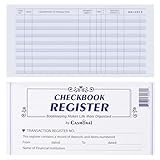
- Compact and Sturdy: These checkbook registers offer clear pages with 17 lines each, making it easy to track account withdrawals; The bold layout and spacious rows and columns (0.32 in wide) provide a comfortable writing experience
- Simplify financial management: The Casmonal account books help you effortlessly remember automatic deductions, dodge overdraft risks, and gain insight into your spending patterns, making financial tracking simple and clear
- Financial instruments: These transaction Registers simplifie your financial monitoring, helping you easily manage your balance, precisely budget, and work towards your financial goals; It's a convenient tool for achieving financial success
- Personal and Small Business Finances: The check register simplifies tracking of payments and deposits, equipped with columns for item numbers, transactions, and balances, making it an ideal tool for managing both personal and small business finances
- Small and Portable: These compact 6x3 inches checkbooks are perfect for on-the-go financial tracking and feature a stylish calendar from 2026 to 2028, guiding you through a better financial journey
These accounts also require closer attention to account terms, including monthly caps, qualifying activity, and linked account requirements. For users with unpredictable travel or limited access to large ATM networks, reimbursement models often provide the lowest effective cost despite added structural complexity.
Best Options by Use Case: Heavy Cash Users, Frequent Travelers, and Digital-Only Bankers
With reimbursement models and network-based access presenting distinct trade-offs, the most cost-effective checking account depends heavily on how, where, and how often cash is accessed. Evaluating ATM usage patterns clarifies which structure minimizes friction, delays, and incidental costs over time.
Heavy Cash Users: Large Fee-Free ATM Networks and Branch Access
Heavy cash users benefit most from checking accounts tied to expansive fee-free ATM networks or physical branch systems. These accounts eliminate ATM fees at the point of withdrawal, avoiding reimbursement delays and the need to monitor monthly caps or eligibility conditions.
Institutions such as Capital One 360 Checking and certain regional credit unions combine broad ATM partnerships with branch access for deposits and withdrawals. This structure is particularly efficient for customers who make frequent cash withdrawals or deposits, as repeated out-of-network reimbursements can become administratively burdensome.
Branch access also matters for cash-intensive users, since ATM networks alone do not fully substitute for over-the-counter cash services. For customers handling cash weekly or more, network-based fee elimination generally produces the lowest operational friction.
Frequent Travelers: Unlimited or High-Cap Reimbursements
Frequent travelers face inconsistent ATM availability and varying fee structures across regions, making rigid ATM networks less reliable. Checking accounts with unlimited or high-cap reimbursement policies provide greater geographic flexibility, especially when international or rural access is required.
Accounts such as Fidelity Cash Management and select Schwab-linked checking products reimburse domestic ATM fees without preset caps. This design allows withdrawals at virtually any ATM, shifting the cost-control mechanism from location planning to reimbursement tracking.
However, travelers must account for timing, as reimbursements typically post after settlement rather than immediately. Maintaining adequate account balances is essential to absorb temporary fees and avoid overdrafts while refunds are pending.
Recommended Free Tools
Digital-Only Bankers: Conditional Reimbursements with Low Structural Complexity
Digital-only bankers, who prioritize app-based management and rarely use branches, often accept conditional reimbursement models in exchange for higher interest rates or integrated financial tools. Accounts like SoFi Checking and Ally Interest Checking align well with this usage pattern when qualifying requirements are consistently met.
These accounts typically rely on direct deposit thresholds or monthly reimbursement caps, which introduce predictable but enforceable limits. For customers with stable income streams and moderate ATM usage, the effective cost of ATM access remains low without sacrificing digital convenience.
The key risk for digital-only users is silent eligibility loss, where missed deposit criteria temporarily suspend reimbursements. Reviewing account activity requirements regularly helps ensure that the advertised no-fee structure remains intact under changing income or spending conditions.
Hidden Limitations to Watch For: Caps, Foreign ATM Fees, and Fine-Print Restrictions
Even accounts marketed as having no ATM fees rely on specific mechanisms to control cost exposure. These mechanisms can introduce caps, exclusions, or timing constraints that materially affect out-of-pocket costs. Understanding how fee elimination is structured is essential to evaluating whether a checking account remains low-cost under real-world usage.
Monthly Reimbursement Caps and Per-Transaction Limits
Many reimbursement-based accounts impose a monthly ceiling on refunded ATM fees, commonly ranging from $10 to $25. Once the cap is reached, additional ATM fees remain the customer’s responsibility until the next statement cycle resets. Some institutions also limit reimbursement to a fixed number of transactions, regardless of dollar amount.
Caps are often disclosed in fee schedules rather than promotional materials. High-frequency cash users can exceed these thresholds quickly, especially in regions where per-withdrawal fees exceed $3.50. Accounts with unlimited reimbursements eliminate this risk but typically come with stricter eligibility criteria or bundled brokerage relationships.
Foreign ATM Fees Versus Foreign Transaction Fees
No ATM fee does not necessarily mean no international cost. Banks may reimburse the local ATM operator fee abroad while still charging a foreign transaction fee, defined as a percentage surcharge (commonly 1% to 3%) applied to withdrawals processed outside the home country. These are separate charges governed by different disclosures.
Some globally oriented checking accounts waive both fees, while others waive only domestic ATM charges. Currency conversion is typically handled by card networks at wholesale exchange rates, but the bank’s foreign transaction fee, if applicable, is added afterward. Travelers should distinguish between ATM operator fees, bank-imposed ATM fees, and foreign transaction fees to avoid misinterpretation.
What’s actually slowing this PC down?
Pick the symptom - the matching free tool is one click away.
Eligibility Conditions That Suspend Fee Waivers
Conditional models frequently tie ATM fee waivers to ongoing account activity, such as recurring direct deposits, minimum balances, or linked account status. Failure to meet these conditions can suspend reimbursements without account closure or prominent alerts. This creates intermittent fee exposure rather than a permanent pricing change.
Direct deposit is usually defined narrowly as employer or government payments processed through ACH, excluding transfers from other banks. Balance-based waivers may also exclude pending transactions, causing brief dips below thresholds. These nuances matter most during income disruptions or irregular cash flow periods.
Timing Delays and Settlement Risk
Reimbursement-based structures reimburse fees after the ATM transaction settles, which may occur several days later. During this interval, the fee temporarily reduces the available balance. If the account has low buffers, this can trigger overdrafts or declined transactions unrelated to the ATM withdrawal itself.
Fee-free network models avoid this timing risk by preventing the fee at the point of withdrawal. Reimbursement models require more active balance management, particularly for customers who withdraw cash near payday or statement cutoffs.
Rank #4

- 24 Easy Read Checkbook Registers for Personal Checkbook
- Standard checkbook register measuring 3" x 6".
- The white and blue background makes recording clearer and less prone to eye fatigue.
Excluded ATM Types and Network Drift
Even broad reimbursement policies may exclude certain ATM categories, such as those located in casinos, event venues, or private retail locations. These exclusions are often based on merchant category codes, which classify the ATM owner rather than the machine’s branding. Customers may not know an ATM is excluded until the fee posts without reimbursement.
Fee-free networks can also change over time as institutional partnerships are renegotiated. An ATM that was previously in-network may become out-of-network without physical signage updates. Periodic verification within the bank’s app or website reduces unexpected fees from network drift.
Bundled Account Dependencies
Some of the strongest no-fee ATM offerings are tied to bundled relationships, such as brokerage-linked checking or premium tiers. Maintaining eligibility may require keeping assets invested, preserving account linkages, or avoiding account downgrades. Loss of bundle status can immediately reinstate ATM fees or introduce caps.
These structures can be cost-efficient for customers who already meet the bundle criteria. For others, the opportunity cost of maintaining idle balances or additional accounts should be weighed against the savings from ATM fee elimination.
Do these 3 things before closing this tab:
1Fix the driver behind crashes, sound loss and screen glitches2Repair Windows errors before they cause bigger problems3Scan for outdated or missing drivers - takes under a minuteSide-by-Side Comparison Table: Fees, ATM Coverage, Requirements, and Extras
To synthesize the structural differences discussed above, the following comparison table places leading no-ATM-fee checking accounts side by side. The focus is not on promotional claims, but on how each account actually eliminates ATM costs, what conditions apply, and which customer profiles are most likely to experience friction. All information reflects publicly disclosed terms as of March 2026 and is subject to change.
Comparison of Leading No-ATM-Fee Checking Accounts
| Institution | ATM Fee Structure | ATM Coverage Scope | Monthly Maintenance Fee | Key Requirements | Notable Extras and Limitations |
|---|---|---|---|---|---|
| Charles Schwab Bank | Unlimited ATM fee reimbursement | Worldwide, including international ATMs | $0 | Linked Schwab brokerage account | No foreign transaction fee; reimbursement posts after settlement; brokerage relationship required |
| Capital One 360 | Fee-free in-network; no reimbursement | 70,000+ Capital One, Allpoint, and partner ATMs | $0 | No minimum balance or direct deposit | Out-of-network ATM fees not reimbursed; strong domestic coverage |
| Fidelity Cash Management | Unlimited ATM fee reimbursement | Worldwide | $0 | Fidelity brokerage account | Reimbursement timing risk; cash account is technically a brokerage product |
| Ally Bank | ATM fee reimbursement up to monthly cap | Allpoint network plus out-of-network reimbursements | $0 | No minimum balance | Reimbursement cap applies; no international ATM fee reimbursement |
| SoFi Checking and Savings | Fee-free in-network; limited reimbursement | Allpoint network nationwide | $0 | Direct deposit for highest benefits | Out-of-network reimbursements capped; benefits tied to direct deposit status |
Interpreting Fee Elimination Methods
The table highlights a clear divide between fee-free network models and reimbursement-based models. Network-based accounts, such as Capital One 360 and SoFi, prevent ATM fees entirely but only within designated ATM networks. This structure minimizes settlement risk but requires awareness of network availability, particularly when traveling or withdrawing cash in less urban areas.
Reimbursement-based accounts, including Charles Schwab and Fidelity, offer broader geographic flexibility at the cost of timing delays. ATM fees are initially deducted and later credited back, which can temporarily reduce available balances. This distinction is especially relevant for customers who maintain low cash buffers or make frequent withdrawals.
Requirements and Structural Trade-Offs
Several of the strongest no-ATM-fee offerings are not standalone checking accounts. Brokerage-linked models require opening and maintaining an associated investment account, even if the primary intent is transactional banking. While these structures do not inherently increase costs, they introduce additional account management considerations and potential complexity.
The Tool Desk
Outbyte Driver Updater FREEScan for outdated or missing drivers - takes under a minuteDriver Scan →Outbyte PC Repair FREERepair Windows errors before they cause bigger problemsFix Now →Other accounts condition their best ATM benefits on ongoing behaviors such as direct deposit. If those conditions lapse, reimbursement limits or network-only access may apply without closing the account. Understanding these dependency triggers is essential for avoiding unexpected ATM charges over time.
Extras That Affect Real-World Cost
Beyond ATM fees, ancillary features can materially affect total banking costs. Foreign transaction fees, currency conversion markups, and reimbursement caps often matter more for frequent travelers than domestic ATM access. Conversely, customers who withdraw cash infrequently may find broad ATM networks sufficient without needing reimbursement-based accounts.
The comparison table is most useful when paired with realistic usage patterns. Evaluating where withdrawals typically occur, how often cash is needed, and whether account conditions are likely to be met determines which structure delivers consistent fee avoidance rather than occasional savings.
Independent reader supportYour contribution helps us test, update, and keep practical guides available for everyone.How to Choose the Most Cost-Effective No-ATM-Fee Checking Account for Your Lifestyle
Selecting among no-ATM-fee checking accounts requires aligning account structure with actual cash usage patterns. As outlined above, the difference between network-based access and reimbursement-based models determines not only where withdrawals are free, but also when fees are avoided. The most cost-effective choice is the one that minimizes friction and unintended charges under normal, not idealized, usage.
Outdated Drivers Are Slowing You Down
One free scan finds every outdated or missing driver and matches the right update for your exact hardware.Free scan · exact hardware matchPC Slower Than It Used to Be?
A free scan shows the junk files, broken settings and background clutter dragging Windows down - then fixes them in one click.Free scan · Windows 10 & 11Map Withdrawal Frequency and Geography
The starting point is withdrawal frequency and location. Customers who withdraw cash occasionally and primarily within major metropolitan areas often incur no costs using large surcharge-free ATM networks. These networks typically include tens of thousands of machines, but coverage can thin in rural areas, small towns, or international locations.
Frequent cash users or those who travel regularly benefit more from reimbursement-based accounts. These accounts neutralize ATM fees regardless of operator, which reduces dependence on network availability. However, the benefit scales with usage; infrequent withdrawals may not justify added complexity.
Evaluate Network Access Versus Reimbursement Mechanics
Network-based accounts eliminate fees at participating ATMs only. Any withdrawal outside the network usually triggers both an operator surcharge and a bank-imposed out-of-network fee. Cost control depends on consistent access to approved machines.
Reimbursement-based accounts operate differently. Fees are charged upfront by the ATM owner and later refunded by the bank, often monthly. This delay can temporarily reduce available balance, which matters for customers with low average balances or tight cash flow.
Free tools Windows power users keep installed
One-click scans. No signup required.
Account for Eligibility Triggers and Ongoing Conditions
Many no-ATM-fee accounts rely on eligibility conditions to maintain full benefits. Common triggers include minimum direct deposit amounts, monthly transaction activity, or maintaining an associated brokerage account. When conditions are not met, reimbursement caps may shrink or access may revert to network-only withdrawals.
Understanding these rules is essential because lapses do not usually close the account or generate alerts. Instead, ATM costs reappear quietly, making the account more expensive over time despite unchanged behavior.
Incorporate Travel and Cross-Border Usage
Domestic ATM fee policies do not always extend internationally. Some banks reimburse international ATM operator fees but still charge foreign transaction fees, which are percentage-based charges applied to currency conversions. Others waive both, while some cap international reimbursements separately.
For customers who travel abroad, the total cost of access depends on all three elements: ATM operator fees, foreign transaction fees, and exchange rate markups. An account that is cost-effective domestically may be less so when used internationally.
Best Value

- Practical set configuration: One set is equipped with 12 check registers, which can meet the needs of both long-term personal use and frequent transaction recording in small businesses, reducing the trouble of repeated purchases and being economical.
- Exclusive personal checkbook design: Crafted specifically for personal checkbooks, the 6"×3" size makes it easy to carry around, allowing individuals to record check transaction details at any time and effectively manage their personal finances.
- Wide range of financial scenarios: Applicable to a variety of financial scenarios, including personal and commercial banking, savings accounts, deposits, and credit card transaction records, fully meeting the recording needs of various financial activities.
- Flexible Blank Ledger Format: The blank ledger format provides you with great flexibility. You can freely set record items based on the characteristics of different financial businesses. Whether it is simple income and expenditure records or complex multi-category transaction details, you can easily handle it and achieve personalized records.
- Efficient Financial Management Assistant: As a professional transaction register, it helps you manage your finances efficiently. By recording every transaction in detail, you can clearly understand the flow of funds and accurately grasp your account balances, providing a strong basis for rational financial planning.
Consider Balance Sensitivity and Liquidity Timing
Reimbursement timing introduces liquidity considerations. When ATM fees are refunded days or weeks later, available funds are reduced in the interim. This can increase the risk of overdrafts or declined transactions for customers maintaining low balances.
Network-based accounts avoid this timing issue because fees are never charged. For balance-sensitive users, immediate fee avoidance can be more cost-effective than delayed reimbursement, even if network access is narrower.
Weigh Simplicity Against Maximum Fee Elimination
The most comprehensive fee elimination often comes with added structural complexity, such as linked brokerage accounts or multi-step eligibility requirements. While these structures do not inherently increase costs, they demand more account monitoring and administrative engagement.
Conversely, simpler checking accounts with large ATM networks may offer slightly less coverage but greater predictability. Cost-effectiveness, in this context, reflects not only fee schedules but also the likelihood that benefits are consistently realized without ongoing intervention.
Quick wins for a faster PC:
Scan for outdated or missing drivers - takes under a minuteDriver Scan →Repair Windows errors before they cause bigger problemsFix Now →Frequently Asked Questions About ATM Fees, Reimbursements, and Account Eligibility
What is the difference between a fee-free ATM network and ATM fee reimbursement?
Fee-free ATM networks eliminate charges at the point of withdrawal by partnering with specific ATM operators. No fee is assessed, so there is no waiting period or reimbursement process.
ATM fee reimbursement allows withdrawals at any ATM but refunds the operator’s surcharge later, typically at the end of a statement cycle. The refund amount may be capped monthly and does not always include international or foreign transaction fees.
Are ATM fee reimbursements unlimited?
Most reimbursement-based accounts impose monthly caps, commonly ranging from $10 to $25, or a fixed number of withdrawals. Once the cap is reached, additional ATM surcharges are not refunded.
A smaller group of accounts advertises unlimited domestic reimbursements, but these often require maintaining higher balances or meeting multi-account eligibility thresholds. The practical benefit depends on whether those requirements are consistently met.
How long does it take for ATM fees to be reimbursed?
Reimbursements are usually credited at the end of the monthly statement cycle, not immediately after the transaction. During this period, the fee reduces the available balance.
For customers with low balances, delayed reimbursement can create liquidity pressure and increase the risk of overdrafts. Network-based fee avoidance removes this timing risk entirely.
Do no-ATM-fee policies apply to international withdrawals?
Domestic and international ATM policies are often separate. Some banks reimburse international ATM operator fees but still charge foreign transaction fees, which are percentage-based charges applied to currency conversions.
Other accounts waive both fees, while some exclude international reimbursements altogether. Travelers must evaluate all cost components, including exchange rate markups, not just ATM access.
What eligibility requirements commonly apply to no-ATM-fee checking accounts?
Eligibility may depend on factors such as direct deposit minimums, average daily balance thresholds, or linking a brokerage or savings account. Digital banks often require fewer conditions, while traditional institutions may bundle ATM benefits with broader relationships.
If requirements are not met, ATM fees typically resume automatically. Accounts rarely provide alerts when eligibility lapses, making periodic review essential for cost control.
Are credit union ATM policies different from bank policies?
Many credit unions participate in shared ATM networks that provide extensive fee-free access domestically. Reimbursement programs are less common but may exist for premium accounts.
Membership eligibility can be geographically or employer-based, which limits access for some consumers. When available, credit union ATM access is often competitive but more localized.
Do these 3 things before closing this tab:
1Fix the driver behind crashes, sound loss and screen glitches2Repair Windows errors before they cause bigger problems3Scan for outdated or missing drivers - takes under a minuteDo ATM fees interact with overdraft policies?
ATM surcharges count as account debits and can contribute to overdrafts if balances are low. Even when reimbursed later, the initial fee may trigger overdraft or non-sufficient funds charges.
Accounts that prevent fees upfront reduce this compounding risk. This interaction is particularly relevant for customers who frequently withdraw small amounts.
How should consumers choose between network-based access and reimbursement models?
The optimal structure depends on cash usage patterns, balance stability, and travel frequency. High-frequency or balance-sensitive users benefit from immediate fee avoidance, while occasional users may find capped reimbursements sufficient.
Evaluating real-world behavior, rather than advertised maximum benefits, leads to more reliable cost savings. As of March 2026, the most cost-effective checking accounts are those whose ATM policies align with how and where cash is actually accessed.
Free tools Windows power users keep installed
One-click scans. No signup required.
Quick Recap
Product prices and availability are accurate as of the date/time indicated and are subject to change. Any price and availability information displayed on Amazon at the time of purchase will apply.




