Every modern personal financial system relies on two foundational deposit accounts: checking and savings. While both are designed to hold money securely at a bank or credit union, they serve fundamentally different roles in day-to-day money management. Understanding how each account functions, and why both exist, is essential for managing cash flow, preserving liquidity, and maintaining financial stability.
At a structural level, checking and savings accounts are regulated deposit accounts, meaning customer balances are liabilities of the bank and are typically insured up to statutory limits by a government-backed program. Their differences emerge not from safety, but from intended use, access frequency, interest treatment, and institutional rules governing transactions. These distinctions shape how money moves through a household’s financial life.
Checking Account
A checking account is designed for frequent, everyday transactions. It functions as the primary hub for incoming funds such as wages, benefits, or transfers, and for outgoing payments including bills, purchases, and withdrawals. Liquidity, defined as how quickly and easily funds can be accessed without penalty, is the central feature of a checking account.
Checking accounts typically allow unlimited deposits and withdrawals, including electronic payments, debit card transactions, checks, and cash access via automated teller machines. Because funds are meant to be readily available, checking accounts usually pay little or no interest. In exchange for this accessibility, financial institutions may charge monthly maintenance fees, transaction-related fees, or overdraft fees when spending exceeds the available balance.
Crashes, No Sound, or Screen Glitches?
Random freezes, missing sound and display glitches usually trace back to one bad driver. Find and replace yours safely.Free scan · under a minuteWindows Errors? Fix Them Before They Spread
Repair common Windows errors and clear accumulated junk for a smoother, more stable PC - no reinstall needed.Free scan · no reinstall#1 Best Overall

- Compact and Sturdy: These checkbook registers offer clear pages with 17 lines each, making it easy to track account withdrawals; The bold layout and spacious rows and columns (0.32 in wide) provide a comfortable writing experience
- Simplify financial management: The Casmonal account books help you effortlessly remember automatic deductions, dodge overdraft risks, and gain insight into your spending patterns, making financial tracking simple and clear
- Financial instruments: These transaction Registers simplifie your financial monitoring, helping you easily manage your balance, precisely budget, and work towards your financial goals; It's a convenient tool for achieving financial success
- Personal and Small Business Finances: The check register simplifies tracking of payments and deposits, equipped with columns for item numbers, transactions, and balances, making it an ideal tool for managing both personal and small business finances
- Small and Portable: These compact 6x3 inches checkbooks are perfect for on-the-go financial tracking and feature a stylish calendar from 2026 to 2028, guiding you through a better financial journey
Savings Account
A savings account is designed to store money that is not intended for immediate spending. Its primary purpose is preservation and gradual accumulation of funds for future needs, such as emergency reserves or short-term financial goals. Compared to checking accounts, savings accounts emphasize balance stability rather than transaction volume.
Savings accounts generally pay interest, which represents compensation from the bank for holding customer funds over time. Interest rates are typically higher than those of checking accounts but lower than those of long-term investment products, reflecting both accessibility and lower risk. Access to funds remains relatively liquid, but withdrawals may be limited by institutional policy or regulatory standards, reinforcing the account’s role as a place to set money aside rather than spend it routinely.
Together, checking and savings accounts form a complementary system. Checking accounts support daily financial activity and cash flow management, while savings accounts support financial buffering and delayed consumption. The distinction between the two is not merely technical, but central to how individuals organize, protect, and deploy their money within the banking system.
How Money Moves: Access, Liquidity, and Transaction Capabilities Compared
Understanding how funds move within and between checking and savings accounts clarifies why each account exists and how they function together. While both hold cash balances, they differ significantly in how quickly money can be accessed, how often it can be moved, and which transaction tools are available. These structural differences shape everyday usability and reinforce each account’s financial role.
Liquidity and Speed of Access
Liquidity refers to the ease and speed with which funds can be accessed and used without restriction or penalty. Checking accounts sit at the highest end of the liquidity spectrum, allowing immediate access to funds for payments, transfers, and withdrawals. Money in a checking account is effectively “transaction-ready” at all times.
Savings accounts are also liquid but intentionally less so. Funds can typically be accessed within one business day through transfers or withdrawals, but they are not designed for constant movement. This slight friction helps separate money intended for near-term spending from money reserved for future use.
Transaction Tools and Payment Capabilities
Checking accounts support a wide range of transaction methods. These include debit card purchases, checks, electronic bill payments, peer-to-peer transfers, and cash withdrawals through automated teller machines. The account infrastructure is built to handle frequent, varied, and sometimes high-volume transactions.
Savings accounts offer far fewer transaction tools. They generally do not provide check-writing privileges or debit card access for everyday purchases. Transactions are usually limited to deposits, electronic transfers to linked accounts, and occasional withdrawals, reinforcing the account’s non-spending orientation.
Do these 3 things before closing this tab:
1Scan for outdated or missing drivers - takes under a minute2Repair Windows errors before they cause bigger problems3Fix the driver behind crashes, sound loss and screen glitchesTransaction Frequency and Structural Limits
Checking accounts typically allow unlimited transactions without formal caps. This flexibility supports continuous inflows and outflows, such as wages, bill payments, and discretionary spending. Any constraints are usually fee-based rather than structural.
Savings accounts often impose limits on certain types of withdrawals or transfers. Historically, U.S. Regulation D restricted savings accounts to six convenient withdrawals per month, defined as non–in-person or electronic transactions. Although this federal limit was removed in 2020, many banks still enforce similar limits through institutional policy to preserve the account’s savings-focused function.
Transfers, Settlement, and Internal Movement
Transfers between checking and savings accounts at the same institution are usually processed quickly, often instantly or within one business day. This internal linkage allows funds to be repositioned as needed without leaving the banking system. External transfers, such as those using the Automated Clearing House (ACH) network, may take one to three business days regardless of account type.
The key distinction lies not in transfer capability but in intent. Checking accounts are designed as transit points for money in motion, while savings accounts act as holding areas where money remains stationary for longer periods. This difference influences how frequently funds are moved, not whether they can be moved.
What’s actually slowing this PC down?
Pick the symptom - the matching free tool is one click away.
Overdrafts, Controls, and Spending Friction
Checking accounts may allow overdrafts, meaning transactions can be processed even when the account balance is insufficient, often resulting in fees. This feature prioritizes transaction completion but increases cost risk when balances are misaligned with spending.
Savings accounts typically do not permit overdraft-driven spending. Transactions that exceed the available balance are more likely to be declined, creating a natural barrier against accidental depletion. This structural friction supports balance preservation rather than payment continuity.
Together, these access and transaction differences explain why checking and savings accounts are not interchangeable. Each is engineered to move money in distinct ways, shaping how funds circulate, pause, or remain available within a personal banking system.
Earning (or Not Earning) Interest: How Each Account Treats Your Cash Over Time
The distinction between checking and savings accounts extends beyond access and transaction mechanics into how each account compensates the account holder for holding cash. Interest treatment reflects the account’s intended role: immediacy and circulation versus retention and accumulation. Over time, this difference materially affects how balances grow, stagnate, or lose purchasing power.
Recommended Free Tools
Checking Accounts and the Absence of Meaningful Interest
Most checking accounts pay no interest or offer only a nominal return that is economically negligible. When interest is offered, it is typically far below prevailing market rates and often subject to restrictive conditions such as minimum balances, capped earnings, or required transaction activity.
Rank #2
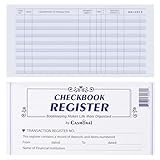
- Compact and Sturdy: These checkbook registers offer clear pages with 17 lines each, making it easy to track account withdrawals; The bold layout and spacious rows and columns (0.32 in wide) provide a comfortable writing experience
- Simplify financial management: The Casmonal account books help you effortlessly remember automatic deductions, dodge overdraft risks, and gain insight into your spending patterns, making financial tracking simple and clear
- Financial instruments: These transaction Registers simplifie your financial monitoring, helping you easily manage your balance, precisely budget, and work towards your financial goals; It's a convenient tool for achieving financial success
- Personal and Small Business Finances: The check register simplifies tracking of payments and deposits, equipped with columns for item numbers, transactions, and balances, making it an ideal tool for managing both personal and small business finances
- Small and Portable: These compact 6x3 inches checkbooks are perfect for on-the-go financial tracking and feature a stylish calendar from 2026 to 2028, guiding you through a better financial journey
This structure aligns with the account’s purpose as a transaction hub rather than a store of value. Funds are expected to enter and exit frequently, limiting the bank’s ability to deploy those deposits for longer-term lending or investment activities that generate interest income.
Savings Accounts and the Role of Interest Accrual
Savings accounts are explicitly designed to earn interest, compensating depositors for leaving funds untouched for longer periods. Interest represents the cost paid by the bank for using deposited funds to support lending and other balance sheet activities.
The interest rate is typically expressed as an annual percentage yield (APY), which reflects both the stated interest rate and the effect of compounding. Compounding occurs when earned interest is added to the principal balance, allowing future interest calculations to apply to a larger base.
The Tool Desk
Outbyte PC Repair FREEClear out junk files and repair common Windows errorsFree Scan →Outbyte Driver Updater FREEFix the driver behind crashes, sound loss and screen glitchesFind Drivers →Rate Differentials, Compounding, and Time Horizon
Savings account interest rates are generally higher than those of checking accounts because savings balances are more stable and predictable. Compounding frequency, often daily or monthly, determines how quickly interest earnings accumulate, though the rate itself is the dominant factor.
Over short time horizons, the difference in earned interest may appear modest. Over longer periods, even small rate differentials can materially affect outcomes, particularly when balances remain largely undisturbed.
Opportunity Cost and Inflation Considerations
Holding cash in a non-interest-bearing checking account carries an opportunity cost, defined as the foregone earnings that could have been generated elsewhere with minimal additional risk. This cost becomes more pronounced when savings account rates rise or when balances exceed what is necessary for routine transactions.
Inflation further complicates the picture by reducing purchasing power over time. When interest earned fails to keep pace with inflation, cash balances experience a real decline in value, even if the nominal balance remains unchanged. Savings accounts partially offset this effect, while most checking accounts do not.
Structural Incentives Embedded in Interest Design
Interest policy reinforces behavioral separation between accounts. Checking accounts discourage accumulation by offering liquidity without reward, while savings accounts encourage retention by offering compensation for patience.
This design supports a functional division within personal cash management. One account facilitates movement and settlement, while the other prioritizes value preservation over time through interest accrual.
Fees, Minimums, and Fine Print: Cost Structures That Matter in Real Life
Interest rates and compounding explain how accounts generate value, but cost structures determine how much of that value is actually retained. Fees, balance requirements, and contractual conditions can quietly offset interest earnings or impose direct losses, particularly for smaller or fluctuating balances. Understanding these mechanics is essential to evaluating the real-world efficiency of both checking and savings accounts.
Monthly Maintenance Fees and Waiver Conditions
Checking accounts commonly charge monthly maintenance fees in exchange for transaction services, payment processing, and branch access. These fees are often waived if specific conditions are met, such as maintaining a minimum daily balance, setting up direct deposit, or completing a required number of transactions.
Savings accounts may also charge maintenance fees, though they are typically lower and more closely tied to balance thresholds. Because savings balances are intended to remain relatively stable, falling below a required minimum can trigger recurring charges that erode interest earnings over time.
Minimum Balance Requirements and Balance Calculation Methods
Minimum balance requirements specify the lowest amount that must be maintained to avoid fees or to earn a stated interest rate. Financial institutions may calculate this minimum using different methods, such as average daily balance or minimum daily balance, each producing different outcomes depending on cash flow patterns.
Checking accounts with frequent inflows and outflows are more likely to dip below thresholds, increasing fee exposure. Savings accounts, while less volatile, can still incur penalties if funds are withdrawn without regard to balance requirements.
Transaction-Related Fees and Usage Sensitivity
Checking accounts are designed for frequent use and may include fees for overdrafts, defined as transactions that exceed the available balance. Overdraft fees are among the most significant costs in consumer banking and can accumulate rapidly when account monitoring is inconsistent.
Quick wins for a faster PC:
Clear out junk files and repair common Windows errorsFree Scan →Fix the driver behind crashes, sound loss and screen glitchesFind Drivers →Repair Windows errors before they cause bigger problemsFix Now →Savings accounts generally limit transaction activity and may impose fees for excessive withdrawals or transfers. These charges reflect the account’s purpose as a holding vehicle rather than a payment tool, reinforcing its role in longer-term cash storage.
Interest Rate Tiers and Conditional Earnings
Some savings accounts offer tiered interest rates, where higher balances earn higher yields. Others advertise competitive rates that apply only when specific conditions are met, such as linked checking accounts or electronic statements.
Rank #3

- 12 Easy Read Register Checkbook Transaction Registers: Balance your check account withdrawals with this checkbook register featuring 16 lines per pages. This thicker body paper is small enough to carry in your pocket or wallet. Column headings are bold easy to read.
- Made in the USA. Each register has 444 lines. Lines are gray in color. Standard checkbook registers having Item No. Date, Description of Transaction, Payment Debit, Deposit Credit and Balance Column.
- High-quality ink print is easy on the eyes and a great booklet for easy insertion into your checkbook.
- Calendars on Back: Check register has up-to date 2025-2026-2027 calendars printed on the back.
- Checkbook Measures: Checkbook register measures 6x3 inches.
Checking accounts that pay interest often do so under restrictive terms, including caps on eligible balances or mandatory debit card usage. These conditions can reduce the practical benefit of interest and introduce behavioral requirements that may not align with everyday usage patterns.
Account Disclosures, Policy Changes, and Hidden Frictions
All deposit accounts are governed by account agreements that outline fee schedules, interest calculations, and the institution’s right to modify terms. These disclosures, often referred to as fine print, can materially affect account performance when policies change or promotional terms expire.
Free tools Windows power users keep installed
One-click scans. No signup required.
Because checking and savings accounts serve different functional roles, their cost structures reflect different priorities. Evaluating fees, minimums, and conditions alongside interest rates provides a more accurate picture of how each account fits into an efficient personal cash management system.
Rules and Regulations: Federal Protections, Withdrawal Limits, and Bank Policies
Beyond fees and interest mechanics, checking and savings accounts are shaped by regulatory frameworks that govern how funds are protected, accessed, and restricted. These rules influence not only account safety but also how each account functions within a broader cash management system. Understanding these regulatory distinctions clarifies why the two account types are structured differently.
Federal Deposit Insurance and Account Safety
Both checking and savings accounts at insured banks are typically covered by federal deposit insurance. In the United States, the Federal Deposit Insurance Corporation (FDIC) insures deposits up to a standard limit per depositor, per institution, per ownership category, protecting consumers against bank failure rather than market loss.
This protection applies equally to both account types, meaning regulatory safety does not differ based on whether funds are held in checking or savings. As a result, the choice between the two is driven by access, usage, and yield considerations rather than differences in deposit security.
Withdrawal and Transfer Limitations on Savings Accounts
Savings accounts have historically been subject to federal restrictions on certain types of withdrawals and transfers. These limits were rooted in Regulation D, a Federal Reserve rule that distinguished savings deposits from transaction accounts by limiting convenient withdrawals, such as electronic transfers and automatic payments.
Although the Federal Reserve removed the mandatory numerical limit in 2020, many banks continue to enforce their own withdrawal caps through account policies. These institutional limits preserve the functional separation between savings and checking accounts, reinforcing savings as a less liquid vehicle intended for accumulation rather than daily spending.
Liquidity and Transaction Flexibility
Checking accounts are classified as transaction accounts, meaning they are designed for unrestricted access to funds. They generally allow unlimited deposits, withdrawals, and payments without regulatory limits on transaction frequency, supporting their role as the primary account for income receipt and expense management.
Savings accounts, by contrast, prioritize stability over flexibility. Even when banks relax formal withdrawal limits, they may still reserve the right to impose fees, convert the account type, or close the account if transaction activity resembles that of a checking account.
Bank Discretion and Internal Policy Controls
In addition to federal rules, banks apply internal policies that shape how accounts operate in practice. These policies govern daily withdrawal limits, funds availability schedules, and conditions under which accounts may be frozen or restricted for compliance or risk management purposes.
Because these policies vary by institution, two accounts with similar labels can function quite differently. Reviewing account agreements alongside regulatory protections helps clarify how much access, flexibility, and control a given checking or savings account actually provides.
Regulatory Structure and Functional Purpose
The regulatory environment reinforces the intended roles of checking and savings accounts within personal finance. Checking accounts emphasize liquidity and transactional efficiency, while savings accounts emphasize balance retention and controlled access.
These structural differences are not incidental; they are designed to guide consumer behavior toward separating daily spending from reserve funds. Recognizing how regulations and bank policies shape account usage supports more deliberate and efficient cash management decisions.
Recommended Free Tools
Use Cases in a Smart Money System: When to Use Checking, When to Use Savings
Within the regulatory and policy framework described above, checking and savings accounts function as complementary tools rather than interchangeable products. A smart money system separates funds based on purpose, access needs, and risk of unintended spending. This functional separation reflects how banks design these accounts and how financial systems process transactions.
Checking Accounts as the Financial Operating Hub
Checking accounts are structured to serve as the operational center of everyday finances. They are optimized for frequent inflows and outflows, such as payroll deposits, bill payments, debit card purchases, and peer-to-peer transfers. High liquidity, defined as the ability to access funds immediately without penalty, is the defining characteristic of this account type.
Because checking accounts prioritize access over yield, they typically offer little or no interest. This tradeoff aligns with their purpose: facilitating transactions rather than preserving or growing balances. Holding excess funds in checking primarily increases convenience, not financial efficiency.
Rank #4

- 24 Easy Read Checkbook Registers for Personal Checkbook
- Standard checkbook register measuring 3" x 6".
- The white and blue background makes recording clearer and less prone to eye fatigue.
Savings Accounts as a Reserve and Buffer Mechanism
Savings accounts function as reserve accounts within a money system. They are designed to hold funds that are not required for daily transactions, such as emergency reserves, short-term goals, or planned expenditures with a longer time horizon. Reduced transaction frequency reinforces the account’s role as a balance-retention tool.
Windows Errors? Fix Them Before They Spread
Repair common Windows errors and clear accumulated junk for a smoother, more stable PC - no reinstall needed.Free scan · no reinstallOutdated Drivers Are Slowing You Down
One free scan finds every outdated or missing driver and matches the right update for your exact hardware.Free scan · exact hardware matchInterest earnings, while modest, compensate account holders for limiting access to these funds. Interest represents the price paid by the bank for temporary use of deposited money, expressed as an annual percentage yield (APY). This yield is secondary to safety and liquidity but materially differentiates savings from checking.
Coordinating Checking and Savings for Cash Flow Control
A structured system assigns distinct roles to each account to reduce friction and behavioral risk. Checking absorbs income and covers routine expenses, while savings holds funds that are intentionally removed from daily spending circulation. Transfers between the two accounts act as controlled gateways rather than constant transaction channels.
This separation supports cash flow clarity. When balances are aligned with purpose, it becomes easier to distinguish spendable money from reserved money without relying on mental accounting alone. The account structure itself enforces discipline through access limitations and transaction visibility.
Liquidity Tradeoffs and Access Planning
Although both account types are liquid compared to long-term investments, their liquidity is not equivalent. Checking offers immediate, unlimited transactional access, while savings introduces mild friction through transfer limits, processing delays, or policy-based restrictions. These constraints are deliberate design features, not technical shortcomings.
Understanding these differences is essential when assigning funds to each account. Money that may be needed on short notice for routine obligations aligns with checking, while funds intended to absorb irregular or future costs align with savings. Liquidity planning reduces the likelihood of forced transfers or unintended fees.
Fee Exposure and Balance Management Considerations
Checking accounts are more frequently associated with activity-based fees, such as overdraft charges, insufficient funds fees, or out-of-network ATM fees. These fees arise from transactional intensity and real-time payment processing. Savings accounts, by contrast, tend to impose fees related to balance thresholds or excessive withdrawals.
The fee structures reinforce intended behavior. Checking penalizes mismanaged cash flow, while savings penalizes excessive access. Recognizing how fees align with account purpose helps explain why banks discourage using one account type as a substitute for the other.
Common Misalignments and Structural Risks
Using a savings account for daily spending can trigger restrictions, delays, or account reclassification under bank policy. Conversely, storing large reserve balances in checking increases exposure to spending errors and offers little compensation in the form of interest. These misalignments weaken the structural benefits built into each account type.
Free tools Windows power users keep installed
One-click scans. No signup required.
A smart money system does not depend on constant monitoring or willpower. It relies on aligning account design with financial function so that routine behavior supports, rather than undermines, effective money management.
Independent reader supportYour contribution helps us test, update, and keep practical guides available for everyone.Choosing the Right Accounts for Your Life Stage and Financial Goals
Once the structural roles of checking and savings are clear, the next step is understanding how those roles shift as financial complexity increases. Life stage influences income stability, expense predictability, and risk tolerance, all of which affect how funds are distributed between transactional and reserve accounts. The objective is not account optimization in isolation, but functional alignment across the entire cash system.
Different stages of life introduce different liquidity demands and planning horizons. Checking and savings accounts remain foundational throughout, but their relative balances and usage patterns evolve as financial responsibilities change.
Early Career and Income Volatility
In early earning years, income may be irregular while expenses are relatively fixed. Checking accounts function as the operational hub for rent, utilities, transportation, and debt payments, requiring frequent access and precise balance management. Savings accounts at this stage primarily serve as short-term buffers against income gaps or unexpected costs.
Do these 3 things before closing this tab:
1Repair Windows errors before they cause bigger problems2Scan for outdated or missing drivers - takes under a minute3Clear out junk files and repair common Windows errorsBecause cash flow variability is high, the separation between spending money and reserve money is especially important. Savings introduces friction that helps preserve limited surplus funds, while checking absorbs daily transaction volume. The structure compensates for uncertainty without requiring complex financial tools.
Household Formation and Expense Expansion
As households grow, expenses become more numerous and less predictable, even if income stabilizes. Checking accounts continue to manage routine obligations, but savings accounts often take on multiple roles, such as emergency reserves, near-term planned expenses, and sinking funds. A sinking fund is money set aside gradually for a known future cost, such as insurance premiums or home maintenance.
At this stage, savings balances tend to increase not for yield, but for resilience. The account’s limited transaction features reduce the risk that funds allocated for future needs are absorbed into daily spending. Structural separation becomes a risk-control mechanism rather than a budgeting preference.
Mid-Career Stability and Goal Segmentation
With higher and more predictable income, financial systems often become more segmented. Checking remains focused on cash flow efficiency, while savings accounts are increasingly organized around specific objectives. This may include separate savings for emergencies, short-term goals, or anticipated irregular expenses.
Best Value

- Keep Your Finances Organized: A very simple and efficient check register, it suitable for personal and commercial use. You can record checks, deposits, withdrawals and any budget notes you want to achieve your financial goals.
- Holds a Lot of Entries:2834 entries in total /26 entries each page. So many pages and this will last a long time. You can keep it instead of the individual check registers. More room to make notes on an entry. Each line is big enough to read what is written.
- Thick Pages and doesn’t Bleed Through: 100gsm paper, no bleed through. 180°lay flat so it’s easy to write in. With a pen loop, bookmarker and pocket for storing receipts and checks.
- Perfect Size for Carrying: Register book Size 5.8in x 8.3 in, perfect size for keeping track of multiple accounts. Enough to take with you in your purse and write down transactions through out the day.
- Ideal Gift Options: Great for keeping banking activity. A great present for Children, parents, colleagues, friends. during various holidays, birthdays and anniversaries, such as Christmas, Thanksgiving, Mother's Day.
Interest earned in savings remains modest, but its role is secondary to liquidity management and capital preservation. Funds that may be needed within a short time frame retain priority access over higher-yield but less liquid alternatives. The checking-savings distinction supports clarity about which money is available for use and which is reserved.
Pre-Retirement and Reduced Income Dependence
As reliance on earned income decreases, liquidity planning shifts from accumulation to distribution. Checking accounts handle ongoing expenses and payment processing, while savings accounts often serve as staging areas for upcoming withdrawals or irregular expenditures. The emphasis is on accessibility without exposing large balances to transactional risk.
At this stage, the interest differential between account types is typically less significant than predictability and control. Savings accounts continue to provide a buffer against timing mismatches between income sources and expenses. Structural simplicity reduces the likelihood of errors during periods of financial transition.
Aligning Accounts With Financial Objectives
Across all life stages, the guiding principle remains consistent: checking supports movement, savings supports preservation. Financial goals with short timelines or uncertain timing align with savings, while immediate obligations align with checking. Misplacing funds between these functions introduces either unnecessary friction or unnecessary risk.
Effective money management systems rely on account design rather than constant intervention. By assigning funds to accounts that naturally encourage the intended behavior, individuals reduce decision fatigue and fee exposure. The result is a system where structure reinforces financial discipline without requiring continuous oversight.
Common Mistakes and Optimization Tips: How to Make Checking and Savings Work Together
When checking and savings accounts are not coordinated deliberately, inefficiencies emerge that undermine liquidity, increase costs, or weaken financial discipline. These issues rarely stem from product design alone, but from mismatches between account function and actual usage. Understanding common errors clarifies how structure, rather than constant monitoring, supports effective money management.
Using a Single Account for All Cash Needs
A frequent mistake is consolidating all cash into a single checking account for simplicity. While operationally convenient, this approach blurs the distinction between spendable funds and reserved funds, increasing the likelihood of overspending. Transactional accounts are designed for frequent use, not for preserving balances over time.
Separating savings introduces a structural barrier that supports intentional use of funds. Even modest friction, such as a transfer delay, reinforces prioritization without restricting access. The distinction aligns daily behavior with the intended purpose of each dollar.
Quick wins for a faster PC:
Fix the driver behind crashes, sound loss and screen glitchesFind Drivers →Repair Windows errors before they cause bigger problemsFix Now →Scan for outdated or missing drivers - takes under a minuteDriver Scan →Maintaining Excessive Balances in Checking
Holding large balances in checking accounts exposes funds to unnecessary transactional risk, including fraud, errors, or unauthorized withdrawals. Checking accounts typically earn little to no interest, creating an opportunity cost when balances exceed near-term spending needs. Liquidity beyond immediate obligations does not require constant access.
Savings accounts reduce these risks while preserving accessibility. Funds not needed for routine expenses can remain available without being continuously exposed to payment activity. This allocation improves both security and clarity.
Ignoring Transfer Limits and Timing Constraints
Savings accounts may be subject to withdrawal or transfer limits, depending on the institution and account type. While federal Regulation D previously capped certain transactions, many banks still impose internal limits or fees. Failing to account for these constraints can disrupt cash flow when funds are needed quickly.
Effective coordination accounts for timing and frequency of transfers. Checking accounts should hold sufficient funds to cover predictable expenses, while savings serve as a buffer rather than a real-time payment source. This reduces reliance on last-minute transfers.
What’s actually slowing this PC down?
Pick the symptom - the matching free tool is one click away.
Overlooking Fee Structures and Minimum Balance Requirements
Both checking and savings accounts may include maintenance fees, minimum balance requirements, or transaction-based charges. These costs are often avoidable but become persistent when account usage does not align with the institution’s terms. Small inefficiencies compound over time.
Optimized account usage ensures balances and activity levels remain within fee-free thresholds. Understanding how each account assesses charges allows the structure to function passively, without frequent adjustments. Cost control becomes a byproduct of alignment rather than ongoing vigilance.
Failing to Assign a Clear Role to Savings
Savings accounts are sometimes treated as a vague overflow rather than a defined component of the financial system. Without a specific purpose, transfers become inconsistent and balances fluctuate unpredictably. This undermines the psychological and practical benefits of separation.
Assigning savings to defined short-term or irregular needs reinforces its preservation role. Whether designated for emergencies, upcoming expenses, or income smoothing, clarity of purpose stabilizes usage patterns. The account functions as intended without requiring frequent decision-making.
Designing a Coordinated Cash Flow System
When properly aligned, checking and savings accounts operate as complementary components rather than isolated products. Checking manages inflows and outflows, while savings absorbs volatility and protects surplus liquidity. Transfers between them reflect planned movement rather than reactive behavior.
This coordination reduces errors, fees, and cognitive burden. The system supports consistency across income levels and life stages by relying on structure instead of constant attention. The result is a resilient cash management framework where each account reinforces the function of the other.
Quick Recap
Product prices and availability are accurate as of the date/time indicated and are subject to change. Any price and availability information displayed on Amazon at the time of purchase will apply.




