Free tools Windows power users keep installed
One-click scans. No signup required.
Financial literacy for adults extends far beyond knowing how to budget or understanding basic investment terminology. It represents the ability to interpret financial information, evaluate trade-offs, and make consistent decisions across changing economic conditions and personal circumstances. At its core, financial literacy is a functional skill set combined with a disciplined mindset that supports stability, resilience, and long-term planning.
Unlike academic knowledge, adult financial literacy is applied and cumulative. Each financial decision interacts with income patterns, family responsibilities, legal obligations, and time horizons. Misunderstanding one area, such as debt or taxes, often creates compounding effects across other areas, including credit access, savings capacity, and retirement readiness.
Financial Literacy as a Mindset, Not Just Knowledge
Financial literacy begins with a cognitive framework that prioritizes intentional decision-making over reactive behavior. This mindset emphasizes understanding opportunity cost, defined as the value of the best alternative forgone when a choice is made. Every financial action, including spending, borrowing, or investing, implicitly excludes other potential uses of money.
An essential component of this mindset is distinguishing between short-term consumption and long-term financial capacity. Consumption refers to spending on goods and services that provide immediate benefit, while financial capacity reflects the ability to absorb shocks, pursue opportunities, and maintain independence over time. Financial literacy aligns daily decisions with longer-term outcomes rather than emotional or situational pressures.
PC Slower Than It Used to Be?
A free scan shows the junk files, broken settings and background clutter dragging Windows down - then fixes them in one click.Free scan · Windows 10 & 11Outdated Drivers Are Slowing You Down
One free scan finds every outdated or missing driver and matches the right update for your exact hardware.Free scan · exact hardware match#1 Best Overall

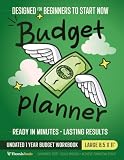
- Effective Budget Planning - Take control of your finances with the budget account book. This comprehensive planner allows you to plan and track your income, expenses, savings, and financial goals in one convenient place. With its intuitive layout and easy-to-use sections, you can stay organized and make informed decisions to achieve financial success.
- User-Friendly Layout - The budget planner features a user-friendly layout designed for easy navigation and organization. Each month, you'll find dedicated budget pages where you can set financial goals, track your income, and plan your expenses. Additional sections include debt trackers, savings goals, bill payment trackers, and more, making it simple to stay on top of your finances.
- Undated Monthly Calendar & Bonus Stickers - Featuring undated calendar each month, you'll have ample space to mark paydays, bills due, appointments, and important dates. Say goodbye to difficult writing spaces. Plus, we've included 3 cute sticker sheets that allow you to personalize your financial organizer and make budgeting more fun. Dates are not pre-printed and are completed by the user.
- Reliable and Convenient Design - Our monthly budget planner is designed for your convenience and built to last. The elastic band keeps everything securely in place, and the dual-sided pocket provides extra storage. Experience a budget planner that combines practicality and durability.
- Master Budgeting with Ease - Our financial planner includes a complete guidebook that provides valuable insights and instructions for optimal usage. From setting financial goals to tracking expenses, this guidebook offers step-by-step guidance and practical tips. Whether you're new to budgeting or an experienced user, this resource will help you make the most of your budget planner, empowering you to achieve financial success.
Risk awareness also defines financial maturity. Risk, in financial terms, refers to the variability of outcomes and the possibility of loss. Literate adults recognize that avoiding all risk is neither possible nor desirable, but unmanaged risk can destabilize household finances through events such as income loss, medical expenses, or market volatility.
Goal Formation and Financial Prioritization
Financial literacy enables adults to translate abstract objectives into measurable financial goals. A financial goal is a defined outcome with a time horizon and a monetary dimension, such as accumulating emergency reserves or reducing outstanding liabilities. Clear goal structure allows financial information to be evaluated in context rather than in isolation.
Time horizon plays a central role in prioritization. Short-term goals typically involve liquidity, meaning access to cash without significant loss of value. Medium-term goals often involve planned expenditures or debt reduction, while long-term goals focus on wealth accumulation and income sustainability. Each horizon interacts differently with saving, credit, and investment decisions.
Trade-offs between goals are unavoidable. Financial literacy involves recognizing constraints such as income, fixed expenses, and tax obligations, and understanding how allocating resources to one objective limits progress toward another. This awareness supports consistency rather than perfection in financial behavior.
Financial Literacy Across Adult Life Stages
Adult financial literacy evolves as personal and economic conditions change. Early adulthood often involves income instability, education-related debt, and limited assets. At this stage, literacy centers on cash flow management, credit fundamentals, and understanding contractual obligations tied to loans and employment.
Midlife typically introduces higher earning potential alongside increased complexity. Housing costs, dependents, insurance needs, and tax exposure expand simultaneously. Financial literacy at this stage requires integrating budgeting, risk management, defined as the use of tools like insurance to transfer financial risk, and long-term investing concepts such as diversification, which is the practice of spreading investments to reduce exposure to any single risk.
Later adulthood shifts focus toward preservation and income reliability. Retirement planning becomes central, involving the coordination of savings vehicles, withdrawal strategies, and public benefits. Financial literacy here includes understanding longevity risk, the possibility of outliving financial resources, and inflation risk, which refers to the erosion of purchasing power over time.
The Practical Scope of Adult Financial Literacy
Comprehensive financial literacy encompasses interconnected domains rather than isolated topics. Budgeting involves tracking and allocating income, but it also informs saving capacity and debt repayment. Credit literacy includes understanding interest, the cost of borrowing expressed as a percentage, and how credit history affects access to financial products.
The Tool Desk
Outbyte PC Repair FREERepair Windows errors before they cause bigger problemsFix Now →Outbyte Driver Updater FREEFix the driver behind crashes, sound loss and screen glitchesFind Drivers →Investment literacy introduces concepts such as asset classes, which are groups of investments with similar characteristics, and compounding, the process by which earnings generate additional earnings over time. Tax literacy explains how different income sources and financial decisions affect after-tax outcomes. Retirement literacy integrates all prior elements into a long-term framework for income replacement and financial independence.
Taken together, financial literacy for adults is not a static achievement but an adaptive skill set. It reflects the ability to process financial information, align actions with evolving goals, and manage uncertainty across the full span of adult life.
Understanding Your Money Flow: Income, Expenses, Net Worth, and Cash Management
Building on the broader scope of adult financial literacy, effective money management begins with understanding how financial resources move through a household. Income, expenses, net worth, and cash management form an integrated system rather than separate concepts. Together, they provide a factual framework for evaluating financial capacity, constraints, and resilience at any stage of adulthood.
Income: Sources and Stability
Income represents the inflow of money received over a given period. Common sources include wages and salaries, self-employment earnings, investment income such as interest or dividends, and transfer income, which includes pensions or public benefits. Each source differs in predictability, tax treatment, and growth potential.
Income stability refers to the consistency and reliability of these inflows over time. Employment income may fluctuate due to hours worked or economic conditions, while investment income may vary with market performance. Understanding both the amount and reliability of income is essential for evaluating spending capacity and financial risk exposure.
Expenses: Fixed, Variable, and Discretionary
Expenses are the outflow of money required to maintain daily life and financial obligations. Fixed expenses are relatively stable and recurring, such as rent, mortgage payments, insurance premiums, or loan repayments. Variable expenses fluctuate based on usage or behavior, including utilities, groceries, and transportation.
Discretionary expenses are a subset of variable costs tied to personal choice rather than necessity, such as entertainment or dining out. Distinguishing among these categories clarifies which costs are contractual, which are flexible, and how spending patterns respond to changes in income or priorities.
Cash Flow: The Relationship Between Income and Expenses
Cash flow refers to the timing and balance between income inflows and expense outflows. Positive cash flow occurs when income exceeds expenses within a given period, while negative cash flow occurs when expenses exceed income. This relationship affects liquidity, defined as the ability to meet short-term financial obligations without selling long-term assets.
What’s actually slowing this PC down?
Pick the symptom - the matching free tool is one click away.
Cash flow analysis focuses on when money is received and when it is spent, not merely on annual totals. Irregular income or uneven expense timing can create short-term strain even when overall income appears sufficient. Understanding cash flow highlights potential pressure points within the financial cycle.
Net Worth: Measuring Financial Position
Net worth is a snapshot measure of financial position at a specific point in time. It is calculated as total assets minus total liabilities. Assets are resources with economic value, such as cash, retirement accounts, real estate, or investment holdings.
Liabilities are financial obligations, including mortgages, student loans, credit card balances, and other debts. Net worth does not measure income or spending behavior, but it reflects the cumulative results of past financial decisions and market conditions. Tracking changes in net worth over time provides insight into long-term financial progress or deterioration.
Cash Management: Liquidity and Short-Term Control
Cash management refers to how readily available funds are organized, accessed, and allocated to meet short-term needs. This includes the use of transaction accounts, such as checking accounts, and savings vehicles designed for near-term accessibility. Effective cash management reduces reliance on high-cost borrowing during temporary shortfalls.
A key concept within cash management is liquidity risk, which is the risk of being unable to meet obligations when they come due. Managing liquidity involves aligning cash availability with expected expenses and income timing. This function supports stability across all other areas of financial planning, from debt management to investing.
Integrating Money Flow into Financial Literacy
Income, expenses, net worth, and cash management are interdependent components of a single system. Income enables spending and saving, expenses determine cash flow outcomes, and cash flow influences changes in net worth. Cash management serves as the operational layer that keeps the system functioning on a day-to-day basis.
Understanding this system equips adults to interpret financial information accurately and anticipate the effects of change. Shifts in income, unexpected expenses, or rising debt levels can be evaluated within a structured framework rather than in isolation. This integrated perspective forms the analytical foundation for more advanced topics in saving, credit, investing, risk management, taxation, and retirement planning.
Building a Real-World Budget That Actually Works (Systems, Tools, and Adjustments)
With an understanding of income flows, expenses, net worth, and cash management, budgeting becomes the mechanism that translates financial awareness into daily control. A budget is not merely a spending limit; it is a structured decision-making system that assigns purpose to each unit of income. Its primary function is to align short-term cash behavior with longer-term financial priorities and constraints.
Quick wins for a faster PC:
Fix the driver behind crashes, sound loss and screen glitchesFind Drivers →Clear out junk files and repair common Windows errorsFree Scan →In practical terms, budgeting operates at the intersection of liquidity management and behavioral discipline. It establishes expectations for spending, saving, and debt payments before money is used, rather than reacting afterward. This forward-looking structure reduces uncertainty and makes financial outcomes more predictable.
What a Budget Is—and What It Is Not
A budget is a planned allocation of income across defined categories over a specific time period, typically monthly. Categories commonly include fixed obligations, variable living expenses, discretionary spending, savings, and debt repayment. Each category represents a deliberate choice about how income will be used.
A budget is not a guarantee of perfect adherence or an attempt to eliminate all discretionary spending. Deviations from a plan are normal and expected, particularly when income or expenses fluctuate. The effectiveness of a budget is measured by how well it supports awareness, adjustment, and control over time.
Choosing a Budgeting Framework
Budgeting frameworks provide structure for allocating income and monitoring outcomes. One widely used framework is the percentage-based budget, such as allocating income across needs, wants, and savings using predefined ratios. These frameworks offer simplicity but may lack precision for households with irregular income or complex obligations.
Another framework is zero-based budgeting, which assigns every dollar of income a specific role, resulting in income minus allocations equaling zero. This approach increases visibility and intentionality but requires more frequent tracking and adjustments. The appropriate framework depends on income stability, financial complexity, and the level of detail required for effective control.
Identifying Fixed, Variable, and Irregular Expenses
Expenses fall into three functional categories that affect budgeting accuracy. Fixed expenses are obligations with consistent amounts and due dates, such as rent, insurance premiums, or loan payments. These expenses form the structural baseline of a budget and are typically prioritized first.
Variable expenses fluctuate month to month and include categories such as groceries, utilities, transportation, and personal spending. Irregular expenses occur infrequently but predictably, including annual insurance premiums, vehicle maintenance, or professional fees. Incorporating irregular expenses into a monthly budget through averaging reduces the risk of cash shortfalls when they occur.
Integrating Savings and Debt into the Budget
Savings and debt payments are not residual outcomes of a budget; they are core allocations within it. Savings refers to income set aside for future use, including emergency funds, planned purchases, or long-term goals. Treating savings as a required category rather than a discretionary one increases consistency and resilience.
Rank #2

- Effective Budget Plan Book – Take control of your finances with the SUNEE budget account book. This all-in-one budget planner allows you to plan and track your income, expenses, savings, and financial goals. Its intuitive layout and easy-to-use sections help you stay organized and make smart decisions to reach financial success. Our financial planner also included a comprehensive guidebook with valuable tips and instructions to help you get the most out of your budgeting planner.
- Full-Page Calendars – Each month’s full-page calendar provides plenty of space to track paydays, bills due dates, appointments, and important events. No more cramped boxes or tight writing areas, you can easily plan and organize your schedule at a glance.
- Colorful Pages Layout and Tabs – This vibrant budget planner features a user-friendly design for easy navigation and organization. Each month includes dedicated budget pages to set financial goals, track income, and plan expenses. Additional sections like debt trackers, savings goals, and bill payment trackers make managing your finances a breeze. The colorful backgrounds on each page offer clear, instant visibility.
- Bonus 4 Stickers and Convenient Design – This monthly budget planner is built for convenience and durability. Water-resistant cover protects against spills, while the elastic band keeps everything secure, and the dual-sided pocket offers extra storage. Plus, we’ve included 4 adorable sticker sheets to personalize your planner and make budgeting more enjoyable. Experience a budget planner that combines practicality with lasting quality.
- UNDATED DESIGN & 1 YEAR USE - Undated finance books start with 1 page-financial goals, 1 page-Mind Map, 1 page-Financial Strategy, 1 page-Tactics, 2 pages-Important Dates, 4 pages-Bill Tracker, 4 pages-Saving Tracker, 8 pages-Debt Tracker, followed by 12 Months(10 pages per month, 1 unique color for each month). 2 pages-Christmas Budgeting, 2 pages-Yearly Summary, 2 pages-Check Register and 12 pages-Notes(dotted). It is UNDATED, so you could start at any time, suitable for 1 year use.
Debt payments include both minimum required payments and any additional principal reductions. Minimum payments maintain account standing, while additional payments affect interest costs and repayment timelines. Including debt obligations explicitly in the budget clarifies trade-offs between current consumption, savings, and future financial flexibility.
Budgeting Tools and Tracking Methods
Budgeting tools range from manual systems to automated software. Manual tools, such as spreadsheets or paper-based trackers, offer transparency and flexibility but require active maintenance. Digital tools, including budgeting apps and financial management platforms, automate transaction tracking and categorization but may obscure underlying assumptions if not reviewed regularly.
Regardless of the tool used, tracking compares planned allocations to actual outcomes. This comparison identifies patterns, inconsistencies, and areas where assumptions differ from reality. The value of tracking lies in analysis rather than precision, as small categorization errors do not undermine overall insight.
Adjusting Budgets for Real-World Variability
Budgets must adapt to changing conditions to remain relevant. Income changes, expense inflation, life transitions, and unexpected events all require revisions to allocations. A static budget that is not updated becomes a record-keeping exercise rather than a planning tool.
Do these 3 things before closing this tab:
1Repair Windows errors before they cause bigger problems2Fix the driver behind crashes, sound loss and screen glitches3Clear out junk files and repair common Windows errorsPeriodic review allows for recalibration based on observed spending behavior and evolving priorities. Adjustments may involve reallocating funds between categories, revising savings targets, or modifying discretionary spending limits. This iterative process reinforces budgeting as an ongoing system rather than a one-time setup.
Behavioral Frictions and Budget Sustainability
Budget failure is often attributed to unrealistic assumptions rather than lack of discipline. Underestimating variable expenses, excluding irregular costs, or setting overly restrictive limits increases the likelihood of abandonment. Sustainable budgets reflect actual behavior patterns while gradually shaping improved outcomes.
Behavioral frictions, such as impulse spending or decision fatigue, can be mitigated through structural choices. Examples include separating spending and savings accounts or aligning bill payments with income timing. These mechanisms support consistency without relying solely on constant attention or motivation.
The Role of Budgeting Within the Broader Financial System
Budgeting serves as the operational link between cash management and long-term financial planning. It determines how income supports liquidity, debt reduction, asset accumulation, and risk management objectives. Without a functional budget, other financial strategies lack a reliable execution framework.
Recommended Free Tools
As financial complexity increases through investing, tax planning, or retirement saving, budgeting remains essential. It ensures that competing financial priorities are balanced within real-world constraints. This operational discipline underpins informed decision-making across all subsequent areas of financial literacy.
Saving With Purpose: Emergency Funds, Short-Term Goals, and Smart Cash Strategies
With a functional budget in place, saving becomes an intentional extension of cash management rather than a residual outcome. Purpose-driven saving assigns specific roles to accumulated cash, clarifying how liquidity supports stability, flexibility, and planned consumption. This distinction is essential because not all savings serve the same function or carry the same risk tolerance.
Effective saving strategies separate funds based on time horizon, defined as the expected period before the money will be used. Shorter horizons prioritize capital preservation and access, while longer horizons can tolerate volatility in exchange for higher expected returns. Conflating these purposes often leads to inappropriate risk exposure or inefficient cash usage.
Emergency Funds as Financial Shock Absorbers
An emergency fund is a pool of liquid assets reserved for unexpected and non-discretionary expenses. Liquidity refers to how quickly an asset can be converted into cash without meaningful loss of value. Common examples of emergencies include job loss, medical expenses, or essential home and vehicle repairs.
What’s actually slowing this PC down?
Pick the symptom - the matching free tool is one click away.
The primary function of an emergency fund is risk management rather than growth. By providing immediate access to cash, it reduces reliance on high-cost debt, such as credit cards or payday loans, during financial disruptions. This function supports overall financial system stability by preventing short-term shocks from cascading into long-term damage.
Emergency fund sizing is typically expressed as a multiple of essential monthly expenses rather than income. Essential expenses include housing, utilities, food, insurance, and transportation required to maintain basic functioning. This framing aligns the fund with actual cash outflows that must be covered during income interruption.
Separating Short-Term Savings From Emergency Reserves
Short-term savings are funds set aside for known, planned expenditures expected within a defined time frame, generally under three years. Examples include travel, professional certifications, annual insurance premiums, or major household purchases. Unlike emergencies, these expenses are anticipated and discretionary in timing or scope.
Separating short-term savings from emergency reserves prevents erosion of financial resilience. When planned spending draws from emergency funds, the buffer against true disruptions weakens. Structural separation also improves psychological clarity, reducing internal trade-offs between current goals and future security.
Do these 3 things before closing this tab:
1Repair Windows errors before they cause bigger problems2Scan for outdated or missing drivers - takes under a minute3Clear out junk files and repair common Windows errorsTime horizon governs appropriate storage for short-term savings. Because the objective is availability and value stability, exposure to market volatility is typically minimized. The defining characteristic of these funds is predictability rather than return maximization.
Cash Management and Opportunity Cost
Holding cash involves an opportunity cost, defined as the potential return foregone by not allocating funds to alternative uses. While cash offers safety and flexibility, its purchasing power can decline over time due to inflation, which is the general increase in prices across the economy. This trade-off makes intentional cash allocation critical.
Smart cash strategies balance accessibility with efficiency. This includes evaluating where cash is held, how much is required for each purpose, and how idle balances accumulate. Cash designated for near-term use is treated differently from excess cash beyond operational needs.
Interest-bearing accounts partially offset inflation but do not eliminate it. The role of cash is therefore functional rather than accumulative within a broader financial system. Excess cash that lacks a defined purpose often reflects incomplete planning rather than prudence.
Account Structure and Behavioral Design
Account structure refers to how financial accounts are organized to support specific objectives. Segmentation, such as using separate accounts for operating expenses, emergencies, and short-term goals, creates functional boundaries. These boundaries reduce cognitive load and limit unintended fund usage.
Behavioral design acknowledges that financial decisions are influenced by friction, convenience, and default options. Automating transfers into designated savings accounts aligns behavior with intent by reducing reliance on active decision-making. This supports consistency without requiring continuous oversight.
These structural choices reinforce the budget’s operational role. When saving mechanisms are embedded into cash flow systems, progress becomes observable and measurable. This integration transforms saving from an abstract goal into a routine financial process.
Liquidity Within the Broader Financial Framework
Liquidity planning connects short-term cash needs to long-term financial objectives. Adequate cash reserves enable sustained participation in investing, debt reduction, and retirement saving without interruption during volatility or income changes. This continuity is foundational to long-term financial stability.
As financial complexity increases, the role of cash becomes more strategic. It acts as a buffer that allows other assets to remain aligned with their intended time horizons. Without this buffer, long-term plans are more likely to be disrupted by short-term constraints.
Purpose-driven saving reinforces the broader financial system by assigning each dollar a role. Emergency funds protect stability, short-term savings enable planned consumption, and structured cash management supports disciplined execution. Together, these elements translate budgeting from planning into durable financial capacity.
Managing Debt and Credit Wisely: Loans, Credit Scores, and Avoiding Common Traps
With cash flow, saving, and liquidity established, attention shifts to liabilities. Debt interacts directly with income, savings capacity, and long-term planning, making it a central structural element rather than an isolated obligation. When managed deliberately, debt can support asset building; when unmanaged, it constrains flexibility and amplifies financial stress.
Credit systems exist to price risk and allocate capital, not to optimize household well-being. Understanding how debt products and credit evaluation mechanisms function allows individuals to engage with them strategically rather than reactively. This section examines debt types, credit scoring, and structural risks that commonly undermine financial stability.
Free tools Windows power users keep installed
One-click scans. No signup required.
Understanding Debt as a Financial Instrument
Debt is a contractual obligation to repay borrowed funds under defined terms, including interest, repayment schedule, and penalties for noncompliance. Interest represents the cost of borrowing, expressed as an annual percentage rate (APR), which incorporates both the stated interest rate and certain fees. The economic impact of debt depends on cost, duration, and how it interacts with income stability.
Debt is commonly categorized as secured or unsecured. Secured debt is backed by collateral, such as a home or vehicle, which the lender can claim in the event of default. Unsecured debt, including credit cards and personal loans, carries higher interest rates because repayment relies solely on the borrower’s creditworthiness.
Another functional distinction is between amortizing and revolving debt. Amortizing loans, such as mortgages and auto loans, have fixed repayment schedules that gradually reduce the principal balance. Revolving debt, most notably credit cards, allows balances to fluctuate and can persist indefinitely if payments do not exceed interest and fees.
Productive Versus Consumptive Debt
Debt is often described as productive or consumptive based on its economic effect rather than its label. Productive debt is generally associated with assets or capabilities that support long-term income or utility, such as education or housing. Consumptive debt finances short-lived consumption without generating enduring value.
Recommended Free Tools
Rank #3

- Effective Budget Planning - Take control of your finances with the budget account book. This comprehensive planner allows you to plan and track your income, expenses, savings, and financial goals in one convenient place. With its intuitive layout and easy-to-use sections, you can stay organized and make informed decisions to achieve financial success.
- User-Friendly Layout - The budget planner features a user-friendly layout designed for easy navigation and organization. Each month, you'll find dedicated budget pages where you can set financial goals, track your income, and plan your expenses. Additional sections include debt trackers, savings goals, bill payment trackers, and more, making it simple to stay on top of your finances.
- Undated Monthly Calendar & Bonus Stickers - Featuring undated calendar each month, you'll have ample space to mark paydays, bills due, appointments, and important dates. Say goodbye to difficult writing spaces. Plus, we've included 3 cute sticker sheets that allow you to personalize your financial organizer and make budgeting more fun. Dates are not pre-printed and are completed by the user.
- Reliable and Convenient Design - Our monthly budget planner is designed for your convenience and built to last. The elastic band keeps everything securely in place, and the dual-sided pocket provides extra storage. Experience a budget planner that combines practicality and durability.
- Master Budgeting with Ease - Our financial planner includes a complete guidebook that provides valuable insights and instructions for optimal usage. From setting financial goals to tracking expenses, this guidebook offers step-by-step guidance and practical tips. Whether you're new to budgeting or an experienced user, this resource will help you make the most of your budget planner, empowering you to achieve financial success.
This distinction is not absolute and depends on context, cost, and scale. A low-cost loan aligned with stable cash flow may be manageable, while high-cost borrowing for discretionary spending can erode financial capacity. Evaluating debt through its impact on future cash flow provides a clearer framework than intent alone.
The critical variable is sustainability. Debt obligations must coexist with saving, investing, and risk management without crowding them out. When debt service consumes excessive income, it limits resilience and reduces the ability to adapt to change.
How Credit Scores Are Constructed and Used
A credit score is a statistical measure used by lenders to estimate the probability of repayment. It is derived from credit report data, which documents borrowing history, payment behavior, and account characteristics. While scoring models vary, they follow broadly consistent principles.
Payment history reflects whether obligations are paid on time and is typically the most influential factor. Amounts owed measure outstanding balances relative to available credit, commonly referred to as credit utilization. Length of credit history captures how long accounts have been active, while credit mix reflects the variety of account types.
New credit activity, including recent applications, can temporarily affect scores due to uncertainty about future obligations. Credit scores are not moral assessments or measures of wealth; they are risk indicators designed for lender decision-making. Their relevance lies in how they influence access to credit and borrowing costs.
The Role of Credit in the Broader Financial System
Credit access affects more than borrowing. It can influence insurance premiums, rental approvals, and employment screening in certain jurisdictions. As a result, credit behavior has implications beyond immediate financing decisions.
From a household planning perspective, credit acts as a lever rather than a foundation. Strong credit supports optionality, allowing individuals to respond to opportunities or disruptions without forced liquidation of assets. Weak credit narrows choices and increases dependence on high-cost alternatives.
Maintaining functional credit requires consistency rather than optimization. Stable account management, predictable repayment behavior, and controlled exposure are more influential over time than short-term tactics. This aligns credit management with the broader emphasis on systems and structure.
The Tool Desk
Outbyte Driver Updater FREEScan for outdated or missing drivers - takes under a minuteDriver Scan →Outbyte PC Repair FREERepair Windows errors before they cause bigger problemsFix Now →Common Debt and Credit Traps
One frequent trap is minimum-payment dependency on revolving debt. Minimum payments are structured to extend repayment duration, resulting in disproportionately high interest costs over time. This mechanism can obscure the true cost of borrowing and delay balance reduction.
Another risk is payment stacking, where multiple obligations with different due dates increase the likelihood of missed payments. Even a single late payment can have outsized effects on credit reports and future borrowing terms. Complexity itself becomes a source of financial fragility.
Promotional financing and deferred-interest offers present additional structural risks. These products often impose retroactive interest if balances are not fully repaid within a specified period. Without precise tracking, temporary relief can convert into long-term cost escalation.
Debt Consolidation and Refinancing Considerations
Debt consolidation involves replacing multiple obligations with a single loan, while refinancing replaces an existing loan with new terms. These mechanisms alter cash flow structure but do not eliminate underlying obligations. Their effectiveness depends on interest rates, fees, and behavioral follow-through.
PC Slower Than It Used to Be?
A free scan shows the junk files, broken settings and background clutter dragging Windows down - then fixes them in one click.Free scan · Windows 10 & 11Crashes, No Sound, or Screen Glitches?
Random freezes, missing sound and display glitches usually trace back to one bad driver. Find and replace yours safely.Free scan · under a minuteLower payments achieved through extended loan terms may improve short-term liquidity while increasing total interest paid. Conversely, shorter terms increase payment pressure but reduce long-term cost. Evaluating these trade-offs requires aligning debt structure with income stability and planning horizon.
Structural changes without corresponding behavioral changes often fail to produce lasting improvement. Debt management tools are facilitators, not solutions, and must integrate with budgeting, saving, and liquidity planning already in place.
Integrating Debt Management Into Financial Stability
Debt obligations interact directly with emergency preparedness and long-term objectives. High fixed payments reduce flexibility during income disruptions and can force reliance on additional borrowing. This creates feedback loops that compound financial stress.
Effective integration treats debt as one component of a coordinated system. Cash reserves absorb shocks, predictable repayment supports credit stability, and controlled leverage preserves future capacity. Each element reinforces the others when designed intentionally.
Quick wins for a faster PC:
Clear out junk files and repair common Windows errorsFree Scan →Fix the driver behind crashes, sound loss and screen glitchesFind Drivers →Repair Windows errors before they cause bigger problemsFix Now →Within a comprehensive financial framework, debt management is not about elimination at all costs or maximal leverage. It is about maintaining balance, preserving optionality, and ensuring that borrowed capital serves defined purposes without undermining long-term stability.
Investing Basics for Long-Term Growth: From Risk and Return to Accounts and Assets
With cash flow stabilized and debt obligations structured intentionally, excess capital can be directed toward long-term growth. Investing extends financial planning beyond preservation toward participation in economic expansion. This shift introduces uncertainty, requiring a structured understanding of risk, return, time horizon, and the vehicles used to deploy capital.
Investing is not an alternative to saving but a complement with a different objective. Savings prioritize liquidity and capital stability, while investing accepts variability in pursuit of higher expected outcomes over extended periods. The distinction is foundational to aligning resources with long-term goals.
Risk and Return: The Core Trade-Off
Risk refers to the possibility that actual investment outcomes differ from expectations, including the potential for loss. Return is the gain or loss generated by an investment over time, typically expressed as a percentage. These two concepts are structurally linked, as higher potential returns generally require accepting greater uncertainty.
Short-term price fluctuations, known as volatility, are a visible form of risk but not the only one. Other risks include inflation risk, where purchasing power erodes over time, and longevity risk, where assets fail to last through extended lifespans. Understanding risk requires evaluating both variability and adequacy relative to long-term needs.
Expected return represents the average outcome anticipated over many possible scenarios, not a guaranteed result. Individual outcomes can deviate significantly from expectations, especially over short periods. Time horizon, defined as the length of time funds remain invested, plays a critical role in absorbing variability.
The Role of Time and Compounding
Compounding describes the process by which investment returns generate additional returns over time. Earnings reinvested into the same asset base increase future growth potential without additional contributions. The effect accelerates over longer periods, making time a critical input in long-term investing.
Early contributions benefit disproportionately from compounding due to their extended growth window. Conversely, delays reduce the cumulative impact even if later contributions are larger. This dynamic emphasizes consistency and duration rather than short-term optimization.
Compounding applies to both gains and losses. Periods of decline reduce the base upon which future growth occurs, highlighting the importance of aligning risk exposure with the ability to remain invested through market cycles.
Diversification and Risk Management
Diversification is the practice of spreading investments across different assets to reduce exposure to any single source of risk. Assets that respond differently to economic conditions can offset one another, smoothing overall portfolio behavior. This does not eliminate risk but redistributes it.
Correlation measures how closely assets move in relation to one another. Assets with low or negative correlation provide greater diversification benefits. Effective diversification requires understanding both asset characteristics and their interactions.
Diversification operates across asset classes, sectors, geographic regions, and time. Concentration increases the impact of individual outcomes, while diversification prioritizes resilience over isolated performance.
Major Asset Classes and Their Characteristics
Equities, commonly referred to as stocks, represent ownership interests in companies. They offer participation in corporate growth and historically higher long-term returns, accompanied by higher volatility. Equity values are sensitive to economic conditions, earnings expectations, and market sentiment.
Fixed income investments, such as bonds, involve lending capital in exchange for interest payments and return of principal. Bonds generally exhibit lower volatility than equities but offer lower expected returns. They provide income and can stabilize portfolios during equity market declines.
Cash and cash equivalents include savings accounts, money market instruments, and short-term government securities. These assets prioritize liquidity and capital preservation but often struggle to outpace inflation. Their role is functional rather than growth-oriented.
Alternative assets, including real estate and commodities, have distinct risk and return profiles. They may provide diversification benefits but often involve complexity, illiquidity, or specialized risks. Understanding structure and constraints is essential before inclusion.
Free tools Windows power users keep installed
One-click scans. No signup required.
Rank #4

- Unlock Your Financial Potential: Harness the power of financial mastery with our budget planner Undated . It's the ultimate tool for reaching your financial aspirations while gaining a comprehensive overview of your monthly income, savings, debts, and daily expenses. Seize control of your finances and elevate your financial game.
- User-Friendly Design: Our monthly budget planner features an intuitive layout, making it easy to navigate and understand. Each month includes dedicated budget pages to help you set financial goals, track income, and plan expenses. Additional sections such as debt tracker, savings tracker, bill tracker, and more ensure that managing your financial is a breeze.
- Start Whenever, Wherever: Our budget notebook is undated, allowing you to begin your financial planner journey whenever you're ready. Compact and conveniently sized at 5.5" x 8.5", it easily fits into any bag, ensuring it's always by your side, ready to guide your financial decisions.
- Functionality with Style: Our account book not only looks elegant but is also highly functional. With features like an elastic band and double-side pocket, it enhances practicality for effective budget planning. The twin-wire binding allows for 180° layflat, keeping your financial bill calendar plan safe and organized.
- Personalize Your Path to Financial Success: Our monthly bill planner includes three sticker sheets to unleash your creativity. Planning instructions provide guidance, while inspirational quotes on each monthly calendar page serve as constant reminders to stay focused on your financial goals.
Investment Accounts: Structure Matters
Investment accounts determine how returns are taxed and accessed, independent of the assets held within them. Taxable accounts apply capital gains and income taxes as returns are realized. They offer flexibility but require ongoing tax awareness.
Tax-advantaged accounts defer or reduce taxes under specific rules. Retirement accounts often defer taxation until withdrawal or exempt qualified withdrawals entirely. These structures influence effective returns and should align with long-term objectives.
Account restrictions, contribution limits, and withdrawal rules shape how investments function over time. Selecting accounts is a structural decision that interacts with cash flow planning, tax exposure, and retirement timelines.
Costs, Turnover, and Behavioral Discipline
Investment costs include management fees, transaction costs, and fund expenses. Even small percentage differences can materially affect long-term outcomes through compounding. Cost awareness is a structural component of return management.
Turnover refers to the frequency with which investments are bought and sold. Higher turnover can increase costs and tax exposure without improving outcomes. Long-term investing emphasizes disciplined participation over frequent adjustment.
Behavioral responses to market movements often introduce more risk than market fluctuations themselves. Emotional decision-making can interrupt compounding and undermine diversification. A structured framework helps maintain alignment between strategy and long-term objectives.
Independent reader supportYour contribution helps us test, update, and keep practical guides available for everyone.Protecting Your Financial Life: Insurance, Risk Management, and Legal Safeguards
Investment structure and discipline address how wealth grows, but protection determines whether progress is durable. Financial stability depends on the ability to absorb adverse events without derailing long-term plans. Risk management focuses on identifying, transferring, or containing financial exposures that can cause disproportionate damage.
Protection is not about eliminating risk entirely, which is neither possible nor efficient. Instead, it involves allocating risk to the most appropriate mechanism, such as insurance, legal planning, or behavioral controls. Effective safeguards preserve earning capacity, assets, and decision-making flexibility over time.
Do these 3 things before closing this tab:
1Repair Windows errors before they cause bigger problems2Fix the driver behind crashes, sound loss and screen glitches3Clear out junk files and repair common Windows errorsUnderstanding Financial Risk and Risk Management
Financial risk refers to the possibility of loss resulting from uncertainty, including health events, accidents, lawsuits, property damage, or premature death. Some risks are predictable in frequency but unpredictable in timing or magnitude. These characteristics make them unsuitable for self-funding through ordinary savings.
Risk management is the process of identifying exposures, assessing potential impact, and selecting mitigation tools. Common strategies include risk avoidance, risk reduction, risk transfer, and risk retention. Insurance is a form of risk transfer, where financial consequences are shifted to an insurer in exchange for a premium.
Not all risks require insurance. Smaller or highly predictable costs may be retained and paid directly. The focus of insurance is on low-probability, high-impact events that could otherwise compromise financial stability.
The Role of Insurance in Financial Protection
Insurance pools risk across many individuals, allowing large losses to be absorbed collectively. Policyholders pay premiums, which are priced based on statistical expectations and underwriting criteria. In return, insurers provide contractual coverage for specified losses under defined conditions.
Quick wins for a faster PC:
Scan for outdated or missing drivers - takes under a minuteDriver Scan →Clear out junk files and repair common Windows errorsFree Scan →Insurance does not prevent loss; it mitigates financial consequences. Coverage terms, exclusions, deductibles, and limits determine how protection functions in practice. A deductible is the amount paid out of pocket before insurance coverage applies, while limits cap the maximum payout.
Insurance should align with the financial consequences of a loss rather than emotional perceptions of risk. Over-insuring minor risks can drain cash flow, while under-insuring major risks can expose assets and income to significant disruption.
Core Types of Personal Insurance
Health insurance addresses medical expenses, which are among the most significant and unpredictable financial risks. Coverage structures vary but typically include premiums, deductibles, copayments, and coinsurance. Understanding how these elements interact is critical for anticipating out-of-pocket costs.
Disability insurance replaces income if illness or injury prevents work. Earning capacity is often a household’s most valuable asset, yet it is frequently underprotected. Policies differ in definitions of disability, benefit duration, and income replacement ratios.
What’s actually slowing this PC down?
Pick the symptom - the matching free tool is one click away.
Life insurance provides financial resources to dependents or beneficiaries upon death. Its purpose is income replacement, debt coverage, or liquidity provision, not wealth accumulation. Coverage needs depend on financial obligations and dependency relationships rather than age alone.
Property and Liability Protection
Property insurance covers damage or loss to physical assets such as homes, vehicles, or personal property. Policies specify covered perils, valuation methods, and exclusions. Replacement cost coverage differs from actual cash value, which accounts for depreciation.
Liability insurance protects against claims arising from injury or damage caused to others. This includes auto liability, homeowners liability, and renters liability. Liability risk is asymmetric, meaning potential losses can exceed the value of insured property.
Umbrella insurance provides additional liability coverage beyond standard policy limits. It applies across multiple underlying policies and addresses catastrophic claims. This type of coverage is focused on asset preservation rather than property replacement.
Recommended Free Tools
Risk Retention, Emergency Funds, and Self-Insurance
Not all financial risks are transferred to insurers. Risk retention involves absorbing losses directly, often through savings or cash flow. Emergency funds are a structured form of risk retention designed to handle short-term disruptions.
An emergency fund is liquid savings reserved for unexpected expenses or income interruptions. Liquidity refers to the ability to access funds quickly without significant loss of value. This buffer reduces reliance on high-cost debt during financial stress.
The size and structure of retained risk should reflect income stability, expense volatility, and access to credit. Retention complements insurance by covering gaps such as deductibles, exclusions, and non-insurable events.
Legal Safeguards and Asset Protection Basics
Legal safeguards establish rules for ownership, decision-making, and asset transfer. These structures reduce uncertainty and prevent avoidable financial complications. They operate independently of market conditions and investment performance.
PC Slower Than It Used to Be?
A free scan shows the junk files, broken settings and background clutter dragging Windows down - then fixes them in one click.Free scan · Windows 10 & 11Outdated Drivers Are Slowing You Down
One free scan finds every outdated or missing driver and matches the right update for your exact hardware.Free scan · exact hardware matchEstate planning documents include wills, beneficiary designations, and powers of attorney. A will directs asset distribution, while beneficiary designations govern accounts like retirement plans and insurance policies. Inconsistencies between documents can create legal and financial conflicts.
Powers of attorney authorize trusted individuals to act on financial or medical matters during incapacity. Without these instruments, court involvement may be required, increasing cost and delay. Legal clarity supports continuity during periods of vulnerability.
Risk, Protection, and Behavioral Discipline
Behavioral risk arises when emotional reactions lead to financially damaging decisions. Panic selling, underinsuring to save premiums, or ignoring legal planning are common examples. These behaviors often surface during periods of stress or uncertainty.
Protective structures reduce the need for reactive decision-making. Insurance contracts, legal documents, and predefined reserves create boundaries that support rational behavior. This mirrors the role of structure and discipline in investment management.
Financial protection is cumulative and interconnected. Insurance, savings, legal planning, and behavior reinforce one another. Together, they form a defensive framework that allows long-term financial strategies to function as intended.
Taxes Made Understandable: How Taxes Affect Your Paycheck, Investments, and Decisions
Just as legal and insurance structures shape financial outcomes without daily attention, taxes operate continuously in the background. They influence cash flow, returns, and the real cost or benefit of most financial choices. Understanding how taxes function is essential for interpreting net results rather than nominal figures.
Taxes are not a single charge but a system of rules that determine when income is recognized, how it is classified, and what rates apply. These rules vary by income source, account type, and timing. Financial literacy requires understanding these mechanics rather than memorizing rates.
How Taxes Reduce and Redistribute Paycheck Income
A paycheck reflects gross pay reduced by mandatory withholdings. Gross pay is total earnings before any deductions. Net pay is the amount received after taxes and other required or elected deductions.
Best Value
Federal income tax is typically withheld based on estimated annual income and filing status. The U.S. tax system is progressive, meaning higher portions of income are taxed at higher marginal rates. A marginal tax rate applies only to the next dollar earned, while the effective tax rate reflects total tax divided by total income.
In addition to income tax, payroll taxes fund specific programs. Social Security tax and Medicare tax, collectively referred to as FICA taxes, are applied at flat rates up to defined income limits. These taxes reduce take-home pay regardless of deductions or credits that affect income tax.
Pre-Tax and After-Tax Deductions
Some paycheck deductions reduce taxable income before tax is calculated. These are known as pre-tax deductions and commonly include employer-sponsored retirement contributions and certain health insurance premiums. By lowering taxable income, pre-tax deductions reduce current income tax liability.
After-tax deductions are taken from net pay and do not reduce taxable income. Examples include Roth retirement contributions or voluntary benefits paid with after-tax dollars. The distinction affects both current cash flow and future tax treatment.
Understanding deduction types clarifies why two individuals with identical salaries may receive different net pay. Tax treatment, not just earnings, determines usable income.
How Investment Taxes Affect Returns
Investment growth is subject to taxation depending on the type of income generated. Interest income, dividends, and capital gains are taxed under different rules. Capital gains are profits from selling an asset for more than its purchase price.
Short-term capital gains apply to assets held for one year or less and are generally taxed at ordinary income rates. Long-term capital gains apply to assets held longer than one year and are taxed at preferential rates set by law. Holding period, not investment quality, determines this classification.
Dividends may be qualified or non-qualified. Qualified dividends meet specific criteria and are taxed at long-term capital gains rates, while non-qualified dividends are taxed as ordinary income. These distinctions directly affect after-tax investment returns.
The Tool Desk
Outbyte Driver Updater FREEFix the driver behind crashes, sound loss and screen glitchesFind Drivers →Outbyte PC Repair FREERepair Windows errors before they cause bigger problemsFix Now →Tax-Advantaged Accounts and Timing Rules
Some accounts receive special tax treatment to encourage specific financial behaviors. Tax-deferred accounts postpone taxation until funds are withdrawn, allowing investments to grow without annual tax erosion. Traditional retirement accounts commonly operate under this structure.
Tax-exempt accounts apply taxes upfront but allow qualified withdrawals to be free from federal income tax. Roth retirement accounts are a primary example. The benefit depends on the relationship between tax rates at contribution and withdrawal.
Timing rules govern when taxes are triggered. Withdrawals, sales, and required distributions can all create taxable events. Managing timing is a structural consideration, not a market prediction.
Taxes as a Factor in Financial Decision-Making
Taxes influence decisions without determining them. Net outcomes matter more than gross figures, whether evaluating compensation, investment returns, or savings vehicles. Ignoring tax effects can lead to misleading comparisons.
What’s actually slowing this PC down?
Pick the symptom - the matching free tool is one click away.
However, tax considerations are constraints rather than goals. Decisions driven solely by tax reduction may increase risk, reduce flexibility, or distort priorities. Effective financial literacy recognizes taxes as one variable within a broader system.
By understanding how taxes affect income, growth, and timing, individuals can interpret financial information accurately. This knowledge supports clearer evaluation of trade-offs across earning, saving, investing, and spending decisions.
Planning for the Future: Retirement Basics, Compounding, and Financial Independence
With taxes, cash flow, and investment mechanics established, the next structural consideration is time. Retirement planning is not a separate financial activity but the long-term extension of saving, investing, and risk management decisions made throughout adulthood. The defining feature of this stage is the interaction between time horizons, compounding, and withdrawal needs.
Planning for the future requires shifting focus from short-term outcomes to sustainability over decades. This involves understanding how assets grow, how income is replaced when employment ends, and how financial independence is measured.
What Retirement Represents in Financial Terms
Retirement is a financial condition, not an age. It occurs when accumulated assets and reliable income sources can cover living expenses without earned income from labor. The transition is defined by cash flow replacement rather than lifestyle change.
Income during retirement typically comes from a combination of investment withdrawals, pensions, government benefits, and possibly part-time work. Each source has distinct timing rules, tax treatment, and risk characteristics. The reliability of retirement income depends on diversification across these sources.
Retirement planning therefore centers on asset accumulation during working years and controlled distribution afterward. The objective is longevity of assets, not maximizing short-term returns.
The Power and Mechanics of Compounding
Compounding refers to the process by which earnings generate additional earnings over time. Returns are reinvested, allowing growth to accelerate as the asset base expands. The effect increases with longer time horizons and consistent contributions.
Compounding depends on three variables: rate of return, time, and contribution frequency. Time is the dominant factor because growth is exponential rather than linear. Small differences in starting age can produce large differences in long-term outcomes.
Interruptions to compounding, such as frequent withdrawals or high costs, reduce its effectiveness. Taxes, fees, and inflation all act as friction on compounding and must be accounted for when evaluating long-term growth.
Retirement Accounts as Structural Tools
Retirement accounts are legal structures designed to support long-term saving through tax incentives. Common categories include tax-deferred accounts, where taxes are paid upon withdrawal, and tax-exempt accounts, where qualified withdrawals are not taxed. Each structure alters the timing, not the existence, of taxation.
Contribution limits, withdrawal rules, and penalties are integral to these accounts. These constraints are intentional, encouraging long-term behavior while restricting early access. Understanding the rules is essential to interpreting account balances accurately.
Crashes, No Sound, or Screen Glitches?
Random freezes, missing sound and display glitches usually trace back to one bad driver. Find and replace yours safely.Free scan · under a minutePC Slower Than It Used to Be?
A free scan shows the junk files, broken settings and background clutter dragging Windows down - then fixes them in one click.Free scan · Windows 10 & 11Employer-sponsored plans, such as defined contribution plans, often include matching contributions. Matches function as conditional compensation tied to participation and timing rather than investment performance.
Inflation and Purchasing Power Risk
Inflation is the general increase in prices over time, reducing the purchasing power of money. A stable retirement plan must account for rising costs, especially over multi-decade periods. Ignoring inflation leads to overstated future value calculations.
Assets differ in their sensitivity to inflation. Cash and fixed payments lose real value more quickly, while growth-oriented assets may adjust over time. The appropriate balance depends on time horizon and income needs.
Planning in real terms, meaning adjusted for inflation, provides a clearer picture of future affordability. Nominal figures alone can be misleading when evaluating long-term sufficiency.
The Tool Desk
Outbyte PC Repair FREEClear out junk files and repair common Windows errorsFree Scan →Outbyte Driver Updater FREEScan for outdated or missing drivers - takes under a minuteDriver Scan →Financial Independence as a Measurement Framework
Financial independence describes the point at which investment income can sustain expenses indefinitely under reasonable assumptions. It is a framework for assessing progress rather than a specific target. The calculation depends on spending levels, asset composition, and withdrawal expectations.
Withdrawal rate refers to the percentage of assets withdrawn annually to fund expenses. Higher withdrawal rates increase the risk of asset depletion, especially during market downturns. Sustainability depends on market variability, not average returns.
Financial independence does not require the absence of work. It reflects optionality, where employment income becomes discretionary rather than necessary.
Risk Management in Long-Term Planning
Long-term planning involves risks that cannot be eliminated, only managed. These include market volatility, longevity risk, inflation risk, and policy changes. Each affects retirement outcomes differently and requires structural awareness.
Quick wins for a faster PC:
Clear out junk files and repair common Windows errorsFree Scan →Scan for outdated or missing drivers - takes under a minuteDriver Scan →Repair Windows errors before they cause bigger problemsFix Now →Diversification spreads exposure across asset types, reducing reliance on any single outcome. Time horizon allows volatility to be absorbed but does not remove the need for disciplined allocation. Risk tolerance must align with both financial capacity and behavioral response.
Insurance products, such as health and longevity coverage, play a supporting role. They protect against low-probability, high-impact events that can disrupt long-term plans.
Integrating Retirement Planning into Financial Literacy
Retirement planning synthesizes budgeting, saving, investing, taxes, and risk management into a single long-term system. Decisions made earlier compound forward, while errors become harder to correct later. The process rewards consistency over precision.
Effective financial literacy treats retirement not as a distant concern but as an organizing principle. Time, structure, and behavior matter more than forecasts or market timing. Understanding these relationships allows individuals to evaluate options without relying on speculation.
Do these 3 things before closing this tab:
1Clear out junk files and repair common Windows errors2Scan for outdated or missing drivers - takes under a minute3Repair Windows errors before they cause bigger problemsBy grasping how compounding, tax structures, and income replacement interact, adults gain a framework for long-term financial stability. This perspective completes the foundation of financial literacy by connecting daily financial decisions to lifetime outcomes.
Quick Recap
Product prices and availability are accurate as of the date/time indicated and are subject to change. Any price and availability information displayed on Amazon at the time of purchase will apply.




