Some links on this page are affiliate links: if you buy through them we may earn a commission, at no extra cost to you.
Nvidia’s effort to restart sales of its H20 AI chips in China ran into a problem on both sides of the Pacific. Washington controls whether the chips can be exported; Beijing can make Chinese companies wary of buying them. On July 31, 2025, China’s cybersecurity regulator summoned Nvidia and demanded explanations about alleged H20 vulnerabilities and backdoors—but its notice did not say investigators had found one. By 2026, limited U.S. approvals had not translated into a broad return to the Chinese market.
What Beijing’s H20 inquiry did—and did not—establish
China’s Cyberspace Administration (CAC) said it had summoned Nvidia on July 31, 2025, and requested explanations and supporting materials about alleged security risks involving vulnerabilities or backdoors in H20 chips. The regulator cited network security, data security and protection of personal information. The CAC notice confirms an inquiry and an evidence request; it does not report that a backdoor, remote-disable function or data-exfiltration mechanism was discovered.
| # | Preview | Product | Price | |
|---|---|---|---|---|
| 1 |

|
NVIDIA Tesla L4 24GB PCIe Graphics ACELLERATOR HH/HL 75W GPU 900-2G193-0000-000 | $3,995.00 | Buy on Amazon |
| 2 |

|
NVIDIA Quadro RTX 6000 | $1,164.96 | Buy on Amazon |
| 3 |

|
EVGA GeForce RTX 3090 FTW3 Ultra Gaming, 24GB GDDR6X, 10496 CUDA Cores, 1800MHz Boost Clock, 3x... | $1,899.99 | Buy on Amazon |
| 4 |
|
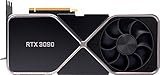
nVidia GeForce RTX 3090 Founders Edition Graphics Card | $2,349.99 | Buy on Amazon |
| 5 |

|
Nvidia GeForce RTX 3090 Ti Founders Edition | $2,449.99 | Buy on Amazon |
That distinction matters. A regulator asking a company to address a security concern is not the same as a technical finding. Chinese officials’ concerns about possible tracking, locating or remote disabling have been reported, but the official notice does not substantiate those specific capabilities in H20 hardware. Nor does the existence of ordinary device-management or security features by itself prove covert access.
What the H20 is and why it mattered
The H20 is a China-focused Nvidia data-center accelerator from the Hopper generation. Nvidia designed it after U.S. export controls restricted sales to China of more capable AI GPUs. It was intended to fit within the rules in effect when it was developed, not to match unrestricted Nvidia products on every measure of performance.
#1 Best Overall
- 24GB Video Memory
- Fourth Generation Tensor Cores
- HALF HEIGHT BRACKET ONLY
Its value cannot be judged by a single peak-compute figure. Memory capacity and bandwidth, interconnects between GPUs, workload, system design and access to Nvidia’s software ecosystem all affect what a data center can do. H20 could remain useful for inference and some AI workloads despite being less capable than unrestricted alternatives. For companies already built around Nvidia software, compatible hardware can also reduce engineering and migration costs.
U.S. export controls consider multiple technical characteristics, including processing performance, performance density, interconnect bandwidth and memory bandwidth. Product names alone do not determine whether a shipment is permitted. Nvidia’s regulatory filing describes the changing thresholds and products affected.
How a narrow sales window closed
- April 9, 2025: The United States told Nvidia that H20 exports to China required a license. Nvidia later reported a $4.5 billion charge related to the change in expected demand, inventory and purchase obligations. That charge is not a tally of lost China revenue. Nvidia’s filing sets out the export-control chronology, and a later filing reports the charge.
- July 2025: Beijing publicly addressed the U.S. authorization process for H20 sales, while the CAC summoned Nvidia over security concerns. China’s Ministry of Commerce published its position on the U.S. authorization.
- August 2025: The United States granted licenses for certain H20 shipments. Nvidia later disclosed roughly $60 million in H20 revenue under those licenses—a limited return, not a restored market.
- After the probe: Reporting said Chinese authorities discouraged some domestic companies from buying H20 chips and questioned firms including Tencent and ByteDance about purchases. The scope and legal status of that guidance should be understood as reported procurement pressure, not a published nationwide ban. Reuters reported on the warnings and questioning.
Backdoor, remote management or policy concern?
Several different technologies can be blurred together in public debate. Hardware telemetry may report device status; remote management can let an administrator configure a system; device attestation can verify software or hardware identity; firmware signing controls which updates a device accepts. Export-control enforcement might also involve monitoring or restrictions. Those capabilities are not automatically equivalent to an unauthorized channel for surveillance or remote access.
Do these 3 things before closing this tab:
1Repair Windows errors before they cause bigger problems2Scan for outdated or missing drivers - takes under a minute3Clear out junk files and repair common Windows errorsRank #2
- CUDA Cores: 4608 / NVIDIA Tensor Cores: 576 / NVIDIA RT Cores: 72
- GPU Memory: 24 GB GDDR6 with ECC / Bandwidth: 624 GB/Sec
- System Interface: PCI Express 3.0 x16
- Four DisplayPort 1.4 Connectors
- 3D Stereo Support with Stereo Connector
To establish a deliberate covert backdoor, investigators would need evidence of a mechanism that permits access or control without the owner’s authorization, supported by technical analysis—not just the possibility that management or enforcement features exist. Nvidia has disclosed that governments could impose conditions requiring tracking or throttling mechanisms capable of disabling or impairing GPUs in specified circumstances. That filing describes a possible regulatory condition; it is not evidence that H20 already contains a secret function targeting Chinese users. Nvidia’s filing discusses those risks.
The careful conclusion is therefore limited: Beijing investigated alleged security risks and sought evidence. The CAC notice does not establish that the allegations were technically proven. The probe may also be read in the context of the wider U.S.–China technology and industrial-policy conflict, but retaliation is an interpretation, not a fact established by the notice.
Why two governments can block the same sale
U.S. export authorization is only one step in reaching a customer. Washington’s rules can change the legal status of a product after design or inventory commitments have been made. Nvidia has warned that shifting restrictions can leave it with excess inventory, purchase obligations and lost opportunities. A chip that is licensable today may face new thresholds or conditions later.
Beijing, meanwhile, can weaken demand without announcing a simple nationwide prohibition. Security reviews, warnings to state-owned or sensitive users, scrutiny of major technology companies and preference for domestic procurement can make buyers reluctant to commit. Even where a specific purchase is not formally banned, a company may worry that it will face regulatory exposure, limited support or difficulty obtaining permission for future deployments.
PC Slower Than It Used to Be?
A free scan shows the junk files, broken settings and background clutter dragging Windows down - then fixes them in one click.Free scan · Windows 10 & 11Crashes, No Sound, or Screen Glitches?
Random freezes, missing sound and display glitches usually trace back to one bad driver. Find and replace yours safely.Free scan · under a minuteThat creates a dual-approval problem: Nvidia needs U.S. export permission, Chinese regulatory acceptance and willing customers, followed by actual import and deployment. A license is not a shipment; a shipment is not necessarily an installation; and an approved buyer does not prove a broad commercial market exists.
The 2026 reality: H200 approvals are not a full comeback
The story has moved beyond H20. Nvidia disclosed that in February 2026 the United States granted a license for limited H200 shipments to specified Chinese customers. At the time of its filing, Nvidia said it had generated no H200 revenue under that program and did not know whether imports would ultimately be allowed. By July 2026, a U.S. Commerce official said only minimal H200 exports had occurred. Reuters also reported that ZTE Kangxun and server maker Maginfra were among firms permitted to purchase H200 chips; permission to purchase is not proof of completed delivery. Reuters on the limited shipments; Reuters on reported buyer approvals.
Rank #4
- Chipset: NVIDIA GeForce RTX 3090
- Video Memory: 24GB GDDR6X
- Memory Interface: 384-bit
- Output: DisplayPort x 3 (v1.4a) / HDMI 2.1 x 1
- Nvidia India 3 Year *
China’s domestic substitution effort is also gaining importance. Huawei’s Ascend products and other Chinese accelerators can be attractive for selected inference, cloud or government workloads, particularly when domestic supply and policy alignment matter. That does not mean domestic chips match Nvidia across every workload, or that migration is effortless. Nvidia retains advantages in CUDA, libraries, developer familiarity and established systems. But a technically stronger foreign chip may still lose a procurement decision if its supply, legal status or future support is uncertain. The Associated Press reported on stalled Nvidia China sales and gains by local chipmakers.
For AI infrastructure buyers, the relevant comparison is not simply H20 or H200 against a domestic chip’s peak specifications. It includes workload performance, memory and interconnect needs, software compatibility, migration engineering, delivery certainty, replacement parts and exposure to changing rules. Cloud access can avoid direct ownership of a GPU, but it is not automatically a workaround: provider restrictions, customer identity, location and cross-border access can still matter.
What’s actually slowing this PC down?
Pick the symptom - the matching free tool is one click away.
What would have to change for Nvidia to regain ground?
A meaningful recovery would require more than another U.S. license. Nvidia would need predictable export rules, Chinese clearance and customer confidence that approved products can be imported, operated and supported over time. It would also need enough demand and shipment volume to justify compliance and supply-chain costs, and products competitive enough to overcome the appeal of domestic alternatives.
Best Value
- 900-1G136-2505-000
That is why the H20 episode is more than a temporary dispute about one chip. A prolonged stop-start market gives Chinese suppliers time to improve hardware and software, while customers have reason to build around products they can reliably obtain. Nvidia has not necessarily lost every Chinese sale, but its position in advanced data-center AI accelerators has become smaller, more conditional and harder to plan around.
The central lesson is that Nvidia’s China strategy is squeezed between two governments: Washington limits what it may sell, while Beijing increasingly shapes whether Chinese buyers are willing or permitted to buy it.
Quick Recap
Product prices and availability are accurate as of the date/time indicated and are subject to change. Any price and availability information displayed on Amazon at the time of purchase will apply.
Recommended Free Tools



