Financial literacy refers to the ability to understand, evaluate, and apply financial information to real-world decisions across the lifespan. It is not limited to knowing financial terms or performing calculations, but instead reflects how individuals interpret trade-offs, assess consequences, and act under conditions of uncertainty. At its core, financial literacy shapes how money decisions align with long-term goals, constraints, and risks.
In practical terms, financial literacy connects daily choices—such as spending, saving, and borrowing—to cumulative outcomes like financial stability, resilience to shocks, and wealth accumulation. Small, repeated decisions compound over time, either reinforcing or undermining financial well-being. This is why financial literacy is consistently associated in academic research with outcomes such as lower debt distress, higher savings rates, and improved retirement preparedness.
Financial Literacy as a Decision-Making Framework
Financial literacy functions as a framework for decision-making rather than a checklist of behaviors. It involves understanding opportunity cost, which is the value of the next best alternative forgone when a choice is made. For example, spending today reduces the ability to save or invest for future needs, even if no immediate financial stress is felt.
This framework also includes time value of money, a concept describing how money available today differs in value from the same amount in the future due to earning potential and inflation. Inflation refers to the general increase in prices over time, which reduces purchasing power. Without this understanding, individuals may underestimate how much future goals will cost or overestimate the adequacy of current savings.
Quick wins for a faster PC:
Fix the driver behind crashes, sound loss and screen glitchesFind Drivers →Repair Windows errors before they cause bigger problemsFix Now →Scan for outdated or missing drivers - takes under a minuteDriver Scan →#1 Best Overall

- Effective Budget Plan Book – Take control of your finances with the SUNEE budget account book. This all-in-one budget planner allows you to plan and track your income, expenses, savings, and financial goals. Its intuitive layout and easy-to-use sections help you stay organized and make smart decisions to reach financial success. Our financial planner also included a comprehensive guidebook with valuable tips and instructions to help you get the most out of your budgeting planner.
- Full-Page Calendars – Each month’s full-page calendar provides plenty of space to track paydays, bills due dates, appointments, and important events. No more cramped boxes or tight writing areas, you can easily plan and organize your schedule at a glance.
- Colorful Pages Layout and Tabs – This vibrant budget planner features a user-friendly design for easy navigation and organization. Each month includes dedicated budget pages to set financial goals, track income, and plan expenses. Additional sections like debt trackers, savings goals, and bill payment trackers make managing your finances a breeze. The colorful backgrounds on each page offer clear, instant visibility.
- Bonus 4 Stickers and Convenient Design – This monthly budget planner is built for convenience and durability. Water-resistant cover protects against spills, while the elastic band keeps everything secure, and the dual-sided pocket offers extra storage. Plus, we’ve included 4 adorable sticker sheets to personalize your planner and make budgeting more enjoyable. Experience a budget planner that combines practicality with lasting quality.
- UNDATED DESIGN & 1 YEAR USE - Undated finance books start with 1 page-financial goals, 1 page-Mind Map, 1 page-Financial Strategy, 1 page-Tactics, 2 pages-Important Dates, 4 pages-Bill Tracker, 4 pages-Saving Tracker, 8 pages-Debt Tracker, followed by 12 Months(10 pages per month, 1 unique color for each month). 2 pages-Christmas Budgeting, 2 pages-Yearly Summary, 2 pages-Check Register and 12 pages-Notes(dotted). It is UNDATED, so you could start at any time, suitable for 1 year use.
The Role of Budgeting, Saving, and Debt Management
Budgeting is the process of tracking and planning income and expenses to ensure resources are allocated intentionally rather than reactively. Financial literacy clarifies that budgeting is not about restriction, but about prioritization under finite resources. It provides visibility into cash flow, which is the timing of money coming in and going out.
Saving represents deferred consumption to meet future needs or absorb unexpected expenses. Debt management involves understanding borrowing costs, repayment structures, and how interest—the cost of using borrowed money—can either accelerate or hinder financial progress. Poorly structured debt can magnify financial stress, while manageable debt can support certain long-term objectives when risks are understood.
Investing, Risk, and Uncertainty
Investing involves committing money to assets with the expectation of future returns, but with no guarantee of outcomes. Financial literacy distinguishes expected return from risk, where risk refers to the variability and unpredictability of returns rather than the likelihood of loss alone. This distinction is critical because higher potential returns are typically associated with greater uncertainty.
Understanding diversification—the practice of spreading investments across different assets to reduce exposure to any single risk—is another foundational principle. Without this knowledge, individuals may concentrate risk unintentionally or avoid investing altogether, both of which can limit long-term financial growth.
Why Financial Literacy Shapes Life Outcomes
Financial decisions intersect with nearly every major life event, including education, housing, family formation, career transitions, and retirement. Limited financial literacy can convert routine decisions into persistent constraints, while strong financial literacy expands available options over time. The difference often emerges gradually rather than through a single mistake or success.
Ultimately, financial literacy influences not just financial outcomes, but psychological and social outcomes as well. Financial stress, decision paralysis, and vulnerability to misinformation are more common when financial concepts are poorly understood. By contrast, informed decision-making supports consistency, adaptability, and sustainability in managing personal finances across changing economic conditions.
The Foundation: Income, Spending, and Building a Sustainable Budgeting System
While investing and debt management influence long-term outcomes, both depend on a more immediate foundation: the relationship between income and spending. Without a clear understanding of cash flow—the movement of money into and out of a household—financial plans remain abstract and fragile. Budgeting serves as the mechanism that connects daily financial behavior to broader financial objectives.
A sustainable budgeting system is not a restrictive exercise, but an analytical framework for allocating limited resources across competing needs and priorities. Its purpose is to make trade-offs explicit, reduce uncertainty, and support consistency over time. When income, expenses, and constraints are clearly defined, financial decisions become more predictable and less reactive.
Recommended Free Tools
Understanding Income: Stability, Variability, and Constraints
Income represents the inflow of money received from labor, business activity, or assets. It can be fixed, such as a salaried wage, or variable, such as hourly work, commissions, or self-employment earnings. The degree of income stability significantly affects budgeting complexity and financial risk exposure.
Gross income refers to total earnings before deductions, while net income is the amount available after taxes, insurance premiums, and other mandatory withholdings. Budgeting must be based on net income, as this reflects actual spending capacity. Confusing the two can lead to systematic overspending and cash shortfalls.
Income also has structural limits that cannot be ignored in financial planning. While income growth is possible over time, short-term decisions must operate within current constraints. Effective budgeting recognizes these limits and focuses on allocation rather than assumption-based projections.
Spending: Fixed, Variable, and Discretionary Expenses
Spending consists of all outflows of money required to maintain a household and lifestyle. Expenses are commonly categorized as fixed, variable, or discretionary. Fixed expenses, such as rent or loan payments, are relatively stable and recurring, while variable expenses, such as utilities or groceries, fluctuate over time.
What’s actually slowing this PC down?
Pick the symptom - the matching free tool is one click away.
Discretionary expenses are non-essential and more flexible, including entertainment, dining out, and optional purchases. This category often attracts the most attention in budgeting discussions, but it is typically constrained by decisions made elsewhere. High fixed obligations reduce flexibility regardless of discretionary discipline.
Understanding spending patterns requires examining actual behavior rather than intended behavior. Irregular and infrequent expenses, such as annual insurance premiums or seasonal costs, are often overlooked despite their predictable nature. Failing to account for them can distort monthly budgets and create avoidable financial strain.
Cash Flow Management and Timing Mismatches
Cash flow management focuses not only on how much money is earned and spent, but also on when those transactions occur. Timing mismatches arise when expenses are due before income is received, even if total monthly income exceeds total expenses. These mismatches are a common source of overdrafts, short-term borrowing, and financial stress.
A budgeting system that incorporates timing considers pay cycles, billing dates, and irregular income streams. This approach reduces reliance on credit for short-term liquidity needs. It also highlights the functional role of savings as a buffer rather than solely as a long-term goal.
The Tool Desk
Outbyte Driver Updater FREEScan for outdated or missing drivers - takes under a minuteDriver Scan →Outbyte PC Repair FREEClear out junk files and repair common Windows errorsFree Scan →Positive cash flow—where income consistently exceeds expenses—creates capacity for saving, debt reduction, and investing. Negative or volatile cash flow constrains these activities, regardless of income level. Managing cash flow is therefore foundational to every other area of personal finance.
Defining a Sustainable Budgeting System
A sustainable budgeting system is one that can be maintained over long periods without excessive cognitive effort or frequent failure. It prioritizes clarity and repeatability over precision. Overly complex systems often break down under real-world conditions, especially during periods of stress or change.
Sustainability also requires adaptability. Life events, economic conditions, and income changes necessitate periodic adjustments. A rigid budget that cannot accommodate variability increases the likelihood of abandonment rather than improvement.
Importantly, budgeting is not about achieving perfection in every category. It is a feedback process that reveals patterns, constraints, and trade-offs. When used consistently, it provides data that supports better decision-making across saving, borrowing, and investing activities.
Outdated Drivers Are Slowing You Down
One free scan finds every outdated or missing driver and matches the right update for your exact hardware.Free scan · exact hardware matchPC Slower Than It Used to Be?
A free scan shows the junk files, broken settings and background clutter dragging Windows down - then fixes them in one click.Free scan · Windows 10 & 11Rank #2
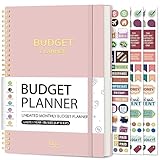
- Effective Budget Planning - Take control of your finances with the budget account book. This comprehensive planner allows you to plan and track your income, expenses, savings, and financial goals in one convenient place. With its intuitive layout and easy-to-use sections, you can stay organized and make informed decisions to achieve financial success.
- User-Friendly Layout - The budget planner features a user-friendly layout designed for easy navigation and organization. Each month, you'll find dedicated budget pages where you can set financial goals, track your income, and plan your expenses. Additional sections include debt trackers, savings goals, bill payment trackers, and more, making it simple to stay on top of your finances.
- Undated Monthly Calendar & Bonus Stickers - Featuring undated calendar each month, you'll have ample space to mark paydays, bills due, appointments, and important dates. Say goodbye to difficult writing spaces. Plus, we've included 3 cute sticker sheets that allow you to personalize your financial organizer and make budgeting more fun. Dates are not pre-printed and are completed by the user.
- Reliable and Convenient Design - Our monthly budget planner is designed for your convenience and built to last. The elastic band keeps everything securely in place, and the dual-sided pocket provides extra storage. Experience a budget planner that combines practicality and durability.
- Master Budgeting with Ease - Our financial planner includes a complete guidebook that provides valuable insights and instructions for optimal usage. From setting financial goals to tracking expenses, this guidebook offers step-by-step guidance and practical tips. Whether you're new to budgeting or an experienced user, this resource will help you make the most of your budget planner, empowering you to achieve financial success.
Saving With Purpose: Emergency Funds, Short‑Term Goals, and Long‑Term Security
With a sustainable budgeting system in place, savings take on a functional role rather than a residual one. Savings are not merely unused income; they are a tool for managing uncertainty, timing mismatches, and future obligations. Purpose-driven saving aligns cash flow management with financial resilience across different time horizons.
The Functional Role of Savings in Cash Flow Stability
Savings serve as an intermediary between predictable income and unpredictable expenses. While budgets allocate expected cash flows, savings absorb deviations from those expectations. This buffering function reduces reliance on high-cost borrowing during disruptions.
From a financial systems perspective, savings convert volatility into manageability. They allow households to meet obligations without liquidating long-term assets or incurring penalties. This stabilizing effect supports consistent financial behavior over time.
Emergency Funds: Liquidity for Unplanned Disruptions
An emergency fund is a pool of readily accessible cash reserved for unexpected expenses or income interruptions. Common examples include medical costs, urgent repairs, or temporary job loss. The defining features are liquidity, capital preservation, and availability without penalty.
Liquidity refers to how quickly an asset can be converted to cash without loss of value. Emergency funds prioritize high liquidity over return, as their purpose is risk mitigation rather than growth. This distinguishes them from investments, which are exposed to market fluctuations.
The size of an emergency fund is often discussed in relation to essential living expenses rather than income. This framing reflects its role in sustaining baseline obligations during disruption. Variability in income, employment stability, and fixed expenses all influence the appropriate scale of this buffer.
Short‑Term Savings Goals and Planned Expenses
Short-term savings address known, upcoming expenses that fall outside regular monthly cash flow. Examples include annual insurance premiums, planned travel, or large household purchases. Unlike emergencies, these expenses are predictable in timing and amount.
Separating short-term savings from emergency funds improves clarity and reduces the risk of misallocation. When planned expenses are funded in advance, emergency reserves remain available for genuine disruptions. This separation also supports more accurate budgeting and cash flow forecasting.
Free tools Windows power users keep installed
One-click scans. No signup required.
Time horizon is the critical differentiator for short-term savings. Because the funds will be used relatively soon, preservation of principal remains the primary objective. Exposure to market risk is typically inappropriate for assets with near-term spending purposes.
Long‑Term Security and the Boundary Between Saving and Investing
Long-term financial security involves objectives such as retirement funding, education planning, and legacy considerations. These goals extend beyond the scope of savings alone and typically require investment to outpace inflation. Inflation is the general increase in prices over time, which erodes purchasing power.
Savings and investing differ in both purpose and risk profile. Savings emphasize stability and accessibility, while investing accepts variability in pursuit of higher expected returns. Confusing these roles can undermine both short-term resilience and long-term outcomes.
Clear boundaries between emergency reserves, short-term savings, and long-term investments support disciplined decision-making. Each category serves a distinct function within the household financial system. Together, they create a structure that balances flexibility, protection, and growth without relying on reactive choices during periods of stress.
Understanding Debt: Good vs. Bad Debt, Interest Mechanics, and Repayment Strategies
Once savings and investment boundaries are established, attention naturally turns to debt. Debt represents the use of borrowed funds that must be repaid in the future, typically with interest. While debt can accelerate access to assets or smooth cash flow, it also creates fixed obligations that reduce financial flexibility.
Understanding how different forms of debt function is essential for evaluating trade-offs. Not all debt carries the same economic impact, risk profile, or long-term consequences. Classification, cost structure, and repayment behavior collectively determine whether debt supports or undermines financial stability.
Good Debt vs. Bad Debt: A Functional Distinction
The terms “good debt” and “bad debt” are descriptive, not moral judgments. Good debt generally refers to borrowing that supports long-term economic value, income generation, or essential human capital. Examples include education loans, mortgages, or business-related borrowing, where benefits may persist beyond the repayment period.
Bad debt typically describes borrowing used for short-lived consumption with no lasting financial return. High-interest credit card balances, payday loans, and discretionary purchases financed over long periods often fall into this category. These obligations can erode future cash flow without creating offsetting assets or earning capacity.
Do these 3 things before closing this tab:
1Fix the driver behind crashes, sound loss and screen glitches2Clear out junk files and repair common Windows errors3Scan for outdated or missing drivers - takes under a minuteThe distinction depends on context rather than labels. Interest rate, repayment horizon, income stability, and the underlying purpose all influence whether debt contributes positively or negatively to household finances. The same instrument can function differently depending on how it is used and managed.
Interest Mechanics: How Borrowing Costs Accumulate
Interest is the cost of borrowing money, expressed as a percentage of the outstanding balance. Simple interest is calculated only on the original principal, while compound interest accrues on both principal and previously accumulated interest. Most consumer debt relies on compounding, which accelerates cost growth over time.
Annual percentage rate, or APR, standardizes the cost of borrowing by incorporating interest and certain fees into a single annualized figure. Higher APRs increase the total repayment amount, particularly when balances are carried for extended periods. The frequency of compounding also affects total cost, with more frequent compounding leading to faster balance growth.
Amortization describes the structured repayment of debt over time through scheduled payments. In amortized loans, early payments consist largely of interest, while later payments increasingly reduce principal. This structure explains why long-term debt can remain expensive even when payments are made consistently.
Rank #3

- Effective Budget Planning - Take control of your finances with the budget account book. This comprehensive planner allows you to plan and track your income, expenses, savings, and financial goals in one convenient place. With its intuitive layout and easy-to-use sections, you can stay organized and make informed decisions to achieve financial success.
- User-Friendly Layout - The budget planner features a user-friendly layout designed for easy navigation and organization. Each month, you'll find dedicated budget pages where you can set financial goals, track your income, and plan your expenses. Additional sections include debt trackers, savings goals, bill payment trackers, and more, making it simple to stay on top of your finances.
- Undated Monthly Calendar & Bonus Stickers - Featuring undated calendar each month, you'll have ample space to mark paydays, bills due, appointments, and important dates. Say goodbye to difficult writing spaces. Plus, we've included 3 cute sticker sheets that allow you to personalize your financial organizer and make budgeting more fun. Dates are not pre-printed and are completed by the user.
- Reliable and Convenient Design - Our monthly budget planner is designed for your convenience and built to last. The elastic band keeps everything securely in place, and the dual-sided pocket provides extra storage. Experience a budget planner that combines practicality and durability.
- Master Budgeting with Ease - Our financial planner includes a complete guidebook that provides valuable insights and instructions for optimal usage. From setting financial goals to tracking expenses, this guidebook offers step-by-step guidance and practical tips. Whether you're new to budgeting or an experienced user, this resource will help you make the most of your budget planner, empowering you to achieve financial success.
Minimum Payments and the Illusion of Progress
Many revolving debts, such as credit cards, allow minimum payments that cover only a small portion of the balance. While this maintains account standing, it often results in prolonged repayment timelines. Interest continues to accrue, and total cost increases substantially.
Minimum payments are designed to preserve lender cash flow, not to optimize borrower outcomes. Reliance on minimums can create the appearance of manageability while masking the true duration and expense of the obligation. Understanding this dynamic is critical for accurate cash flow planning.
Extended repayment periods also increase exposure to income disruptions. Fixed debt obligations reduce adaptability during financial stress, particularly when emergency reserves are limited. This interaction reinforces the importance of aligning debt levels with savings capacity.
Repayment Strategies and Cash Flow Prioritization
Debt repayment strategies focus on the order and structure of balance reduction. Common frameworks include prioritizing higher-interest balances first or targeting smaller balances to reduce the number of open obligations. Each approach affects cash flow, total interest paid, and behavioral consistency differently.
Recommended Free Tools
Cash flow is the net movement of income and expenses over a given period. Because debt repayments are contractual, they function as fixed expenses that constrain discretionary spending. Effective repayment planning accounts for both affordability and resilience under changing income conditions.
Consistency is more influential than optimization in many cases. Regular, predictable payments reduce uncertainty and prevent balance escalation. When repayment aligns with broader budgeting, savings, and investment structures, debt becomes a managed component of the financial system rather than a destabilizing force.
Debt as a Structural Element of Financial Decision-Making
Debt interacts directly with savings, investing, and risk management decisions. High debt obligations may limit the ability to fund emergency reserves or pursue long-term investments. Conversely, inadequate borrowing capacity can delay asset accumulation or force reliance on volatile income sources.
Evaluating debt requires an integrated perspective. Interest cost, repayment duration, and opportunity cost must be weighed against liquidity needs and long-term objectives. This analysis shifts debt from a reactive necessity to a deliberate financial tool.
The Tool Desk
Outbyte Driver Updater FREEFix the driver behind crashes, sound loss and screen glitchesFind Drivers →Outbyte PC Repair FREEClear out junk files and repair common Windows errorsFree Scan →Clear understanding of debt mechanics supports informed decision-making. When borrowers recognize how costs accumulate and obligations constrain future choices, financial decisions become more intentional. This foundation strengthens overall financial literacy and supports sustainable household outcomes over time.
Investing Basics Demystified: How Money Grows Through Time, Markets, and Compounding
With debt structured and cash flow stabilized, attention shifts to how surplus funds can grow over time. Investing differs from saving in that it accepts uncertainty in exchange for the potential for higher long-term returns. Understanding this tradeoff requires clarity on how time, markets, and compounding interact within financial systems.
The Time Value of Money and Delayed Consumption
The time value of money is the principle that a dollar available today has greater potential value than the same dollar in the future. This difference arises because money can earn returns over time through interest, dividends, or price appreciation. Investing is fundamentally the process of deferring current consumption to increase future purchasing power.
Time is a critical variable because returns accumulate across periods. Longer time horizons allow gains to build upon prior gains, while also providing more opportunity to recover from short-term losses. This relationship explains why investing is typically aligned with long-term goals rather than immediate spending needs.
Risk and Return as a Structural Relationship
Risk refers to the uncertainty of outcomes, including the possibility of loss. Return is the gain or income generated from an investment, usually expressed as a percentage over a given period. In financial markets, higher expected returns are generally associated with higher levels of risk, reflecting compensation for uncertainty rather than a guarantee of performance.
Risk is not uniform. Market risk affects broad asset prices, while specific risk relates to individual companies or issuers. Understanding these distinctions helps explain why diversification, the practice of spreading investments across different assets, reduces exposure to any single source of risk without eliminating uncertainty entirely.
Core Asset Classes and Their Economic Roles
Asset classes are broad categories of investments with similar characteristics and risk profiles. Common asset classes include equities, which represent ownership in companies; fixed income, which consists of loans such as bonds; and cash equivalents, which prioritize liquidity and stability. Each plays a distinct role in balancing growth, income, and preservation of capital.
Equities tend to offer higher long-term growth potential but fluctuate more in value. Fixed income typically provides more predictable cash flows with lower volatility. Cash equivalents offer minimal return but serve as a buffer against short-term needs and market instability.
Financial Markets and Price Formation
Financial markets are systems where buyers and sellers exchange assets. Prices in these markets reflect collective expectations about future earnings, interest rates, and economic conditions. As new information becomes available, prices adjust continuously, which explains day-to-day market movements.
Market volatility refers to the degree of price fluctuation over time. Volatility is a normal feature of investing and does not inherently indicate poor outcomes. Its impact depends on timing, behavior, and the investor’s need for liquidity.
Compounding as the Engine of Long-Term Growth
Compounding occurs when investment returns generate additional returns in subsequent periods. This process accelerates growth because gains are reinvested rather than withdrawn. The effect of compounding increases with time, consistency, and the rate of return.
Small differences in return or contribution timing can lead to large differences in outcomes over extended periods. Compounding therefore rewards patience and regular participation more than short-term optimization. Interruptions, withdrawals, or high costs reduce its effectiveness.
What’s actually slowing this PC down?
Pick the symptom - the matching free tool is one click away.
Rank #4

- ALL-IN-ONE B5 BUDGET PLANNER: With 15+ Functional Inserts –it covers every money-management pain point for beginners & pros. Stop juggling messy notebooks or incomplete trackers! The budget planner includes, monthly budget, bill expense detail, debt tracker, bill tracker, saving tracker...matches 90% of "how to manage money" search queries
- DURABLE BUDGET BOOK: Our budget organizer features a PVC waterproof cover and elastic band—no more ruined pages, made of 100GSM thick paper—no smudges or ghosting, coming with a heavy-duty double spiral binding—lays flat for easy writing. Built for daily use: toss it in your work bag, backpack, or purse without worry
- CONVENIENT B5 SIZE (7.3”X10.15”): No more choosing between "too small to write" or "too bulky to carry"! The B5 budget planner gives ample space to log expenses, note bill due dates, or map financial goals—without being cumbersome. Fits easily in laptop bags, backpacks, or purses—perfect for "on-the-go budget tracking
- UNMATCHED VALUE & COMPREHENSIVE GUIDEBOOK: Comes with 5 practical, high-quality freebies crafted, plus a comprehensive user guide that takes the guesswork out of financial planning. You’ll get: PVC waterproof colorful monthly tabs & wide range of label stickers, a ribbon bookmark, an elastic pen holder, a elastic band, an inner pocket, and a detailed step-by-step user guide handbook
- VISUAL CLARITY & LESS FATIGUE: Unlike plain black-and-white budget planners, our vivid color highlights reduce eye strain during long budgeting sessions, helping you track expenses, savings, and bills quickly and accurately. It’s the perfect fit for working professionals, international students, family financial managers, freelancers, new graduates, retirees
Costs, Taxes, and Net Returns
Investment returns are affected by expenses such as management fees, transaction costs, and taxes. These factors reduce net returns, which are the gains remaining after all costs are accounted for. Even modest recurring expenses can significantly diminish compounded growth over time.
Taxes vary by investment type, account structure, and holding period. Understanding how returns are taxed is essential for accurately evaluating long-term outcomes. Net returns, not headline performance figures, determine actual financial progress.
Aligning Investing With Financial Structure
Investing does not exist independently of budgeting, saving, or debt management. Liquidity needs, income stability, and existing obligations influence how much risk can be absorbed without disrupting cash flow. This alignment ensures that investments support, rather than strain, the broader financial system.
When investing decisions are grounded in an understanding of time, risk, and compounding, they become more deliberate and sustainable. This framework transforms investing from speculative activity into a structured component of long-term financial planning.
Do these 3 things before closing this tab:
1Clear out junk files and repair common Windows errors2Scan for outdated or missing drivers - takes under a minute3Repair Windows errors before they cause bigger problemsRisk, Return, and Behavior: Making Decisions Under Uncertainty
Investment outcomes are shaped not only by financial structure and market mechanics, but also by how individuals perceive and respond to uncertainty. Risk and return are inseparable concepts, and behavior often determines whether theoretical benefits are realized in practice. Understanding this interaction is essential for making consistent financial decisions over time.
The Risk–Return Relationship
Risk refers to the possibility that actual outcomes will differ from expected outcomes, including the potential for loss. Return is the gain or income generated by an investment over a given period. In financial markets, higher expected returns are generally associated with higher levels of risk, reflecting compensation for uncertainty rather than guaranteed reward.
This relationship is probabilistic, not deterministic. Taking more risk increases the range of possible outcomes, not the certainty of higher results. Short-term outcomes can diverge significantly from long-term averages, especially during periods of market stress.
Types of Risk and How They Affect Outcomes
Not all risks are the same, and their effects vary by context. Market risk refers to broad price movements affecting most investments, such as economic recessions or interest rate changes. Credit risk involves the possibility that a borrower fails to meet obligations, while inflation risk reflects the erosion of purchasing power over time.
Quick wins for a faster PC:
Fix the driver behind crashes, sound loss and screen glitchesFind Drivers →Clear out junk files and repair common Windows errorsFree Scan →Scan for outdated or missing drivers - takes under a minuteDriver Scan →Some risks can be reduced through diversification, which is the practice of spreading investments across different assets to limit exposure to any single source of uncertainty. Other risks, such as overall market downturns, cannot be eliminated and must be absorbed as part of participating in capital markets. Distinguishing between these categories clarifies which risks are manageable and which are structural.
Expected Return Versus Realized Return
Expected return is the average outcome anticipated over many possible scenarios, often based on historical data or statistical models. Realized return is the actual result achieved over a specific period. The difference between the two reflects randomness, timing, and sequence of outcomes.
Because realized returns can deviate widely from expectations in the short and medium term, decision-making based solely on recent performance can be misleading. Evaluating investments requires an understanding that uncertainty is inherent and that outcomes unfold over extended horizons.
Behavioral Responses to Uncertainty
Behavior plays a central role in how risk and return translate into real-world results. Behavioral finance studies how psychological factors influence financial decisions, often leading to systematic errors. Common patterns include loss aversion, which is the tendency to feel losses more intensely than gains, and recency bias, which places excessive weight on recent events.
These responses can cause individuals to alter decisions at inopportune times, such as reducing exposure after declines or increasing exposure following strong performance. Such behavior does not change underlying market probabilities but can materially affect personal outcomes. Recognizing these tendencies is a prerequisite for maintaining consistency.
Decision-Making Under Probabilistic Outcomes
Financial decisions are made under conditions where outcomes cannot be known in advance, only estimated. Probability describes the likelihood of different results, not their timing or sequence. A sound decision process focuses on whether choices are reasonable given available information, rather than whether a specific outcome occurs.
Separating decision quality from short-term results reduces the temptation to react to noise. Over time, disciplined processes are more reliable than reactive adjustments, particularly in environments characterized by volatility and incomplete information. This perspective reinforces the role of structure and behavior in navigating financial uncertainty.
Protecting Your Financial Life: Insurance, Credit, and Fraud Awareness
Managing uncertainty extends beyond investment markets into everyday financial exposure. While risk-taking is intentional in investing, many financial threats are uncompensated, meaning they offer no expected benefit in exchange for potential loss. Insurance, credit management, and fraud awareness function as defensive tools that reduce the impact of adverse events on long-term financial stability.
Windows Errors? Fix Them Before They Spread
Repair common Windows errors and clear accumulated junk for a smoother, more stable PC - no reinstall needed.Free scan · no reinstallCrashes, No Sound, or Screen Glitches?
Random freezes, missing sound and display glitches usually trace back to one bad driver. Find and replace yours safely.Free scan · under a minuteThese protections do not increase expected returns, but they reduce the likelihood that unpredictable shocks derail broader financial plans. Understanding how these mechanisms work is essential to preserving progress made through saving, investing, and disciplined decision-making.
The Role of Insurance in Managing Financial Risk
Insurance is a risk-transfer mechanism that shifts the financial cost of specific adverse events from an individual to a pooled system. In exchange for a premium, which is the recurring cost of coverage, the insurer agrees to compensate losses defined in a contract called a policy. This arrangement is designed to address low-probability but high-impact events.
Common categories include health insurance, which covers medical expenses; property insurance, which protects assets such as homes or vehicles; liability insurance, which covers legal responsibility for harm to others; and income protection, such as disability or life insurance. Each category addresses a distinct type of financial exposure rather than serving as a general investment or savings vehicle.
Insurance effectiveness depends on alignment between coverage terms and actual risk. Deductibles, which are the amounts paid out-of-pocket before insurance applies, and coverage limits, which cap insurer payments, materially affect financial outcomes. Understanding these features reduces reliance on assumptions during periods of stress.
Free tools Windows power users keep installed
One-click scans. No signup required.
Best Value

- Keep Track of Your Finances: Manage your personal and family’s finances with this monthly budget planner! Intuitive, comprehensive and fun, this budgeting planner allows you to keep track of your debts, expenses and bills, organize your spending and saving and optimize your budget for achieving your financial goals!
- Large Budgeting Planner: Our budget notebook features a large design of 8.5 x 11-inch that provides enough space for budgeting, financial planning and spending tracking but also for monthly reviews and building strategies for optimizing your budget!
- Well-Organized for Your Convenience: This budget book planner features an easy yet efficient template that includes a monthly budget with customizable categories, a debt tracker, a bill tracker, an expenses tracker as well as a section for financial goals and monthly review that will make things easier when it comes to budget planning!
- 12-Month Budget Management: Our budgeting book features a spiral-bound hardcover design made with high-quality 120gm thick paper and a 12-month undated design that allows you to start budget planning at any time of the year!
- Chic, Practical, Giftable: Featuring a superb boho cover and packed in a matching gift box, this budget book journal makes a lovely gift for a friend, family member or co-worker! The budget journal includes a special pocket for bills, receipts or other documents and comes with 5 stickers that will make your planning more fun and effective!
Credit as a Financial Tool and Ongoing Obligation
Credit allows consumption or investment to occur before income is earned, creating flexibility but also obligation. The cost of borrowing is expressed through interest, which is the price paid for using someone else’s capital over time. Because interest compounds, meaning it accrues on both the original balance and prior interest, credit mismanagement can accelerate financial strain.
Credit histories are recorded in credit reports, which document borrowing and repayment behavior. From these reports, credit scores are calculated using statistical models to estimate the likelihood of repayment. Payment history, credit utilization, and account longevity are key inputs that influence these scores.
Access to favorable borrowing terms is influenced by credit quality, but credit itself does not create wealth. It amplifies existing financial behavior, either supporting productive uses or magnifying instability. Viewing credit as a long-term reputation rather than a short-term resource reinforces disciplined decision-making.
Fraud, Identity Theft, and Information Risk
Financial systems increasingly rely on digital credentials, which introduces exposure to fraud and identity theft. Fraud involves unauthorized transactions or deception for financial gain, while identity theft occurs when personal information is used to impersonate an individual. These risks are largely external and unrelated to financial skill or intelligence.
Common entry points include data breaches, phishing attempts, and compromised devices. Phishing refers to deceptive communications designed to extract sensitive information by appearing legitimate. The financial impact often extends beyond direct losses, affecting credit records, access to accounts, and time required for remediation.
Awareness is the primary defense against fraud-related risk. Monitoring financial statements, understanding normal account activity, and recognizing common tactics reduce the duration and severity of unauthorized activity. These practices complement formal protections such as account alerts and legal consumer safeguards.
Integrating Protection into Financial Decision-Making
Protective financial mechanisms operate alongside saving and investing rather than in competition with them. Just as diversification reduces investment-specific risk, insurance, prudent credit use, and fraud awareness reduce non-market risks that can disrupt long-term plans. These tools stabilize outcomes without altering underlying economic probabilities.
Behavioral discipline remains relevant in this context. Overconfidence can lead to underestimating exposure, while avoidance can delay necessary protections. A structured understanding of financial vulnerabilities supports consistency, particularly when decisions must be made under uncertainty.
By addressing risks that do not offer compensating returns, individuals preserve the conditions needed for compounding and long-term progress. Protection is not about eliminating uncertainty, but about preventing isolated events from becoming permanent financial setbacks.
Putting It All Together: Creating a Personal Financial Framework That Evolves With You
Taken together, budgeting, saving, debt management, investing, and risk protection form an integrated system rather than isolated tasks. Each component influences the others, and weaknesses in one area can undermine progress elsewhere. A personal financial framework organizes these elements into a coherent structure that supports consistent decision-making over time.
Such a framework is not a static plan or a one-time calculation. It is a repeatable process for allocating income, managing obligations, deploying capital, and controlling risk as circumstances change. The goal is durability, not optimization for a single moment.
Establishing Clear Financial Priorities
A functional framework begins with defined priorities, which act as constraints on financial choices. Core priorities typically include meeting essential expenses, maintaining liquidity through emergency savings, managing high-cost debt, and allocating resources for long-term objectives. Liquidity refers to how quickly assets can be converted to cash without significant loss of value.
Recommended Free Tools
Clarifying priorities reduces decision fatigue and limits reactive behavior during market volatility or personal stress. When trade-offs arise, decisions can be evaluated based on their alignment with these established objectives rather than short-term emotions.
Connecting Cash Flow to Long-Term Outcomes
Cash flow, the movement of income and expenses over time, is the operational engine of the financial framework. Budgeting translates abstract goals into concrete monthly actions by assigning each dollar a purpose. This creates visibility into how daily decisions compound into long-term outcomes.
Savings and investments are downstream of cash flow, not separate activities. Consistent contributions, even at modest levels, harness compounding, the process by which returns generate additional returns over time. Interruptions to cash flow, such as unmanaged debt or unexpected expenses, directly impair this process.
Aligning Debt, Investing, and Risk Management
Debt management and investing should be evaluated together rather than in isolation. High-interest debt represents a guaranteed cost, while investing involves uncertain returns. A balanced framework recognizes when reducing liabilities offers a more reliable improvement to financial stability than increasing investment exposure.
Quick wins for a faster PC:
Fix the driver behind crashes, sound loss and screen glitchesFind Drivers →Clear out junk files and repair common Windows errorsFree Scan →Risk management reinforces this balance by addressing threats that do not offer compensating rewards. Insurance, fraud monitoring, and prudent credit practices protect accumulated assets and future earning capacity. These measures preserve the ability to remain invested and financially functional during adverse events.
Adapting the Framework Over Time
A personal financial framework must evolve as income, family structure, health, and economic conditions change. Early stages may emphasize liquidity and debt reduction, while later stages may prioritize capital preservation and income generation. Regular review ensures that strategies remain aligned with current realities.
Adaptation does not imply frequent overhaul. Incremental adjustments based on life events or structural changes are more effective than reactive shifts driven by market noise. Stability in process supports better outcomes than constant revision of tactics.
Financial Literacy as an Ongoing Capability
Financial literacy is not defined by the memorization of rules or products, but by the ability to evaluate choices within a structured context. Understanding how financial components interact allows individuals to assess new information without abandoning discipline. This capability becomes increasingly valuable as financial systems grow more complex.
A well-constructed framework transforms financial decisions from isolated judgments into repeatable evaluations. By integrating cash flow management, long-term planning, and risk control, individuals create conditions for sustainable financial progress. The outcome is not certainty, but resilience—the capacity to move forward despite uncertainty while preserving long-term financial well-being.
Quick Recap
Product prices and availability are accurate as of the date/time indicated and are subject to change. Any price and availability information displayed on Amazon at the time of purchase will apply.




