Some links on this page are affiliate links: if you buy through them we may earn a commission, at no extra cost to you.
Yes—Google has announced contractual protection for certain intellectual-property claims involving its generative AI services. But it is not a blanket promise to cover every lawsuit, every Google AI product, or every use of AI output. Coverage depends on the specific service and model, whether the use qualifies under the applicable paid-service terms, the type of claim, and how the customer used the output and any customization data. The practical rule for buyers is to check the current service list and the contract that governs their account—not rely on the announcement alone.
What Google announced
On October 12, 2023, Google described a two-part generative-AI indemnity. One part addresses claims that Google’s use of training data to develop a model infringed a third party’s intellectual-property rights. The other addresses certain claims that output generated by a covered Google AI service and used by a customer infringes a third party’s IP rights. Google’s announcement is useful context, but the applicable service terms and agreement—not the blog post by itself—determine a customer’s rights.
Indemnification is a contractual allocation of specified legal risk. Depending on the governing agreement, it may involve a defense, settlement, reimbursement, or payment of covered liabilities. It does not mean Google automatically accepts every claim, guarantees that a customer will win in court, or pays every loss connected to AI. Customers should check the agreement’s notice, cooperation, defense, settlement, and liability provisions rather than assume how those mechanics work.
The two parts of the protection
1. Claims about Google’s training data
This part concerns allegations that Google’s use of training data to build a model infringed a third party’s IP rights. It addresses a risk associated with Google’s model-development practices. It does not establish that a claimant has a valid claim, decide whether a customer’s own use was lawful, or necessarily cover a customer’s changes to a model or use of its own data.
#1 Best Overall

- [Compatible with Google Pixel 10/Pixel 10 Pro 6.3 inch] Only compatible with Google Pixel 10/Pixel 10 Pro phone 6.3 inch (Not for Pixel 10 Pro XL 6.8 inch). Precise cutouts for easy access to all ports, buttons, sensors and cameras. Sensitive buttons with good response, are easy to press.
- [Magnetic Designed for Google Pixel 10/Pixel 10 Pro 6.3 inch ] Built-in magnet ring aligns perfectly and locks into place making wireless charging faster and easier than ever. This Google Pixel 10/Pixel 10 Pro case will not fall off no matter how it rotates with super adsorption capacity.
- [Thorough Camera & Screen Protection for Google Pixel 10/Pixel 10 Pro 6.3 inch] 1.5mm raised lips over screen and 1.5mm raised lips over camera relieves over this Google Pixel 10/Pixel 10 Pro case, impacts and protects the phone screen and camera against drop damage, cracks and scratches. Reinforced corner effectively absorb bumps from any angle drop.
- [Zero Fingerprints] SPIDERCASE translucent matte Google Pixel 10/Pixel 10 Pro case with a smart Nano Oleophobic Coating design that prevents fingerprints, watermarks, oil, and dust, comfortable and clean.
- [Shock Protection] Passing military drop tests up, your device is effectively protected from violent impacts and drops
2. Claims about generated output
This part concerns certain allegations that output from a covered Google generative-AI service infringes third-party IP rights. It is conditional: the service must be covered, the applicable terms must apply, and exclusions may matter. A customer that deliberately solicits likely-infringing material, disables safeguards, or keeps using disputed output after receiving a claim should not assume the indemnity will apply.
Which Google services are on the current list?
Google’s Generative AI Indemnified Services page showed a version last modified July 20, 2026. The list includes the services below, subject to the terms and qualifications attached to each listing. Product names and boundaries change, so this is a dated snapshot, not a permanent guarantee.
Rank #2
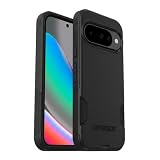
- Perfect Fit for Google Pixel 10 & Pixel 10 Pro (Only - Not Compatible with Pixel 10 Pro XL): Precision-engineered for the Google Pixel 10 & 10 Pro, this OtterBox case offers a flawless fit. It not only preserves your phone's sleek design but also ensures unparalleled protection against everyday hazards.
- Rugged Multi-Layer Defense: Featuring dual-layer construction with a rigid shell and internal rubber layer, our case exceeds 3X military drop standards (MIL-STD-810G 516.6), crafted from over 35% recycled plastic for eco-conscious resilience.
- Secure Grip, Streamlined Protection: Rely on the OtterBox legacy with Commuter Series—total protection with rubber-gripped edges for a secure hold. It's a slim, easy-to-install case providing durable quality and a precise fit for hassle-free defense
- Wireless Charging Compatible: Its slim profile is pocket-friendly, offering protection and ease for your on-the-go lifestyle
- Trusted OtterBox Quality: With OtterBox, you're not just buying a case; you're investing in peace of mind.
| Area | Services named on the list |
|---|---|
| Google Cloud | Gemini for Google Cloud (formerly Duet AI for Google Cloud); Gemini Enterprise Agent Platform API (formerly Vertex AI API) when used with generally available versions of Codey, Gemini, Imagen, PaLM, and Veo; Agent Conversation and Agent Search on Gemini Enterprise Agent Platform (formerly Vertex AI Conversation and Vertex AI Search); Grounding with Google Search; Web Grounding for Enterprise; Grounding with Google Maps; Automotive AI Agent; Gemini Enterprise; and NotebookLM Enterprise. |
| Google Workspace | Gemini in Workspace (formerly Gemini for Google Workspace) and Google Vids. |
The 2023 announcement named earlier offerings such as Duet AI, Vertex AI Search, Vertex AI Conversation, embedding services, and Codey APIs. Those historical examples should not be treated as the current coverage list. For current procurement, match the exact service, feature, and model version to Google’s live list; “Vertex AI” or “Gemini” as a broad product-family name is not enough.
Outdated Drivers Are Slowing You Down
One free scan finds every outdated or missing driver and matches the right update for your exact hardware.Free scan · exact hardware matchPC Slower Than It Used to Be?
A free scan shows the junk files, broken settings and background clutter dragging Windows down - then fixes them in one click.Free scan · Windows 10 & 11Who qualifies—and important limits
Google’s service-specific terms define an indemnified service around a listed service or feature that is paid for by the customer and not subject to credits or free-tier usage. That distinction can matter even if the product name is the same. The service list also refers to generally available model versions in relevant cases, so a preview or experimental feature should not be presumed covered.
Rank #3

- Strong Magnetic Attraction: Powerful built-in magnets, easier place-and-go wireless charging and compatible with Pixelsnap
- Compatibility: Compatible with Google Pixel 10/10 Pro 6.3 inch; precise cutouts for easy access to all ports, buttons, sensors and cameras, soft and sensitive buttons with good response, are easy to press
- Matte Translucent Back: Features a flexible TPU frame and a matte coating on the hard PC back to provide you with a premium touch and excellent grip, while the entire matte back coating perfectly blocks smudges, fingerprints and even scratches
- Shock Protection: Passing military drop tests up to 10 feet, your device is effectively protected from violent impacts and drops
- HD Tempered Glass Screen Protector: 0.33mm thin with 99% clarity and oleophobic coating.Features edge-to-edge coverage,bubble-free installation kit and 9H hardness against scratches
Google Cloud’s archived July 18, 2024 service-specific terms and September 9, 2024 terms describe exclusions for generated-output claims. Because these are archived versions, use them to understand the kinds of conditions at issue, not as a substitute for checking the terms currently applicable to your account. The cited versions identify circumstances including:
- The customer created or used output it knew or should have known was likely to infringe.
- The customer, or Google at the customer’s direction, disregarded, disabled, modified, or circumvented citations, filters, instructions, or other tools supplied to encourage responsible use.
- The customer continued using output after receiving notice of an infringement claim from the rights holder or its authorized agent.
- A claim based on a trademark-related right arising from the customer’s use of output in trade or commerce.
- The customer lacked necessary rights to data used to customize or retrain a fine-tuned Google model or customer adapter model.
These conditions show why “Google covers AI output” is too broad. A paid subscription or API bill alone is not proof that a particular claim is covered: the agreement, product listing, model status, billing arrangement, claim type, and customer conduct all matter. Regional terms, reseller arrangements, and negotiated enterprise agreements may also alter the default position.
Rank #4
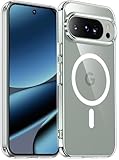
- [Compatible] Only compatible with Google Pixel 10/Pixel 10 Pro phone. Precise cutouts for easy access to all ports, buttons, sensors and cameras. Sensitive buttons with good response, are easy to press.
- [Magnetic Designed] Built-in magnet ring aligns perfectly and locks into place making wireless charging faster and easier than ever. This Google Pixel 10/Pixel 10 Pro case will not fall off no matter how it rotates with super adsorption capacity.
- [Thorough Camera & Screen Protection] 1.5mm raised lips over screen and 1.5mm raised lips over camera relieves over this Google Pixel 10/Pixel 10 Pro case, impacts and protects the phone screen and camera against drop damage, cracks and scratches. Reinforced corner effectively absorb bumps from any angle drop.
- [Zero Fingerprints] SPIDERCASE translucent matte Google Pixel 10/Pixel 10 Pro case with a smart Nano Oleophobic Coating design that prevents fingerprints, watermarks, oil, and dust, comfortable and clean.
- [Shock Protection] Passing military drop tests up, your device is effectively protected from violent impacts and drops
“IP rights” is not one single type of claim
Google’s announcement foregrounds copyright, while describing output claims in terms of third-party IP rights, including copyright. The contract’s express treatment of certain trademark claims illustrates that categories can be treated differently. Do not assume this indemnity automatically covers:
- Copyright: a claim that generated text, code, an image, or other output unlawfully copies protected expression.
- Trademark or trade dress: a claim involving a brand, logo, product identifier, or commercial presentation; some trademark-related uses are specifically identified as excluded in the cited terms.
- Patent: a claim that a product or process infringes a patent; the exact agreement must establish whether and how it is covered.
- Trade secrets, privacy, or publicity: these raise distinct legal issues and should not be casually folded into an IP-output indemnity.
- Open-source licenses, data-supplier contracts, or regulatory duties: these can create separate obligations or claims, not automatically resolved by the generative-AI indemnity.
The claim’s legal basis and the specific contract language control. A lawsuit involving AI is not necessarily an IP claim covered by this protection.
Best Value

- Perfect Fit for Google Pixel 9 & 9 Pro: Precision-engineered for the Google Pixel 9 & 9 Pro, this OtterBox case offers a flawless fit. It not only preserves your phone's sleek design but also ensures unparalleled protection against everyday hazards.
- Rugged Multi-Layer Defense: Featuring dual-layer construction with a rigid shell and internal rubber layer, our case exceeds 3X military drop standards (MIL-STD-810G 516.6), crafted from over 35% recycled plastic for eco-conscious resilience.
- Secure Grip, Streamlined Protection: Rely on the OtterBox legacy with Commuter Series—total protection with rubber-gripped edges for a secure hold. It's a slim, easy-to-install case providing durable quality and a precise fit for hassle-free defense
- Wireless Charging Compatible: Its slim profile is pocket-friendly, offering protection and ease for your on-the-go lifestyle
- Trusted OtterBox Quality: With OtterBox, you're not just buying a case; you're investing in peace of mind. Our limited warranty covers material and workmanship defects.
Indemnity is not ownership or a guarantee of originality
Protection against certain third-party claims is separate from ownership of output. The indemnity does not mean Google grants copyright in every generated response, that applicable law will recognize the customer as an author, or that output is original or exclusive. Similar or identical output may be generated for another customer. Nor does contractual protection make it prudent to publish material without checking for copied text, protected images, or conflicting brands.
How enterprise buyers should evaluate it
Before selecting a service, a procurement or legal team should verify the following against its own contract and workload:
- Identify the exact service and model. Confirm that the precise product, feature, and model version appear on Google’s current indemnified-services list, and establish whether a preview or successor product is treated differently.
- Confirm billing status. Determine whether the workload is paid use or relies on free-tier capacity or credits. Keep records showing which billing arrangement applied when the output was created.
- Read the governing terms. Check whether the relevant Google Cloud or Workspace agreement incorporates the service-specific terms, and whether regional, reseller, or negotiated language changes them.
- Map likely claims to the coverage. Ask whether the protection concerns training-data allegations, generated-output allegations, or both, and how the agreement treats copyright, trademark, patent, open-source, and third-party data claims.
- Review defense and claims procedures. Locate notice deadlines, cooperation duties, defense and settlement provisions, liability limits, and any conditions that could affect recovery. Do not infer these details from the marketing announcement.
- Assess customization risk. Establish who supplied fine-tuning, adapter, grounding, or other customization data and whether the organization has the rights needed to use it.
- Check operational controls. Confirm whether the service can preserve citations, grounding information, prompts, model versions, and output records needed to investigate an incident.
- Compare alternatives on contracts, not slogans. Azure AI Foundry/Azure OpenAI, Amazon Bedrock, OpenAI, Anthropic, and self-hosted models have different products and legal terms. Do not assume their indemnities are equivalent; compare the current agreements that would actually govern your use.
For buyers, the commercial question is not simply whether Google offers protection. It is whether the covered service fits the organization’s workflow, whether the protection applies to the workload and claims it cares about, and whether the value is meaningful alongside the contract’s limits and operational requirements. Google Cloud may suit organizations seeking Google’s model platform, agents, and grounding features; Gemini in Workspace is a different proposition for productivity workflows rather than API-level model control. Product fit and legal coverage should be assessed separately.
Quick wins for a faster PC:
Fix the driver behind crashes, sound loss and screen glitchesFind Drivers →Repair Windows errors before they cause bigger problemsFix Now →Practical controls for using covered services
Indemnity should sit alongside—not replace—an organization’s content and data controls. A sensible workflow is to:
- Retain prompts, system instructions, model versions, relevant source citations, outputs, and human edits in a way consistent with privacy and retention requirements.
- Preserve citations and grounding data where available; do not bypass or disable safeguards intended to support responsible use.
- Avoid prompts designed to reproduce a named creator’s protected work, copyrighted text, or a competitor’s distinctive brand assets.
- Have a human review output before publication or commercialization, with additional copyright and trademark checks for high-value material.
- Document rights and permissions for customer-supplied training, fine-tuning, adapter, or grounding data.
- Quarantine potentially infringing material and escalate it to counsel and the vendor. Do not continue using disputed output after receiving a notice without legal advice.
Google’s announcement ties output protection to responsible use and the use of available tools such as source citations. Operational records can therefore matter both for managing actual IP risk and for establishing what happened if a claim arises.
Quick Recap
Product prices and availability are accurate as of the date/time indicated and are subject to change. Any price and availability information displayed on Amazon at the time of purchase will apply.



