Free tools Windows power users keep installed
One-click scans. No signup required.
Some links on this page are affiliate links: if you buy through them we may earn a commission, at no extra cost to you.
Eastern Washington ag-tech startup Qualterra reportedly raised $4.5 million in financing, according to a February 22, 2025 report from GeekWire. The company uses modular biomass-processing equipment to convert agricultural and forestry residues into biochar, recoverable energy and, potentially, verified carbon-removal credits.
The raise is significant because Qualterra is pursuing several businesses at once: selling biochar as a soil amendment, deploying processing units for farms and industrial sites, developing carbon credits, and expanding its plant-propagation and agricultural-biotechnology operations. But the publicly available reporting does not identify the investors, financing structure, valuation or exact use-of-proceeds breakdown.
What Qualterra does
Qualterra is based in the Pullman and Eastern Washington region and operates across agricultural technology, not just climate-related materials. Its services include molecular plant testing, clean plant propagation and other agricultural biotechnology work.
The Tool Desk
Outbyte PC Repair FREEClear out junk files and repair common Windows errorsFree Scan →Outbyte Driver Updater FREEScan for outdated or missing drivers - takes under a minuteDriver Scan →GeekWire reported that the company was formed in 2021 after NuPhY acquired Ag Energy Solutions, the business associated with biochar and renewable-energy systems. Mike Werner is Qualterra’s CEO, while Amit Dhingra is identified as chief scientist and a horticultural-science academic. GeekWire described the company as having 38 employees in February 2025; that is a dated snapshot, not a current headcount.
#1 Best Overall
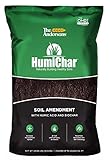
- Improves soil health, lawn health, plant health, and reduce the use of fertilizers
- Easy to apply spherical, uniform, low dust formulation. Dispersible Granule, or "DG" Technology is The Andersons' patented nutrient delivery system. With DG Technology, particles are more rapidly and efficiently broken down
- Environmentally friendly, OMRI listed. User friendly; can be blended with fertilizers, alongside any fertilizer program or used alone
- HumiChar is an organic, carbon-based soil amendment. Contains 30% high-quality humic acid and 43% granulated biochar
- Provides the benefit of quickly-available humic acid and the long-term soil building qualities of the biochar that lasts for decades. Not for sale in CA or OR
That broader operating base matters to the business model. Qualterra is attempting to connect waste processing, soil products, greenhouse production and plant research rather than rely on a single revenue stream.
What the $4.5 million raise means—and what it does not establish
The confirmed public figure is $4.5 million, reported by GeekWire on February 22, 2025. The available coverage does not establish whether the financing was equity, debt, a grant, a blended transaction or another structure. It also does not identify the investors, valuation, closing date or the percentage allocated to biochar, greenhouses, plant production or hiring.
Qualterra’s reported priorities include scaling biochar production and sales, launching biochar carbon-credit sales, expanding into roughly seven acres of high-tech greenhouses and increasing plant-production capacity by a claimed 10-fold. Those are plans and targets, not evidence that every milestone had been completed by August 2026.
The greenhouse property was purchased by Qualterra partner Cowles Real Estate Company, with Qualterra leasing the space. A separate claim that Qualterra received a $13.2 million grant is not substantiated by the credible funding report and should not be treated as part of this financing story.
How the waste-to-biochar system works
Qualterra’s core equipment is called a Biomass Processing Unit, or BPU. The company describes it as a containerized, modular system designed for continuous operation, automated controls, remote monitoring, continuous feedstock supply and automatic shutdown features.
Rank #2
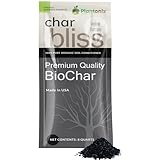
- 100% Natural Soil Amendment for Plants - Plantonix Char Bliss is an organic soil conditioner that’s been ethically harvested from wood and tree trimmings. Biochar provides a number of benefits for indoor plants and outdoor plants, such as enhanced nutrient availability, soil fertility, and water retention, all while promoting carbon sequestration.
- Excellent Nutrient Retention - Biochar absorbs nutrients like a sponge, preventing waterlogging and nutrient runoff. Biochar holds onto these nutrients over a long period of time, so they can remain available for plant use. This makes biochar ideal for increasing nutrient uptake while reducing the need for other garden fertilizers.
- Supports Carbon Sequestration - Using bio charcoal removes carbon from the atmosphere and returns it back to the soil, where it can continue benefiting the Earth for hundreds of years. Bio charcoal for garden soil is an effective tool for mitigating the effects of climate change and promoting more sustainable gardening practices.
- Amazing Water Retention - Thanks to its porous structure, bulk biochar traps moisture in the soil, so you can rest assured knowing your plants are staying happy and hydrated. Using wood chips for garden soil is perfect for building drought tolerance and reducing the need for frequent watering, helping you save more water.
- Improves Soil Structure & Aeration - Biochar loosens compacted soil for better soil aeration and porosity, making it easier for roots to penetrate. With no extra additives or synthetic ingredients, Char Bliss is an ideal soil amendment for mixing with garden soil, garden pots, lawns, turf, garden containers, garden terraces, and potted plants.
- Biomass is collected. Potential inputs include crop residues, orchard waste, forestry material and processing byproducts.
- The material is prepared. Depending on the feedstock, the operator may need to dry, grind, screen or otherwise condition it.
- Thermal conversion takes place in controlled conditions. Pyrolysis or related low-oxygen processing heats the material without treating it as ordinary open-air combustion.
- The process produces biochar and energy. The solid output is a carbon-rich material, while combustible gases or syngas can be used to produce heat or electricity.
- The outputs are put to work. Biochar may be sold as a soil amendment or used in carbon-credit accounting. Recovered energy may serve farms, greenhouses, warehouses or industrial facilities.
Calling the process simply “burning waste” misses important variables. Oxygen availability, temperature, residence time, moisture and the use of the resulting gases affect emissions, energy recovery, biochar quality and carbon-credit eligibility.
What the BPU can process
GeekWire reported Qualterra’s claim that its system can process about 20 feedstock types, including wheat straw, timber waste, orchard residue, seeds, nuts and husks. Qualterra also says its equipment is designed for agricultural waste, including high-silica field residues.
Do these 3 things before closing this tab:
1Clear out junk files and repair common Windows errors2Scan for outdated or missing drivers - takes under a minute3Repair Windows errors before they cause bigger problemsThat does not mean all feedstocks perform identically. Moisture, density, contamination, ash content and seasonal availability can change the unit’s throughput, operating cost and the properties of the finished biochar.
Qualterra’s published specifications list BPU configurations processing approximately 450 to 5,400 tons of feedstock per year and producing roughly 112 to 1,350 tons of biochar per year. Listed energy-output configurations range from 100 kilowatts to 1.2 megawatts. These are published equipment specifications, not a guarantee of annual output at every installation.
Why farmers might use biochar
Biochar is a carbon-rich soil amendment, not automatically a fertilizer. Qualterra says its material is intended to create a soil environment that supports beneficial microorganisms and improves water efficiency.
Rank #3

- 100% Natural Soil Amendment for Plants - Plantonix Char Bliss is an organic soil conditioner that’s been ethically harvested from wood and tree trimmings. Biochar provides a number of benefits for indoor plants and outdoor plants, such as enhanced nutrient availability, soil fertility, and water retention, all while promoting carbon sequestration.
- Excellent Nutrient Retention - Biochar absorbs nutrients like a sponge, preventing waterlogging and nutrient runoff. Biochar holds onto these nutrients over a long period of time, so they can remain available for plant use. This makes biochar ideal for increasing nutrient uptake while reducing the need for other garden fertilizers.
- Supports Carbon Sequestration - Using bio charcoal removes carbon from the atmosphere and returns it back to the soil, where it can continue benefiting the Earth for hundreds of years. Bio charcoal for garden soil is an effective tool for mitigating the effects of climate change and promoting more sustainable gardening practices.
- Amazing Water Retention - Thanks to its porous structure, bulk biochar traps moisture in the soil, so you can rest assured knowing your plants are staying happy and hydrated. Using wood chips for garden soil is perfect for building drought tolerance and reducing the need for frequent watering, helping you save more water.
- Improves Soil Structure & Aeration - Biochar loosens compacted soil for better soil aeration and porosity, making it easier for roots to penetrate. With no extra additives or synthetic ingredients, Char Bliss is an ideal soil amendment for mixing with garden soil, garden pots, lawns, turf, garden containers, garden terraces, and potted plants.
Depending on the biochar, soil and application, possible functions include:
- Improving water and nutrient retention.
- Adding porous habitat for soil microorganisms.
- Influencing soil structure and aeration.
- Potentially reducing irrigation or fertilizer needs.
- Keeping some biomass carbon in a more persistent solid form.
Results are highly site-specific. Feedstock, production conditions, pH, ash and mineral content, particle size, application rate, soil type, climate and crop all matter. Nutrients may be blended into some products, but that does not make every biochar fertilizer.
Qualterra said it was testing biochar across 13 crop types in three U.S. states. That demonstrates an active testing program, not proof of universal yield increases or water savings. Buyers should look for crop-specific control data, application rates, soil conditions, number of growing seasons, irrigation measurements, fertilizer use, yield and crop-quality results, and independent validation.
How biochar can store carbon
Plants absorb atmospheric carbon dioxide as they grow. If plant residues decompose rapidly or are burned, much of that carbon returns to the atmosphere relatively quickly. Thermal conversion can leave part of it in a more stable solid form.
That distinction is important:
- Carbon storage means carbon remains in a solid material for a period of time.
- Carbon removal requires accounting for the full project, including feedstock sourcing, transport, preprocessing, energy use, application or storage, monitoring and permanence.
- Carbon-negative operation is a lifecycle conclusion, not an automatic feature of every biochar facility.
Qualterra says its BPU-generated biochar is registered under the Climate Action Reserve U.S. Biochar Protocol under project ID CAR2120. It also says 3Degrees manages registration, monitoring, verification and sale of credits under their partnership. Those are company-published claims; the status of issued credits, anticipated credits and credits still under development should not be conflated.
Crashes, No Sound, or Screen Glitches?
Random freezes, missing sound and display glitches usually trace back to one bad driver. Find and replace yours safely.Free scan · under a minuteWindows Errors? Fix Them Before They Spread
Repair common Windows errors and clear accumulated junk for a smoother, more stable PC - no reinstall needed.Free scan · no reinstallRank #4
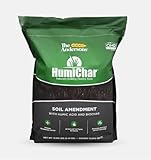
- Improves soil health, lawn health, plant health, and reduce the use of fertilizers
- Easy to apply spherical, uniform, low dust formulation. Dispersible Granule, or "DG" Technology is The Andersons' patented nutrient delivery system. With DG Technology, particles are more rapidly and efficiently broken down
- Environmentally friendly, OMRI listed. User friendly; can be blended with fertilizers, alongside any fertilizer program or used alone
- HumiChar is an organic, carbon-based soil amendment. Contains 30% high-quality humic acid and 43% granulated biochar
- Provides the benefit of quickly-available humic acid and the long-term soil building qualities of the biochar that lasts for decades. Not for sale in CA or OR
A registered methodology does not mean that every ton produced is automatically a permanent removal. Credible accounting still depends on project-specific monitoring, reporting, verification, additionality, permanence and lifecycle emissions. Energy consumption, backup fuel, air-pollution controls, transport and application all affect the net result.
Qualterra’s operating footprint
Qualterra says its 75-acre corporate research-and-development farm in Cheney, Washington, includes commercial biochar production, three BPUs operating in parallel, a feedstock-storage module, a mixing shed, a laboratory and a greenhouse. More than 50 acres are used for farm trials and demonstrations, according to the company.
Qualterra presents the site as an agricultural regeneration center combining waste processing, renewable energy, greenhouse heating and crop research. If that integration works economically, the same operation could use local residues, produce soil inputs, recover energy and test the products in real growing systems.
Independent reader supportYour contribution helps us test, update, and keep practical guides available for everyone.The business model has multiple revenue streams
Qualterra’s potential income sources extend beyond selling bags of biochar:
- Retail and bulk biochar: The company’s online shop lists agricultural biochar products from $15 in the available page data. Some listings were marked sold out, and the package sizes were not sufficiently clear to calculate a meaningful per-pound or per-ton price.
- Processing equipment: Farms, greenhouses and industrial sites may purchase or arrange projects around BPUs. Qualterra does not publish an equipment purchase price and directs prospective buyers to contact the company.
- Energy recovery: Heat or electricity from the process could offset energy purchases, but the value depends on site demand, system efficiency, uptime and local energy prices.
- Carbon credits: Verified credits could provide another revenue source, subject to methodology rules, verification, market demand and project-specific performance.
- Plant production and biotechnology: Qualterra’s plant-propagation, testing and greenhouse operations provide a separate agricultural-technology business that may also benefit from biochar integration.
Qualterra has presented illustrative revenue assumptions for biochar, carbon credits, energy and tipping fees. Those figures are scenario inputs rather than guaranteed returns. A payback calculation requires capital cost, installation, permitting, maintenance, labor, feedstock preparation, energy value, product pricing, credit revenue, downtime and utilization.
Best Value
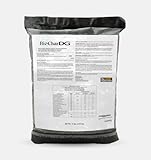
- An organic carbon soil amendment that can be used on all lawns, any time during the growing season to boost soil health. Stays active in your soil for years, steadily improving soil structure and health over time.
- Attracts essential nutrients, beneficial bacteria, microbes, and water—making them more available to your plants when they need it most.
- Made with patented DG Technology (dispersible granule) allowing granules to disperse quickly with water, ensuring fast and even soil integration. BioChar DG’s spherical, uniform granules are designed for low dust and better coverage than other biochar products.
- Ideal for seeding new lawns, enriching gardens, flower beds, potted plants, and composting. Apply alone or alongside any fertilizer program.
- Not for sale in CA or OR
The hard part is feedstock logistics
A BPU is most attractive when a site has a reliable, concentrated biomass stream and a nearby use for the output. Low-density straw, wet material and long-distance hauling can quickly weaken both the financial and climate case.
Before evaluating an installation, an operator would need to ask:
- Who owns and supplies the waste?
- Is it currently burned, landfilled, composted, left in the field or used as bedding?
- How far must it travel?
- What drying, grinding or screening is required?
- Is feedstock available year-round or only during harvest?
- What permits and air-quality controls are required?
- Where will the biochar, heat and electricity go?
These questions also affect additionality. If the waste already has a valuable use, diverting it to biochar may create different economics and emissions than processing a residue that would otherwise be openly burned or discarded.
Biochar quality is not one-size-fits-all
Two products labeled biochar can behave differently. Buyers should examine carbon content, ash, pH, volatile matter, surface area, porosity, particle size, stability and possible contaminants. A product suitable for agricultural soil may not be appropriate for remediation, filtration, animal-related applications or construction materials.
Farmers should also avoid assuming that more biochar is always better. Application rate, incorporation method and the interaction with fertilizer and irrigation practices can change the result. Independent lab analysis and local agronomic advice are more useful than a generic yield promise.
How Qualterra compares with MYNO Carbon
Washington-based MYNO Carbon is another company working with biochar and carbon-removal markets. Its public model emphasizes larger carbon-removal facilities and products for agribusiness, remediation, construction and industrial materials, alongside renewable energy and carbon credits. Its product categories include MYNO Carbon Pure, Boost and Core.
The strategic contrast is useful:
| Question | Qualterra | MYNO Carbon |
|---|---|---|
| Operating model | Modular, distributed BPUs designed for on-site or nearby processing | More centralized, larger-scale facility and materials strategy |
| Feedstock emphasis | Agricultural residues, orchard waste, forestry waste and other biomass | Public materials emphasize wood waste and specialized products |
| End markets | Soil amendments, equipment, energy, credits and plant production | Agribusiness, remediation, construction and industrial materials, plus credits |
| Buying path | Retail biochar is listed online; equipment requires a project discussion | Products and credits are generally handled through company contact channels |
Neither model is automatically superior. Distributed systems may reduce hauling when residues are concentrated at farms, but they require suitable sites, operators and local energy demand. Centralized facilities may achieve scale, but feedstock transportation and supply concentration become more important.
Recommended Free Tools
What investors, farmers and credit buyers should verify
- Investors: Ask for the financing instrument, investor identities, valuation, revenue, production volumes, customer concentration and use-of-proceeds breakdown.
- Farmers: Request product specifications, contaminant testing, crop-specific trial results, application guidance and delivered pricing.
- BPU customers: Model feedstock volume, moisture, transport, preprocessing, permitting, maintenance, uptime, energy demand and biochar offtake before considering payback.
- Carbon-credit buyers: Confirm registry status, whether credits are issued or merely planned, monitoring and verification arrangements, permanence treatment, additionality and lifecycle emissions.
The strongest evidence for Qualterra’s model will be independent agronomic results, sustained commercial operating data, transparent equipment economics and independently verified net carbon-removal performance.
Quick Recap
Product prices and availability are accurate as of the date/time indicated and are subject to change. Any price and availability information displayed on Amazon at the time of purchase will apply.



