Quick wins for a faster PC:
Repair Windows errors before they cause bigger problemsFix Now →Scan for outdated or missing drivers - takes under a minuteDriver Scan →Some links on this page are affiliate links: if you buy through them we may earn a commission, at no extra cost to you.
AI-conic is a real coffee blend launched by Helsinki’s Kaffa Roastery and Finnish AI consultancy Elev on April 19, 2024. But the coffee was not autonomously made or roasted by artificial intelligence. AI proposed a four-origin recipe from written flavor descriptions; human roasters then test-roasted, blind-tasted, adjusted the roast level during development, and approved the product.
What launched in Helsinki?
Kaffa Roastery introduced AI-conic Coffee during the professional day of the Helsinki Coffee Festival on April 19, 2024. The project was a collaboration between Kaffa, a Helsinki specialty coffee roaster, and Elev Consulting, a Finnish AI consultancy and training company.
The companies described AI-conic as the world’s first coffee developed with help from artificial intelligence. That is a claim from the developers and their launch announcement—not an independently verified universal designation.
The more precise description is an AI-assisted coffee blend. “AI-generated coffee” can suggest that software selected green beans, operated a roaster, or conducted quality control. None of those things happened here.
#1 Best Overall
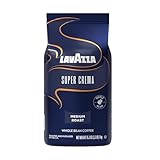
- SUPER CREMA: A 2.2 lb whole bean coffee bag ideal for espresso preparation
- INTENSITY AND ROAST: This full-bodied medium roast offers a bold and creamy finish
- BLEND: Made from Arabica and Robusta beans, this naturally caffeinated blend is sourced from 15 coffee-growing countries around the world
- PREPARATION: Ideal for espresso preparation.
- BREWING GUIDE FOR SINGLE ESPRESSO: 0.28 oz of ground espresso delivers a 1 oz espresso shot
AI-conic at a glance
| Detail | What is known |
|---|---|
| Product | AI-conic Coffee |
| Launch | April 19, 2024, at Helsinki Coffee Festival |
| Collaborators | Kaffa Roastery and Elev Consulting |
| Blend size | Four coffee origins |
| Roast | Medium |
| Official flavor description | Juicy, dynamic, sweet, and ripe-fruited |
The four-bean recipe
AI proposed a combination of four origins, more than the two or three beans Kaffa commonly used in its blends. The published composition is:
| Origin | Coffee | Share |
|---|---|---|
| Brazil | Fazenda Pinhal | 40% |
| Colombia | San Lorenzo | 25% |
| Guatemala | La Bolsa | 25% |
| Ethiopia | Geruke | 10% |
The Brazil component dominates the recipe, while Colombia and Guatemala each contribute a quarter and Ethiopia makes up the remaining tenth. The project’s official site says the blend is balanced between sweetness and ripe fruit.
The unusual part was not that AI invented a new type of bean. It suggested a proportioned combination of coffees already available to the project team. The roasters reportedly questioned whether four origins would make the individual flavors indistinct. Their blind tasting convinced them that the blend worked.
That result is interesting, but it is not a controlled scientific finding. The public accounts do not disclose the number of tasters, brewing method, water chemistry, roast dates, comparison coffees, or statistical results.
Rank #2
- Balanced, full-bodied medium roast with a smooth finish
- One 32-ounce bag of whole bean coffee
- 100% Arabica coffee grown in Colombia
- Roasted and packed in the U.S.A.
- Shown as a serving suggestion
How AI contributed
The development process involved several distinct AI tasks:
- Data preparation: Kaffa supplied written descriptions of its existing coffees, including flavor notes and bean profiles.
- Model input: Elev added information about the characteristics of the available beans.
- Recipe ideation: A GPT-based large language model was asked to propose a new blend intended to appeal to coffee drinkers. Elev’s Finnish announcement says GPT was used through Microsoft Azure.
- Naming and visual concepts: The project’s official history says ChatGPT 3.5 assisted with naming, while AI also contributed to package-visual concepts.
- Physical testing: Kaffa’s coffee professionals test-roasted the proposed blend and evaluated it through blind tasting.
The model worked from descriptions supplied by people. It did not taste the beans, sense aroma, assess freshness, operate the roasting equipment, or independently decide whether the final coffee was saleable.
What humans still did
The human role was central rather than ceremonial. Kaffa’s roasters selected and supplied the relevant information, handled the physical roasting, and judged the result. The official account says the roasters accepted the proposed blend proportions without changing them. A separate company account indicates that the roast level was adjusted during development.
The Tool Desk
Outbyte Driver Updater FREEScan for outdated or missing drivers - takes under a minuteDriver Scan →Outbyte PC Repair FREERepair Windows errors before they cause bigger problemsFix Now →That distinction matters: the AI suggested the blend recipe, but human professionals remained responsible for how the beans were roasted and whether the result met their standards.
Rank #3

- INTENSITY AND ROAST: With a 5/10 intensity, this fragrant medium roast offers a sweet and aromatic finish
- PREPARATION: Ideal for espresso machines, moka pot, drip coffee machines, or French press.
- LAVAZZA ESPRESSO: A 2.2 lb whole bean coffee bag ideal for espresso or drip preparation (pack of 1)
- INGREDIENTS: Lavazza Espresso contains only coffee and is produced in facilities that exclusively make coffee
- BLEND: A 100% Arabica, naturally caffeinated blend sourced from South America and Africa
| AI contribution | Human contribution |
|---|---|
| Analyzed written coffee descriptions | Selected and supplied the data |
| Proposed the four-origin composition | Obtained and roasted the beans |
| Assisted with naming and visual concepts | Blind-tasted and evaluated the coffee |
| Generated suggestions from text | Managed production, quality control, and sale |
What does AI-conic taste like?
The official product description calls the coffee “juicy and dynamic,” with a balance of sweetness and ripe fruit. Independent reporting similarly described it as balanced, sweet, and fruit-forward, with Brazil’s Fazenda Pinhal as the dominant component.
Company testimonials mention chocolate-like notes and softness, but those are promotional or attributed sensory opinions—not standardized, independent tasting results. The public product information identifies a medium roast but does not publish a cupping score, complete processing details for every bean, or an independent sensory study.
For a buyer, “AI” does not mean artificial flavoring or a futuristic ingredient. This is conventional coffee, evaluated by ordinary human sensory standards. Taste will also depend on roast freshness, grind size, water, brewing method, and personal preference.
Did AI make the coffee better?
The evidence supports a narrower conclusion: AI produced a combination that the roasters had not initially considered, and human experts judged the resulting coffee positively in a blind tasting.
Rank #4

- Balanced, full-bodied medium roast with a smooth finish
- One 12-ounce bag of whole bean coffee
- 100% Arabica coffee grown in Colombia
- Roasted and packed in the U.S.A.
- Shown as a serving suggestion
It does not prove that AI consistently makes better coffee than an experienced roaster. The model was constrained by the completeness and consistency of the written descriptions, the beans made available, the prompts used by Elev, and the physical behavior of the coffees during roasting.
Language models can recombine patterns in supplied information, which may make them useful brainstorming partners. But text descriptions are not the same as sensory perception. The model did not optimize flavor through a statistically validated experiment, and the exact prompt, model version, settings, full dataset, and rejected alternatives have not been publicly disclosed.
Independent reader supportYour contribution helps us test, update, and keep practical guides available for everyone.Why the project matters beyond coffee
AI-conic is best understood as a case study in augmentation rather than replacement. Coffee blending depends on tacit knowledge: sensory memory, an understanding of how origins interact, and experience with how roasting changes a bean’s character.
Recommended Free Tools
AI can help professionals explore combinations quickly, identify patterns across large descriptive datasets, and challenge assumptions. In this case, it acted as a creative “sparring partner” that suggested using four origins. People then tested whether the suggestion survived contact with the physical product.
Best Value
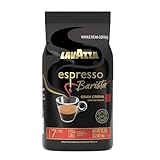
- One bag of 2.2lb Lavazza Espresso Barista Gran Crema Whole Bean Coffee Blend
- Roast: Dark
- Intensity: 7/10
- Taste: Full-bodied
- Aromatic Notes: Honey and roasted coffee
The same pattern applies to many skilled industries. An algorithm may generate options, but domain experts still need to define the inputs, test the output, account for real-world constraints, and take responsibility for the final decision.
Can you still buy AI-conic?
As of the official pages checked in August 2026, the dedicated AI-conic website says the coffee is available for pickup and delivery. However, AI-conic is not visibly listed among the current coffee bags in Kaffa’s main English catalogue or its coffee-products collection.
That mismatch means availability should be verified through the order page and checkout rather than assumed from the 2024 launch coverage. The product site may have changing stock, delivery, or geographic restrictions. Kaffa’s general shipping policy describes Finland, EU, and worldwide shipping arrangements, but that policy should not automatically be treated as confirmation that every AI-conic order can be shipped to every country.
The reported launch price was €12.90 for 250 grams, according to The Next Web’s April 2024 coverage. That is a historical price, not a current 2026 price.
Elev said orders came from more than ten countries during the launch weekend. That figure is company-reported and indicates international attention at launch, not a current sales or popularity measurement.
The bottom line
AI-conic was not coffee made by a robot. It was a human-produced, medium-roast blend whose four-bean recipe was proposed by a GPT-based AI system using descriptions supplied by Kaffa and Elev.
The project’s real achievement is more modest—and more credible—than the headline suggests: AI offered experienced roasters an unexpected formulation, and those roasters decided through physical testing and blind tasting that it was worth selling. That makes AI-conic a compelling experiment in creative assistance, not proof that software can replace coffee expertise or guarantee better flavor.
What’s actually slowing this PC down?
Pick the symptom - the matching free tool is one click away.
Quick Recap
Product prices and availability are accurate as of the date/time indicated and are subject to change. Any price and availability information displayed on Amazon at the time of purchase will apply.



