Free tools Windows power users keep installed
One-click scans. No signup required.
Some links on this page are affiliate links: if you buy through them we may earn a commission, at no extra cost to you.
Intel has not sold or legally spun off Intel Foundry. It is separating the business’s financial reporting and management structure while keeping the foundry operation inside Intel. The plan is intended to improve accountability, reassure outside customers and preserve the option of bringing in separate capital.
That distinction matters for investors: Intel Foundry is becoming more independent operationally, but it remains legally and economically tied to Intel. Its success will ultimately depend on winning external customers, filling expensive factories and securing demand for the next generation of manufacturing technology.
The short answer: separation does not yet mean a spin-off
Intel announced in September 2024 that it planned to establish Intel Foundry as an independent subsidiary inside Intel. The proposal included a more independent operating board, separate financial visibility and flexibility to evaluate future funding or capital structures.
That is different from creating a separately owned public company. There is no evidence, as of the research cutoff of August 16, 2026, that Intel has completed an Intel Foundry IPO, sold control of the business or transferred it into an independently owned company.
#1 Best Overall

- Next‑Gen Platform Support: Compatible with Intel 800 Series Chipset‑based motherboards with LGA1851 Socket enabling PCIe 5.0/4.0 and high‑speed DDR5 memory (up to 7200 MT/s).
- High‑Performance Core Configuration: Features up to 24 cores (8 P‑cores + 16 E‑cores) for demanding gaming and creator
- Ultra‑Fast Boost Clocks: Reaches up to 5.5 GHz max turbo frequency for top‑tier responsiveness and performance
- Built for Enthusiasts: Unlocked for performance tuning when paired with Intel Z‑series chipsets, making it ideal for overclockers and power users.
- Robust Power & Thermal Design: Engineered with 125W base power and 250W max turbo power to sustain high‑intensity
“Separation” can therefore mean four different things:
- Accounting separation: Intel reports Foundry and Intel Products as distinct businesses, with internal manufacturing treated more like a customer-supplier relationship.
- Operational separation: Foundry is expected to manage its customer relationships, capacity and investment decisions with greater focus.
- Governance separation: Intel planned an operating board that includes independent directors.
- Ownership separation: A spin-off, sale, IPO, joint venture or outside equity investment would change who owns or controls Foundry. That has not been established.
What Intel Foundry actually does
Intel is an integrated device manufacturer, or IDM. Unlike a pure-play foundry, it both designs chips and develops and operates the manufacturing facilities used to produce them.
Intel Foundry serves two broad customer groups:
- Intel Products, including Intel processors and other internally designed chips.
- External customers, which pay Intel to manufacture chips or provide related services.
The foundry business is more than a collection of factories. It includes process-node development, wafer fabrication, process-design kits, electronic-design-automation support, intellectual-property libraries, advanced packaging, assembly, chiplet integration, design services, yield improvement and supply-chain support. Intel’s 2025 annual filing describes these activities as part of the Foundry business.
Quick wins for a faster PC:
Scan for outdated or missing drivers - takes under a minuteDriver Scan →Repair Windows errors before they cause bigger problemsFix Now →Fix the driver behind crashes, sound loss and screen glitchesFind Drivers →Why Intel wants greater independence
Customer trust
Intel is trying to sell manufacturing services to companies that may compete with Intel’s own products. A prospective customer could hesitate to provide sensitive chip designs, road maps or performance requirements to a supplier that also designs CPUs, accelerators and other semiconductors.
A separately managed foundry can offer clearer rules for confidentiality, engineering access and capacity allocation. But governance separation does not eliminate the conflict entirely while Foundry remains part of Intel.
Financial transparency
Intel’s foundry strategy has required enormous investment before it has generated substantial external revenue. Separate reporting makes it easier to see what manufacturing costs, internal demand and outside-customer sales look like.
In April 2024, Intel introduced a financial framework for Intel Foundry. Internal manufacturing is treated more like a commercial transaction, with intersegment pricing intended to approximate market pricing. This improves visibility, but it does not make internal sales equivalent to revenue from independent customers.
What’s actually slowing this PC down?
Pick the symptom - the matching free tool is one click away.
Rank #2

- Get ultra-efficient with Intel Core Ultra desktop processors that improve both performance and efficiency so your PC can run cooler, quieter, and quicker.
- Core and Threads 24 cores (8 P-cores plus 16 E-cores) and 24 threads. Integrated Intel Graphics included
- Performance Hybrid Architecture Integrates two core microarchitectures, prioritizing and distributing workloads to optimize performance
- Performance Unlocked Up to 5.7 GHz unlocked. 40MB Cache
- Compatibility Compatible with Intel 800 series chipset-based motherboards
Capital discipline
Leading-edge fabs and process development require multibillion-dollar investments over many years. A separate profit-and-loss structure can make it harder to hide manufacturing losses inside the broader company and can force clearer decisions about which facilities and process nodes deserve more capital.
Potential outside funding
Intel said the subsidiary structure could provide flexibility to evaluate independent funding sources and optimize the capital structures of Intel Products and Intel Foundry. That is an option, not evidence that a separate Foundry financing has already occurred.
The numbers show why the business is under pressure
Intel’s filings show that external business is growing but remains small compared with the scale of its internal manufacturing activity.
In the first quarter of 2026, external foundry and assembly/test revenue was $174 million, up from $31 million in the first quarter of 2025. Intel also stated that substantially all of Foundry’s business still supported internal manufacturing for Intel Products.
Recommended Free Tools
The two facts create the central paradox of Intel’s strategy:
Intel needs its own products to provide volume and help utilize its factories, but it needs external customers to prove that Foundry can compete as a commercial business.
Intel’s 2025 filing also reported $950 million in charges related to non-cash impairments and accelerated depreciation for manufacturing assets with reduced or no remaining operational use, compared with $3.3 billion in 2024. Those charges relate to manufacturing assets and should not automatically be attributed solely to Intel Foundry, but they illustrate the financial risk of investing ahead of demand.
Rank #3

- Game Without Compromise. Play harder and work smarter with Intel Core 14th Gen processors
- 20 cores (8 P-cores plus 12 E-cores) and 28 threads. Integrated Intel UHD Graphics 770 included
- Up to 5.6 GHz with Turbo Boost Max Technology 3.0 gives you smooth game play, high frame rates, and rapid responsiveness
- Compatible with Intel 600-series (with potential BIOS update) or 700-series chipset-based motherboards
- DDR4 and DDR5 platform support cuts your load times and gives you the space to run the most demanding games
Intel’s filings describe the business as capital-intensive and dependent on securing significant external customers. “Ailing” is a shorthand used by some observers, not a formal Intel business designation.
18A matters, but 14A is the bigger commercial test
Intel 18A
Intel says it ramped its 18A process into high-volume production in 2025 and is using it for its own products, including the first Intel Core Ultra Series 3 processor. Intel also aims to make 18A its first significant foundry node for government and commercial customers.
Production readiness and internal use are important milestones, but they do not by themselves prove that Intel has built a successful external-foundry business. A process can be technically ready while still lacking enough third-party volume to support its economics.
Intel 14A
Intel describes 14A as its first process node designed from the beginning as an external-foundry offering. That makes it a crucial test of whether the company can convert its manufacturing roadmap into a commercially credible service.
Intel has warned that it may pause or discontinue development of 14A and successor leading-edge nodes if it cannot secure a significant external customer. The company said prospective customers were expected to make 14A decisions in the second half of 2026 and the first half of 2027.
Do these 3 things before closing this tab:
1Clear out junk files and repair common Windows errors2Fix the driver behind crashes, sound loss and screen glitches3Repair Windows errors before they cause bigger problemsA major 14A design win would support Intel’s argument that the subsidiary structure and technology roadmap can attract customers. Failure to secure meaningful demand would raise the risk that Intel limits future process development and relies more heavily on outside foundries for products beyond 18A and 18A-P.
What happens if 14A is not economically viable?
Intel has not announced that it is abandoning advanced manufacturing. Its disclosed contingency is more selective: most products could continue using Intel processes through 18A-P for at least part of the decade, while products requiring more advanced performance could shift to external manufacturers, particularly TSMC.
Rank #4
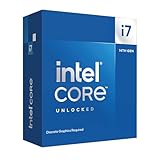
- Game Without Compromise. Play harder and work smarter with Intel Core 14th Gen processors
- 20 cores (8 P-cores plus 12 E-cores) and 28 threads. Discrete graphics required
- Up to 5.6 GHz with Turbo Boost Max Technology 3.0 gives you smooth game play, high frame rates, and rapid responsiveness
- Compatible with Intel 600-series (with potential BIOS update) or 700-series chipset-based motherboards
- DDR4 and DDR5 platform support cuts your load times and gives you the space to run the most demanding games
That would represent a narrower IDM strategy:
- Keep internal manufacturing where Intel has adequate technology and product volume.
- Use third-party foundries where they offer better economics, performance or capacity.
- Continue operating Foundry as a manufacturing and services business, but potentially with a narrower leading-edge roadmap.
Greater reliance on TSMC in that scenario would be a possible consequence, not a completed strategic decision.
Why customers may still hesitate
Intel’s structural change addresses some concerns but cannot remove all of them. A customer evaluating Intel Foundry may consider:
- Whether its confidential designs are adequately protected from Intel’s product teams.
- Whether Intel will allocate capacity fairly between internal products and external customers.
- Whether process-design kits and engineering support are mature enough for production.
- Whether Intel’s yields, delivery reliability and supply-chain performance are competitive.
- Whether Intel will continue funding a process node for its full expected life.
- Whether internal demand could take priority during a capacity shortage.
TSMC remains Intel’s most important external manufacturing alternative. Samsung Foundry is another major advanced-node competitor. GlobalFoundries is more focused on mature, specialty and differentiated processes, while UMC and SMIC are important in selected process categories and geographies. Intel’s own filing identifies TSMC and Samsung as the few foundries capable of producing the leading-edge and near-leading-edge nodes relevant to its products.
Independent reader supportYour contribution helps us test, update, and keep practical guides available for everyone.Government support complicates a full separation
Intel’s relationship with the U.S. government is an important constraint on any future ownership transaction.
Intel’s 2025 filing said that, as a condition of certain Department of Commerce disbursements, the company agreed to issue shares and warrants to the U.S. government. The arrangements include a warrant condition tied to Intel directly or indirectly owning at least 51% of its foundry business.
This does not amount to a blanket statement that Intel cannot spin off Foundry. It does mean that a transaction transferring control could have contractual consequences. A minority investment or subsidiary structure may be easier to reconcile with continued Intel control than a full sale.
National-security considerations also make Intel Foundry different from an ordinary corporate division. A transaction would need to address ownership, access to advanced manufacturing capacity, government support, intellectual property and future U.S. semiconductor production.
Best Value

- Game without compromise. Play harder and work smarter with Intel Core 14th Gen processors
- 24 cores (8 P-cores plus 16 E-cores) and 32 threads. Integrated Intel UHD Graphics 770 included
- Leading max clock speed of up to 6.0 GHz gives you smoother game play, higher frame rates, and rapid responsiveness
- Compatible with Intel 600-series (with potential BIOS update) or 700-series chipset-based motherboards
- DDR4 and DDR5 platform support cuts your load times and gives you the space to run the most demanding games
Outside investment is not the same as Foundry financing
Intel disclosed an agreement dated August 18, 2025, under which SoftBank Group agreed to purchase 87 million Intel shares at $23 per share, for an aggregate investment of $2 billion.
That was an investment in Intel Corporation, not proof that SoftBank acquired a direct interest in Intel Foundry. The distinction matters because several structures have very different implications:
| Structure | What it would mean |
|---|---|
| Investment in Intel Corporation | The investor owns Intel shares and has indirect exposure to Foundry. |
| Investment in an Intel Foundry subsidiary | The investor has a direct economic interest in Foundry, potentially with negotiated governance rights. |
| Joint venture | Intel and one or more partners share ownership, funding and control. |
| Minority sale | Intel retains control while selling part of Foundry to outside investors. |
| Full spin-off or sale | Foundry becomes independently owned and may have its own capital structure and board. |
| Public offering | A separately listed Foundry entity raises capital from public-market investors. |
Altera shows what a real ownership separation looks like
Intel has demonstrated that it can execute an actual ownership change. In September 2025, Intel sold 51% of Altera and deconsolidated the business, according to its filing.
Windows Errors? Fix Them Before They Spread
Repair common Windows errors and clear accumulated junk for a smoother, more stable PC - no reinstall needed.Free scan · no reinstallOutdated Drivers Are Slowing You Down
One free scan finds every outdated or missing driver and matches the right update for your exact hardware.Free scan · exact hardware matchThat is materially different from Intel Foundry’s announced structure. Altera provides a useful comparison because it involved a change in control and accounting consolidation. Intel Foundry’s separate reporting and proposed subsidiary governance, by contrast, do not establish that ownership has changed.
What investors and industry observers should watch next
The most informative evidence will be operational and financial, not simply a new label for the business.
- A major 14A design win: This is the clearest near-term test of external confidence in Intel’s roadmap.
- Direct Foundry financing: Watch for a joint venture, minority investment, subsidiary-level debt or equity financing, or a separately listed entity.
- Long-term wafer commitments: Design discussions and qualification work are less meaningful than production commitments that help fill fabs.
- External revenue growth: The $174 million Q1 2026 figure needs to become a material share of Foundry’s business rather than a small increase from a low base.
- Separate audited financial statements: These would provide more evidence of genuine financial independence than management reporting alone.
- Capital-allocation authority: A Foundry board and management team with meaningful control over investment decisions would make the structure more substantive.
- Factory-capacity changes: Delays, cancellations, impairment charges or expansion plans in Ohio and elsewhere can reveal whether Intel expects enough demand.
- Future use of TSMC: More external manufacturing could be a deliberate portfolio decision, or evidence that Intel’s leading-edge roadmap is being narrowed. The context matters.
- Customer protections: Stronger contractual safeguards for confidential designs, engineering access and capacity allocation would address a central reason customers may prefer independent foundries.
Bottom line
Intel is separating the books, operating model and proposed governance of its foundry business—not yet separating Foundry into an independently owned company.
The strategy is an attempt to make Intel Foundry more accountable and commercially credible while preserving Intel’s control and strategic options. External revenue is growing, but Intel’s own products still provide most of the business’s activity. The decisive evidence will be whether Intel wins substantial external production, secures demand for 14A and attracts direct capital without giving up the ownership and government relationships that support its U.S. manufacturing ambitions.
The Tool Desk
Outbyte Driver Updater FREEFix the driver behind crashes, sound loss and screen glitchesFind Drivers →Outbyte PC Repair FREEClear out junk files and repair common Windows errorsFree Scan →Quick Recap
Product prices and availability are accurate as of the date/time indicated and are subject to change. Any price and availability information displayed on Amazon at the time of purchase will apply.



