Quick wins for a faster PC:
Fix the driver behind crashes, sound loss and screen glitchesFind Drivers →Repair Windows errors before they cause bigger problemsFix Now →Scan for outdated or missing drivers - takes under a minuteDriver Scan →Some links on this page are affiliate links: if you buy through them we may earn a commission, at no extra cost to you.
AMD has launched the clearest new challenge to Nvidia in 2026: its Instinct MI400 accelerators and Helios rack-scale platform. Intel’s case is different: its commercially relevant Gaudi 3 pitch is lower-cost, Ethernet-based AI infrastructure, not a newly announced 2026 chip. Neither company’s lower-price claims alone prove a cheaper deployment. Buyers need to compare software fit, complete-system costs, delivery and useful output at the latency they require.
At a glance
| Company | Current platform | Main pitch | Potential fit | Key question |
|---|---|---|---|---|
| AMD | Instinct MI400 and Helios | High-memory, rack-scale infrastructure with an open-stack pitch | Large-scale inference and training, sovereign AI and HPC | Can ROCm, supply and deployment support match the hardware ambitions? |
| Intel | Gaudi 3, alongside Xeon | Lower-cost positioning, standard Ethernet and a less proprietary networking approach | Selected enterprise inference and retrieval-augmented generation (RAG) deployments | Does the workload run well enough to justify migration and operating costs? |
| Nvidia | Rubin platform | Integrated chips, interconnect, networking and software | Frontier AI and deployments where compatibility and scale matter most | Does the platform’s performance and deployment efficiency justify its cost and ecosystem dependence? |
This is not a like-for-like contest between three chips. The consequential products are increasingly complete platforms: accelerators, CPUs, memory, networking, software and rack design. For a buyer, the useful question is not simply which accelerator has the lowest announced price, but which system can deliver the required workload reliably at an acceptable total cost.
| # | Preview | Product | Price | |
|---|---|---|---|---|
| 1 |

|
MX3 M.2 AI Accelerator | $169.00 | Buy on Amazon |
| 2 |

|
HPE AMD Radeon Pro WX4100 Graphics Accelerator | $129.96 | Buy on Amazon |
| 3 |

|
Yahboom Jetson Orin Nano Super 8GB RAM Development Board Kit, 67TOPS | $599.99 | Buy on Amazon |
| 4 |
|
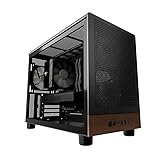
Andromeda Insights - AI Workstation Gaming PC | AMD Radeon Pro R9700 32GB | Ryzen 5 9600X (5.4 GHz... | $3,099.99 | Buy on Amazon |
AMD’s new move: MI400 and Helios
On July 23, 2026, AMD announced its Instinct MI400 Series. The company positions the MI455X for frontier AI, including training, fine-tuning and high-volume inference. The MI430X targets sovereign AI and high-performance computing; AMD says it can deliver up to 288 TFLOPS of FP64 performance, a vendor specification that should be judged in the context of the workload and system. AMD’s MI400 announcement
The Tool Desk
Outbyte Driver Updater FREEFix the driver behind crashes, sound loss and screen glitchesFind Drivers →Outbyte PC Repair FREEClear out junk files and repair common Windows errorsFree Scan →The larger story is Helios, AMD’s rack-scale system built around MI455X GPUs, sixth-generation EPYC server CPUs, Pensando networking and ROCm software. AMD describes a rack with 18 four-GPU compute trays, or 72 GPUs, and up to 31 TB of HBM4 memory. Its stated peak figures are up to 2.9 exaflops at FP4 and 1.4 exaflops at FP8. These are company specifications, not a guarantee of application performance: precision, model, software, utilization and system configuration all affect actual results. AMD’s Helios announcement
#1 Best Overall
- High-Performance AI Processing: The MX3 is designed to handle the most demanding AI computer vision workloads, delivering exceptional performance and efficiency.
- Flexible Integration: The MX3 can be easily integrated into your existing systems via its M.2 M-key form factor and support for Linux operating systems.
- Energy Efficient: The MX3 is designed to provide high performance while minimizing power consumption.
- Comprehensive Software Development Kit (SDK): The MX3 is supported by a comprehensive SDK that simplifies development and deployment.
- Hardware compatability: The MX3 is compatible with the PCI-SIG M.2 M-key 2280 Specification. It can be used with the Raspberry Pi 5 with a M-key 2280 HAT.
Helios also illustrates why an accelerator price is an incomplete comparison. AMD is selling a vision of an integrated AI factory, with GPU-to-GPU connectivity through UALink over Ethernet and standards-based Ethernet scale-out. An open or standards-based approach may give buyers options, but it does not automatically remove software dependencies, support costs or integration work.
AMD says Helios can produce up to 30% more tokens per dollar than its leading competitive solution. Treat this as an AMD claim, not a universal result. The comparison is useful only when the vendor discloses a relevant model, precision, software version, system configuration, throughput, latency and utilization—and when buyers can reproduce it on their own serving workload.
There are notable demand signals, but they need precise interpretation. Meta announced an agreement for up to 6 gigawatts of AMD Instinct GPUs, with first-gigawatt shipments expected in the second half of 2026 and based on a custom MI450-derived GPU. Anthropic announced plans for up to 2 gigawatts of MI450-series GPUs, with the first gigawatt expected to begin in the first half of 2027. These agreements signal interest and potential scale; announced capacity is not the same as hardware delivered, installed, operational or recorded as revenue. AMD–Meta announcement · AMD–Anthropic announcement
Do these 3 things before closing this tab:
1Repair Windows errors before they cause bigger problems2Scan for outdated or missing drivers - takes under a minute3Clear out junk files and repair common Windows errorsIntel’s different play: Gaudi 3 and cost-conscious deployments
Intel’s strongest verifiable accelerator story here is Gaudi 3, rather than a new 2026 successor. The product has 128 GB of HBM2e and, in Intel’s launch specifications, 24 200-Gb Ethernet ports. Its HL-338 version is a PCIe Gen5 card. Intel emphasizes standard Ethernet instead of a proprietary, tightly integrated interconnect approach, and says Gaudi can suit existing server environments. Its product information describes support for PyTorch and Hugging Face models, migration resources and deployment through Dell, HPE and Supermicro systems, as well as selected cloud providers. Intel Gaudi product information
Intel made its price pitch unusually concrete in June 2024: it listed eight Gaudi 3 accelerators plus a universal baseboard at $125,000 and said this was about two-thirds the cost of comparable competing platforms. That figure is a historical list-price signal for the specified kit—not a confirmed August 2026 transaction price, a complete server price or a current universal quote. Intel also cited a $65,000 price for eight Gaudi 2 accelerators plus a baseboard. Intel’s 2024 pricing announcement
Rank #2
- Hpe AMD WX4100 Graphics module
Intel has also published performance-per-dollar and performance comparisons with Nvidia H100. Those are vendor-supplied, workload-specific claims, and some launch comparisons were projections rather than universal independent results. They are not enough to establish that Gaudi 3 is faster or cheaper for a buyer’s own model and serving target.
Gaudi 3 may be worth assessing for enterprise inference, RAG, cost-sensitive workloads and organizations already equipped with x86 servers and Ethernet. Xeon can also serve as the host and orchestration platform in an AI deployment. But those are not the same as proving Gaudi 3 is the strongest choice for frontier-model training. A buyer should define the intended role first: replacement for Nvidia in frontier training, inference accelerator, RAG appliance, supplementary device in a mixed environment, or leverage in hardware negotiations.
Recommended Free Tools
Nvidia’s answer is a platform, not just a GPU
Nvidia remains the benchmark AMD and Intel must displace or complement. Its January 5, 2026 Rubin announcement covers six chips: Vera CPU, Rubin GPU, NVLink 6 switch, ConnectX-9 SuperNIC, BlueField-4 DPU and Spectrum-6 Ethernet switch. That breadth puts Rubin in the same system-level conversation as Helios, not merely in a chip-to-chip comparison. Nvidia’s CUDA ecosystem, libraries, interconnect, networking, cloud availability and OEM relationships are part of the competitive offer. Nvidia’s Rubin announcement
Nvidia claims Rubin can lower inference token cost by up to 10× versus Blackwell for specified workloads. This is a generation-to-generation company claim; it does not establish that every Rubin configuration will cost less than an AMD or Intel system. Nvidia’s strategic response to cheaper alternatives is to argue that integration and throughput can reduce the cost of producing useful output, even if the initial system carries a premium.
What “cheaper” should mean to an AI buyer
A list price tells only part of the story. Compare the full cost of a production deployment, including accelerators, server or rack, networking, storage, software support, power, cooling, installation and engineering. For a cloud deployment, compare actual rental rates and the utilization the service can sustain rather than inferring cloud cost from the hardware price.
Rank #3
- 【Core Parameters】★AI Perf: 34/67 TOPS ★GPU:1024-core official Ampere architecture GPU with 32 Tensor Cores ★CPU:6-core Arm Corte-A78AE v8.2 64-bit CPU 1.5MB L2 + 4MB L3 ★Memory:8GB 128-bit LPDDR5 68 GB/s ★Storage: external NVMe via M.2 Key M
- 【Empowered by Large Al Model, Enhanced Human-Computer Interaction】Jetson Orin Super leverages three AI models and incorporates an AI voice interaction module. This multimodal visual system matches the scene being described, enabling environmental awareness and AI visual gameplay. Combined with a large-scale voice module and camera, it enables speech-to-text, semantic analysis, natural conversation, and real-time video analysis, enabling advanced embodied AI applications.
- 【AI Upgrade】Jetson Orin Nano series modules are compact in size but can deliver up to 34-67 TOPS of AI performance, with power consumption ranging from 7 watts to 25 watts. Compared to the Jetson Nano B01, it offers up to 80 times the performance and sets a new standard for entry-level edge AI.
- 【Highly compatible carrier board】Yahboom's carrier board is fully compatible with orin nano module. Compared to carrier boards that use Jetson Nano on the market, the newly upgraded circuit supports 25W power mode, which enables larger and more complex neural networks and fully leverages the performance of the core module. The resources, size, and interfaces of the Yahboom carrier board are consistent with the official board, with the only difference addition of power switch button.
- 【Tutorial materials provided】The JETSON system based on Ubuntu 22.04 provides a complete desktop Linux environment with accelerated graphics, supporting CUDA 12.6, TensorRT 10.7.0, cuDNN 9.6.0, OpenCV 4.10.0, etc. The performance on AI LLM, VLM and visual Transformer is significantly improved compared with the previous generation.
Effective cost per useful token = total hardware, software, power, cooling, networking, support and engineering cost ÷ useful production tokens delivered at the required latency and reliability.
“Useful” matters. For an interactive assistant, a system that produces many tokens but misses first-token or inter-token latency targets may not meet the need. For training, time to completion, scaling efficiency and the ability to fit the model matter. A lower acquisition cost can be outweighed by weak utilization, longer jobs, additional servers, engineering effort or a software gap.
When comparing vendor claims, hold these conditions constant:
- Workload and model: use the models, context lengths and serving or training pattern you expect to run.
- Precision and quality: FP4, FP8, BF16 and FP16 results are not interchangeable; check output quality as well as speed.
- Serving conditions: record batch size, concurrency, sequence length, throughput, first-token latency and inter-token latency.
- System boundary: compare complete systems or racks with comparable networking, storage and power—not one accelerator against a finished rack.
- Economics: include acquisition or rental, support, installation, electricity, cooling, software and migration costs.
- Practical delivery: verify availability, OEM or cloud access, warranty, service coverage and upgrade path.
Software migration can decide the economics
Nvidia’s durable advantage is not simply the CUDA name; it is the accumulated compatibility of software, optimized libraries, tooling, developer knowledge and deployment options. For a team with production code built around CUDA-specific kernels or tooling, changing hardware can mean substantial engineering work, even if a framework is available on another platform.
AMD presents ROCm as an open software foundation that includes programming models, compilers, libraries, runtimes and deployment tools. Intel highlights PyTorch, Hugging Face and migration resources for Gaudi. Those are meaningful routes into each platform, but “open” and “supported” do not mean a CUDA workload will run unchanged or perform equally well. Portability is workload-specific.
What’s actually slowing this PC down?
Pick the symptom - the matching free tool is one click away.
Rank #4
- Engineered for demanding AI workloads, this is your definitive development platform. It packs an AMD Ryzen 5 9600x for parallel processing and an AMD Radeon AI Pro R9700 with 32GB VRAM for large models & complex neural nets. Built for sustained performance, it includes 32GB DDR5 RAM, a 1TB NVMe Gen4 SSD, and a digital display cooler for ultimate thermal stability.
- Industry-Leading Warranty & US Support - Backed by a 2-Year Parts Warranty, Lifetime Labor Warranty & Lifetime Technical Support. Andromeda Insights is a US-based company dedicated to high-performance hardware and long-term service.
- Elite CPU Power with Liquid Cooling – AMD Ryzen 5 9600X | 6 Cores, 12 Threads - Blazing fast speeds with up to 5.4GHz Turbo – ideal for LLM, engineering, gaming, streaming, and content creation. Future-ready architecture ensures consistent high performance. The included digital display cooler keeps it cool without throttling.
- Ultra-Fast 32GB DDR5 6000MHz RAM - Multi-task effortlessly and load programs instantly with 32GB of blazing-fast DDR5 memory for high performance.
- Transform your AI development with the AMD Radeon AI PRO R9700. Its RDNA 4 Architecture and 2nd-gen AI Accelerators deliver up to 2x better AI performance over the previous generation.¹ Equipped with 32GB of dedicated video memory, it lets you tackle larger, more complex projects. Purpose-built to accelerate local AI workloads, the R9700 delivers the speed and capacity your workflow demands to turn ambition into reality.
Before committing to a non-Nvidia platform, run a representative proof of concept and check:
- Whether the required framework, model and serving engine are supported in the needed versions.
- Availability and maturity of kernels, quantization methods and distributed-inference features.
- Whether critical custom CUDA code can be replaced, ported or maintained with acceptable performance.
- Profiling, debugging, monitoring, security and production operations tooling.
- Support response, release stability, documentation and access to engineers with platform experience.
- Migration effort, retraining needs and the cost of maintaining a second software stack.
Who should evaluate each platform?
Nvidia: when compatibility and time-to-deployment dominate
Nvidia remains the pragmatic default when a team depends on CUDA-specific software, needs the broadest ecosystem, or cannot absorb migration risk. Its integrated platform may also suit frontier-scale work where networking and system efficiency matter as much as accelerator cost. The trade-off is premium pricing, potential supply constraints and deeper ecosystem dependence. Smaller or lightly utilized workloads may not benefit enough from a top-end system to justify its cost.
AMD: when a second source or rack-scale alternative matters
AMD’s MI400 and Helios make it the most direct new hardware challenger in this 2026 product cycle. It merits serious evaluation for large deployments that can use high memory capacity, want a second strategic supplier, or are prepared to validate ROCm and a rack-scale architecture. The key risks are workload-specific software readiness, delivery and integration at scale, and whether AMD’s claimed token economics hold under the buyer’s actual conditions.
Intel: when the workload fits Gaudi 3’s cost and Ethernet case
Intel’s strongest case is narrower: selected inference and RAG deployments, buyers able to use standard Ethernet and existing x86 environments, and organizations willing to benchmark Gaudi’s software path before scaling. The historical 2024 kit price can be a reference point for Intel’s strategy, but it should not anchor a 2026 budget without a current quote. Gaudi 3’s age relative to MI400 and Rubin also matters for buyers seeking a new frontier-training platform.
Free tools Windows power users keep installed
One-click scans. No signup required.
Separate what is announced from what is proven
These platforms are at different stages and the evidence is not equivalent. AMD has announced a new 2026 product family and rack design, plus large customer commitments; its rack performance and token-economics figures remain vendor claims unless validated for a buyer’s workload. Intel has a commercial Gaudi 3 product and OEM/cloud routes, but its best-known public price reference dates to 2024. Nvidia has announced Rubin and claims substantial efficiency gains over Blackwell for specified workloads. A product announcement, benchmark claim, customer agreement, shipment and operational deployment are distinct milestones.
For an enterprise decision, request a current complete-system quote and test the same representative model, software stack, latency target and reliability requirements on each candidate. Ask vendors to specify system configuration, precision, software versions, networking, measured throughput, power and support terms. That is the only fair way to turn public claims into a procurement comparison.
The practical takeaway
AMD has become a serious system-level challenger with MI400 and Helios; Intel remains a lower-cost, open-Ethernet alternative for selected workloads rather than a new 2026 product-cycle peer; and Nvidia is defending its position by selling integrated performance and efficiency, not just accelerators. The best value depends on the buyer’s model, software, deployment date and total cost—not the lowest chip sticker price.
Quick Recap
Product prices and availability are accurate as of the date/time indicated and are subject to change. Any price and availability information displayed on Amazon at the time of purchase will apply.



