What’s actually slowing this PC down?
Pick the symptom - the matching free tool is one click away.
Some links on this page are affiliate links: if you buy through them we may earn a commission, at no extra cost to you.
Texas Instruments began production on December 17, 2025, at SM1, the first 300mm wafer fabrication plant at its new semiconductor manufacturing campus in Sherman, Texas. The facility is ramping production according to customer demand, with analog power products among its initial output.
The milestone expands TI’s U.S. manufacturing capacity, but it does not mean the entire Sherman campus is complete or that the fab is already operating at full capacity.
What Texas Instruments announced
TI marked the start of production at SM1 with a ribbon-cutting ceremony attended by company and Texas officials. The fab entered production roughly three and a half years after groundbreaking.
Quick wins for a faster PC:
Repair Windows errors before they cause bigger problemsFix Now →Fix the driver behind crashes, sound loss and screen glitchesFind Drivers →SM1 is the first operating facility at TI’s planned Sherman campus. TI says the site could eventually contain four connected fabs: SM1, SM2, SM3 and SM4. The company’s manufacturing overview identifies SM1 as open and in production, while construction of SM2 is complete. The later fabs remain part of the longer-term, demand-driven expansion plan.
#1 Best Overall

- COMPATIBILITY: Development board supporting multiple wireless protocols including Bluetooth
- Thread, Matter, Zigbee, ANT, and NFC at 2.4GHz frequency
- PROCESSOR: Features the advanced nRF54L15 transceiver chip from Nordic Semiconductor for reliable wireless communications
- WIRELESS STANDARDS: Implements IEEE 802.15.4 protocol support for Matter, Thread, and Zigbee networking applications
- DEVELOPMENT PLATFORM: Comprehensive evaluation board designed for testing and prototyping wireless connectivity solutions
TI’s announcement says SM1 will ultimately produce tens of millions of chips per day. That is an eventual production claim, not a disclosed current output figure, monthly wafer-start rate or full-ramp date.
What SM1 will manufacture
Initial production includes analog power products. These chips regulate, convert, distribute and manage electrical power inside many types of equipment. Potential applications include:
- battery-management systems;
- automotive lighting and other vehicle electronics;
- data-center power systems;
- laptops and wearable devices;
- industrial equipment; and
- medical systems.
TI says the Sherman fab is intended to support a broader range of its analog and embedded-processing portfolio as production expands. These are foundational semiconductor products: they are essential to the operation of electronic systems, but SM1 should not be described as a plant for the industry’s most advanced smartphone or artificial-intelligence logic processors.
Free tools Windows power users keep installed
One-click scans. No signup required.
Rank #2

- Powerful ESP-32 Board: Unlock the world of Internet of Things (IoT) and advanced electronics with the heart of this kit: the ESP-32 board. It features a powerful dual-core processor, integrated Wi-Fi and Bluetooth 4.2, making it perfect for building connected, smart devices that communicate with your phone or the cloud. It's fully compatible with the Arduino IDE for easy programming.
- Super Starter Kit: This kit contains over 35 different modules and electronic components, including sensors, displays, motors, and input devices. From LEDs and buttons to an OLED screen, servo motor, and keypad, you have everything needed to explore a vast range of projects in one box.
- Step by Step Online Tutorial: Jump right in with our detailed, beginner-friendly tutorial. Access 30+ projects with complete code, clear circuit diagrams, and step-by-step instructions. Learn the fundamentals of electronics, coding, and how to utilize the ESP-32's unique capabilities without any prior experience.
- Hands-on Learning for All Skill Levels: Perfect for students, makers, engineers, and hobbyists. Start with basic circuits and coding, then progress to intermediate and advanced IoT applications. Build practical projects like weather stations, smart home controllers, remote-controlled devices, and interactive gadgets. The skills you learn are the foundation for real-world innovation.
- Quality & Great Support: Elegoo is committed to quality. We provide a clear, detailed tutorial guide, refined code, and a well-organized component kit. All modules are carefully selected for reliability and ease of use. Our dedicated technical support team and active online community are ready to help you succeed in your learning journey.
What “300mm wafers” means
300mm refers to the diameter of the silicon wafer processed inside the fab—approximately 12 inches. It does not mean a 300mm chip and does not describe a 300mm process node.
A larger wafer provides substantially more usable silicon area than a 200mm wafer. Subject to product size, yield and process complexity, that can allow manufacturers to produce more individual die from each wafer and improve cost efficiency at high volume. TI describes its 300mm facilities as high-volume operations using automated manufacturing flows.
However, moving to 300mm does not automatically make every chip cheaper. The economics depend on how many usable die fit on a wafer, manufacturing yield, equipment utilization, process requirements and customer demand. After wafer fabrication, the die must still be separated, packaged, tested and distributed.
Rank #3

- DEVELOPMENT KIT: Nordic Semiconductor NRF5340-AUDIO-DK designed for audio application development with nRF5340 dual-core Bluetooth LE SOC
- VERSATILE CONNECTIVITY: Features multiple interface options including I2S, SPI, UART, and USB for comprehensive development capabilities
- POWER SPECIFICATIONS: Operates with flexible power supply range of 1.7V to 5V, suitable for various development scenarios
- TEMPERATURE RANGE: Capable of operating in environments up to +105°C, ensuring reliable performance across diverse conditions
- AI COMPATIBILITY: Supports Edge Impulse platform integration, enabling advanced machine learning and AI development capabilities
How large will the Sherman operation become?
The Sherman project is a multi-fab campus rather than a single-building expansion. TI says the site can eventually support up to four connected fabs and as many as 3,000 direct jobs, plus jobs in supporting industries. The employment figure applies to the broader completed Sherman site, not necessarily to SM1 at launch.
The project is part of TI’s plan to invest more than $60 billion across seven semiconductor fabs in Texas and Utah. TI characterizes that program as the largest investment in foundational semiconductor manufacturing in U.S. history; that description is the company’s characterization and covers the broader expansion, not SM1 alone.
TI’s other 300mm facilities
| Facility | Location | Milestone |
|---|---|---|
| RFAB1 | Richardson, Texas | TI describes it as the world’s first 300mm analog wafer fab; it opened in 2009. |
| RFAB2 | Richardson, Texas | Began production in 2022. |
| LFAB1 | Lehi, Utah | Began 300mm wafer production in 2022 after TI acquired the site. |
| SM1 | Sherman, Texas | Began production on December 17, 2025, as the first fab at the Sherman campus. |
TI provides the facility history and its broader manufacturing strategy on its manufacturing overview.
Rank #4

- VERSATILE CONNECTIVITY: Supports both Bluetooth
- And IEEE 802.15.4 protocols (Thread, Zigbee) for comprehensive wireless development capabilities
- DEVELOPMENT PLATFORM: Complete development kit for nRF5340 System-on-Chip applications with integrated debugging and programming capabilities
- DUAL-CORE ARCHITECTURE: Features both application and network processing cores for enhanced wireless development flexibility
- WIRELESS PROTOCOLS: Designed for 2.4GHz wireless applications including Bluetooth Low Energy and 802.15.4-based protocols
Why the project matters for supply chains
TI is seeking greater control over wafer manufacturing, process technology, assembly and testing. The company says it aims to produce more than 95% of its production internally by 2030.
More U.S.-based capacity could give customers in automotive, industrial, medical, communications and consumer markets another source of analog and embedded chips. It may also help TI align capacity with customer demand and reduce reliance on external wafer foundries for some products.
Recommended Free Tools
That is geographic diversification, not complete supply-chain independence. A semiconductor fab still relies on silicon wafers, specialized equipment, chemicals, gases, electricity, water, skilled labor, packaging, testing and logistics. Production at SM1 therefore strengthens one important part of the chain without removing every international or supplier dependency.
Best Value
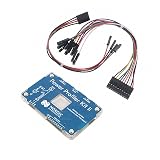
- POWER MONITORING: Professional-grade current monitoring and power management evaluation board for precise power consumption analysis
- COMPATIBILITY: Designed specifically for Nordic Semiconductor development and testing applications
- MEASUREMENT CAPABILITIES: Enables real-time current measurement and power profiling for embedded system development
- DATA ANALYSIS: Features comprehensive power consumption data collection and visualization capabilities
- DEVELOPMENT TOOL: Essential evaluation board for optimizing power efficiency in embedded system projects and prototypes
What the announcement does not establish
- Not full capacity: TI says SM1 will ramp according to customer demand.
- Not four operating fabs: Sherman is planned for up to four fabs, but SM1 is the facility now in production.
- Not a precise wafer capacity: “Tens of millions of chips daily” cannot be converted into a wafer-start figure without knowing die sizes, product mix and yields.
- Not total U.S. self-sufficiency: downstream packaging, testing and other inputs remain essential.
- Not a disclosed process-node announcement: TI has not provided, in the cited announcement, a specific node or detailed product-allocation breakdown for SM1.
The cited materials also do not specify when SM1 will reach full production, how many people currently work there, which customers receive particular output, or when SM2 will begin production. Those details should not be inferred from the production-start ceremony.
Bottom line
SM1’s start of production is a significant capacity milestone for Texas Instruments and the U.S. analog-chip supply chain. It establishes that the first fab at the Sherman campus is making 300mm wafers, initially including analog power products. The larger significance will depend on how quickly TI ramps output, qualifies additional products and develops the remaining Sherman facilities.
The most accurate reading is therefore straightforward: TI has begun production at one new Sherman fab as part of a much larger, demand-driven U.S. manufacturing expansion—not completed the entire campus or eliminated semiconductor supply-chain risk.
Windows Errors? Fix Them Before They Spread
Repair common Windows errors and clear accumulated junk for a smoother, more stable PC - no reinstall needed.Free scan · no reinstallCrashes, No Sound, or Screen Glitches?
Random freezes, missing sound and display glitches usually trace back to one bad driver. Find and replace yours safely.Free scan · under a minuteQuick Recap
Product prices and availability are accurate as of the date/time indicated and are subject to change. Any price and availability information displayed on Amazon at the time of purchase will apply.



