Some links on this page are affiliate links: if you buy through them we may earn a commission, at no extra cost to you.
Yes—but only in specific places and time periods. AI-driven data centers are increasing electricity demand faster than some regions can add generation, transmission lines, substations, transformers, and reliable grid connections. This is not a worldwide shortage of electricity. It is primarily a local infrastructure problem that can affect wholesale prices, utility bills, public subsidies, and the cost of building new data centers.
The short answer: supply is falling behind locally, not globally
Data centers are large electricity customers, and AI is making them larger and more power-intensive. The International Energy Agency (IEA) estimates that global data-center electricity consumption rose to approximately 485 terawatt-hours (TWh) in 2025 and could reach about 950 TWh by 2030. Electricity use by AI-focused data centers is projected to triple over the same period. These are forecasts, not audited real-time totals, and actual demand will depend on how many planned facilities are completed and how intensively they operate.
The important distinction is between having enough electricity somewhere and being able to deliver reliable power to a particular site. A region may have adequate annual generation but still lack the transmission capacity, substation equipment, transformers, or firm peak capacity needed to connect a new 300- to 1,000-megawatt facility.
Recommended Free Tools
The U.S. Department of Energy describes hyperscale connection requests of 300–1,000 MW or more, with connection lead times of roughly one to three years. That scale can overwhelm infrastructure that was planned for slower, more distributed growth.
#1 Best Overall

- Multi-function power monitor: Our electric usage monitor can monitor the power (W), electricity(kWh), voltage(V), frequency(Hz), current(A), power factor(PF), unit price($/kWh), total cost($) of your appliances. By switching 8 display modes, you can easily know the various parameters while the appliance is working. The “electricity” mode can calculate and display how much power your appliance uses. And the “total cost” mode will show how much electricity bill it cost in cumulative time
- Overload protection: When the loading power of the appliance is over the default overload threshold 1800W, the whole display with backlight and the word “OVERLOAD” will keep flashing to warn the users. Please turn off the appliance for safety concern
- Premium Material: The whole body of our energy meter is made of high-quality ABS material. It makes our home electricity usage monitor more long lasting, fireproof and anti-drop. The standard US socket and plug is suitable for all US standard appliances
- Backlight Display: With white backlight and black words, the LCD display of our home power monitor can display the data clearer and help you to read the data easier no matter day or night. The backlight will only lights up when the device is connected to AC power. If no button is pressed, the backlight turns off automatically after 10 minutes. You can also press the "UP" button to turn off the backlight manually, and press any button to turn on backlight again
- Easy to reset: No reset tool needed, our appliance power usage meter is easy to reset. You can press the “M” button for 5 seconds directly to reset the device. After reset, all cumulative data (electricity quantity, cost) will be cleared, and all settings will be restored to factory settings
What “outstripping supply” actually means
Headlines often use “energy” and “electricity” interchangeably. For data centers, electricity is the more precise term. The supply challenge has several separate parts:
| Term | What it means | Why it matters |
|---|---|---|
| Annual electricity supply | Total electricity generated over a year, measured in TWh. | A region may have enough annual energy but still experience shortages during peaks. |
| Firm capacity | Generation that can be relied upon when demand is high or renewable output is low. | AI facilities generally need dependable power, not just annual energy credits. |
| Local deliverability | The ability of nearby wires, substations, and distribution equipment to serve a site. | This is often the immediate bottleneck. |
| Interconnection capacity | The ability to connect a new customer or generator to the grid, and the date that connection can be provided. | A project can be approved in principle but delayed for years. |
| Equipment availability | Access to transformers, switchgear, turbines, batteries, power electronics, and cooling systems. | A single delayed component can postpone an entire campus. |
| Fuel supply | Access to natural gas or other fuels used for generation. | Onsite generators do not eliminate fuel and permitting constraints. |
That is why a national electricity statistic cannot, by itself, show whether a proposed data center can be served. The binding constraint may be a single transmission corridor or transformer rather than a shortage of fuel or power across the entire country.
How much of the growth is actually caused by AI?
Not all data-center electricity use is AI-related. Facilities also support cloud software, streaming, content delivery, enterprise applications, conventional search, storage, backup, networking, cryptocurrency, and non-generative machine learning.
The Tool Desk
Outbyte PC Repair FREEClear out junk files and repair common Windows errorsFree Scan →Outbyte Driver Updater FREEFix the driver behind crashes, sound loss and screen glitchesFind Drivers →The precise AI share is difficult to measure because operators generally do not publish facility-level workload and electricity data. EPRI estimates that AI workloads account for approximately 15%–25% of data-center electricity use today, with that share rising. The estimate should not be treated as a comprehensive audited measurement.
The IEA estimates that global data-center electricity use grew 17% in 2025, while electricity use by AI-focused data centers grew by about 50%. The faster AI growth makes AI a significant accelerator, but it does not make AI the only source of new demand.
Why AI facilities are unusually demanding
AI servers use clusters of specialized accelerators and high-speed networking equipment. Compared with conventional computing, these systems can require much more power in a smaller physical area and generate substantially more heat.
- Higher rack density: more electricity is concentrated in each rack and room.
- More cooling: dense computation increases the need for advanced air or liquid-cooling systems.
- Synchronized workloads: training can involve thousands of processors operating together.
- Rapid load changes: training and inference workloads can create steep changes in demand.
- High reliability requirements: an outage can interrupt services or waste an expensive training run.
According to the IEA, AI-server power density increased roughly 11-fold between 2020 and 2025 and could rise another fourfold by 2027. The agency estimates that one advanced AI server rack could have peak power demand equivalent to approximately 65 households by 2027.
Do these 3 things before closing this tab:
1Repair Windows errors before they cause bigger problems2Scan for outdated or missing drivers - takes under a minute3Clear out junk files and repair common Windows errorsRank #2

- Various Monitoring Parameters: The power energy meter can monitor the power (W), energy (kWh), volts, amps, hertz, power factor, cost, minimum and maximum power (W), cumulative days and time of your appliances. By switching 7 display modes, you can easily know the various parameters while the appliance is working. The home energy monitor can also calculate and display how much power your appliance uses and how much electricity bill it cost in cumulative time
- Upgraded LCD Display: With large screen size 2.36 inch x 1.85 inch, clearer monitor backlit, our electrical usage monitor can display the data clearer and more visible no matter day or night. 180°full wide viewing angles is great for reading and recording the data in any angles. No need to stand on the front of the display and bend over to read the numbers
- Adjustable Backlight Time: Our upgraded watt meter has 5 options of backlight time. The default backlight time duration is 10 minutes(bL-0). If you want to change the backlight time, you can press and hold "UP" and "DOWN" button at the same time to enter backlight time setting, then press "UP" and "DOWN" to select the backlight time (bL-0 =10 minutes, bL-1=1 hour, bL-2=4 hours, bL-3=8 hours, bL-4=always on), finally press the "COST" to save the backlight time settings
- Overload Protection: When the power of the appliance exceeds the overload power, the LCD will display “OVERLOAD” to warn the user. All the buttons will quit working and can only be workable when you lower or remove the load power. The default overload power is 3680W and is adjustable from 0 to 3680W. In general, you need to set the overload power to 1800W before using. Just press the "function" button for more than 3 seconds to enter the setting
- Data Memory Function: The wattage meter will record your power consumption data when you remove it from socket, or remove appliances from the electricity monitor. You can directly see the last data when you use it next time. This function can also automatically save the data when there is a sudden power failure
Average electricity use and peak electricity use are not the same. A facility can have a high annual load factor—meaning its average demand is close to its maximum demand—while still causing difficult short-term ramps that require stronger grid equipment and operating reserves.
Where the pressure is most acute
The issue is best understood as a problem of data-center clusters rather than a uniform country-by-country shortage.
In the United States, the Energy Information Administration (EIA) expects especially rapid electricity-load growth in the ERCOT and PJM regions through 2027. It also identifies expected growth in MISO, SPP, Arizona, and Nevada. EIA forecasts U.S. electricity-load growth of 1.9% in 2026 and 2.5% in 2027 in the cited February 2026 outlook.
Different regions face different constraints:
- Northern Virginia and the broader PJM system may face transmission, interconnection, and generation-planning pressure.
- Texas and ERCOT can experience rapid load growth alongside periods of extreme weather and tight reserves.
- Arizona and Nevada may face a combination of fast development, transmission needs, cooling demand, and water constraints.
- Ireland has seen data centers become a major share of electricity demand, creating grid-planning and reliability concerns.
- Nordic, continental European, and Asian markets may have adequate resources nationally but still face local connection, permitting, or transmission bottlenecks.
A delay in one region does not prove that electricity is unavailable everywhere. It may simply mean that the preferred site cannot receive a connection on the developer’s schedule.
Free tools Windows power users keep installed
One-click scans. No signup required.
Why the power system cannot respond instantly
Transmission and grid connections
New power plants do not help unless electricity can reach the customer. Transmission lines, substations, and interconnections require engineering, land rights, permitting, financing, construction, and coordination among utilities and regulators. Those processes often take years.
Transformers and electrical equipment
Transformers, switchgear, power electronics, and related components are critical to connecting and managing large facilities. The IEA identifies these components as supply-chain pressure points and notes that important inputs are concentrated among a relatively small number of producers. A project can therefore have land, financing, and a proposed generation source but still wait for one major electrical component.
Generation construction
Utilities and developers must account for environmental review, equipment procurement, construction, fuel arrangements, and transmission upgrades. Generation capacity that is announced today may not be available when a data center wants to open.
Rank #3
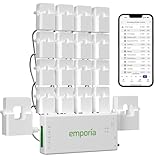
- SAFETY YOU CAN TRUST WITH UL CERTIFICATION: With Emporia Energy, your home energy monitoring is safe, reliable, and certified. The Emporia Vue is UL Listed, meaning it has met rigorous safety standards for electrical products in the U.S. and Canada. This certification ensures that every component has been thoroughly tested to prevent hazards, such as overheating, short-circuiting, or fire, offering you peace of mind as you manage your home’s energy consumption.
- INSTALLS IN CIRCUIT PANEL of most homes with clamp-on sensors. Supports Single phase, Single-split phase, and 2-wire systems. 3-wire systems; 3-phase, 4-wire Wye systems with earthed (TN or TT) neutral (no-Delta) are supported with an additional 200A sensor (sold separately).
- 24/7 ENERGY MANAGEMENT AND MONITORING: Automate, manage and control your home's real power anywhere, anytime to prevent costly repairs, conserve energy, and save costs. Monitor solar / net metering. PROTECTED BY A 1-YEAR WARRANTY.
- LOWER YOUR ELECTRIC BILL: Configure settings in the Emporia Energy App to automate energy management for time of use, peak demand, excess solar, and rewards programs. You can even see live reporting and invaluable savings opportunities instantly. Gauge real-time spending and get actionable notifications and automated energy management to help you reduce costs.
- REAL-TIME ENERGY DATA: REQUIRES 2.4 GHz WIFI WITH AN INTERNET CONNECTION to monitor energy use with iPhone / Android / Web app. Vue sensors collect energy data and are accurate from ±2%. The Vue is UL and CE Listed for your safety. 1 second data is only available in the app (when actively open) and retained 3 hours. Minute and hour data are retained in the cloud. 1 minute data is retained 7 days, 1 hour data is retained indefinitely. Export cloud data whenever you want in the app.
Onsite gas generation
Some developers are considering natural-gas generation to reduce dependence on a delayed grid connection. The IEA reports a 70% increase in gas-turbine orders in 2025, indicating strong demand for the equipment itself.
Onsite gas is not a universal quick fix. It requires fuel infrastructure, air-quality permits, maintenance, and backup arrangements. The IEA estimates that reliable onsite gas generation for variable AI loads may require 30%–70% more installed generation capacity than average demand alone would suggest. It estimates that approximately 15–27 GW of onsite natural-gas capacity could power data centers by 2030, mostly in the United States.
What happens when demand grows faster than supply?
The effects can reach beyond data-center developers:
- higher wholesale electricity prices;
- higher utility rates if infrastructure costs are passed to customers;
- delayed facility openings and business expansions;
- competition for generation, transmission capacity, and fuel;
- postponed retirements of coal or older power plants;
- greater short-term reliance on natural gas;
- more emissions and local air pollution;
- reliability risks during extreme weather; and
- larger public debates over tax incentives and infrastructure subsidies.
EIA modeling indicates that faster-than-expected data-center demand would primarily increase natural-gas generation in the near term. EIA also warns that demand growing faster than available supply could produce wholesale-price spikes or, in extreme cases, rolling blackouts.
That does not mean every household will automatically see a data-center surcharge. The effect depends on the utility’s tariff, the regulatory decision approving the project, who finances the upgrades, and whether the new customer makes minimum-load or take-or-pay commitments.
How the main supply options compare
| Option | Strengths | Limitations |
|---|---|---|
| Natural gas | Dispatchable and familiar; can be faster than some large infrastructure projects. | Emissions, methane leakage, fuel-price exposure, pipeline constraints, and local pollution. |
| Renewables plus storage | Low operating emissions and modular deployment. | Intermittency, transmission requirements, land use, curtailment, and storage-duration limits. |
| Nuclear | Firm, low-carbon electricity with high capacity factors. | Long development timelines, licensing, financing, cost-overrun, and fuel-supply risks. |
| Hydropower or geothermal | Can provide firm or dispatchable low-carbon power where resources exist. | Geographically limited and often subject to long project timelines. |
| Batteries | Can smooth peaks, provide ride-through power, and support grid services. | Usually cannot replace long-duration generation or transmission by themselves. |
| Flexible computing | Training and some batch workloads can move across hours or locations. | Latency-sensitive inference and customer services may not be easily shifted. |
Technology companies accounted for around 40% of corporate renewable-power-purchase agreements signed in 2025, according to the IEA. But a power-purchase agreement does not necessarily mean the data center receives renewable electricity every hour. Annual matching, financial settlement, renewable-energy certificates, physical delivery, hourly matching, and firm capacity are different concepts.
Similarly, announced nuclear offtake agreements are not operating nuclear plants. The IEA reports that conditional offtake agreements between data-center operators and small modular reactor projects grew from 25 GW at the end of 2024 to 45 GW in 2026. Those figures describe proposed or conditional arrangements, not generating capacity already available to customers.
Rank #4

- Various Monitoring Parameters: The power meter plug can monitor the power (W), energy (kWh), volts, amps, hertz, power factor, cost,minimum and maximum power (W), cumulative days and time of your appliances. By switching 8 display modes, you can easily know the various parameters while the appliance is working. The wattage meter can also calculate and display how much power your appliance uses and how much electricity bill it cost in cumulative time
- Premium Material: The whole body of our power monitor is made of high-quality PC material. It makes our home power consumption monitor more long lasting, heat resistant and fall resistant. The standard US socket and plug is suitable for all US standard appliances
- Overload Protection: When the power of the appliance exceeds the overload power, the word "OVERLOAD" and the LCD display will keep flashing, the buzzer will keep making a bi sound to warn the users. All the buttons will quit working and can only work again when the overload alarm has been cleared by raising the setting value or removing the appliance. The default overload power is 3680W and is adjustable from 0 to 3680W. In general, you need to set the overload power to 1800W before using. Just press the "MODE" button for more than 3 seconds to enter the setting
- KWH Alarm: Our power monitor plug has a upgraded power consumption alarm function. You can set the alarm power consumption for the appliances you monitored. Once the accumulated power consumption reaches the set alarm power consumption, the word "kwh alarm" will be displayed and keep flashing, the LCD will also keep flashing, and the buzzer will keep making a bi sound all the time to warn the users
- Data Memory Function: The watt meter plug in will record your power consumption data when you remove energy meter from socket, or remove appliances from the electricity monitor. All setting data and cumulative data(electricity quantity, cost, unit price, time) will be saved. You can directly see the last data when you use the electric usage meter plug next time(NOT including current, voltage, power, power factors). This function can also automatically save the data when there is a sudden power failure
Forecasts disagree—and that matters
The scale of future demand is uncertain:
- The IEA’s central projection is approximately 950 TWh of global data-center electricity consumption in 2030.
- Gartner forecasts more than 1,200 TWh globally by 2030.
- EPRI estimates that U.S. data centers could account for 9%–17% of U.S. electricity consumption by 2030, compared with 4%–5% today, depending on the scenario.
These figures are not directly interchangeable. They use different geographies, definitions, assumptions about cooling and ancillary loads, expectations for AI adoption, utilization rates, equipment constraints, and treatment of proposed projects.
EPRI cautions that many publicly announced data-center projects are speculative. A useful analysis separates facilities that are operating, under construction, permitted, in an interconnection queue, merely announced, or canceled. Counting every proposed campus as certain demand can significantly overstate future electricity needs.
Why efficiency will not automatically solve the problem
Electricity use per AI task has fallen sharply. The IEA says consumption per individual AI task has declined in some cases by at least an order of magnitude annually in recent years. But efficiency is not the same as lower total demand.
When each task becomes cheaper, people and businesses may use AI more often. New services—such as video generation, reasoning-heavy models, and agentic systems—can also be much more computationally intensive than a simple text response. The IEA says those activities can consume hundreds or thousands of times more energy per query than simple text generation, depending on the workload.
There is no single universal energy cost for an AI query. Consumption varies with the model, prompt and response length, hardware, utilization, cooling overhead, location, and whether the workload involves training, inference, images, video, reasoning, or autonomous agents.
Who should pay for the new infrastructure?
This is as much a financial-policy question as an engineering question. Regulators and utilities may consider:
Crashes, No Sound, or Screen Glitches?
Random freezes, missing sound and display glitches usually trace back to one bad driver. Find and replace yours safely.Free scan · under a minuteWindows Errors? Fix Them Before They Spread
Repair common Windows errors and clear accumulated junk for a smoother, more stable PC - no reinstall needed.Free scan · no reinstall- special tariffs for large data-center customers;
- minimum-load or take-or-pay commitments;
- upfront payments for substations and transmission;
- exit fees if a project is canceled;
- capacity-market costs;
- tax incentives and local subsidies; and
- whether infrastructure is privately financed or placed in utility rate base.
There is no universal answer about whether ordinary ratepayers subsidize data centers. The result depends on the jurisdiction’s tariff and regulatory order. A fair assessment should ask whether the large customer pays the full marginal cost of generation, wires, backup capacity, and potential stranded assets—and whether the infrastructure also provides benefits to other customers.
Best Value
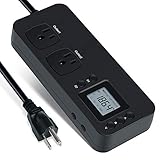
- NEW DESIGN: Our new electricity usage monitor with 2 outlets design can allow you monitor the power consumption of two electronic devices at the same time. Monitor each machine independently, without affecting each other
- POWER OFF MEMORY FUNCTION: With standard memory function, the CT and EC-KWH of electrical power consumption can be retained in the event of a power failure. And you can clear them manually
- SAFETY & OVERLOAD TIP: Full ABS flame retardant material housing, and equipped with 14AWG heavy duty extension cord, performances excellent heat resistance. When the rated power exceeds 1200W, a warning will remind you to cut off the power in time
- ACCURATE MONITORING: Electricity analyzer monitoring device equippeds with a high-precision current sensor and high-resolution real-time monitoring. You can measure power(W), volts, amps, hertz, kilowatt-hours(EC), cumulative time(CT) and power factor accurately
- WIDE APPLICATION & EASY TO USE: Watt voltage amps meter tester can connected to TV, refrigerator, water purifier, HIFI System and other household appliances. It can be monitored easily when the device is connected
Communities may receive construction activity, employment, tax revenue, and investment. They may also face land-use changes, noise, water consumption, local air pollution, and higher system costs. Those benefits and costs should be evaluated together rather than assuming that either data centers are automatically economically beneficial or automatically harmful.
What a credible response looks like
The most durable approach is a combination of supply, grid, efficiency, and policy measures:
- Improve project transparency. Utilities and developers should distinguish committed demand from speculative announcements.
- Require meaningful financial commitments. Large customers can help fund dedicated substations, transmission, backup, and cancellation risks.
- Use flexible-load contracts. Training and other schedulable workloads may be shifted away from system peaks.
- Build storage and controls. Batteries can manage short-duration peaks and provide grid services, while facility controls can reduce avoidable demand.
- Expand transmission and generation responsibly. Faster permitting should not remove reliability, environmental, or community review.
- Measure clean power honestly. Annual renewable accounting should not be presented as equivalent to 24/7 carbon-free electricity at the facility.
- Use grid-enhancing technologies where practical. Better monitoring, dynamic line ratings, advanced controls, and improved power management may increase the usefulness of existing infrastructure, although they do not eliminate the need for new lines and equipment.
What electricity customers and investors should watch
For households, the most relevant signals are utility rate cases, proposed special tariffs, transmission-upgrade plans, capacity-market prices, and local reliability forecasts. A data-center announcement alone does not establish that customer bills will rise.
Quick wins for a faster PC:
Fix the driver behind crashes, sound loss and screen glitchesFind Drivers →Repair Windows errors before they cause bigger problemsFix Now →For investors and businesses, useful questions include:
- Is the project operating, under construction, permitted, or only announced?
- Does it have a binding interconnection agreement and a credible energization date?
- Who pays for the transformer, substation, transmission, and backup generation?
- Is the power contract firm, or does it rely on annual renewable certificates?
- What happens if projected AI demand or facility utilization is lower than expected?
- Are gas, water, emissions, and equipment constraints included in the schedule?
- Can some workloads be shifted during grid emergencies?
Bottom line
AI is a major reason data-center electricity demand is rising quickly, but “AI is outstripping energy supply” is too broad. The more accurate description is that concentrated data-center demand is outpacing the ability of some regional power systems and equipment supply chains to deliver reliable electricity on the required schedule.
Whether that pressure becomes higher bills, delayed projects, more natural-gas generation, new transmission, or reliability problems depends on location, timing, project certainty, grid design, and cost allocation. The central financial question is not simply how much electricity AI uses. It is whether the companies creating the new demand—and the communities benefiting from it—are paying fairly for the infrastructure and risks required to serve it.
Sources: International Energy Agency; U.S. Energy Information Administration; EPRI; U.S. Department of Energy; Gartner.
Quick Recap
Product prices and availability are accurate as of the date/time indicated and are subject to change. Any price and availability information displayed on Amazon at the time of purchase will apply.



