Some links on this page are affiliate links: if you buy through them we may earn a commission, at no extra cost to you.
AMD completed its approximately $665 million all-cash acquisition of Finnish AI company Silo AI in August 2024. The deal was not primarily a purchase of a consumer chatbot or a single large language model. It gave AMD enterprise-AI researchers, model-development expertise, software knowledge, and deployment capabilities that could help customers run AI workloads on AMD hardware.
For investors and technology buyers, the important question is not whether AMD bought “the next ChatGPT.” It did not. The strategic value lies in the less visible layers of AI infrastructure: optimizing models, integrating software, deploying systems, and helping enterprises move from experimentation to production.
AMD’s Silo AI deal: the essential facts
| Detail | What happened |
|---|---|
| Buyer | Advanced Micro Devices, or AMD |
| Target | Silo AI Oy, a Finland-based AI company |
| Announced | July 10, 2024 |
| Purchase price | Approximately $665 million, paid in cash |
| Completion | AMD announced completion on August 12, 2024; AMD’s later SEC filings identify August 9, 2024, as the completion date |
| Post-deal organization | AMD Silo AI, integrated into AMD’s Artificial Intelligence Group |
AMD originally said it expected the transaction to close in the second half of 2024. The company announced that it had completed the acquisition on August 12, while a subsequent filing records August 9 as the completion date. The difference reflects the distinction between the legal completion date and the date AMD publicly announced it.
AMD’s acquisition announcement described the deal as a way to expand enterprise-AI solutions and accelerate the development and deployment of AI models on AMD platforms. Its completion announcement said Silo AI’s scientists and engineers would join AMD’s Artificial Intelligence Group, led by Senior Vice President Vamsi Boppana.
#1 Best Overall

- 【High-Performance APU】The MS-S1 MAX features an AMD Ryzen AI Max+ 395 APU, integrating a Zen 5 architecture CPU (up to 5.1GHz, 16C/32T, 64M L3 Cache), an RDNA 3.5 GPU, and an NPU (50 TOPS). The total system output is 126 TOPS. It provides powerful parallel computing capabilities for demanding AI workflows. It is ideal for running local LLMs, multimodal models, and computationally intensive tasks
- 【128GB UMA Memory】Equipped with up to 128GB of LPDDR5x-8000MT/s unified memory, it enables the CPU and GPU to access a shared, high-bandwidth memory pool with extremely low latency. Ideal for large-scale AI inference, 3D workloads, and complex timelines in video editing. It eliminates traditional VRAM bottlenecks, ensuring smoother data transfer during high-intensity computations. The UMA design maximizes performance stability under high loads
- 【Flexible Expansion】The MS-S1 MAX features USB4 V2 (up to 80Gbps), dual 10GbE LAN, HDMI 2.1 (up to 8K60), a full-length PCIe x16 expansion slot, and dual M.2 slots supporting up to 16TB RAID 0/1. Wi-Fi 7 provides stronger signal coverage and a more stable wireless experience. The slide-out design facilitates upgrades and maintenance. It easily adapts to personal, studio, or rack-mount enterprise environments
- 【High-Efficiency Cooling System】Utilizing an aerospace-grade aluminum alloy chassis, copper base plate, six heat pipes, dual turbine fans, and advanced PCM thermal conductive material, it maintains stable cooling performance even under continuous load. This system supports 130W continuous power and 160W peak power operation, with a built-in 320W power supply. It boasts multiple global certifications including CCC, FCC, UL, CE, and UKCA, ensuring stable and reliable operation in various environments
- 【Cluster Design】Two MS-S1 MAX units can be configured as a dual-unit cluster to run a large 235B Q4 model locally, achieving an output speed of 10.87 tok/s. Supporting 2U rack deployment, multiple MS-S1 MAX units can be cascaded into a distributed cluster to create a high-efficiency AI computing center. A cluster of four MS-S1 MAX units successfully ran a DeepSeek-R1 671B Q4 large model. A reserved cluster power-on interface allows for unified start-up and shutdown
What Silo AI actually did
Silo AI was more than an “AI lab” in the research-only sense. It combined AI research with enterprise consulting, customized model development, platform engineering, and production deployment. Its work covered cloud, embedded, and endpoint-computing environments.
AMD said Silo AI had worked with large enterprises including Allianz, Philips, Rolls-Royce, and Unilever. That customer list should be understood as AMD’s description of Silo AI’s relationships; it does not establish that every customer used the company in the same way or at the same scale.
The company’s value to AMD came from experience with the practical problems that arise after a model has been demonstrated in a laboratory:
What’s actually slowing this PC down?
Pick the symptom - the matching free tool is one click away.
- Adapting models to a company’s data and business requirements.
- Training and optimizing models for available computing hardware.
- Connecting models to software frameworks and production systems.
- Deploying and scaling inference workloads.
- Supporting customers that need customized rather than generic AI systems.
That makes the acquisition strategically different from buying a consumer-facing chatbot. There is no evidence in the cited primary sources that AMD acquired a mass-market service comparable to ChatGPT.
Poro and Viking: the language models AMD highlighted
Silo AI developed open-source multilingual large language models called Poro and Viking. AMD said these models were developed on AMD platforms, including AMD Instinct accelerators.
The models mattered for two reasons. First, they demonstrated that substantial language-model work could be performed on AMD hardware. Second, their multilingual and open-source orientation fit Silo AI’s emphasis on enterprise and regional AI use cases rather than only English-language consumer applications.
However, Poro and Viking should not automatically be described as competitors to the largest frontier models. The acquisition materials do not establish that they led the market in commercial usage, benchmark performance, or revenue. Their significance was as evidence of engineering capability and as potential reference workloads for AMD’s hardware and software ecosystem.
Quick wins for a faster PC:
Scan for outdated or missing drivers - takes under a minuteDriver Scan →Repair Windows errors before they cause bigger problemsFix Now →Fix the driver behind crashes, sound loss and screen glitchesFind Drivers →SiloGen was a platform, not another model
One important distinction is between Silo AI’s models and SiloGen. Poro and Viking were model families. SiloGen was an enterprise platform and capability designed to help organizations develop and deploy customized AI models.
Rank #2

- 【Leading AI Mini Workstation】MINISFORUM AI MS-S1 Max Workstation comes with AMD Ryzen AI Max+ 395 processor, which uses AMD's latest generation Zen 5 architecture. It has 16 Cores and 32 Threads, the boost clock is up to 5.1GHz. The overall processor performance is up to 126 TOPS, and the NPU performance reaches up to 50 TOPS. AMD Ryzen AI enables improved productivity, advanced collaboration, and improved efficiency.
- 【AMD Radeon 8060S Graphics 】The MS-S1 Max Mini PC equipped with AMD Radeon 8060S Graphics which built on the new generation of RDNA 3.5 architecture AMD graphics, it brings ultra-high frame rate experiences and advanced content creation features anywhere and delivers staggering performance. It can handle all your computing and multimedia tasks efficiently.
- 【Five 8K Video Output】This MS-S1 Max Workstation comes with five video outputs, 1x HDMI (8K@60Hz), 2x USB4(40Gbps,Alt DP2.0,PD out 15W) and 2x USB4 V2(80Gbps,Alt DP2.0,PD out 15W) Outputs, which support multiple monitors display at the same time and provide a larger and wider filed of view and improve your work efficiency. It is used in fields that require high-performance computing and graphics processing, including digital signage and securities trading, as well as work that uses CAD, such as engineering design, scientific calculations, animation production, and post-production for movies and television.
- 【 Fast and Stable Wire & Wireless Speed】It comes with Two 10G Lan Ports for wired connection and and Wi-Fi 7 / BT5.4 for wireless connection, which increased the network speed greatly and expand its functions and improved performance of computer to a large extent and allows you to use more networks such as software routers (OpenWRT / DD-WRT / Tomato etc.), firewalls, NAT, network isolation etc.
- 【Large Storage & Flexible Expandability】This Workstation equipped with 128GB LPDDR5-8000MHz + 2TB M.2 2280 PCIe4.0 SSD. There is another PCIe4.0 SSD slot available for up to 8TB, these SSD slots are compatible with RAID0 and RAID1, you can store movies, videos, photos, important files easily. What’s more, it also comes with 1x standard PCIex16 slot(PCIe4.0x4) inside.
AMD’s current AMD Silo AI overview describes SiloGen as combining open-source AI frameworks and generative-AI models with an enterprise-ready Kubernetes platform. In practical terms, the workflow is intended to look like this:
- Choose or build a model: An organization starts with an open model or develops a customized one.
- Optimize the workload: Engineers tune the model and its software stack for AMD compute.
- Deploy it: The model is placed into an operational environment rather than left as a research demonstration.
- Scale the application: The organization expands usage across its infrastructure as demand grows.
This distinction matters because an enterprise AI platform is not itself a chatbot. It is part of the machinery used to build, operate, and maintain AI applications.
Why AMD wanted Silo AI
AI infrastructure is sold as a stack, not just as a processor. A customer evaluating an accelerator needs more than theoretical hardware performance. It also needs compatible frameworks, libraries, compilers, optimized kernels, orchestration tools, documentation, cloud availability, and technical support.
AMD’s hardware challenge has therefore involved the broader software and developer ecosystem as well as chips. Nvidia’s CUDA platform and associated tooling have historically been a major reason developers build around Nvidia GPUs. Silo AI did not replace ROCm or automatically eliminate that advantage, but its experience could help AMD make the route from model development to production deployment easier.
The acquisition supported several parts of AMD’s strategy:
- Model optimization: Silo AI had experience training and running language models on AMD Instinct accelerators.
- ROCm integration: Its engineers could contribute practical knowledge about making frameworks and workloads work effectively on AMD’s open GPU-computing platform.
- Enterprise implementation: Customer-specific deployments require consulting and engineering, not just hardware shipments.
- Production tooling: Kubernetes, inference services, monitoring, and scaling are essential when an AI project becomes a business system.
- Open-source credibility: Public models such as Poro and Viking offered visible examples of AMD-based AI development.
- European talent: The acquisition strengthened AMD’s research and engineering presence in Finland and Europe.
The strongest interpretation is that AMD bought people and capabilities that could improve the usability of its AI platform. That is an inference from the acquisition rationale and AMD’s later product descriptions, not a statement that the company explicitly characterized Silo AI as a solution to every competitive problem involving Nvidia.
How the deal relates to ROCm
ROCm is AMD’s open software platform for GPU computing and AI workloads. It supplies the software foundation that developers use to build and run applications on AMD accelerators.
Outdated Drivers Are Slowing You Down
One free scan finds every outdated or missing driver and matches the right update for your exact hardware.Free scan · exact hardware matchPC Slower Than It Used to Be?
A free scan shows the junk files, broken settings and background clutter dragging Windows down - then fixes them in one click.Free scan · Windows 10 & 11Silo AI’s contribution was complementary. Its engineers could help optimize models, integrate frameworks, and deliver enterprise workloads on top of AMD’s compute and software stack. That is valuable because a benchmark result is not the same as a production deployment. Customers also care about installation, compatibility, latency, reliability, support, and the cost of operating the complete system.
Rank #3

- Built for Local AI Development: AMD Ryzen AI Halo is designed for local AI development and inference, featuring 128GB unified memory and support for up to 200B parameter models to build and run intensive AI workloads locally.
- 128GB Unified Memory: Features 128GB LPDDR5x unified memory at 8000 MT/s with 256 GB/s memory bandwidth, providing a shared memory pool across the CPU, GPU, and NPU to support larger AI models.
- AMD Ryzen AI Max+ 395 Processor: Features 16 cores, 32 threads, and Zen 5 architecture, paired with AMD Radeon 8060S integrated graphics featuring 40 RDNA 3.5 compute units and an AMD XDNA 2 NPU with up to 50 TOPS.
- Linux AI Developer Platform: Purpose-built for Linux-based AI development with full AMD ROCm software support and preloaded tools, models, and workflows optimized for local AI development.
- Compact, Connected Design: Includes a 2TB M.2 SSD, 10GbE LAN, Wi-Fi 7, Bluetooth 5.4, USB-C connectivity, and HDMI 2.1b.
AMD’s Enterprise AI documentation describes a Kubernetes-based reference stack for developing, deploying, and running workloads on AMD compute. It includes portable inference microservices for AMD Instinct GPUs. This shows the direction of the combined strategy: connect accelerator hardware with repeatable deployment software.
The acquisition did not guarantee parity with Nvidia’s CUDA ecosystem. Software ecosystems develop through years of developer adoption, documentation, third-party integrations, and customer experience. Silo AI could strengthen AMD’s position, but it could not solve all of those issues by itself.
Was $665 million a large price?
AMD disclosed an approximately $665 million all-cash purchase price. Without reliable comparable revenue and headcount data, it would be misleading to calculate a conventional valuation multiple or a price per employee.
Do these 3 things before closing this tab:
1Clear out junk files and repair common Windows errors2Scan for outdated or missing drivers - takes under a minute3Repair Windows errors before they cause bigger problemsAMD’s later filing says Silo AI’s financial results were not material to AMD’s consolidated operations and were included primarily in the Data Center segment from the acquisition date. That indicates the deal should be viewed mainly as a strategic capability acquisition rather than as the purchase of a business with an immediately material revenue stream.
For AMD, the potential return could come indirectly through several channels:
- More customers adopting AMD Instinct accelerators.
- Lower technical friction when enterprises migrate AI workloads.
- Additional consulting, implementation, and support opportunities.
- Better software and model compatibility across AMD’s AI portfolio.
- Stronger credibility with developers and organizations building AI systems.
None of those possibilities proves that the acquisition generated a particular amount of revenue. AMD has not publicly attributed a specific incremental sales figure to Silo AI.
Independent reader supportYour contribution helps us test, update, and keep practical guides available for everyone.What happened after the acquisition?
By 2026, AMD presents the business as AMD Silo AI, integrated into its broader enterprise-AI strategy. AMD’s current materials describe services covering enterprise AI consulting, model and workload optimization, deployment, and scaling.
The Tool Desk
Outbyte PC Repair FREERepair Windows errors before they cause bigger problemsFix Now →Outbyte Driver Updater FREEScan for outdated or missing drivers - takes under a minuteDriver Scan →AMD says the organization includes more than 300 AI scientists, including more than 125 PhDs, and has delivered more than 200 production-grade AI implementations. These are company-provided figures and should not be treated as independently audited measurements.
Rank #4
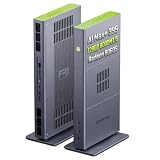
- Unlock next-generation AI computing with AMD Ryzen AI Max+ 395 processor featuring 16 cores, 32 threads, up to 5.1GHz boost clock, and integrated Ryzen AI engine delivering up to 126 TOPS AI performance. EVO-X3 is designed for local AI models, content creation, development, and professional workloads.
- OCuLink External GPU Expansion – Upgrade Beyond a Mini PC: Take your graphics performance further with a dedicated OCuLink (PCIe 4.0 x4) interface. Connect an external GPU dock to add desktop-class graphics power for AAA gaming, AI acceleration, 3D rendering, video production, and advanced creative applications. EVO-X3 gives you the flexibility of a compact PC with workstation-level expansion capability.
- AI NPU with XDNA 2 ARCHITECTURE - Powered by 16 “Zen 5” CPU cores, 50+ peak AI TOPS XDNA 2 NPU and a truly massive integrated GPU driven by 40 AMD RDNA 3.5 CUs, the Ryzen AI MAX+ 395 is a transformative upgrade and delivers a significant performance boost over the competition. The Ryzen AI Max+ 395 excels in consumer AI workloads like the llama.cpp-powered application: LM Studio. Shaping up to be the must-have app for client LLM workloads, LM Studio allows users to locally run the latest language model without any technical knowledge required and unleash their creativity and productivity.
- AMD RADEON 8090S iGPU GAMING PC - The AMD Radeon RX 8060S offers all 40 CUs with up to 2.9 GHz graphics clock and uses the new RDNA 3.5 architecture. The powerful iGPU is positioned between an RTX 4060 and 4070 laptop GPU and therefore enables gaming in FHD at maximum details in most demanding games. The 8060S can also utilize the full 128GB pool, which is perfect for running LLMs such as Deepseek 70B Q8, which runs comfortably on this machine.
- EIGHT CHANNEL LPDDR5X - LPDDR5X is a new ground breaking memory small form factor installed on-board. With blazing speeds up to to 8000MT/s, it runs 1.5x faster than the DDR5 SODIMMs; 90% better performance over DDR5 SODIMMs in video conferencing and photo editing; 30% better performance in productivity apps; 12% better performance in digital content workloads.
The current offering is aimed primarily at large enterprises, public-sector organizations, and technology companies that need customized implementation help. AMD’s page directs prospective customers to contact an AMD Silo AI expert rather than publishing standard list pricing. It is therefore not a self-serve consumer AI subscription with a transparent per-token price.
Likewise, AMD’s Enterprise AI stack is most relevant to organizations that already operate, or plan to operate, Kubernetes clusters and AMD GPU infrastructure. Buyers need to assess hardware availability, ROCm compatibility, staffing, support requirements, and whether an on-premises or cloud deployment makes more economic sense.
What the deal does—and does not—mean for AMD
Potential benefits
- AMD gains a team with demonstrated experience developing models on its accelerators.
- Enterprise customers can receive help with customization and production deployment.
- Open-source models and reference workloads can encourage developers to test AMD hardware.
- AMD can present a more complete offering spanning chips, software, services, and deployment.
- The deal expands AMD’s AI research and engineering footprint in Europe.
Limits and risks
- Integration risk: Key researchers may leave, or the team’s priorities may change inside a much larger company.
- Financial uncertainty: AMD has not disclosed a specific revenue contribution from Silo AI, and its filing says the results were not material to consolidated operations.
- Hardware dependency: Software expertise helps only if AMD accelerators are available, competitive, and supported by clouds and server vendors.
- ROCm adoption: The acquisition does not guarantee parity with Nvidia’s mature developer ecosystem.
- Open-source monetization: Open models may increase ecosystem adoption without producing direct software revenue; returns may instead come through hardware, services, support, or enterprise contracts.
- Model turnover: Poro and Viking demonstrate capabilities at the time of the deal but should not automatically be treated as AMD Silo AI’s current flagship models in 2026.
- Opaque customer outcomes: Enterprise implementations may involve confidential data and customized systems, making scale and measurable performance difficult to compare publicly.
How it fits AMD’s wider AI push in 2026
AMD’s AI strategy now extends beyond individual accelerators. It includes Instinct GPUs, EPYC CPUs, Pensando networking, ROCm, rack-scale systems, enterprise deployment software, and cloud partnerships.
In July 2026, AMD announced that Microsoft would deploy AMD’s Helios rack-scale platform on Azure for frontier-model inference and other AI workloads. That announcement is useful context: AMD is pursuing complete infrastructure systems and cloud-scale deployments, not merely selling standalone chips. It should not, however, be presented as a result caused solely by the Silo AI acquisition.
The Silo AI deal fits inside this larger strategy by addressing the application and deployment layer. AMD’s ability to win AI business will still depend on the combined performance of its hardware, ROCm software, cloud availability, systems, pricing, and customer support.
What investors and buyers should watch
For investors, the acquisition’s success is unlikely to appear as a separately reported Silo AI revenue line. More useful indicators include:
- Growth in AMD Instinct adoption among enterprises and cloud providers.
- Evidence that ROCm supports more popular frameworks and production workloads.
- Repeatable customer deployments rather than isolated demonstrations.
- Expansion of AMD’s enterprise software and implementation business.
- Retention of Silo AI’s technical talent.
- Clearer evidence that customers can achieve competitive total cost and performance on AMD systems.
For potential customers, the practical questions are different:
Free tools Windows power users keep installed
One-click scans. No signup required.
- Does the required model and framework run on the intended AMD hardware?
- Are the necessary ROCm libraries, inference tools, and integrations mature enough?
- Does the organization have Kubernetes and GPU-operations expertise?
- Would cloud access be easier than buying and operating servers?
- What support, implementation, security, and data-governance commitments are included?
- Is the project large enough to justify enterprise consulting rather than a self-managed open-source deployment?
The bottom line
AMD’s approximately $665 million Silo AI acquisition was completed in August 2024 and should now be discussed as a finished transaction, not a pending deal. AMD bought an enterprise-AI team and platform capability: researchers, model engineers, deployment expertise, multilingual open-source models, and experience optimizing workloads for AMD hardware.
The deal strengthens AMD’s attempt to compete as a complete AI infrastructure provider. But it did not buy a consumer chatbot, guarantee Nvidia-level software adoption, or establish an immediate material financial return. Its long-term value depends on whether AMD can turn Silo AI’s technical expertise into reliable, repeatable enterprise deployments across its hardware and ROCm ecosystem.
Quick Recap
Sources
- AMD announces Silo AI acquisition
- AMD announces completion
- AMD Silo AI overview
- AMD 2025 Form 10-K
- AMD Enterprise AI documentation
- AMD–Microsoft Azure AI infrastructure announcement
Product prices and availability are accurate as of the date/time indicated and are subject to change. Any price and availability information displayed on Amazon at the time of purchase will apply.



