Recommended Free Tools
Some links on this page are affiliate links: if you buy through them we may earn a commission, at no extra cost to you.
Yes—SpaceX and xAI completed a transaction. The merger agreement was signed on January 31, 2026, and SpaceX filings state that xAI was acquired effective February 2, 2026. The often-repeated $1.25 trillion figure describes the implied valuation of the combined company, not a $1.25 trillion cash payment.
The deal brings xAI’s Grok models, AI-compute operations and related assets into SpaceX’s broader platform alongside Starlink, launch services, satellite manufacturing and X-related operations. Its most ambitious promise—placing AI-compute hardware in orbit—remains a future development plan, not an operating business available to customers today.
The short version
SpaceX did not simply announce a partnership with xAI. According to the companies’ SEC-filed documents, SpaceX acquired xAI through a merger structure that became effective February 2, 2026. Economically, this is best understood as an acquisition; legally, it was implemented through mergers involving SpaceX subsidiaries.
Crashes, No Sound, or Screen Glitches?
Random freezes, missing sound and display glitches usually trace back to one bad driver. Find and replace yours safely.Free scan · under a minuteWindows Errors? Fix Them Before They Spread
Repair common Windows errors and clear accumulated junk for a smoother, more stable PC - no reinstall needed.Free scan · no reinstallReuters reported that the combination valued the resulting company at approximately $1.25 trillion. That number should not be read as the amount SpaceX paid in cash, a public-market capitalization or money deposited with xAI shareholders. The transaction documents describe SpaceX stock being issued to xAI holders as part of the corporate reorganization. The merger agreement is the primary source for the structure and consideration.
#1 Best Overall

- 1:200 Scale SpaceX Starship Model: This NikolaToy model offers a precise 1:200 scale replica of the SpaceX Starship, showcasing a realistic design for aviation and space enthusiasts.
- LED Lights & Misting Effect: Equipped with LED lights and a misting function, this model creates a dynamic and interactive experience, simulating rocket exhaust in a unique way.
- Durable PLA+ Construction: Made from PLA+, a strong and eco-friendly material, ensuring a sturdy, long-lasting model with fine detailing.
- Precision 3D Printing: Crafted with high-precision 3D printing technology to capture every detail of the SpaceX Starship, from its sleek body to the intricate features.
- Ideal Gift for Space Enthusiasts: A perfect gift for space lovers, engineers, or collectors, adding both a decorative touch and an engaging conversation piece to any home or office.
The strategic thesis is vertical integration: combine AI models and computing with launch capacity, satellite production, global connectivity and a large distribution platform. Whether that combination creates durable financial value will depend on execution, capital requirements, regulation and the economics of the proposed orbital-computing system.
When did the SpaceX-xAI merger close?
The timeline has three important stages:
- January 31, 2026: Space Exploration Technologies Corp., X.AI Holdings Corp. and two SpaceX-created merger subsidiaries executed the merger agreement.
- February 2, 2026: The agreement contemplated closing on this date, subject to its conditions. A later SpaceX filing states that xAI was acquired by SpaceX effective February 2.
- After closing: xAI’s AI operations became part of the broader SpaceX corporate structure, while the companies continued describing future integration and orbital-compute projects.
This distinction matters because a public announcement, a signed agreement and a completed acquisition are not interchangeable. The evidence supports describing the transaction as completed, but it does not mean every proposed product, satellite or business process was fully integrated or commercially operational on the closing date.
Was it a merger or an acquisition?
Both descriptions can be accurate, depending on context.
Strategically and economically, SpaceX acquired control of xAI. The legal agreement, however, used a two-step merger process. The first merger was designed to leave xAI as a wholly owned SpaceX subsidiary, followed immediately by a second merger involving another SpaceX subsidiary. That is why “SpaceX merges with xAI” is defensible headline shorthand, while “SpaceX acquires xAI” is usually more precise when discussing ownership.
It was not necessarily a conventional merger of equals simply because the word “merger” appears in the legal documents. The key practical result is that xAI became part of SpaceX’s corporate structure.
What does the $1.25 trillion valuation mean?
The headline figure is an implied valuation of the combined company. It is not a $1.25 trillion purchase-price cheque.
Private-company transactions often use negotiated share exchanges, preferred-stock rights, employee equity and other contractual terms rather than a simple public share price multiplied by shares outstanding. The valuation reported in coverage represents what the combined business was considered to be worth at the transaction point under the relevant deal terms. Reuters reported the combined valuation at $1.25 trillion. The Reuters report carried by Investing.com also discussed separate expectations around a possible future SpaceX offering.
Do these 3 things before closing this tab:
1Scan for outdated or missing drivers - takes under a minute2Clear out junk files and repair common Windows errors3Fix the driver behind crashes, sound loss and screen glitchesCoverage commonly describes the deal as combining SpaceX at roughly $1 trillion with xAI at roughly $250 billion. That is a useful high-level explanation of the headline, but readers should not treat it as a definitive accounting breakdown unless the companies provide a detailed valuation reconciliation. The exact economic value can depend on the exchange ratio, the classes of securities involved and the treatment of debt and other claims.
What the valuation does not tell you
- It is not revenue or profit.
- It is not cash held by the combined company.
- It is not necessarily a public-market price at which ordinary investors can buy shares.
- It does not prove that the orbital-AI business is commercially viable.
- It does not guarantee a future SpaceX IPO.
A possible SpaceX public offering at a valuation above $1.5 trillion would be a separate event. A private transaction valuation and a later IPO valuation are not automatically comparable, because public investors would receive new disclosures, face market pricing and evaluate the company under different liquidity and governance conditions.
What businesses are now connected?
SpaceX’s filings describe a platform spanning several major businesses:
Rank #2

- Name:1:233 Falcon 9 Block 5 Material::Alloy+resin
- Size:Approximately 22x7cm (8.6*2.7inch) Function: Static desktop display
- For collection or display, Not suitable for children to play with Handmade, there may be minor flaws
- Model is a highly Simulated SpaceX Falcon9 Dragon+F9 Starship Heavy Falcon Falcon 9 Biock 5 rocket model. The main body of the first-stage rocket is precision aluminum alloy tube, and the rest of the rocket materials are made of high-quality imported resin-with excellent laser forming ability and long-lasting preservation
- Launch: Falcon launch services and development of future Starship systems.
- Satellite connectivity: Starlink broadband and satellite-to-mobile services.
- AI: xAI’s Grok models, applications, research and computing operations.
- Social distribution: X and its information and user-distribution capabilities.
- Terrestrial AI infrastructure: xAI’s Colossus and Colossus II facilities.
- Future orbital computing: Proposed satellites carrying AI-compute hardware and linked through laser communications and Starlink.
The combined strategy therefore reaches from physical infrastructure to software, connectivity and distribution. SpaceX filings describe the acquisition as combining launch capability, satellite manufacturing, global connectivity and xAI’s AI-development operations.
What’s actually slowing this PC down?
Pick the symptom - the matching free tool is one click away.
SpaceX’s Australian prospectus reports approximately 1.3 billion supported accounts active during the twelve months ended March 31, 2026, and approximately 550 million monthly active users for the integrated platforms. Those are company-reported figures; they should not be treated as independently audited user counts without further verification.
Why combine a rocket company and an AI company?
The stated strategic rationale
SpaceX says the deal is intended to integrate AI development with launch and satellite manufacturing. Its filings identify several constraints on AI growth, including the supply of chips, data-center infrastructure and power. The proposed response is to connect model development and computing with a company that already builds spacecraft, launches payloads and operates a global satellite network.
In the company’s vision, orbital computing could eventually:
- Use solar power at scale.
- Reduce reliance on terrestrial land, grid connections and cooling infrastructure.
- Use SpaceX’s launch and manufacturing capabilities to deploy hardware.
- Connect satellites through laser links and Starlink.
- Place computing closer to a distributed communications network.
This is a vertically integrated thesis. Instead of treating AI as only a software business dependent on rented data centers, it combines model development, chips and computing, connectivity, spacecraft, launch and user distribution under one corporate structure.
The commercial explanation
There is also a less promotional financial rationale. AI development is capital-intensive: models require expensive accelerators, data centers, electricity, cooling, networking and specialized employees. Access to SpaceX’s manufacturing, launch, connectivity and financing capabilities could help xAI pursue that expansion.
Conversely, adding AI and X-related operations could give SpaceX a larger technology narrative ahead of any future public-market transaction. That possibility is an analytical inference, not a confirmed purpose of the merger. SpaceX’s own disclosures warn that the AI segment is newly formed and faces integration, scaling, competitive and operational risks.
The financial question is whether cash generation from launch and Starlink can support AI investment without weakening the established businesses. If profitable divisions fund speculative infrastructure, investors will need transparent segment reporting to understand the trade-off.
What is the orbital-AI plan?
SpaceX has described a future system of satellites with localized AI-compute hardware. The proposed architecture would use:
Quick wins for a faster PC:
Scan for outdated or missing drivers - takes under a minuteDriver Scan →Clear out junk files and repair common Windows errorsFree Scan →- Solar panels to generate power in a sun-synchronous orbit.
- Onboard computing for AI workloads.
- Laser links between satellites.
- Starlink connections to ground users and terrestrial systems.
- Large-scale satellite production at a proposed “Gigasat Factory” in Bastrop.
On its AI-satellite project page, SpaceX presents an “AI1” satellite concept with a 150-kilowatt peak and 120-kilowatt average compute payload, a deployed height of 20 metres and a wingspan of 70 metres. These are SpaceX’s design specifications, not independently validated commercial performance figures. SpaceX’s AI-satellite materials also describe solar power and laser connectivity.
Rank #3
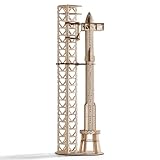
- HANDS-ON ENGINEERING EXPERIENCE: Build this detailed 3d puzzle for adults and explore the complex engineering of the legendary SpaceX Super Heavy booster. A truly immersive dive into aerospace technology
- IMPRESSIVE DISPLAY MODEL: Once completed, this highly detailed and cool-looking model makes a perfect decorative centerpiece for your office, study, or game room, showcasing your unique interests
- SATISFYING MENTAL CHALLENGE: Enjoy hours of focused, relaxing fun. This 3D puzzle provides the perfect level of difficulty, offering a great sense of accomplishment upon completion
- THE PERFECT GIFT IDEA: An unforgettable and inspiring gift for birthSpace-X Falcon Heavydays, holidays, or any occasion. Ideal for space enthusiasts, model kit fans, teens, and adults who love a good challenge
- PREMIUM & SAFE MATERIALS: Made from high-strength, eco-friendly materials with precisely cut pieces for a smooth build. The finished model is robust and durable, designed for long-term display
SpaceX has discussed manufacturing enough satellites to begin deploying thousands as early as late 2027. A separate SEC filing says the company expects to begin deploying orbital AI-compute satellites as early as 2028. The wording matters: these are company targets, not firm delivery commitments or evidence that a production constellation has been approved, funded at the required scale or deployed.
The longer-term language includes potentially thousands or millions of compute satellites. That should be understood as an aspiration rather than a guaranteed launch schedule.
Why might computing in space be attractive?
Space-based computing could offer genuine theoretical advantages. Solar energy is continuously available in the proposed orbital regime, and satellites would not need conventional terrestrial cooling towers, chillers, fans or dry coolers.
But “no conventional cooling plant” does not mean “no thermal problem.” In a vacuum, heat cannot be removed through convection. It must be rejected primarily through radiation, which requires appropriately sized radiators and careful hardware design.
SpaceX claims orbital AI satellites could reduce cooling-power overhead by an order of magnitude and eventually lower AI-compute costs. Those are company claims that require independent engineering and economic validation. Abundant sunlight is only one input into the cost calculation. Launch, manufacturing, radiation protection, communications, replacement and end-of-life management could dominate total costs.
What could prevent orbital AI from working economically?
1. Mass and launch requirements
AI hardware is only part of a satellite. The complete system also needs power generation, structure, radiators, communications equipment, shielding, attitude control and other support systems. A large orbital-compute network would require substantial mass to orbit and a continuing launch and replacement program.
2. Thermal management
Space is cold in some respects, but vacuum does not carry heat away. High-power processors must transfer waste heat to radiators and emit it into space. The larger the compute payload, the more demanding the thermal design becomes.
3. Radiation and hardware reliability
Space radiation can damage chips and memory or cause temporary errors. Designers may need radiation-tolerant components, shielding, redundancy or error correction. Each option adds mass, cost, complexity or performance trade-offs.
4. Hardware obsolescence
AI accelerators evolve quickly. A satellite could remain physically usable while its processors become uncompetitive compared with newly installed terrestrial hardware. The business case must account for how frequently orbital equipment can be upgraded or replaced.
5. Bandwidth and latency
Orbital placement does not automatically make every AI workload economical. Training and inference require data movement, synchronization and reliable links. Some workloads may tolerate orbital latency; others may be cheaper or faster in a terrestrial facility.
Rank #4
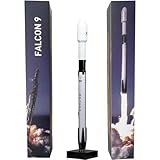
- Name:1:233 Falcon 9 Material::Alloy+resin
- Size:Approximately 28x2.4cm (11*1.5inch) Function: Static desktop display
- For collection or display, Not suitable for children to play with Handmade, there may be minor flaws
- Model is a highly Simulated SpaceX Falcon9 Dragon+F9 Starship Heavy Falcon Falcon 9 Biock 5 rocket model. The main body of the first-stage rocket is precision aluminum alloy tube, and the rest of the rocket materials are made of high-quality imported resin-with excellent laser forming ability and long-lasting preservation
6. Replacement and servicing
Satellites have finite operating lives. A large constellation would need replacement missions, collision avoidance, deorbiting and potentially servicing capabilities. These recurring costs are central to the economics, not minor maintenance details.
7. Orbital debris and regulation
Thousands or millions of additional spacecraft would raise collision, spectrum, coordination and debris-management issues. Launch licensing, spectrum authorization, orbital-debris requirements, national-security review and international regulation would all remain relevant.
8. Manufacturing scale
The proposed Gigasat Factory is a planned manufacturing project. Producing spacecraft at the required scale and quality has not been demonstrated merely because a factory has been proposed.
9. Total cost
The decisive metric will be cost per useful computation—potentially cost per token or per training operation—not the price of solar power alone. Investors would need data on launch cost, satellite cost, useful lifetime, utilization, networking, replacement and terrestrial alternatives before concluding that orbital AI is cheaper.
Outside experts quoted by the Los Angeles Times raised concerns about radiation-resistant chips, heat dissipation and communications challenges. Those concerns do not prove the concept impossible, but they show why the proposal should be evaluated as an engineering program rather than an established business.
Free tools Windows power users keep installed
One-click scans. No signup required.
What is operating now—and what remains a plan?
| Capability | Status |
|---|---|
| SpaceX acquisition of xAI | Completed effective February 2, 2026, according to SpaceX filings. |
| Grok and xAI AI operations | Existing operations integrated into SpaceX’s AI-related platform. |
| X platform | Included in the broader xAI-related platform described in SpaceX materials. |
| Colossus and Colossus II | Existing terrestrial AI-compute facilities. |
| Starlink connectivity | Existing operating broadband and satellite-to-mobile business. |
| AI-compute satellites | Development and future deployment plan. |
| Gigasat Factory | Planned manufacturing project. |
| First orbital deployments | Company target as early as 2028; not an established production schedule. |
| SpaceX IPO | Possible future public-market event, separate from the merger. |
The table is the most important safeguard against confusing the completed acquisition with the future orbital-compute business. Grok, X, Starlink and terrestrial data centers represent existing operations. The orbital system and its factory remain development plans.
Independent reader supportYour contribution helps us test, update, and keep practical guides available for everyone.What does the deal mean for X and Grok?
The transaction creates a closer relationship among X’s real-time information and distribution layer, Grok’s AI models, Starlink’s connectivity and SpaceX’s infrastructure.
Potential advantages include faster distribution of Grok features, shared engineering and computing resources, possible integration with Starlink or future devices, and access to information flows generated through X. SpaceX says Grok and X benefit from real-time information and human discourse on X. Those are company assertions about model freshness and competitive advantage, not independently established measures of model quality.
The risks are equally important:
- Privacy and data governance: The combination could raise questions about how platform data is collected, used and shared.
- Content moderation: Decisions affecting X could have consequences for AI training, model outputs and public information distribution.
- Concentration: One corporate structure would connect launch, communications, social media, AI and information services.
- Conflicts of interest: Commercial, platform-governance and public-interest decisions could pull in different directions.
- Control: Investors and users may face heightened dependence on a single controlling shareholder and interconnected companies.
What should investors watch?
Valuation quality
Investors should ask how the $1.25 trillion figure was established. Was it based on a negotiated exchange ratio, recent private financing marks, secondary-market transactions, management estimates or a combination? Does it account for debt, preferred-stock rights, employee equity and other claims?
The Tool Desk
Outbyte PC Repair FREERepair Windows errors before they cause bigger problemsFix Now →Outbyte Driver Updater FREEScan for outdated or missing drivers - takes under a minuteDriver Scan →Cash generation versus capital needs
Starlink and launch may provide established revenue streams, but xAI requires continuing investment in chips, power, data centers and personnel. Future orbital infrastructure could require another substantial capital commitment. The important question is not just the combined valuation; it is whether the operating businesses can fund those plans without unacceptable dilution or leverage.
Best Value
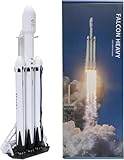
- Extremely exquisite Falcon Heavy rocket model (For collection or display, not a toy! Children should not buy it)
- This model is a highly simulated SpaceX Falcon Heavy rocket model. First-stage super heavy-duty booster is made of precise aluminum alloy tubes.Second-level starship is embedded with reinforced aluminum alloy tubes
- The proportional model:1:233
- Actual height: 32cm (the core diameter is 24mm, the real rocket is 9 meters in diameter) This ratio is the best choice for desktop placement
- Note: This model is not a toy model, it is not recommended to buy for children, please buy with caution to avoid unnecessary trouble for your shopping
Integration and related-party controls
Future disclosures should clarify whether the businesses share personnel, computing capacity, intellectual property, procurement and financing. Investors should look for segment reporting and controls covering related-party transactions, especially where multiple businesses have common ownership or management.
Orbital-compute economics
Useful disclosures would include cost per kilogram to orbit, satellite manufacturing cost, expected hardware life, replacement rates, bandwidth, latency, radiation protection, utilization and cost per unit of computation compared with terrestrial data centers.
Regulation and governance
Relevant issues include spectrum and orbital approvals, debris mitigation, competition policy, data privacy, national-security review, voting control and shareholder protections.
IPO terms
A future IPO would not automatically give retail investors access at the $1.25 trillion valuation. Public investors should examine audited financial statements, segment reporting, voting rights, dilution, related-party arrangements and whether launch, Starlink, X, Grok, terrestrial AI and orbital AI are reported separately.
Can ordinary investors buy SpaceX or xAI shares now?
Not simply because the merger has a reported valuation. SpaceX and xAI are not made publicly investable for ordinary retail investors merely by completing a private transaction. A future IPO would be a separate offering with its own eligibility, price and allocation rules.
Public brokerage accounts may provide indirect exposure to listed aerospace, semiconductor, data-center or satellite-connectivity companies, but those investments are not substitutes for owning SpaceX or xAI. Private-market platforms may sometimes provide access to private-company transactions for accredited or otherwise eligible investors, but availability, minimums, liquidity, fees and transfer restrictions must be checked individually. A platform listing is not a guarantee that SpaceX or xAI shares are available.
Similarly, subscribing to Starlink or using Grok provides access to products and services, not an ownership stake. Buying a related public stock should not be treated as a diversified proxy for SpaceX, xAI, X, Grok and Starlink.
What the merger could mean for competition and regulation
The combination is unusual because it links businesses with influence over several layers of the technology stack: rockets and launch access, satellite communications, AI infrastructure, a social platform and an AI assistant.
That may produce efficiencies, but it could also prompt scrutiny over market power, data access, preferential treatment, network effects, spectrum and launch dependence. Regulators and counterparties may examine whether the combined structure can disadvantage rivals or use information from one business to benefit another.
For users, the practical questions will include how X data is handled, how Grok is integrated into products, whether Starlink customers receive new AI capabilities and whether corporate control affects content or service decisions. For investors, the key issue is whether governance safeguards and financial disclosures are strong enough to evaluate such a complex group.
How to interpret the deal without being misled
- Say “combined-company valuation”, not “SpaceX paid $1.25 trillion.”
- Distinguish the completed acquisition from the future orbital-AI project.
- Treat technical specifications and user numbers as company-reported unless independently verified.
- Use “as early as 2028” for the deployment target, not “orbital AI launches in 2028.”
- Do not assume a proposed constellation has received every required regulatory approval.
- Do not treat a possible IPO as guaranteed or assume retail investors can buy at the private valuation.
- Evaluate total compute economics, including launch, replacement, radiation, thermal management and networking—not just solar-power availability.
Bottom line
The SpaceX-xAI transaction is real and became effective February 2, 2026. The $1.25 trillion headline is an implied valuation of the combined company, supported by a stock-based merger structure—not a $1.25 trillion cash purchase.
The deal’s logic is vertical integration: SpaceX contributes launch, satellite manufacturing and Starlink connectivity, while xAI contributes Grok, AI research and terrestrial computing, with X providing a large distribution and information platform. The most consequential promise is the proposed orbital-AI network, but that remains unproven. Its success will depend on mass, heat, radiation, bandwidth, replacement, regulation and total cost.
For personal-finance readers, the central lesson is simple: a private valuation is not an investment opportunity by itself. Until a public offering or a verified eligible private-market transaction exists, there is no ordinary retail route to buy SpaceX or xAI at the reported $1.25 trillion figure.
Quick Recap
Product prices and availability are accurate as of the date/time indicated and are subject to change. Any price and availability information displayed on Amazon at the time of purchase will apply.



